


 Japan : Safety by City
- Fukuoka
- Hakone
- Hiroshima
- Kamakura
- Kanazawa
- Kyoto
- Nagasaki
- Nara
- Nikko
- Osaka
- Sapporo
- Sendai
- Tokyo
- Yokohama
Hiroshima is the capital of Hiroshima Prefecture.
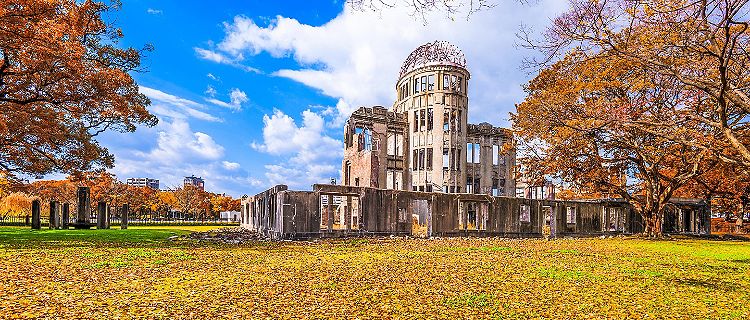
It’s located on the southwestern side of the island of Honshu, and most people know of it as the city that was the site of the first atomic bombing during World War II.
But the city offers so much more to visitors, from the Memorial Peace Park to the deer you can feed on Miyajima.
It’s considered a safe place to visit, although it does have some crime.
The U.S. Department of State currently has a Level 1 travel advisory for all of Japan, which means exercising normal precautions.
You can take steps to make yourself safer and less at risk of encountering a problem.
Warnings & Dangers in Hiroshima

OVERALL RISK: LOW
Japan is not known to be a horribly dangerous place, and Hiroshima is pretty safe overall. But you need common sense, and you need to take precautions even if you feel very safe. Remember, scam artists, thieves, and others looking to harm you rely on you zoning out and not paying attention to what's going on around you. And Japan is rife with the risk of natural disasters. However, there's not much you can do about those except pay attention to emergency declarations and download emergency apps that the city of Hiroshima has available.

TRANSPORT & TAXIS RISK: LOW
If you take trains, look out for chikan, or gropers. As for taxis, take ones that have green license plates. These are official taxis. If you see a taxi with a white plate, there's a small chance that this is a rideshare driver (rideshare drivers have to work through taxi companies and may have white or green plates), but there's a larger chance that it's an unofficial taxi. Those drivers could be good, or they could try to scam you. Unofficial taxis are illegal in Japan.

PICKPOCKETS RISK: MEDIUM
The risk is usually low, but if you're in a crowded area or a tourist area, there will likely be people looking to take advantage. People have reported finding zippers open and bags cut open, with some items missing. Keep an eye on your belongings, and try to travel light so that you're not lugging a lot with you.

NATURAL DISASTERS RISK: HIGH
Hiroshima is prone to heavy rains, especially during typhoon season. The rain can lead to flooding, landslides, and erosion. The city has a five-level warning system; if you hear that the city is at anything but a level 1 (or no level), stick close to your hotel and ask the staff what you should do. Level 5 is the most serious. The city is also at risk of earthquakes. You can download an app that gives you information on evacuation preparation and procedures. This app is called "Emergency Evacuation Guide App." The city of Hiroshima also offers blank medical information cards that you can fill out.

MUGGING RISK: LOW
Mugging can and has happened, but the overall risk is low. Don't make yourself look like a lucrative target; don't wear expensive jewelry or carry a ton of shopping bags. Japan is overall safe, but you still want to take commonsense precautions, especially if you don't speak or understand Japanese.

TERRORISM RISK: LOW
Low with a caution due to current global events. Terrorism is generally low, but with the fighting in Iran at present, anyone traveling anywhere should be a little more cautious. The risk of attacks, especially against U.S. citizens, is an unfortunate reality. That said, Japan as a whole tends to have a low risk.

SCAMS RISK: MEDIUM
Most scams in Japan tend to target the elderly, unfortunately. However, tourists also have to be on the lookout. Distraction scams do exist, and you should be careful around ATMs and not flash money. That's just common sense. But there are other scams, such as people who claim to be travelers who are stranded and who ask for money. There's one particular Belgian man who's been spotted in several cities trying to pull this scam. There are also Tinder and dating site scams where the person you're conversing with suddenly asks for a gift card before meeting you. Of course, they make off with the electronic gift card and never show up. Other scams include switching Japanese coins with similar Korean coins, people dressed as Buddhist monks who offer you a charm and then demand payment once you touch it, vendors "accidentally" giving you less change than you're due, and bar touts who pose as really friendly people who want to go to their favorite bar. Then you end up paying for a big bar bill that you weren't expecting, or you end up drinking a spiked drink and getting robbed.

WOMEN TRAVELERS RISK: MEDIUM
In general, Hiroshima is considered very low risk. You want to take the usual precautions, especially if you're a solo traveler; don't go into bars with strangers, and take similar precautions that you'd take in any large city. Be sure you know your route before you set out to go anywhere, be it via train or walking. The real problems are things like chikan, or those perverts in trains who grope women. Even though the city is generally safe, assaults can happen, and women traveling there should keep that in mind. Another risk is the butsukari otoko, or "bumping men," who may shoulder-check or even shove women whom they think are too weak to fight back. Note that chikan sometimes grope men, and women may display butsukari otoko behavior. If someone gropes you, try to get their picture and alert the train station staff. One potential way to ward off anyone trying to body-slam you is to appear tougher than the people around you. That doesn't mean you have to mimic a gang member. But try to adopt a more confident stance, and keep your eyes out for anyone moving toward you. Sometimes moving out of the way at the last minute can trip them up.

TAP WATER RISK: LOW
Tap water is safe, although it can sometimes smell like the purification chemicals that the city uses.
Safest Places to Visit in Hiroshima
Most of the city is considered safe.
Enjoy walking through the Shukkei-en Garden and visiting the Mitaki-dera Temple and Hiroshima Peace Memorial Park.
Ride through the city center on vintage Hiroden trolleys before getting some Hiroshima-style okonomiyaki for a snack.
Places to Avoid in Hiroshima
There’s really no place to avoid officially, other than the usual darkly lit alleys and isolated streets.
You will want to be careful in Nagarekawa, the entertainment/club district.
Watch out for touts trying to get you into their clubs and bars, and if you’re a woman, beware of harassment.
Anecdotally, some have warned others to be careful around — and not even go to at night — Alice Garden, PARCO, Shitenchi Park, and the river.
Safety Tips for Traveling to Hiroshima
- Please register with the U.S. Department of State’s Smart Traveler Enrollment Program (STEP). This helps you stay in touch with embassies in emergencies, and you get new travel advisories as they’re issued.
- Don’t wander and lose track of what’s happening around you. Hiroshima is generally safe, but crime does happen there. Don’t turn yourself into a daydreaming target.
- Get yen in cash at the airport, and keep getting cash as you run low. Japanese society is very cash-based, and you don’t want to be stuck with only cards when services around you require cash.
- Watch out for chikanon trains. Scan crowds and anyone near you to see if someone suddenly moves in your direction; this could be a butsukari otoko planning to shove you. Note that some women display this behavior, too, and neither men nor women are always obvious about it.
- Plan your stay at hotels that have a front desk that’s staffed round the clock. These hotels are often more secure.
- Be cautious in summer with the heat and humidity. Stay hydrated and protect yourself from the sun.
- Pay attention to weather reports, especially in summer. Never wander about if heavy rains are forecast.
- Avoid anyone who insists they just have to take you to this really cool bar or club they like. That’s likely a tout who will ensure you end up with a huge bar bill or a spiked drink.
- Get travel insurance that includes medical coverage and medical translation coverage.
- Green plate taxis only. Don’t take white plate taxis.
So... How Safe Is Hiroshima Really?
It’s really easy to see all the warnings here and think that Hiroshima is crime-ridden.
The city really is considered generally safe, as is most of Japan.
But crime does happen, and you can take steps to make yourself less of a target if you know what to expect.
Staying alert to what’s going on around you — no earbuds blasting music as you walk, for example — and protecting your belongings can go a long way toward keeping yourself safe.
Crime rates are generally classed as low, while safety walking around during the day is classed as safe.
Walking around at night is classed as moderately safe, although it’s not that much more dangerous than walking around in the daytime.
Treat Hiroshima like any big city in the U.S. and just be aware.
How Does Hiroshima Compare?
| City | Safety Index |
|---|---|
| Hiroshima |
80 |
| Kyoto |
83 |
| Hakone |
92 |
| Kanazawa |
83 |
| Fukuoka |
90 |
| Kamakura |
91 |
| Tokyo |
90 |
 Bamiyan Bamiyan | 25 |
 Great Bend Great Bend | 53 |
| Kill Devil Hills | 77 |
 Kandy Kandy | 73 |
| Sacramento | 51 |
| Sun Prairie | 84 |
Useful Information

Visas
U.S. citizens don't need a visa to visit Japan if they're staying no more than three months in the country. If you want to stay longer than that, you'll need a visa that you apply for ahead of your trip.

Currency
Japan uses the yen, which comes in both paper bills and coins. As of early March 2026, US$1 = JPN¥157.57. Note that there's no way to subdivide yen into a form of "cents"; the numbers you see to the right of the decimal points are minor variations. To exchange money, you can go to counters in the airport or in banks. You can also use ATMs in convenience stores to withdraw money, but be mindful of withdrawal maximums. Banks tend to have worse rates than ATMs. Japan still uses cash for a lot, so don't rely on your cards. Get money before you leave the airport and then more when you're settled in your hotel.

Weather
The climate in Hiroshima changes a lot between winter and summer. Winters are cold, with highs (in Fahrenheit here, although the country uses Celsius) averaging in the low to mid 50s and the lows in the low to mid 30s. Summers, though, get hot and humid, with highs averaging in the upper 80s to low 90s, and lows hitting the upper 70s. Humidity in summer is awful, often in the upper 60s and low 70s percent-wise. Bring layers and a parasol or hat during summer, and stay hydrated. Don't overdo it as you travel around. In winter, bring cold-weather clothing and accessories. Hiroshima gets over 66 inches of precipitation a year. July is usually the wettest month.

Airports
Hiroshima Airport is located several miles east of Hiroshima, between the cities of Higashihiroshima and Mihara. You have the option of renting a car from six different companies at a rental car "port" that's next to the terminal. If you prefer to take a bus or train, the array of schedules and route options can be overwhelming at first. You have the option of taking a "limousine bus," which is a dedicated bus line that travels between the airport and a specific destination. Two of the buses currently go to parts of Hiroshima. You can also take a local bus to the nearest train station and take a train into town. Taxis are also available and very convenient, but the fare to Hiroshima will be rather high. One other option is to fly into Narita Airport in Tokyo and then take the JR Tokaido/Sanyo Shinkansen train. You'll see different route names, but all you need to know is that "Nozomi" trains take about four hours, and "Hikari" and "Sakura" trains take about five hours.

Travel Insurance
Right now (as of early March 2026), you're not required to have travel insurance to enter Japan. However, it's highly recommended because, if you end up needing medical care or have some other expense that you don't pay, you could find that you're not allowed to enter Japan again in the future. You should carry insurance that covers things like canceled trips and reservations so that you can protect yourself financially if something happens that affects your trip. You definitely want to carry travel insurance for medical events and treatment because the national health insurance in Japan doesn't cover short-term travelers. And that treatment can be expensive. Japan has had such a problem with tourists leaving medical bills unpaid that the government has proposed creating a mandatory insurance requirement for tourists and other short-term visitors. That's not in force yet, but get the medical insurance anyway, just in case they make it mandatory while you're there. Make sure the policy you get covers medical translation as well as treatment. Some good news is that you can buy a travel insurance policy after you enter Japan, and your credit cards may offer some coverage. If you drive, you'll need insurance for the car, and you can get that through the car rental agency. Before you travel to Japan, however, you'll need to apply for an international driving permit. In the U.S., you can do that through your local AAA location. You'll also need to bring your valid home-country driving license.
Hiroshima Weather Averages (Temperatures)
Average High/Low Temperature
| Temperature / Month | Jan | Feb | Mar | Apr | May | Jun | Jul | Aug | Sep | Oct | Nov | Dec |
|---|---|---|---|---|---|---|---|---|---|---|---|---|
| High °C |
9 | 10 | 13 | 18 | 22 | 25 | 29 | 30 | 26 | 21 | 16 | 11 |
| Low °C |
0 | 1 | 4 | 8 | 13 | 17 | 22 | 23 | 19 | 13 | 7 | 2 |
| High °F |
48 | 50 | 55 | 64 | 72 | 77 | 84 | 86 | 79 | 70 | 61 | 52 |
| Low °F |
32 | 34 | 39 | 46 | 55 | 63 | 72 | 73 | 66 | 55 | 45 | 36 |
Japan - Safety by City
| City | Safety Index |
|---|---|
| Fukuoka | 90 |
| Hakone | 92 |
| Hiroshima | 80 |
| Kamakura | 91 |
| Kanazawa | 83 |
| Kyoto | 83 |
| Nagasaki | 96 |
| Nara | 88 |
| Nikko | 91 |
| Osaka | 88 |
| Sapporo | 92 |
| Sendai | 88 |
| Tokyo | 90 |
| Yokohama | 87 |



Very historic
Hiroshima is a beautiful place but you have to be sure to be on your toes in the market. People will try and get money off you and you will pay extra if you don’t know what should cost what. That being said, I feel this is like most other places in Japan, there is a very low risk for anything bad happening to you via the natives there. Most people just keep to themselves. The food and sights make it worth visiting.
A dream city?
My boyfriend and I recently got back from visiting some friends who live in Hiroshima. We met in the states when they were at a convention and hit it off. We both loved the place. My boyfriend said if he ever had the money we could just move there. I like how lively it is but it never feels hectic like in New York City.
Hiroshima is safe!
I’ve lived in the area for 23 years and never ever had a problem with the “risks” in this article. In fact, I’ve never heard of them until now.
Hiroshima is a great city, very very safe, and people are very friendly.
I’d say the only risk may be a dodgy taxi driver or two, who will try to treat you like a tourist who doesn’t know the area. Other than that, expect zero problems!
Gets hot in summer!
The weather averages in the list above are way higher than shown!
Is it really as moving to see the Atomic Bomb Dome in person as people say, or does the hype not quite match the reality?
I was not expecting the Atomic Bomb Dome to feel so hauntingly powerful and untouched after all this time.
Hiroshima felt a lot calmer and more ordinary than I expected given its history, but walking through the Peace Park at dusk still left this heavy, unsettled feeling in my chest that stuck with me long after I left.
Is Miyajima really as magical as people say, with the deer wandering around like that?
Never thought I’d be discussing deer-feeding in the same breath as atomic history; kinda surreal, isn’t it?
No way, did a deer on Miyajima actually nibble at your sleeve and give you that sudden jolt of adrenaline like it did to me?
I spent an afternoon feeding the deer on Miyajima and later walked through the Memorial Peace Park at dusk, and the quiet there actually made me tear up a bit.