


 Japan : Safety by City
- Fukuoka
- Hakone
- Hiroshima
- Kamakura
- Kanazawa
- Kyoto
- Nagasaki
- Nara
- Nikko
- Osaka
- Sapporo
- Sendai
- Tokyo
- Yokohama
Travelers often call Osaka Japan’s boisterous soul.
The city sits at the mouth of the Yodo River on Osaka Bay and serves as the historic commercial capital.
It is also sometimes called the Nation’s Kitchen because it was once Japan’s central food-trading hub.
Today, it is still known for its exceptional street food.
If you are not visiting Osaka for the food, then you are there to see the historic architecture and ancient history.
Either way, Osaka offers a multifaceted experience that you won’t soon forget.
But is this city in the heart of Japan safe for travelers?
Warnings & Dangers in Osaka

OVERALL RISK: LOW
Osaka is an extremely safe place for travelers. It consistently ranks as one of the most secure cities in the world. It does have a slightly higher crime rate than other Japanese cities, but it is safer than many Western travel hotspots. Most tourists have no trouble during their time in Osaka, provided they exercise some basic travel safety precautions and stay aware of their surroundings. This is especially critical in Osaka, given its thriving nightlife.

TRANSPORT & TAXIS RISK: LOW
The public transportation system in Osaka is one of the best around. It is not only safe but also punctual and clean. Osaka is known for its vast and complex network of subterranean passages that connect the multiple railway stations. It can be confusing and difficult to navigate, though, so much so that locals call it the Osaka Dungeon or Umeda Underground Maze. Taxis are highly regulated in the city as well, so the drivers are professional, use meters, and don’t overcharge.

PICKPOCKETS RISK: MEDIUM
As with most tourist cities, there is a risk of petty crime in Osaka, especially pickpocketing. It is a crime that is common in high-traffic areas. Recently, there has been an increase in distraction thefts around Dotonbori and Shinsaibashi. When visiting the tourist landmarks or riding the crowded trains, be sure to keep your bags zipped and in front of you. Also, keep your phone safely tucked away in your bag. Don’t leave it in your back pocket.

NATURAL DISASTERS RISK: HIGH
The risk of natural disasters is greater in Japan than in other countries. Geographically, this area is vulnerable to earthquakes. In fact, Japan is one of the most seismically active countries on earth. Osaka also sees typhoons and flooding. Weather patterns are showing an increase in guerrilla rainstorms with severe flooding in low-lying areas near the bay in the city.

MUGGING RISK: LOW
Petty crime may be on the rise in Osaka, but violence is still rare. Physical muggings are virtually unheard of in the city. Even at night, the streets remain safe for those who wish to walk around. There is a high police presence in the city, and that acts as a deterrent in most areas. The exception would be nightlife districts such as Kitashinchi. It is best to take some common-sense measures to avoid becoming a target. Stay out of dark alleys, especially if intoxicated.

TERRORISM RISK: LOW
The risk of a terrorist attack in Osaka is low. Japan has strict border controls in place and a very effective intelligence service. There is no history of targeted attacks on tourists in this area, and security in Osaka is tight. Security is tight at major travel hotspots such as Universal Studios Japan and the Osaka Convention Center.

SCAMS RISK: LOW
The only scams in Osaka usually involve aggressive promotion in the nightlife districts. They may make promises to get tourists at the door, such as no cover charge or all-you-can-drink, then present a large bill later. There are also fake monk scams near the Shitennoji Temple. Someone in a robe will hand out free trinkets, then become aggressive when asked for a donation.

WOMEN TRAVELERS RISK: LOW
Osaka is an ideal choice for women traveling alone. The city offers women-Only carriages on the Midosuji Metro line and on JR trains during peak hours to prevent groping. Street harassment is rare, but women still should stay in well-lit areas, especially in the Namba district after midnight, and use only registered taxis.

TAP WATER RISK: LOW
The tap water in Osaka is top-quality. The city has an advanced purification system in place to ensure it is safe to drink. Most tourists carry a refillable water bottle when out and about. They can get water at the hotel or use the fountains in the parks to refill it.
Safest Places to Visit in Osaka
For travelers who want extra peace of mind while visiting Osaka, there are some areas that have higher security.
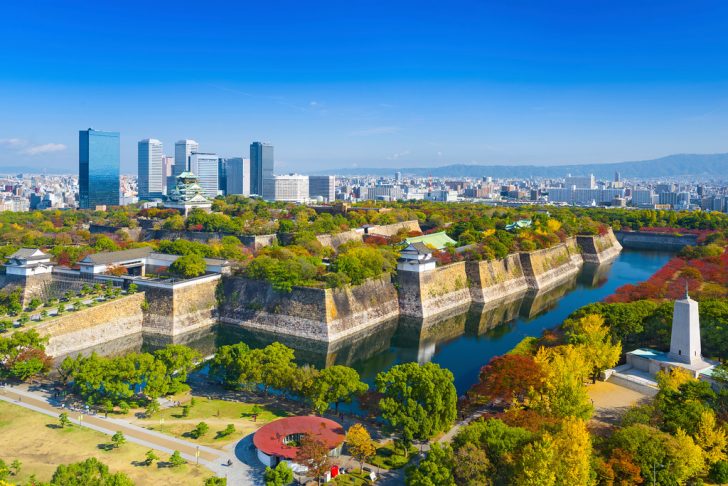
The Osaka Castle, in the Chuo-ku district, is safe even after dark.
This sprawling park is family-friendly and a popular option for joggers.
There is a significant security presence there to ensure the safety of visitors.
Also, Honmachi, the city’s primary business district, is a well-monitored area.
It is a peaceful choice for those who want to get out of the neon-lit chaos that tends to define Osaka.
The Osaka Bay Area, called Tempozan, is a well-managed tourist spot.
It is home to the Osaka Aquarium, Kaiyukan, and Legoland, so there is a heavy police presence to manage the large tourist population.
Tennoji is a redeveloped area that was once considered a rough neighborhood.
Today, it is where travelers will find the Abeno Harukas, the tallest building in Japan.
It is also a modern hub for shopping and dining.
Places to Avoid in Osaka
While much of Osaka is safe, there are a few exceptions within the city limits.
Nishinari Ward, specifically the Kamagasaki district, is considered Japan’s largest slum.
It’s not known for violent crime, but it has a dense population of homeless people.
It can be a bit overwhelming, compared to the otherwise pristine streets of Osaka.
Travelers might also want to avoid Tobita Shinchi, which is the traditional red-light district in Osaka.
For those who do walk around, there is a strict no-camera rule that, if you break, can lead to confrontation.
Dotonbori is a concern after 2:00 AM, especially the back alleys.
The main strip is primarily safe, but the side streets are where the rip-off bars operate.
Aggressive promoters try to lure tourists in and then charge them hidden fees.
Safety Tips for Traveling to Osaka
- Use the Koban System if necessary: There are small police boxes on most major corners. You can use them to talk to the police if you get lost or lose your wallet. There are usually English translation devices to make it easier for Western tourists.
- Take advantage of the Safety Tips app: This app is a product of the Japan Tourism Agency and can provide real-time alerts of potential natural disasters such as earthquakes or typhoons.
- Carry your passport with you: By law, you must have the original copy of your passport with you at all times. If the police ask for an ID, you must be able to produce it. They don’t accept photocopies or digital images.
- Avoid the street touts: These are the promoters on the street in Namba or Shinsaibashi. They try to lead you to a great bar and then charge you hidden fees. Just walk past them. They are aggressive but harmless.
- Use the women-only train cars: If you are a woman traveling in Osaka, use these trains, especially during peak hours. They offer a more comfortable and hassle-free environment.
- Be conscious of the potential for drink spiking: This is true for all travel destinations. Don’t leave your drink unattended.
- Understand the basic disaster phrases in Japanese: Osaka is prone to natural disasters, so you need to be able to recognize the vocabulary in case it happens to protect yourself. For example, jishin means earthquakes, and hinan means evacuation. Many hotels have maps on the back of the room doors showing evacuation routes. Take a minute and review it.
- Watch your belongings: Especially when in areas such as Ame-mura, which is the center of the youth culture in Osaka. It can be crowded and rowdy. Keep your bag, even a backpack, on the front of your body.
- Keep some cash on hand: Osaka is card-friendly, but you will want to have some cash on hand for an emergency. Natural disasters can knock out the electronic payment systems, so you’ll need cash to compensate.
- Drink responsibly: Osaka serves lots of alcohol, but the local police don’t have much patience for tourists who overindulge. They don’t abide by public intoxication that leads to disorder or fighting.
So... How Safe Is Osaka Really?
Osaka is as safe a tourist city as you can find.
The crime statistics offered by the Oskak Prefectural Police indicate that there is a significant decrease in crime there.
You are safer walking through Osaka than you would be in most major US or European cities.
Japanese culture is built on social trust.
There is an expectation of honesty and acceptable behavior.
You’ll see locals holding a table at a coffee shop like Starbucks by simply putting their iPhone on the seat while they go up to order.
The danger to travelers is environmental.
Osaka sits near a major fault line, so the risk of an earthquake is real.
It’s important to be aware of this risk and to know how to respond if something happens.
Stay informed about the weather and enjoy your time in this wonderful city.
How Does Osaka Compare?
| City | Safety Index |
|---|---|
| Osaka |
88 |
| Sendai |
88 |
| Kamakura |
91 |
| Tokyo |
90 |
| Sapporo |
92 |
| Kyoto |
83 |
| Hiroshima |
80 |
 Nebraska Nebraska | 82 |
 Benguela Benguela | 53 |
| Colorado Springs | 76 |
| Boise | 85 |
 Corozal Corozal | 74 |
 Bohicon Bohicon | 69 |
Useful Information

Visas
Most Western travelers can enter Japan for up to 90 days without a visa. Japan does have a mandatory e-Arrival system in place, though. You must register online before you land to receive a QR code to pass through immigration. Registering is generally free.

Currency
Currency is the Japanese Yen (JPY). Many travelers use an IC card. It is a rechargeable prepaid smart card that allows them to tap and go on public transit simply. They are also accessible for small purchases from vending machines or convenience stores. You can use credit cards with larger vendors, but you should always have some yen with you. Some small temples and traditional markets will only accept cash.

Weather
Osaka is typically humid. Spring runs from March to May, and Autumn from October to November. These are the best seasons to visit. Summers are brutally hot and humid, and the winters are dry and cold. The temperature rarely drops below freezing, though. If you travel in June, carry a sturdy umbrella. This is the rainy month.

Airports
The main travel hub is Kansai International Airport (KIX), located on an artificial island in the middle of Osaka Bay. From there, you can take the Nankai Rapi:t train into Osaka or the JR Haruka. They are the fastest and cheapest ways to travel to the city center. Avoid taxis if possible. Traveling that way can be expensive.

Travel Insurance
Tourists will need travel insurance when visiting Japan. The medical costs are exorbitant for foreigners without it. The policy should specifically cover natural disasters and Medical Repatriation. If you need to see a doctor for a minor issue, visit one of the International Clinics in the Umeda area.
Osaka Weather Averages (Temperatures)
Average High/Low Temperature
| Temperature / Month | Jan | Feb | Mar | Apr | May | Jun | Jul | Aug | Sep | Oct | Nov | Dec |
|---|---|---|---|---|---|---|---|---|---|---|---|---|
| High °C |
10 | 10 | 14 | 19 | 24 | 27 | 31 | 33 | 29 | 23 | 17 | 12 |
| Low °C |
3 | 3 | 5 | 10 | 15 | 19 | 23 | 25 | 21 | 15 | 9 | 5 |
| High °F |
50 | 50 | 57 | 66 | 75 | 81 | 88 | 91 | 84 | 73 | 63 | 54 |
| Low °F |
37 | 37 | 41 | 50 | 59 | 66 | 73 | 77 | 70 | 59 | 48 | 41 |
Japan - Safety by City
| City | Safety Index |
|---|---|
| Fukuoka | 90 |
| Hakone | 92 |
| Hiroshima | 80 |
| Kamakura | 91 |
| Kanazawa | 83 |
| Kyoto | 83 |
| Nagasaki | 96 |
| Nara | 88 |
| Nikko | 91 |
| Osaka | 88 |
| Sapporo | 92 |
| Sendai | 88 |
| Tokyo | 90 |
| Yokohama | 87 |












Typhoon
Since the Typhoon came to Tokyo, I suggest not going to Japan whatsoever. There’s a fifty-fifty chance that the typhoon will hit Osaka too. But I don’t guarantee that it will happen. But still, I don’t suggest you to go there, especially when you have children or senior citizens with you.
The Japanese count it as dangerous but since visiting it for 5 days it felt very safe. And it is not common to get your belongings snatched if you lose them.
There’s something about wandering through the streets of Osaka that makes you feel alive, especially when you’re surrounded by all those little cafes and shops brimming with character.
Not sure it lives up to the hype; some places felt more touristy than authentic.
When friends visit I usually just drag them through Dotonbori and a few backstreet izakaya till midnight, so I’m curious what lesser known spots you’d tell someone to check out if they want that same fun, slightly chaotic Osaka feeling without being crushed by tourists.
Osaka totally matched its “Nation’s Kitchen” nickname for me, and wandering around stuffing myself with takoyaki at midnight felt way more relaxed and safe than I expected for such a loud, neon-soaked city.
Wandering Dotonbori at midnight, the neon lights and takoyaki smell had me grinning like an idiot the whole time.
Did you feel safe wandering past the neon Dotonbori takoyaki stalls at midnight, even with all the crowds and that irresistible smell?
Wandering Dotonbori’s neon-lit streets and grabbing takoyaki around 11pm, I felt surprisingly safe and oddly comforted by the bustle.
Wasn’t expecting to wander Dotonbori at 1 a.m. and actually feel safe while clutching hot takoyaki, but that warm, greasy bite stuck with me.
I’ve wandered around Osaka’s busy streets myself, and while the food smells amazing, I can’t say I always felt completely at ease with the crowd pushing through, which is something to keep in mind.
I wandered around late at night near Dotonbori and felt surprisingly chill despite the crowds and noise, which really made me think this place has a cool kind of friendly energy.