


 British Virgin Islands : Safety by City
British Virgin Islands - safety as a country
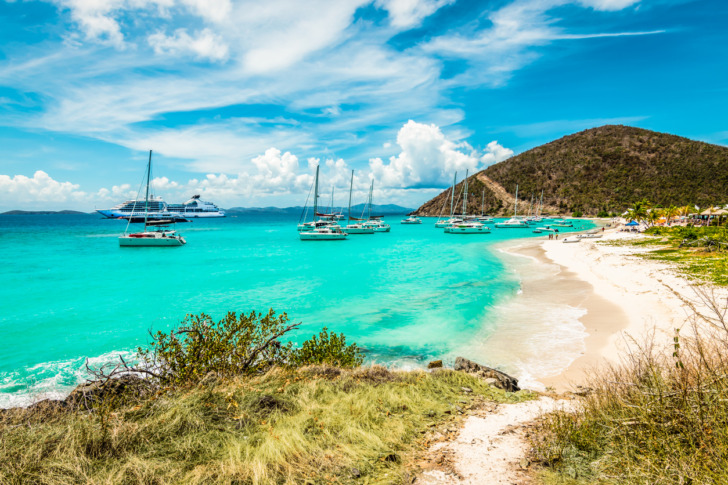
White Bay is the postcard side of Jost Van Dyke, a tiny island in the British Virgin Islands known for brilliant turquoise water, a long strip of pale sand, beach bars, sailboats, and an atmosphere built almost entirely around relaxing.
Most visitors arrive by boat from Tortola, St. John, St. Thomas, or another nearby island, then spend the day swimming, snorkeling, eating, and enjoying the beach.
White Bay is generally very safe, and the British Virgin Islands remain a low-risk Caribbean destination for travelers.
The biggest dangers here are not street crime.
They are swimming around boat traffic, drinking too much in the sun, rough seas, hurricanes, slippery boat transfers, and leaving valuables unattended while everyone goes into the water.
Warnings & Dangers in White Bay

OVERALL RISK: LOW
White Bay is a low-risk destination for most travelers. Serious crime is uncommon, and the beach is usually filled with vacationers, sailors, restaurant customers, and boat crews. Petty theft can occur, however, and visitors should not leave phones, wallets, passports, or expensive cameras unattended on the sand.

TRANSPORT & TAXIS RISK: MEDIUM
Transportation around Jost Van Dyke is generally safe, but roads are steep, narrow, and winding. Taxis are often open-air safari-style vehicles, and boat transfers create their own risks. Hold onto railings when boarding, watch your footing on wet docks, and avoid unnecessary road or boat travel after heavy drinking

PICKPOCKETS RISK: LOW
Traditional pickpocketing is uncommon because White Bay does not have dense urban crowds. Opportunistic theft is more realistic. Bags left unattended while people swim, phones sitting on beach tables, and valuables left in rental vehicles or boats are much easier targets. Keep important belongings within sight.

NATURAL DISASTERS RISK: HIGH
Hurricanes are the most serious environmental threat. The Atlantic hurricane season runs from June through November, and severe storms can affect ferries, electricity, accommodation, beaches, and communications. Tropical systems can also create dangerous surf and storm surge even when the center of a storm remains away from Jost Van Dyke.

MUGGING RISK: LOW
Mugging is uncommon at White Bay. The beach is busy during the day and early evening, and serious attacks involving tourists are unusual. Violent crime does occasionally occur elsewhere in the British Virgin Islands, so avoid isolated beaches and poorly lit roads alone late at night.

TERRORISM RISK: LOW
There is no significant recent history of terrorism in the British Virgin Islands. White Bay is a tiny leisure destination rather than a politically important location. Normal awareness is enough, and terrorism should not be a meaningful concern for ordinary visitors.

SCAMS RISK: LOW
Scams are uncommon. Travelers are more likely to encounter misunderstandings involving boat charters, taxi fares, accommodation, or bar tabs than organized fraud. Confirm prices before accepting private transportation or excursions, and carefully review charter conditions if arriving aboard a rented boat.

WOMEN TRAVELERS RISK: LOW
White Bay is generally comfortable for women traveling alone or with friends. Most of the beach atmosphere is social and tourism-oriented. Normal nightlife precautions still apply. Watch your drink, avoid getting heavily intoxicated around strangers, and arrange transportation rather than walking alone along quiet island roads late at night.

TAP WATER RISK: MEDIUM
Water availability depends on the property because many Caribbean islands rely heavily on stored rainwater, desalination, or delivered water. Visitors should ask their accommodation whether tap water is intended for drinking. Bottled and purified water is widely available and is a sensible choice when uncertain.
Safest Places to Visit in White Bay
Central White Bay
The main stretch of White Bay is the safest and busiest area.
Beach bars, restaurants, accommodation, anchored boats, and regular visitor traffic keep the area active during the day.
The main safety issue is keeping belongings secure while swimming.
Bring only what you need and consider a waterproof pouch for your phone, cash, and room key.
Eastern White Bay
The eastern side tends to feel a little quieter while retaining the same beautiful water and beach environment.
It is a good option for travelers wanting more space, but remember that quieter also means fewer people watching unattended belongings.
Western White Bay
The western portion of the beach is another popular area for swimming, relaxing, and reaching nearby bars and accommodation.
Watch for boats entering and leaving the bay, particularly when swimming farther from shore.
Great Harbour
Great Harbour sits on the opposite side of Jost Van Dyke and serves as one of the island’s main arrival points.
Ferries, customs facilities, restaurants, taxis, and businesses make it the practical transportation center for many visitors.
It is generally safe during normal operating hours.
Diamond Cay and the Bubbly Pool
Travelers staying longer on Jost Van Dyke often explore the northeastern side of the island, including Diamond Cay and the naturally formed Bubbly Pool.
These areas are generally safe when conditions are calm, but waves can become powerful.
Avoid the Bubbly Pool during rough seas, when water crashes aggressively through the rocks.
Places to Avoid in White Bay
White Bay has no dangerous neighborhoods.
The places worth avoiding depend almost entirely on sea conditions, darkness, alcohol, and isolation.
Swimming Lanes Used by Boats
White Bay can become busy with dinghies, charter boats, yachts, and day-trip vessels.
Do not swim directly through active boat routes or assume a captain can see you easily.
Stay reasonably close to shore and remain highly visible.
Isolated Beaches After Dark
Jost Van Dyke is generally safe, but deserted beaches provide little reason for solo nighttime wandering.
Return to accommodation with friends or arrange transportation, especially after drinking.
Rocky Shorelines During Rough Seas
Waves can become much more powerful than they appear from a distance.
Avoid climbing onto wet coastal rocks or entering exposed water during heavy swell.
A wave strong enough to knock someone down can also drag them across sharp rock or coral.
White Bay During Hurricane Warnings
If authorities or your accommodation recommend leaving the island before a tropical cyclone, take that advice seriously.
Do not wait until the last possible ferry simply because the weather still looks pleasant.
Transportation options can disappear quickly once conditions deteriorate.
Steep Roads After Heavy Drinking
Jost Van Dyke’s roads are steep enough when completely sober.
Walking along dark, winding roads after several rum cocktails introduces unnecessary risks from vehicles, falls, and poor visibility.
Use a taxi.
Safety Tips for Traveling to White Bay
- Keep valuables with you when swimming. The easiest way to create a theft opportunity is for everyone in your group to enter the water while phones, wallets, and cameras remain on the beach. Bring fewer valuables, use a waterproof pouch, or rotate who watches the bags.
- Stay alert for boats. White Bay is both a beach and a popular anchorage. Boats, dinghies, swimmers, and paddleboards often share relatively limited space. Look frequently toward the water while swimming and avoid crossing directly behind moving vessels.
- Do not underestimate the rum. White Bay has a strong beach-bar culture, and Caribbean cocktails can contain more alcohol than visitors expect. Combine that with heat, dehydration, swimming, and boats, and accidents become much more likely. Eat properly, drink water, and slow down.
- Wear serious sun protection. Caribbean sunshine reflecting from pale sand and clear water can produce severe sunburn quickly. Use sunscreen, sunglasses, a hat, and shade during the middle of the day. Reapply sunscreen after swimming.
- Monitor hurricane forecasts. If visiting between June and November, check tropical weather regularly. Even distant systems can produce rough seas or ferry disruptions. Keep essential medication, travel documents, chargers, and some cash ready if plans need to change quickly.
- Use a taxi on steep island roads. Jost Van Dyke is mountainous. Distances that look short on a map can involve significant climbs. Use local taxis when traveling between White Bay, Great Harbour, and more distant parts of the island, particularly after dark.
- Wear footwear when exploring beyond the sand. The beach itself is easy barefoot territory, but roads, docks, rocks, trails, and boat decks can become hot, slippery, or sharp. Keep sandals or water shoes nearby.
- Take boat transfers seriously. Getting into a dinghy after several drinks while waves move both vessels is an easy way to fall. Step carefully, keep your hands free, listen to the crew, and let them help you board when conditions are rough.
- Know your last ferry or boat connection. Jost Van Dyke does not offer unlimited late-night transportation. If visiting as a day trip, know when your return transportation leaves and where it departs. Missing the last connection can turn an afternoon beach visit into an expensive accommodation problem.
- Carry emergency contact information. Cellular service is generally available, but boat trips and remote areas can complicate emergencies. Save local emergency numbers and your accommodation or charter contact. In a serious emergency in the BVI, police, fire, and ambulance can be reached at 911, while dedicated sea rescue services are also available.
So... How Safe Is White Bay Really?
White Bay is genuinely one of the safer Caribbean beach destinations for ordinary visitors.
The British Virgin Islands currently carry the lowest U.S. travel-advisory category, with travelers advised to exercise normal precautions.
Crime levels are generally low, although theft, burglary, car break-ins, robbery, and occasional serious violent incidents still occur.
White Bay itself is even less about urban crime and more about managing a beach-and-boating environment.
During the day, the beach is active with swimmers, sailors, day-trippers, restaurant customers, and boat crews.
That activity provides a degree of natural security, but it also means valuables are frequently left unattended while people swim.
Alcohol deserves special attention.
White Bay’s relaxed bar culture is part of its attraction, but drinking becomes more dangerous when combined with boats, swimming, tropical heat, slippery docks, and steep island roads.
Weather creates the highest-consequence risk.
Jost Van Dyke is exposed to Atlantic hurricanes, and severe storms can interrupt ferries and damage infrastructure.
Visitors traveling during hurricane season should maintain flexible plans.
Overall, I rate White Bay as low risk.
Secure your valuables, stay clear of boat traffic, drink responsibly, respect rough water, and take hurricane warnings seriously.
For most travelers, White Bay is exactly what it appears to be: an exceptionally relaxed Caribbean beach where sensible precautions go a long way.
How Does White Bay Compare?
| City | Safety Index |
|---|---|
| White Bay |
92 |
| Cane Garden Bay |
90 |
| Road Town |
84 |
| North Sound |
93 |
 Maryland Heights Maryland Heights | 79 |
| Keene | 76 |
| Kannapolis | 82 |
 Leuven Leuven | 87 |
| Fort Davis | 80 |
| Lewisboro | 88 |
Useful Information

Visas
Entry requirements for the British Virgin Islands depend on nationality. Many visitors can enter for short tourism stays without obtaining a visa in advance, while travelers from visa-required countries need authorization before arrival. Visitors arriving through the U.S. Virgin Islands must also satisfy applicable U.S. entry requirements.

Currency
White Bay uses the U.S. dollar. Cards are accepted at many established restaurants, hotels, and bars, but cash remains useful for taxis, tips, smaller purchases, and situations where payment systems are temporarily unavailable. Bring smaller denominations rather than relying entirely on large bills.

Weather
White Bay is warm throughout the year, generally with daytime temperatures in the upper 20s to low 30s Celsius. The drier months are especially popular with sailors. Hurricane season runs from June through November, while tropical rain showers can occur throughout the year.

Airports
Jost Van Dyke does not have a major commercial airport. Most international travelers fly into Terrance B. Lettsome International Airport on Beef Island near Tortola or arrive in St. Thomas in the U.S. Virgin Islands, then continue by ferry or private boat. Boat schedules should be confirmed carefully when coordinating with flights.

Travel Insurance
Travel insurance is strongly recommended, particularly for trips involving sailing, snorkeling, boating, or travel during hurricane season. Coverage should include medical care, evacuation, storm-related cancellation, missed ferry connections, lost belongings, and water activities. Travelers on charter boats should also confirm exactly what the charter company's insurance covers.
White Bay Weather Averages (Temperatures)
Average High/Low Temperature
| Temperature / Month | Jan | Feb | Mar | Apr | May | Jun | Jul | Aug | Sep | Oct | Nov | Dec |
|---|---|---|---|---|---|---|---|---|---|---|---|---|
| High °C |
28 | 28 | 29 | 29 | 31 | 32 | 32 | 32 | 32 | 32 | 31 | 29 |
| Low °C |
23 | 23 | 23 | 24 | 26 | 26 | 26 | 27 | 26 | 26 | 24 | 24 |
| High °F |
82 | 82 | 84 | 84 | 88 | 90 | 90 | 90 | 90 | 90 | 88 | 84 |
| Low °F |
73 | 73 | 73 | 75 | 79 | 79 | 79 | 81 | 79 | 79 | 75 | 75 |
British Virgin Islands - Safety by City
| City | Safety Index |
|---|---|
| Cane Garden Bay | 90 |
| North Sound | 93 |
| Road Town | 84 |
| White Bay | 92 |












Getting caught in the sun longer than I planned made me realize just how easy it is to lose track of time here, but that water was totally worth every burnt minute.