


 Brazil : Safety by City
- Belem
- Belo Horizonte
- Brasilia
- Campinas
- Campo Grande
- Curitiba
- Florianopolis
- Fortaleza
- Foz do Iguacu
- Gramado
- Jericoacoara
- Manaus
- Natal
- Ouro Preto
- Porto Alegre
- Recife
- Rio de Janeiro
- Sao Paulo
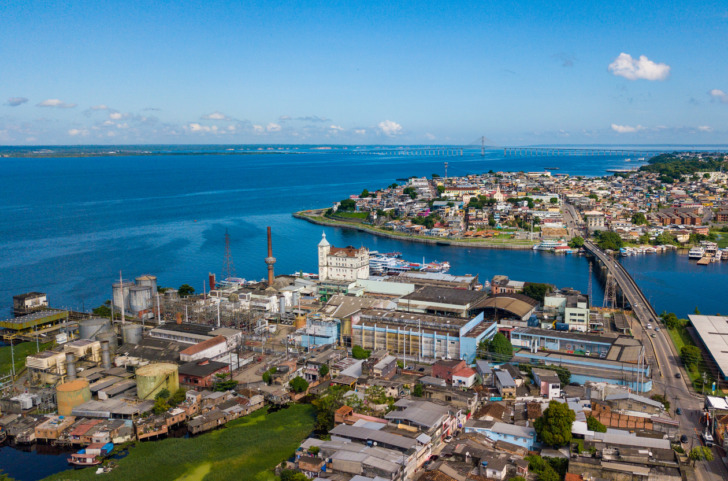
Manaus is one of those places that feels almost unreal on a map: a major city of more than two million people sitting deep in the Brazilian Amazon, surrounded by rainforest, rivers, humidity, wildlife, and jungle mythology.
It is the capital of Amazonas state and the main gateway for Amazon river cruises, rainforest lodges, jungle tours, and the famous Meeting of the Waters, where the dark Rio Negro and sandy-colored Solimões River run side by side before forming the Amazon River.
Manaus is fascinating, chaotic, sweaty, historic, and very different from Brazil’s beach cities.
It can absolutely be worth visiting, but it is not a place where I would recommend wandering around carelessly.
The city rewards travelers who plan well, use reputable guides, and treat urban safety seriously.
Warnings & Dangers in Manaus

OVERALL RISK: MEDIUM
Manaus is not the most dangerous place in Brazil for tourists, but it is not a low-risk destination either. The main concerns are petty theft, phone snatching, robberies, poorly chosen transport, and safety issues linked to river or jungle excursions. Most travelers who stay in tourist areas, book reputable tours, and avoid isolated streets do fine.

TRANSPORT & TAXIS RISK: MEDIUM
Transport in Manaus requires some caution. Ride-hailing apps and hotel-arranged taxis are generally better than hailing random taxis on the street. Public buses are cheap but not ideal for visitors unfamiliar with the city, especially at night. Riverboats and speedboats should be chosen carefully, with attention to safety equipment, crowding, and operator reputation.

PICKPOCKETS RISK: MEDIUM
Pickpocketing and phone theft are realistic risks in Manaus, especially around busy markets, bus terminals, waterfront areas, street crowds, and festivals. The city is hot, noisy, and distracting, which makes it easy to let your guard down. Keep phones off tables, avoid flashy jewelry, and carry bags in front of you in crowded areas.

NATURAL DISASTERS RISK: MEDIUM
Manaus faces seasonal flooding, heavy tropical rain, intense heat, and river-related hazards. Flooding can affect streets, riverside neighborhoods, and travel routes during the high-water season. Jungle trips bring added risks like insects, dehydration, river currents, storms, and poor communications. Nature is part of the appeal here, but it deserves respect.

MUGGING RISK: MEDIUM
Muggings do happen in Manaus, particularly at night, in isolated streets, around poorly lit areas, and in neighborhoods far from the standard tourist circuit. Armed robbery is a concern in Brazil’s larger cities, and Manaus is no exception. The best defense is simple: do not walk alone late, do not display valuables, and use trusted transport.

TERRORISM RISK: LOW
Terrorism is not a major concern for travelers in Manaus. The risks that matter here are ordinary urban crime, organized crime activity in certain areas, river safety, and health precautions. Large events and crowded public places still require normal awareness, but terrorism should not be the main thing on your safety checklist.

SCAMS RISK: MEDIUM
Scams in Manaus are usually practical rather than elaborate: overpriced tours, unofficial guides, inflated taxi fares, fake “special” excursions, weak jungle lodge promises, and pressure around markets or docks. Be especially careful when booking Amazon tours. A bargain jungle trip can become miserable quickly if the operator is disorganized, unsafe, or unlicensed.

WOMEN TRAVELERS RISK: MEDIUM
Women can travel safely in Manaus, but solo female travelers should be selective about accommodation, nightlife, transport, and tour operators. Catcalling and unwanted attention can happen, particularly in nightlife areas or on the street. Avoid walking alone after dark, use ride-hailing apps, and choose small-group or reputable guided activities for river and jungle travel.

TAP WATER RISK: MEDIUM
I would not rely on tap water in Manaus as a visitor. Stick with bottled, filtered, or properly purified water, especially because heat and humidity make dehydration a real issue. Use bottled water for drinking and brushing teeth if your stomach is sensitive. Be cautious with ice in informal places and street drinks.
Safest Places to Visit in Manaus
Teatro Amazonas and the Historic Center
The Teatro Amazonas is one of the safest and most worthwhile landmarks in Manaus, especially during the day.
This pink-and-white opera house is the city’s great symbol of rubber-boom wealth, and the surrounding Largo de São Sebastião is one of the more tourist-friendly parts of the historic center.
I still recommend watching your phone and bag, but this is a good area to explore with normal city awareness.
Go during daylight, join a guided visit if available, and avoid drifting too far into quiet side streets without knowing where you are headed.
The historic center is beautiful in pockets, but it changes quickly from polished landmark to hectic urban street.
Ponta Negra
Ponta Negra is one of the better areas for visitors who want a more relaxed Manaus experience.
It has a riverside promenade, restaurants, hotels, and views over the Rio Negro.
It is generally more comfortable than the downtown waterfront, particularly in the evening, although you should still avoid isolated stretches and keep valuables discreet.
This is a good area for sunset walks, dinner, and staying in a hotel with easier access to safer transport.
MUSA and INPA
For a nature experience within the city, MUSA, the Amazon Museum, and the INPA area are excellent choices.
These are controlled, organized environments where visitors can learn about Amazon plants, animals, and ecosystems without launching straight into deep jungle logistics.
They are ideal for travelers who want a safer, structured first taste of Amazon nature.
Go during opening hours, use trusted transport, and bring water, mosquito repellent, and light clothing.
Guided Amazon Tours and the Meeting of the Waters
The Meeting of the Waters is one of the classic Manaus experiences, and it is safest when booked through a reputable operator.
The same goes for jungle lodges, river tours, wildlife watching, and indigenous community visits.
Safety depends heavily on the company you choose.
Good guides make Manaus much easier, safer, and more rewarding.
Places to Avoid in Manaus
Isolated Waterfront and Port Areas at Night
The waterfront and port areas can be interesting during the day, especially around markets and river traffic, but they are not places I would wander around casually after dark.
These areas can attract opportunistic theft, drug activity, and people targeting distracted visitors with luggage or cameras.
If you are taking a boat, arrange transport directly to the dock, arrive with time to spare, and avoid hanging around with visible valuables.
River ports are functional transit spaces, not relaxed tourist promenades.
Poorly Lit Streets Around the Historic Center
The historic center has some must-see sights, but it is uneven from a safety perspective.
One block can feel busy and normal, while another can feel deserted or rough.
After business hours, many streets become quieter, and that is when the risk rises.
Visit the Teatro Amazonas area, markets, and central landmarks by day.
At night, use a ride-hailing app or trusted taxi, even for distances that look walkable on a map.
Informal Settlements and Outer Neighborhoods
Tourists should avoid informal settlements and outer neighborhoods unless visiting with a trusted local reason and proper guidance.
These are not sightseeing areas, and the risks can include robbery, gang activity, poor police response, and simply being very obviously out of place.
Manaus is a large city with serious inequality, and some areas are far removed from the tourist infrastructure.
Curiosity is not a good enough reason to explore unknown residential districts.
Unregulated Jungle or River Trips
This is one of the biggest safety mistakes travelers make in Manaus.
Avoid random offers from people at docks, cheap jungle tours with vague details, or boats that appear overcrowded or poorly maintained.
The Amazon is not a theme park.
River conditions, storms, mechanical issues, and distance from medical care all matter.
If a tour operator cannot clearly explain the itinerary, safety equipment, accommodations, food, transport, and emergency procedures, choose someone else.
Safety Tips for Traveling to Manaus
- Book Amazon tours before you arrive or through trusted local channels. Manaus is famous as a gateway to the Amazon, but the quality of tours varies widely. A good operator can make the trip unforgettable; a bad one can make it unsafe, uncomfortable, and disappointing. Look for clear itineraries, proper boats, life jackets, experienced guides, real reviews, and transparent pricing. Be cautious of people offering last-minute “special deals” near hotels, docks, or markets.
- Use ride-hailing apps or hotel taxis, especially at night. Manaus is not a city where I would casually walk long distances after dark. Even if the distance looks short, streets can be poorly lit, uneven, quiet, or confusing. Ride-hailing apps are usually the easiest option for visitors because the route and price are tracked. If internet service is weak, ask your hotel or restaurant to call a trusted taxi.
- Do not flash your phone in public. Phone snatching is one of the most common problems for travelers in many Brazilian cities. In Manaus, it is easy to get distracted while checking maps, taking photos, or filming street scenes. Step inside a shop, restaurant, hotel lobby, or other controlled space before using your phone for directions. Keep it out of sight when walking near roads, markets, and crowds.
- Stay in a practical area, not just the cheapest one. Choosing the right hotel location matters in Manaus. Ponta Negra is more relaxed and often easier for visitors, while the historic center can be convenient but more uneven, especially at night. A cheap room in an awkward location can cost more in taxis, stress, and safety concerns. Prioritize secure entrances, good reviews, air conditioning, and easy transport access.
- Carry only what you need for the day. Leave your passport, backup cards, and excess cash in a secure hotel safe when possible. Carry a copy of your passport, one payment card, and limited cash. This way, if you are pickpocketed or robbed, the damage is contained. In Manaus, I would rather look slightly underprepared than walk around with everything important in one bag.
- Take river safety seriously. The rivers around Manaus are massive, powerful, and unpredictable. Only board boats that appear properly maintained and equipped with life jackets. Avoid overcrowded boats and questionable night crossings. If you are going to the Meeting of the Waters, a river community, or a jungle lodge, ask how long the journey is and what happens if weather changes.
- Prepare for heat like it is a safety issue, because it is. Manaus is hot, humid, and draining. Dehydration can sneak up on you fast, especially if you are walking around markets or taking outdoor tours. Carry water, wear light clothing, use sunscreen, and take breaks in shade or air conditioning. The Amazon climate does not care how ambitious your itinerary is.
- Use mosquito protection every day. Mosquito-borne illnesses are part of the risk profile in the Amazon region. Use repellent, wear lightweight long sleeves when practical, and sleep somewhere with screens, air conditioning, or mosquito protection. This is especially important if you are going into forest areas, staying near water, or traveling during wetter periods.
- Avoid nightlife mistakes. If you go out in Manaus, be extra cautious with drinks, new acquaintances, and late-night transport. Do not leave drinks unattended, do not accept drinks from strangers, and do not bring people you just met back to your accommodation. Dating-app and bar-related thefts are a known issue in parts of Brazil, and the basic rule is simple: keep your judgment sharp.
- Learn a little Portuguese. English is not as widely spoken in Manaus as in some major international tourist hubs. A few Portuguese phrases can make taxis, markets, restaurants, and emergencies much easier. Save hotel addresses offline, keep screenshots of bookings, and download offline maps. In a city this large and this far from the usual tourist trail, communication is part of safety.
So... How Safe Is Manaus Really?
Manaus is safe enough to visit, but only if you approach it with realistic expectations.
It is not a polished, easy, low-risk destination like a small European city or a resort town.
It is a large Amazonian metropolis with visible poverty, urban crime, intense weather, complicated river logistics, and neighborhoods that tourists should not explore casually.
At the same time, it is also the main base for one of the most extraordinary travel experiences in South America.
The biggest mistake is thinking Manaus is either “too dangerous to visit” or “totally fine, don’t worry about it.”
The truth sits in the middle.
Most tourist visits are concentrated around hotels, the historic center, Ponta Negra, organized river trips, and jungle lodges.
In those settings, with reputable transport and guides, the risk becomes much more manageable.
Tourists are more likely to deal with theft, scams, bad transport choices, heat exhaustion, stomach issues, mosquito exposure, or an unsafe tour operator than with anything dramatic.
Violent crime exists, but travelers can reduce exposure by avoiding nightlife wandering, informal neighborhoods, isolated streets, and careless displays of wealth.
My take: Manaus is a medium-risk destination with high reward.
It is best for travelers who are curious, prepared, and willing to trade convenience for adventure.
If you plan well, it can be unforgettable for all the right reasons.
How Does Manaus Compare?
| City | Safety Index |
|---|---|
| Manaus |
60 |
| Foz do Iguacu |
69 |
| Fortaleza |
40 |
| Florianopolis |
72 |
| Sao Paulo |
50 |
| Campo Grande |
67 |
| Recife |
45 |
 Hennessey Hennessey | 87 |
 Tel Aviv Tel Aviv | 60 |
| Caldwell | 78 |
| Hammonton | 75 |
| Trenton | 46 |
| Parkersburg | 78 |
Useful Information

Visas
Brazil’s visa rules depend on nationality, so travelers should check current requirements before booking. Many visitors from South American and European countries can enter visa-free for tourism, while some nationalities may need an eVisa or consular visa. Entry periods often allow stays of up to 90 days, but extensions and rules vary.

Currency
Manaus uses the Brazilian real. Credit and debit cards are widely accepted in hotels, restaurants, supermarkets, and ride-hailing apps, but cash is still useful for markets, small shops, tips, and river travel. Use ATMs inside banks, malls, or secure locations. Avoid exchanging money with unofficial street changers.

Weather
Manaus is hot, humid, and tropical year-round. Pack light breathable clothing, comfortable walking shoes, sunscreen, mosquito repellent, and a rain jacket or compact umbrella. The rainy season can bring heavy downpours and flooding, while the drier months are still humid. Quick-dry clothing is much more useful than fashionable travel outfits here.

Airports
Manaus is served by Eduardo Gomes International Airport, the main airport for Amazonas state. It is located outside the central city area, and the easiest way to reach your hotel is by ride-hailing app, pre-arranged transfer, or official taxi. If arriving late at night, arrange transport in advance and avoid negotiating with random drivers.

Travel Insurance
Travel insurance is strongly recommended for Manaus, especially if you plan to take riverboats, jungle tours, wildlife excursions, or multi-day lodge trips. Look for coverage that includes medical care, emergency evacuation, theft, lost luggage, cancellations, and adventure activities. In the Amazon, distance from major medical facilities can turn small problems into expensive ones.
Manaus Weather Averages (Temperatures)
Average High/Low Temperature
| Temperature / Month | Jan | Feb | Mar | Apr | May | Jun | Jul | Aug | Sep | Oct | Nov | Dec |
|---|---|---|---|---|---|---|---|---|---|---|---|---|
| High °C |
30 | 29 | 30 | 29 | 30 | 31 | 32 | 34 | 35 | 34 | 33 | 31 |
| Low °C |
23 | 23 | 23 | 23 | 23 | 23 | 23 | 24 | 25 | 25 | 24 | 24 |
| High °F |
86 | 84 | 86 | 84 | 86 | 88 | 90 | 93 | 95 | 93 | 91 | 88 |
| Low °F |
73 | 73 | 73 | 73 | 73 | 73 | 73 | 75 | 77 | 77 | 75 | 75 |
Brazil - Safety by City
| City | Safety Index |
|---|---|
| Belem | 59 |
| Belo Horizonte | 45 |
| Brasilia | 65 |
| Campinas | 57 |
| Campo Grande | 67 |
| Curitiba | 51 |
| Florianopolis | 72 |
| Fortaleza | 40 |
| Foz do Iguacu | 69 |
| Gramado | 85 |
| Jericoacoara | 65 |
| Manaus | 60 |
| Natal | 52 |
| Ouro Preto | 69 |
| Porto Alegre | 21 |
| Recife | 45 |
| Rio de Janeiro | 45 |
| Sao Paulo | 50 |










I remember feeling totally overwhelmed by the heat and humidity the first time I walked through Manaus, but then watching the Meeting of the Waters made it all stick in my mind like nothing else ever did.
I lived in Manaus for 5 years and had repeated problems with my idiot North American and European colleagues who wouldn’t follow the simple advice as outlined in this page. This is one of the best tourist guides I’ve seen. Common sense. The only thing I would add is modesty. On the surface it appears that people wear little clothing, but they do cover the “private bits”. Women – do NOT swim topless. This is very rude. Cover shoulders in religious buildings, and don’t wear shorts that show your bum because the local guys will assume you’re available.
The heat hit me harder than I expected, but watching those two rivers flow side by side was something I’ll never forget.