


 Brazil : Safety by City
- Belem
- Belo Horizonte
- Brasilia
- Campinas
- Campo Grande
- Curitiba
- Florianopolis
- Fortaleza
- Foz do Iguacu
- Gramado
- Jericoacoara
- Manaus
- Natal
- Ouro Preto
- Porto Alegre
- Recife
- Rio de Janeiro
- Sao Paulo
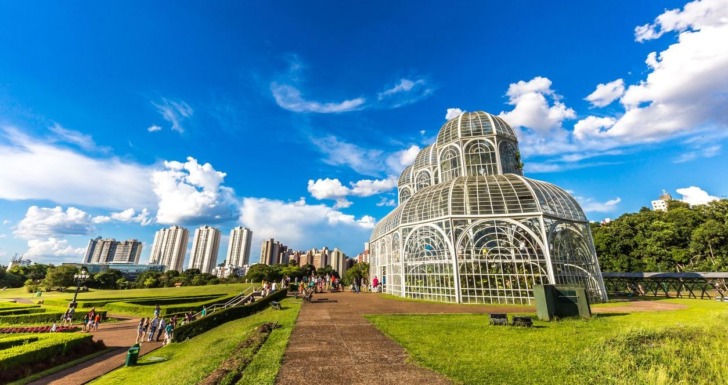
Curitiba sits in southern Brazil, in the state of Paraná, and often surprises first time visitors who expect a tropical city and instead find a greener, cooler, more orderly urban landscape.
Built on a plateau, Curitiba is known for its parks, modern planning, strong bus system, and neighborhoods that feel more relaxed than many larger Brazilian capitals.
It has a reputation for being one of Brazil’s more livable big cities, which helps explain why so many travelers use it as a base for exploring southern Brazil.
Still, this is not a place to visit on autopilot.
Like most major cities in the country, Curitiba rewards travelers who stay alert, pick the right areas, and avoid wandering carelessly at night.
For most tourists, it feels manageable, comfortable, and far less overwhelming than Brazil’s more chaotic urban hotspots.
Warnings & Dangers in Curitiba

OVERALL RISK: MEDIUM
Curitiba is generally considered safer than many major Brazilian cities, which is good news for travelers. Even so, it is still a large urban center where theft, phone snatching, and occasional muggings happen. Most visitors who stay in good neighborhoods and use basic common sense have a smooth trip, but this is not a city where you should ignore your surroundings.

TRANSPORT & TAXIS RISK: LOW
Curitiba’s public transportation system is one of the city’s strongest points and is better organized than what many travelers expect in Brazil. Buses are widely used and taxis and rideshare apps are easy to find. The biggest risks are using transport late at night in isolated areas or accepting rides from unofficial drivers. Stick to licensed taxis or app based rides and you should be fine.

PICKPOCKETS RISK: MEDIUM
Pickpocketing is not the first thing people associate with Curitiba, but it absolutely exists in busy transit areas, downtown streets, markets, and crowded buses. Tourists who flash phones, carry open bags, or keep wallets in back pockets are the easiest targets. The risk is not extreme, but it is high enough that you should treat crowded places with care.

NATURAL DISASTERS RISK: LOW
Curitiba does not face the kind of dramatic natural disaster profile seen in earthquake or hurricane zones. The more realistic concerns are heavy rain, localized flooding, slick streets, and occasional weather swings that catch travelers off guard. The city’s altitude gives it cooler temperatures and fast changes in conditions, so the weather can be annoying, but it is rarely a major travel threat.

MUGGING RISK: MEDIUM
Muggings do happen in Curitiba, especially in poorly lit streets, quiet areas after dark, and places where people are distracted by phones or jewelry. The risk is lower than in some Brazilian cities, but it is not low enough to ignore. Walking alone late at night in unfamiliar districts is where travelers make the biggest mistakes.

TERRORISM RISK: LOW
There is no significant terrorism threat that makes Curitiba stand out as a dangerous destination in this category. Travelers are far more likely to face petty crime than any politically motivated attack. As with travel anywhere, staying aware of demonstrations or large public gatherings is smart, but terrorism is not a defining concern for most visitors here.

SCAMS RISK: MEDIUM
Curitiba is not famous for elaborate tourist scams, but that does not mean they do not exist. Overpriced taxi rides, distraction theft, card issues, and street approaches that seem friendly but are designed to separate you from your cash can happen. The best defense is simple: use official transport, pay attention during card transactions, and do not let strangers pull you into a rushed situation.

WOMEN TRAVELERS RISK: MEDIUM
Many women travel through Curitiba without major problems, especially in well known neighborhoods and during the day. Compared with some other big cities, it can feel calmer and more manageable. Still, solo women should avoid deserted streets at night, stay cautious in nightlife areas, and use rideshare or licensed taxis after dark instead of walking long distances alone.

TAP WATER RISK: MEDIUM
Curitiba’s water system is better than travelers often expect, and many locals do drink tap water. Still, visitors can react differently to water treatment, building plumbing, or ice and beverages in smaller establishments. For a short trip, filtered or bottled water is the safer play, especially if you have a sensitive stomach and want to avoid losing a day of your trip.
Safest Places to Visit in Curitiba
Batel and Bigorrilho
Batel is one of Curitiba’s best areas for travelers who want comfort, restaurants, shopping, and a more polished city feel.
It is one of the neighborhoods where many visitors feel safest, especially during the day and early evening.
Nearby Bigorrilho has a similarly residential and upscale atmosphere, with good services and less of the rough urban edge that can make travelers nervous elsewhere.
Centro Cívico
Centro Cívico is a smart stop for visitors interested in museums, government buildings, and broad avenues that feel more open and organized.
It is home to major landmarks and tends to attract business travelers and sightseers rather than chaotic nightlife crowds.
During the day, it is one of the easier parts of the city to explore with confidence.
Santa Felicidade
Santa Felicidade is one of Curitiba’s most pleasant districts for tourists.
Famous for its Italian heritage and food scene, it feels more laid back than central city areas and is popular with families and visitors looking for a relaxed afternoon.
It is a good place to enjoy local culture without feeling trapped in an intense downtown environment.
Parks and Landmark Areas
Curitiba’s green spaces are part of what makes the city appealing.
Parque Barigui, Jardim Botânico, and the Oscar Niemeyer Museum area are among the most visitor friendly places to spend time.
These spots are generally safest during daylight hours, when they are active and well used.
They let you enjoy Curitiba’s calmer side, which is exactly why many travelers leave with a positive impression of the city.
Places to Avoid in Curitiba
Parts of Centro Late at Night
Curitiba’s central area is useful by day, especially for transport, commerce, and historic interest, but it can feel very different after dark.
Empty streets, opportunistic theft, and a rougher street scene make some parts of downtown less comfortable at night.
Travelers should be especially cautious around poorly lit blocks, bus corridors after hours, and streets that suddenly empty out.
Isolated Areas Around Major Transit Zones
Transport hubs are practical, but the streets around them can attract pickpockets, loiterers, and people looking for distracted targets.
The issue is often not the station itself, but what happens just outside it when you are carrying luggage, checking directions, or pulling out your phone.
Move with purpose and avoid lingering in these areas unnecessarily.
Southern and Peripheral Districts Unknown to Tourists
Curitiba has outer neighborhoods that ordinary tourists have no real reason to visit, and wandering into unfamiliar peripheral districts can increase your exposure to street crime.
This does not mean every outlying area is dangerous all the time, but they are not the best places for casual sightseeing.
If a local tells you an area is not ideal for visitors, take that seriously.
Quiet Streets Near Nightlife When Leaving Late
The nightlife itself is not the issue as much as the transition out of it.
Late night walks after bars close can put travelers in vulnerable situations, especially if they are tired, intoxicated, or using phones openly.
The safest move is to leave by rideshare or licensed taxi rather than walking through half empty streets looking for the next stop.
Safety Tips for Traveling to Curitiba
- Stay in the right neighborhood. Choose well regarded areas such as Batel, Bigorrilho, Centro Cívico, or Santa Felicidade if you want a smoother trip. A good location reduces the chance of dealing with unsafe streets, long late night commutes, or sketchy surroundings.
- Do not flash your phone in public. Phone snatching is one of the most common urban travel problems in Brazil. If you need directions, step inside a shop, hotel lobby, or café instead of standing on the sidewalk with your device in full view.
- Use rideshare or official taxis after dark. Curitiba is more manageable than some Brazilian cities, but nighttime still changes the equation. A cheap ride is often worth it to avoid wandering unfamiliar streets when foot traffic drops.
- Be extra alert in downtown and transport areas. Bus terminals, busy sidewalks, and shopping streets are where distracted travelers stand out. Keep your bag zipped, your valuables out of sight, and your attention on what is happening around you.
- Carry only what you need for the day. Leave your passport, spare cards, and extra cash in your hotel safe or locked luggage when possible. The less you carry, the less you can lose if something goes wrong.
- Dress simply and avoid obvious signs of wealth. You do not need to look sloppy, but expensive watches, flashy jewelry, and designer gear can make you a more appealing target. Blending in a bit goes a long way in any large city.
- Check routes before you leave. Know how you are getting back before dinner, nightlife, or a long day out. Tourists become most vulnerable when they are tired, lost, and deciding what to do on the street.
- Use card payments carefully. Brazil is card friendly, but watch your transaction, avoid handing your card over for too long, and keep an eye on the amount being charged. Digital payment convenience should not turn into carelessness.
- Stick to busy, well lit places. Curitiba has lovely streets and public spaces, but not every block feels the same. If an area looks deserted or uncomfortable, trust your instincts and leave instead of trying to prove you are a fearless traveler.
- Drink filtered or bottled water if you are sensitive. Even where tap water is treated, visitors sometimes react badly to unfamiliar water or older building pipes. It is a simple precaution that can save you from an annoying stomach issue during your trip.
So... How Safe Is Curitiba Really?
Curitiba is one of those cities that earns a better safety reputation than many outsiders expect, and in broad terms, that reputation is fair.
Among Brazil’s large cities, it is often seen as more organized, less chaotic, and easier for visitors to handle.
That does not make it risk free.
Petty theft remains the most realistic concern for tourists, and street crime can become more serious if you walk into the wrong area at the wrong time.
What makes Curitiba feel safer is the combination of better urban structure, strong public transport, good residential neighborhoods, and a visitor experience that is less intense than places like Rio de Janeiro or São Paulo.
Travelers who stay in established districts, avoid late night wandering, and keep valuables hidden usually have a comfortable experience.
The main mistake visitors make is assuming that a safer Brazilian city means a carefree city.
It does not.
You still need urban awareness, especially in Centro after dark, near major transit areas, and in unfamiliar outer neighborhoods.
Overall, Curitiba is a destination I would call reasonably safe for prepared travelers.
It is not a place to fear, but it is definitely a place to respect.
How Does Curitiba Compare?
| City | Safety Index |
|---|---|
| Curitiba |
51 |
| Manaus |
60 |
| Brasilia |
65 |
| Natal |
52 |
| Belem |
59 |
| Porto Alegre |
21 |
| Foz do Iguacu |
69 |
 Athens Athens | 68 |
 Flagstaff Flagstaff | 92 |
 Aalborg Aalborg | 95 |
| Port Aransas | 83 |
| Fenwick Island | 79 |
 Sharm el Sheikh Sharm el Sheikh | 70 |
Useful Information

Visas
Visa rules depend on your nationality. Many tourists can enter Brazil for short stays, but some travelers, including U.S. citizens, now need to arrange a visitor visa or e visa before arrival. Passport validity and entry rules should be checked well before departure. Tourist stays are commonly granted for up to 90 days, with possible extension depending on the case.

Currency
The local currency is the Brazilian real. Credit and debit cards are widely accepted in Curitiba, especially in hotels, malls, and restaurants, so you do not need to carry large amounts of cash. Use bank ATMs in secure locations and exchange money through reliable offices or banks rather than informal street offers.

Weather
Curitiba has milder weather than many travelers expect in Brazil. Because of its elevation, it can feel cool, damp, and unpredictable, especially from June through August. Pack layers, a light rain jacket, and comfortable shoes. Even in warmer months, evenings can feel fresh compared with other Brazilian cities.

Airports
The main gateway is Afonso Pena International Airport, located in the metropolitan area near Curitiba. It is the airport most travelers use for domestic and international connections. Getting into the city is usually straightforward by official taxi, rideshare, or airport bus, and the trip is generally quick depending on traffic and where you are staying.

Travel Insurance
Travel insurance is a very good idea for Curitiba. Even if the city feels manageable, insurance can help with medical treatment, delayed luggage, canceled flights, and theft related losses. Brazil is a much more relaxed trip when you know you are covered for the expensive surprises that can ruin a vacation.
Curitiba Weather Averages (Temperatures)
Average High/Low Temperature
| Temperature / Month | Jan | Feb | Mar | Apr | May | Jun | Jul | Aug | Sep | Oct | Nov | Dec |
|---|---|---|---|---|---|---|---|---|---|---|---|---|
| High °C |
25 | 25 | 24 | 22 | 19 | 18 | 18 | 19 | 20 | 22 | 23 | 24 |
| Low °C |
17 | 17 | 16 | 14 | 11 | 10 | 9 | 10 | 11 | 13 | 14 | 16 |
| High °F |
77 | 77 | 75 | 72 | 66 | 64 | 64 | 66 | 68 | 72 | 73 | 75 |
| Low °F |
63 | 63 | 61 | 57 | 52 | 50 | 48 | 50 | 52 | 55 | 57 | 61 |
Brazil - Safety by City
| City | Safety Index |
|---|---|
| Belem | 59 |
| Belo Horizonte | 45 |
| Brasilia | 65 |
| Campinas | 57 |
| Campo Grande | 67 |
| Curitiba | 51 |
| Florianopolis | 72 |
| Fortaleza | 40 |
| Foz do Iguacu | 69 |
| Gramado | 85 |
| Jericoacoara | 65 |
| Manaus | 60 |
| Natal | 52 |
| Ouro Preto | 69 |
| Porto Alegre | 21 |
| Recife | 45 |
| Rio de Janeiro | 45 |
| Sao Paulo | 50 |














Dangerous, but visitable
The author’s review is very accurate about the current situation of Curitiba. Being mugged is an issue and it can happens at anytime on the streets. Anyone needs to exercise caution in the whole city because criminals wander around and do not target any specific area, although the Historical District is a focal point of problems of this nature.
My only observation about the author’s article is that the city center is not necessarily safe during daylight. Contrary to most places of the world, locals do not have tradition to help people who are being mugged, tending to hide themselves, run away or even pretending they are not witnessing anything, so sometimes one can face problems in an apparently peaceful place.
Squares located on the city center have to be avoided and they should be bypassed at their extremes by visitors and residents alike. These places register high levels of muggings and drug trafficking.
The Historical District by night has been turned to an unpleasant and dangerous site, with lots of homeless people and drug-addicted ones circulating on. Fights and violent police actions happens quite frequently in the main street so it is not an advised place. The neighboring Trajano Reis Street has seen a rise of a somewhat hipster culture and is also a hotspot of nightlife, but precisely the same situation applies there.
In the recent years, there are a increasing popularity of some open-air ventures comprised of a row of bars and restaurants, such as “Shopping Hauer” and “Hike Itupava”. These places have a good reputation to spare a time and see a nightlife from a local perspective, so it’s safe to stay wherever most people are and relax. One block away from the main site, however, things tend to be much grimmier. When leaving, ask for a taxi or Uber at the very site you are and do not stroll around.
The city parks, at the moment, are a pretty safe place to go and have a walk or a picnic. Outside the Botanical Garden, however, the streets pose danger (as revealed by the quantity of electrical fencing in almost every house or building).
In summary: it is a beautiful city with interesting things and places to go. By night: avoid random walks. By daylight: walk while exercising some level of situation awareness
Dangerous, not that ugly, not worth it
Dangerous, nicer than other brazilians cities but not worth the travel.
safer than most Brazilian cities
I was a bit surprised that Sao Paulo is deemed safer than Curitiba, which is not the case, or at least, not anymore.
Curitiba is way safer than any other big Brazilian city. Yes, you always need to have eyes on your back but it’s made out way worse than it is.
Avoid Largo De Ordem, it used to be nice but now it’s a bunch of crackheads. Tiradentes and Rui Barbosa are also better to be avoided because they have so many drug addicts. They are a lot less aggressive and annoying than in Sao Paulo though.
Plenty of neighbourhoods are very safe; Alto Da XV, Juveve, Hugo Lange, Agua Verde, Cabral, Centro Civico, Merces, Batel, Ecoville, Champagnat, Bigorillo, Seminario… a few are in between like Barrio Alto, Hauer, Taruma, Vila Fany, Portao, Fazendinha…a few are better avoided at all; Cajuru, Parolin, CIC, at night, avoid the historical centre too. Surrounding cities Colombo and Almirante Tamandare are also to be avoided.
I’ve been coming for over 10 years, been walking around a lot at night, and have gotten (unsuccessfully) mugged once in Largo De Ordem.
Also, there is nearly no risk of pickpocketing. Especially if you give SP a medium, then Curitiba should be very, very low.
Concordo com você. Curitiba is much safer than São Paulo.
I didn’t expect the old city to feel so vibrant and welcoming after all those years; it’s like stepping into a living museum, especially with the arts and crafts fair buzzing on Sundays.
I didn’t expect the arts and crafts fair to be such a hidden gem; the local vibes there are just awesome!
Did you check out the arts and crafts fair? I heard it’s such a vibrant place to explore on Sundays!
The city really does feel cooler and greener, the bus system made getting between parks easy and I felt more at ease wandering the neighborhoods.
Never thought I’d say this about a Brazilian city but the breeze in those parks actually made me want to hang out longer, not rush off.