 Australia : Safety by City
- Adelaide
- Alice Springs
- Brisbane
- Broome
- Byron Bay
- Cairns
- Canberra
- Darwin
- Fremantle
- Geelong
- Gold Coast
- Hobart
- Launceston
- Melbourne
- Perth
- Port Douglas
- Sydney
- Townsville
- Wollongong
Geelong sits on the edge of Corio Bay in Victoria, about 75 kilometers southwest of Melbourne, and it is far more than a convenient stop on the way to the Great Ocean Road.
Once known mainly for wool, manufacturing, and its working waterfront, the city now mixes beaches, public gardens, museums, restaurants, street art, sports culture, and an increasingly polished harbor precinct.
Geelong is also the traditional land of the Wadawurrung people and is sometimes referred to by the Wadawurrung name Djilang.
For travelers, it offers the services of a proper city without Melbourne’s size or intensity.
Safety is generally good, especially around the waterfront and established visitor areas.
The main concerns are property crime, late-night disorder, road accidents, cold water, unpredictable coastal weather, and leaving belongings unattended.
Warnings & Dangers in Geelong

OVERALL RISK: LOW
Geelong is generally safe for tourists, families, solo travelers, and couples. Violent crime against visitors is uncommon, and the waterfront, central attractions, and suburban beach areas are comfortable during the day. The main concerns are theft from vehicles, nighttime antisocial behavior, traffic, and ordinary precautions around unfamiliar streets.

TRANSPORT & TAXIS RISK: LOW
Trains, buses, taxis, and app-based rides are generally safe and reliable. The biggest transport risk is road safety, particularly for visitors driving toward the Bellarine Peninsula or Great Ocean Road. Australian traffic travels on the left, speed limits are enforced, and fatigue can become dangerous on longer scenic drives.

PICKPOCKETS RISK: LOW
Pickpocketing is not a major problem in Geelong, but opportunistic theft can occur around shopping centers, events, train stations, nightlife areas, and crowded waterfront festivals. Keep phones and wallets in secure pockets, especially at major football matches or public celebrations. Theft from unattended bags and parked cars is more likely than professional pickpocketing.

NATURAL DISASTERS RISK: MEDIUM
Geelong can experience bushfire smoke, severe heat, storms, flash flooding, strong winds, and dangerous coastal conditions. Bushfire danger is more relevant when traveling into rural areas, the Otways, or parts of the Bellarine region. Summer visitors should monitor fire warnings, while winter travelers should prepare for cold rain and slippery roads.

MUGGING RISK: LOW
Muggings are uncommon, particularly in busy areas during daylight and early evening. The risk increases slightly around empty streets, parks, transport hubs, and nightlife zones late at night. Avoid walking alone while intoxicated, keep expensive items discreet, and use a taxi or rideshare when returning to distant accommodation.

TERRORISM RISK: LOW
Geelong has a low terrorism risk. It is not considered a major international target, although large sporting events, transport facilities, and public celebrations still require ordinary awareness. Travelers should follow police instructions and report unattended suspicious items, but crime, road accidents, heat, and water safety are much more realistic concerns.

SCAMS RISK: LOW
Tourist scams are uncommon in Geelong. The most likely issues involve fake accommodation listings, unclear rental-car charges, unofficial event tickets, or misleading online tour advertisements. Book through established businesses, confirm cancellation rules, inspect rental vehicles carefully, and avoid transferring money directly to unknown individuals for accommodation.

WOMEN TRAVELERS RISK: LOW
Geelong is generally safe for women traveling alone. The waterfront, central shopping streets, museums, and restaurant areas are comfortable during the day and early evening. Women should still avoid isolated parks, empty beaches, and poorly lit streets late at night, watch drinks in bars, and use trusted transportation after nightlife outings.

TAP WATER RISK: LOW
Tap water in Geelong is safe to drink and is routinely monitored under Victorian drinking water regulations. The supply comes from several regional sources, including the Barwon and Moorabool river catchments. Taste may vary seasonally, but visitors do not normally need bottled water unless they simply prefer it.
Safest Places to Visit in Geelong
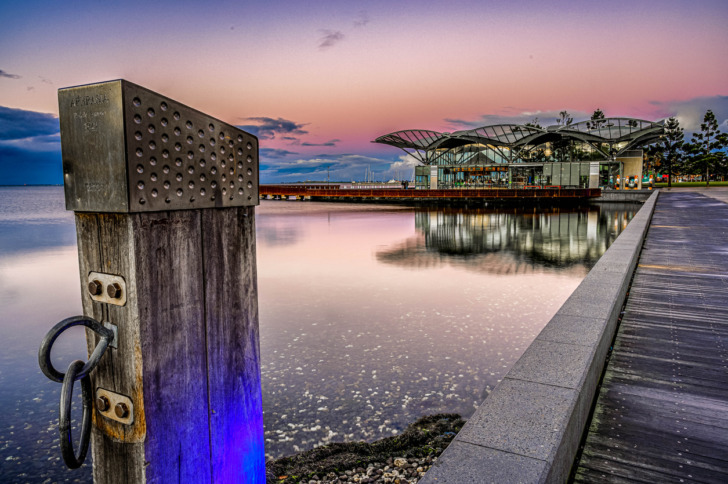
Geelong Waterfront
The waterfront is one of the safest and most enjoyable parts of the city.
It is busy with walkers, families, cyclists, diners, and visitors exploring the painted bollards along Corio Bay.
The area around Cunningham Pier, Steampacket Gardens, and the Carousel is particularly comfortable during daylight and early evening.
Eastern Beach Reserve
Eastern Beach is a popular public swimming and recreation area with lawns, paths, playground facilities, and an enclosed swimming section.
It is one of the best places for families, especially when lifeguards are operating.
Swim only in open areas, supervise children closely, and obey temporary closures or warning signs.
Geelong Botanic Gardens
The Botanic Gardens provide a calm and well-maintained environment near Eastern Park.
Paths are mostly easy to navigate, entry is free, and the gardens are suitable for families, solo travelers, and older visitors.
Visit during official opening hours and avoid wandering through empty parts of the surrounding park after dark.
National Wool Museum Area
The National Wool Museum and surrounding central waterfront streets are safe and convenient for daytime sightseeing.
The museum sits inside a restored nineteenth-century woolstore and helps explain how Geelong developed.
Nearby restaurants, shops, and public buildings keep the area active throughout most of the day.
Barwon River Trails
The walking and cycling paths along the Barwon River are popular with locals and generally safe during daylight.
They are good for exercise, birdwatching, and quieter scenery away from the waterfront.
Cyclists should control their speed, while walkers should avoid isolated stretches after dark and remain aware during flooding or heavy rain.
Places to Avoid in Geelong
Central Nightlife Streets After Midnight
Central Geelong is not a no-go zone, but parts of the CBD can become less comfortable late at night, especially around bars, clubs, takeaway restaurants, and transport stops.
Alcohol-related arguments and antisocial behavior are more likely after midnight.
Leave confrontations alone and use a taxi if the streets feel unsettled.
Geelong Railway Station Surroundings Late at Night
The station is normally safe and busy during commuting hours, but the surrounding streets can become quiet later in the evening.
Travelers carrying luggage should remain in well-lit areas, avoid leaving phones or bags unattended, and arrange onward transportation if arriving on a late train.
Northern Industrial Areas
Industrial sections around North Geelong, Corio, and Norlane contain warehouses, freight routes, workshops, and residential streets that offer little to ordinary tourists.
These suburbs are not universally dangerous, but unfamiliar visitors have no reason to explore isolated industrial roads at night.
Stick to main routes and planned destinations.
Empty Waterfront Sections After Dark
The central waterfront is lively, but quieter stretches toward Western Beach or isolated parking areas can feel empty after restaurants close.
Avoid sitting alone with valuables late at night, and do not leave bags visible inside a vehicle.
Stay near active venues, lighting, and regular pedestrian traffic.
Remote Beaches During Rough Weather
Beaches around the Bellarine Peninsula and Surf Coast can have strong currents, cold water, submerged rocks, and rapidly changing conditions.
Unpatrolled beaches should be treated carefully.
Swim between red and yellow flags where lifeguards are present and avoid entering rough water simply because experienced surfers are outside.
Safety Tips for Traveling to Geelong
- Keep valuables out of parked cars. Vehicle break-ins are one of the most preventable travel problems in Australia. Remove luggage, electronics, passports, shopping bags, and visible charging cables whenever you park. This is especially important at beaches, trailheads, railway car parks, sports venues, and scenic stops where thieves know visitors may be away for hours.
- Use normal caution in the CBD at night. Central Geelong is generally safe, but alcohol-related disorder can occur around nightlife venues. Stay with your group, watch your drink, avoid arguments, and move away if a crowd becomes aggressive. After midnight, use a taxi or rideshare rather than taking dark shortcuts through parks or quiet streets.
- Swim only where conditions are safe. Corio Bay often appears calm, but water can still be cold, murky, or affected by wind and tides. At Eastern Beach, follow signs and lifeguard instructions. On ocean beaches farther from Geelong, swim between the red and yellow flags and never enter the water during closures or severe weather.
- Prepare for four seasons in one day. Victoria is famous for rapidly changing weather. A warm morning can turn into a cold, windy, wet afternoon. Carry a light waterproof layer, use sunscreen, and check the forecast before beach trips or long walks. Coastal wind can make temperatures feel considerably colder than the thermometer suggests.
- Drive carefully on regional roads. The roads around Geelong provide access to the Bellarine Peninsula, Great Ocean Road, You Yangs, and Melbourne. Drive on the left, wear seat belts, avoid using your phone, and watch for wildlife around dawn and dusk. Take breaks on long journeys and never combine unfamiliar roads with fatigue.
- Cross roads defensively. Do not assume every driver has noticed you, even at pedestrian crossings. Look in both directions, wait for vehicles to slow, and pay particular attention near roundabouts. Tourists unfamiliar with left-side traffic often look in the wrong direction first, which can be more dangerous than crime.
- Protect yourself during heat and fire danger. On very hot days, carry water, wear sunscreen, and limit strenuous activity during the afternoon. If exploring parks or rural regions, check bushfire warnings and obey road closures. Never enter a closed fire area or assume smoke in the distance is harmless.
- Secure bicycles and outdoor equipment. Geelong is excellent for cycling, but bicycles should be locked with a strong lock whenever unattended. Do not leave helmets, bags, surfboards, or sports equipment unsecured on vehicles. Rental companies may charge substantial replacement costs if equipment is lost or stolen.
- Use licensed transportation. Taxis and app-based rides are widely available. Confirm the vehicle and driver before entering, especially after events or late-night outings. Public buses and trains are generally safe, but keep bags close during crowded periods and avoid falling asleep with valuables exposed.
- Save emergency information. Australia’s emergency number is 000 for police, fire, or ambulance assistance. Save your accommodation address and keep your phone charged when taking day trips. In non-urgent situations, hotel staff, visitor centers, and local police can help. Remote coastal and hiking areas may have weaker mobile coverage.
So... How Safe Is Geelong Really?
Geelong is a safe city by international travel standards, and most visitors will experience no serious problems.
Its main attractions are concentrated around open, active, and well-maintained public spaces, particularly the waterfront, Eastern Beach, central museums, and Botanic Gardens.
Families, women traveling alone, couples, and older visitors can generally move around comfortably.
The city is not crime-free.
Victoria’s statewide crime data continues to record property crime, theft, burglary, vehicle theft, assault, and public-order incidents.
Geelong’s CBD has also received increased attention from local authorities because of concerns about antisocial behavior and crime in the central area.
This does not mean tourists should avoid downtown, but it supports using extra caution late at night.
For travelers, the greatest risks may be less dramatic than crime statistics suggest.
Car break-ins, road accidents, alcohol-related confrontations, sunburn, cold-water swimming, and poor preparation for coastal weather are more likely to affect an ordinary trip.
The safety level also depends on where you go next.
Central Geelong is low risk, while remote beaches, bushfire-prone areas, and long coastal drives require more planning.
My honest assessment is that Geelong deserves a low overall risk rating.
Stay aware around the CBD after midnight, remove valuables from vehicles, follow swimming warnings, and drive carefully.
With those precautions, Geelong is an easy and comfortable Australian destination.
How Does Geelong Compare?
| City | Safety Index |
|---|---|
| Geelong |
86 |
| Melbourne |
80 |
| Sydney |
85 |
| Gold Coast |
69 |
| Fremantle |
85 |
| Alice Springs |
70 |
| Cairns |
61 |
 Cape Coral Cape Coral | 82 |
| Kokomo | 47 |
| Salinas | 64 |
 Falmouth Harbour Falmouth Harbour | 86 |
 Florence Florence | 72 |
 Izmir Izmir | 70 |
Useful Information

Visas
Most foreign visitors need an Australian visa or travel authority before departure. Eligible European passport holders may use the eVisitor system, while citizens of certain other countries can apply for an Electronic Travel Authority. The Visitor visa subclass 600 currently starts from AUD 250 for overseas applicants and may allow stays of 3, 6, or 12 months.

Currency
Geelong uses the Australian dollar. Cards and contactless payments are accepted almost everywhere, including hotels, restaurants, supermarkets, museums, and public transport services. Cash is useful for small markets or emergencies but is not essential. Use bank ATMs and let your card provider perform currency conversion rather than accepting poor terminal exchange rates.

Weather
Geelong has warm, generally dry summers and cool, wet winters. Summer temperatures often sit in the 20s Celsius, but heatwaves can exceed 35°C. Winter days are commonly cool and windy. Pack layers, a waterproof jacket, sunscreen, comfortable walking shoes, and warmer clothing for evenings near the bay.

Airports
Avalon Airport is the closest airport and lies northeast of Geelong. Taxis serve the terminal, and Route 18 now connects Avalon Airport with Lara Station, where passengers can transfer to trains toward Geelong. Melbourne Airport has many more international flights but requires a longer road or public transport journey.

Travel Insurance
Travel insurance is strongly recommended for Geelong and wider Victoria. Choose coverage for medical treatment, cancellations, lost luggage, theft, rental-car damage, and weather disruption. Add appropriate protection for surfing, hiking, cycling, or road trips if planned. Overseas visitors may face high medical costs without suitable insurance.
Geelong Weather Averages (Temperatures)
Average High/Low Temperature
| Temperature / Month | Jan | Feb | Mar | Apr | May | Jun | Jul | Aug | Sep | Oct | Nov | Dec |
|---|---|---|---|---|---|---|---|---|---|---|---|---|
| High °C |
25 | 25 | 23 | 20 | 16 | 14 | 13 | 14 | 16 | 19 | 21 | 23 |
| Low °C |
15 | 15 | 14 | 12 | 10 | 8 | 7 | 7 | 8 | 9 | 11 | 12 |
| High °F |
77 | 77 | 73 | 68 | 61 | 57 | 55 | 57 | 61 | 66 | 70 | 73 |
| Low °F |
59 | 59 | 57 | 54 | 50 | 46 | 45 | 45 | 46 | 48 | 52 | 54 |
Australia - Safety by City
| City | Safety Index |
|---|---|
| Adelaide | 88 |
| Alice Springs | 70 |
| Brisbane | 90 |
| Broome | 86 |
| Byron Bay | 85 |
| Cairns | 61 |
| Canberra | 88 |
| Darwin | 70 |
| Fremantle | 85 |
| Geelong | 86 |
| Gold Coast | 69 |
| Hobart | 90 |
| Launceston | 89 |
| Melbourne | 80 |
| Perth | 85 |
| Port Douglas | 88 |
| Sydney | 85 |
| Townsville | 77 |
| Wollongong | 55 |