 Australia : Safety by City
- Adelaide
- Alice Springs
- Brisbane
- Broome
- Byron Bay
- Cairns
- Canberra
- Darwin
- Fremantle
- Geelong
- Gold Coast
- Hobart
- Launceston
- Melbourne
- Perth
- Port Douglas
- Sydney
- Townsville
- Wollongong
Broome is one of Australia’s most unusual beach towns, sitting way up on the Kimberley coast of Western Australia, more than 2,000 kilometers from Perth.
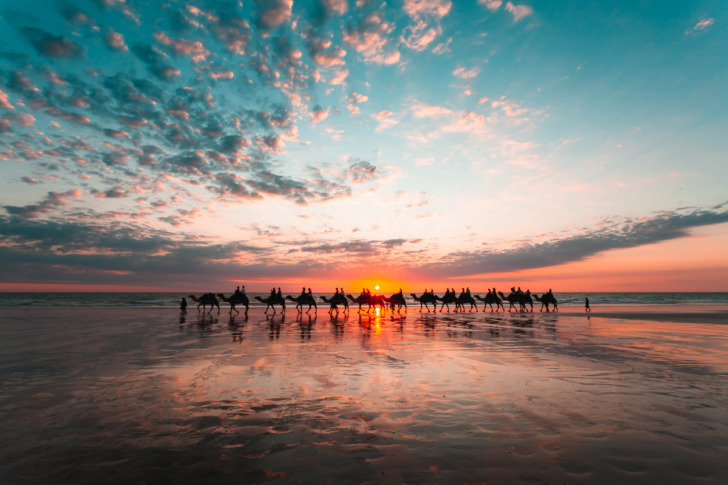
It is famous for Cable Beach sunsets, red pindan cliffs, pearling history, dinosaur footprints, camels on the sand, huge tides, and that wild “edge of the continent” feeling that makes northern Australia so addictive.
This is not Byron Bay with red dirt.
Broome is remote, tropical, culturally rich, and surrounded by landscapes that feel much bigger than you.
It is also a place where travelers need to think differently about safety.
The town itself is manageable, but the risks include theft, alcohol-related trouble, heat, marine stingers, crocodiles, remote roads, and weather that can change plans fast.
Warnings & Dangers in Broome

OVERALL RISK: MEDIUM
Broome is safe enough for tourists who plan well, but it deserves a medium risk rating because of property crime, alcohol-related incidents, remote travel hazards, and serious environmental risks. Most visitors enjoy Broome without problems, especially around Cable Beach and main tourist areas, but this is not a destination where you should switch your brain off.

TRANSPORT & TAXIS RISK: MEDIUM
Transport in Broome is generally safe, but limited. Taxis, airport shuttles, tours, and car rentals are commonly used, though waits can be longer than in big cities. The bigger issue is self-driving outside town. Distances are large, roads can be remote, and wet-season flooding, wildlife, fatigue, and unsealed tracks require caution.

PICKPOCKETS RISK: MEDIUM
Broome does not have the classic big-city pickpocket feel, but theft is one of the more realistic concerns for travelers. Bags, phones, wallets, bicycles, camping gear, and items left in vehicles can be targeted. Be extra careful around beaches, accommodation car parks, nightlife areas, and busy tourist spots during the dry season.

NATURAL DISASTERS RISK: MEDIUM
Broome has a tropical climate with a wet season, cyclone risk, extreme heat, storms, flooding, and dangerous marine conditions. The dry season is easier for travel, but the sun is still intense. During the wet season, roads may close, tours may be canceled, and swimming conditions can become unsafe because of stingers or crocodile warnings.

MUGGING RISK: MEDIUM
Muggings are not the main threat to tourists, but Broome does have public safety issues, especially at night and around alcohol. Avoid walking alone late at night, do not get involved in arguments, and be careful around poorly lit streets, parks, beach access areas, and isolated car parks. The risk is manageable, not imaginary.

TERRORISM RISK: LOW
Terrorism is a low risk in Broome. The town is remote, small, and not a major political or financial target. Travelers should still use basic awareness in crowded places, airports, and events, but terrorism should not be a major concern when planning a trip to Broome.

SCAMS RISK: LOW
Tourist scams are not a major problem in Broome. The more common issues are overpriced last-minute accommodation, unclear tour terms, fake or questionable rental listings, and informal deals for vehicles or camping gear. Book through reputable operators, read cancellation policies carefully, and avoid sending deposits through strange payment methods.

WOMEN TRAVELERS RISK: MEDIUM
Women travelers can visit Broome safely, including solo travelers, but nighttime caution matters. The town is spread out, transport can be limited, and some areas feel quiet after dark. Stay in well-reviewed accommodation, use taxis or rideshare-style services when available, avoid isolated beaches at night, and be cautious around intoxicated groups.

TAP WATER RISK: LOW
Tap water in Broome is generally safe to drink. Because the climate is hot and dry for much of the tourist season, dehydration is a bigger concern than water quality. Carry a refillable bottle, drink more than you think you need, and use electrolytes if you are walking, cycling, hiking, or spending long hours outdoors.
Safest Places to Visit in Broome
Cable Beach
Cable Beach is Broome’s superstar and one of the safest places for visitors when conditions are suitable.
The beach is wide, scenic, easy to access, and popular with tourists, especially at sunset.
It is a great place for walking, photography, camel rides, and swimming when lifeguards are present and conditions are clear.
Still, this is northern Australia, so always pay attention to signs about stingers, crocodiles, tides, and beach closures.
Gantheaume Point
Gantheaume Point is one of Broome’s most memorable places, with red cliffs, turquoise water, and dinosaur footprints visible at very low tide.
It is safe as a daytime sightseeing stop, but you need to be careful near cliff edges and tidal areas.
Wear proper shoes, check tide times, and do not wander onto slippery rocks if the water is rising.
Town Beach and Roebuck Bay
Town Beach is a popular family-friendly area with views over Roebuck Bay and access to the famous Staircase to the Moon event when conditions line up.
It is usually comfortable during the day, especially around markets and public facilities.
Swimming needs more caution here because tropical jellyfish and crocodile sightings can affect the area.
Chinatown and the Broome Historical Museum
Broome’s Chinatown area and museum are good daytime stops for learning about the town’s pearling history and multicultural background.
These areas are generally safe during normal visitor hours.
As always in Broome, lock your car, keep valuables out of sight, and avoid leaving bags unattended while browsing.
Places to Avoid in Broome
Isolated Beaches and Creeks
The biggest “avoid” category in Broome is not a neighborhood.
It is isolated water.
Remote beaches, creeks, tidal flats, mangroves, and estuaries can be dangerous because of crocodiles, tides, stingers, soft mud, and lack of quick help.
Do not assume a beautiful stretch of water is safe just because it looks calm.
Beach and Tourist Car Parks After Dark
Car parks near beaches, lookouts, accommodation strips, and trail areas can be targets for theft.
Avoid leaving anything visible in your vehicle, even for a short stop.
After dark, these places can also feel isolated.
Park in well-lit areas, travel with others when possible, and do not linger around empty car parks late at night.
Quiet Streets Late at Night
Broome is not a huge city, and some streets become very quiet after dark.
Avoid walking alone late at night between nightlife areas and distant accommodation, especially if you have been drinking.
Use a taxi, shuttle, or pre-arranged ride instead.
The distances may look small on a map, but heat, darkness, and isolation change the feel quickly.
Remote Roads Without Preparation
Do not casually drive out toward the Dampier Peninsula, Cape Leveque area, or other Kimberley routes without checking road conditions, fuel, water, phone coverage, and weather.
Some roads may be sealed, some may be unsealed, and conditions can change.
Remote driving around Broome is beautiful, but it is not something to improvise.
Flood-Prone Areas During the Wet Season
During the wet season, some roads, low-lying areas, and regional routes can flood.
Never drive through floodwater.
It can be deeper, faster, or more damaged underneath than it looks.
If heavy rain is forecast, keep your itinerary flexible and avoid heading far from town unless local conditions are clearly safe.
Safety Tips for Traveling to Broome
- Take crocodile warnings seriously. Broome sits in crocodile country. That does not mean crocodiles are waiting behind every beach towel, but it does mean you must follow local warnings. Avoid swimming in creeks, mangroves, estuaries, boat ramps, remote beaches, and murky water. If signs say a beach is closed because of a sighting, do not treat it as a suggestion.
- Swim only where locals and lifeguards say it is safe. Cable Beach is the main tourist swimming beach, but conditions still matter. Stingers, tides, crocodile sightings, storms, and rough water can all affect safety. Ask lifeguards, read signs, and never swim alone at remote beaches. In Broome, the question is not “does the water look nice?” It is “is this water safe today?”
- Understand the tides before exploring. Broome has huge tides, and they can change the landscape quickly. Rocks, flats, footprints, and shoreline areas that seem easy to reach may become dangerous as the tide rises. This is especially important at Gantheaume Point and around Roebuck Bay. Check tide times before walking on rocks or tidal flats.
- Lock your car and hide everything. Vehicle break-ins are one of the most practical risks for travelers. Do not leave phones, cameras, passports, bags, wallets, camping gear, or luggage visible in your car. Even an empty backpack can attract attention. If you are road-tripping, store valuables at your accommodation before visiting the beach.
- Plan nights out before you start drinking. Broome has bars, restaurants, and a social backpacker scene, but it is not a place where you want to wander around aimlessly late at night. Arrange transport back to your accommodation, stay with your group, and avoid arguments with intoxicated strangers. If the vibe gets messy, leave early.
- Carry water everywhere. Broome’s heat is sneaky because the town has a relaxed holiday feel, but dehydration can hit hard. Carry water on walks, tours, beach visits, and short drives. If you are visiting in the hotter months, add electrolytes and take breaks in shade. A hat is not optional here. It is survival with a brim.
- Choose the dry season for the easiest trip. The dry season, roughly May to October, is usually the best time to visit. The weather is more comfortable, roads are more reliable, and many tours operate at full strength. The wet season can be dramatic and beautiful, but it brings humidity, storms, possible flooding, more mosquitoes, and more travel disruptions.
- Be careful with remote tours and self-drive adventures. The Kimberley is magnificent, but it is remote. If you plan to drive outside Broome, check road conditions, fuel stops, water supplies, spare tires, insurance rules, and mobile coverage. For many travelers, guided tours are the safer option. This is especially true if you are not experienced with remote Australian travel.
- Protect yourself from the sun. The sun in Broome is powerful. Use high-SPF sunscreen, reapply often, wear sunglasses, cover your shoulders, and avoid long walks in the hottest part of the day. Sunburn, heat exhaustion, and dehydration can ruin a trip faster than almost anything else here. Beach sunsets are lovely. Midday roasting is not.
- Respect local communities and cultural sites. Broome has deep Aboriginal and pearling history, and the surrounding land has cultural significance. Stay on marked paths, follow signs, do not trespass, and ask before photographing people or culturally sensitive places. Good travel behavior is also good safety behavior. It keeps interactions respectful and avoids unnecessary problems.
So... How Safe Is Broome Really?
Broome is safe for prepared travelers, but I would not rank it as a low-risk Australian beach destination.
It is safer than its rougher reputation might suggest if you stay in tourist areas, use common sense, and avoid risky situations.
But it has more practical safety concerns than a polished resort town.
The key thing to understand is that Broome’s risk profile is split in two.
First, there is the human side: theft, vehicle break-ins, some public disorder, and alcohol-related incidents.
Broome is small, but it has a high visitor turnover and local social challenges, so crime rates can look more serious than travelers expect.
Tourists are most likely to deal with opportunistic theft rather than violent crime.
Second, there is the environmental side, which is arguably more important.
This is tropical northern Australia.
Crocodiles, stingers, huge tides, heat, storms, flooding, and remote distances are real.
The beaches are stunning, but not every stretch of water is safe.
The roads are beautiful, but not every drive is casual.
So, how safe is Broome really?
Safe enough to recommend, absolutely.
But it is a medium-risk destination because it rewards travelers who pay attention.
Come prepared, listen to local advice, lock your stuff, respect the ocean, and Broome becomes one of the most unforgettable places in Australia.
How Does Broome Compare?
| City | Safety Index |
|---|---|
| Broome |
86 |
| Cairns |
61 |
| Perth |
85 |
| Townsville |
77 |
| Wollongong |
55 |
| Geelong |
86 |
| Sydney |
85 |
 Kendall Kendall | 87 |
| Norwalk | 79 |
 Arequipa Arequipa | 32 |
 Rijeka Rijeka | 85 |
| West Fargo | 78 |
 Nikko Nikko | 91 |
Useful Information

Visas
Most international visitors need a visa or an electronic travel authority before entering Australia. Eligible travelers can often apply for an ETA through the official app, which has an AUD 20 service fee. Many European passport holders may qualify for an eVisitor visa. Longer tourist visas may cost more, depending on nationality and stay length.

Currency
Broome uses the Australian dollar. Cards are widely accepted in hotels, restaurants, supermarkets, and tour offices, but carrying some cash is useful for markets or smaller operators. Avoid poor exchange rates at airports when possible. A low-fee travel card and ATM withdrawals from reputable banks usually work best.

Weather
Broome has a tropical climate with two main seasons. The dry season is warm, sunny, and more comfortable for travel, while the wet season is hotter, humid, stormy, and more unpredictable. Pack light clothing, sunscreen, sunglasses, a hat, swimwear, sandals, insect repellent, and a light rain jacket if visiting in wetter months.

Airports
Broome International Airport is very close to town, usually only a short drive from central Broome and Cable Beach. Taxis, hotel transfers, car rentals, and shuttle services are available. Some travelers also fly into Broome as a starting point for Kimberley trips, so booking transport early during peak season is smart.

Travel Insurance
Travel insurance is strongly recommended for Broome because remote travel can make problems more expensive. Look for coverage that includes medical care, trip cancellation, lost luggage, rental car excess, weather disruptions, and adventure activities. If you plan to drive, take tours, swim, or explore the Kimberley, insurance is not just a formality.
Broome Weather Averages (Temperatures)
Average High/Low Temperature
| Temperature / Month | Jan | Feb | Mar | Apr | May | Jun | Jul | Aug | Sep | Oct | Nov | Dec |
|---|---|---|---|---|---|---|---|---|---|---|---|---|
| High °C |
33 | 33 | 34 | 34 | 31 | 29 | 29 | 30 | 32 | 33 | 34 | 34 |
| Low °C |
26 | 26 | 25 | 23 | 19 | 18 | 14 | 16 | 19 | 23 | 24 | 25 |
| High °F |
91 | 91 | 93 | 93 | 88 | 84 | 84 | 86 | 90 | 91 | 93 | 93 |
| Low °F |
79 | 79 | 77 | 73 | 66 | 64 | 57 | 61 | 66 | 73 | 75 | 77 |
Australia - Safety by City
| City | Safety Index |
|---|---|
| Adelaide | 88 |
| Alice Springs | 70 |
| Brisbane | 90 |
| Broome | 86 |
| Byron Bay | 85 |
| Cairns | 61 |
| Canberra | 88 |
| Darwin | 70 |
| Fremantle | 85 |
| Geelong | 86 |
| Gold Coast | 69 |
| Hobart | 90 |
| Launceston | 89 |
| Melbourne | 80 |
| Perth | 85 |
| Port Douglas | 88 |
| Sydney | 85 |
| Townsville | 77 |
| Wollongong | 55 |