 Angola : Safety by City
Angola - safety as a country
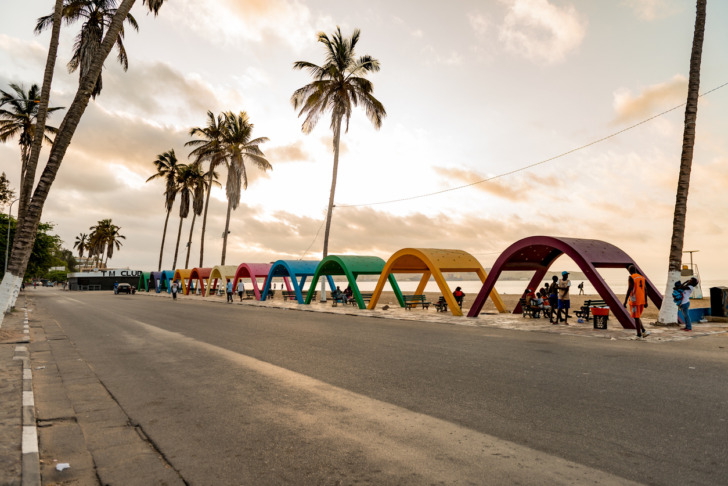
Namibe is where Angola becomes almost otherworldly.
Located on the country’s southwestern Atlantic coast, the city sits between the cold ocean and the northern reaches of the Namib Desert, creating a landscape of pale beaches, reddish cliffs, empty roads, fog, and enormous open spaces.
Once known as Moçâmedes, Namibe is the capital of the province that shares its name and a gateway to Iona National Park, desert dunes, fishing towns, and rare plants such as the ancient welwitschia.
It feels calmer and less congested than Luanda, but it is also remote and lightly developed for international tourism.
Travelers should prepare for limited healthcare, difficult roads, petty crime, strong ocean conditions, and desert excursions where a simple vehicle problem can become serious.
Namibe is rewarding, but it favors careful travelers.
Warnings & Dangers in Namibe

OVERALL RISK: MEDIUM
Namibe has a medium overall risk. It is generally quieter than Luanda, and violent incidents involving tourists are not an everyday occurrence. However, theft, robbery, poor road conditions, limited medical care, unsafe drinking water, civil unrest, and remote desert travel prevent it from being considered a low-risk destination.

TRANSPORT & TAXIS RISK: HIGH
Transport is one of Namibe's biggest safety concerns. Vehicles may be poorly maintained, roads outside the city can be isolated, and assistance may be hours away. Avoid informal taxis and nighttime driving. Use a reputable driver, a well-maintained vehicle, and preferably a four-wheel-drive vehicle for desert or park excursions.

PICKPOCKETS RISK: MEDIUM
Pickpocketing and bag theft can occur around markets, transport stops, banks, shops, and crowded streets. Foreign visitors carrying visible phones, cameras, or expensive equipment may attract attention. Keep valuables hidden, carry limited cash, use zipped bags, and avoid leaving belongings unattended at beaches or restaurants.

NATURAL DISASTERS RISK: MEDIUM
Namibe is extremely dry, but natural hazards still include coastal fog, strong winds, rough seas, flash flooding after unusual rain, extreme inland heat, and desert isolation. Weather can reduce road visibility and affect remote routes. Travelers should carry extra water and fuel and avoid desert trips without current local guidance.

MUGGING RISK: MEDIUM
Mugging is possible, particularly after dark, in quiet streets, near informal transport areas, or around poorly lit beaches. The risk is lower than in central Luanda but should not be dismissed. Avoid walking alone at night, displaying valuables, or withdrawing large amounts of cash without secure transportation.

TERRORISM RISK: LOW
Namibe has a low terrorism risk. Angola has no recent pattern of major terrorist attacks, and Namibe is not a prominent political or international target. Visitors should still stay aware of their surroundings and avoid demonstrations, government compounds, and unexpected public gatherings that could become tense.

SCAMS RISK: MEDIUM
Visitors may encounter inflated taxi fares, unofficial guides, questionable currency exchanges, fake parking fees, and unclear tour prices. Confirm every price before agreeing to a service, and use operators recommended by reputable accommodation. Never hand over a passport as security for a casual rental or informal arrangement.

WOMEN TRAVELERS RISK: MEDIUM
Women can visit Namibe safely with careful planning, but solo nighttime walking is not recommended. Harassment, unwanted attention, and sexual violence are potential concerns in Angola. Women should use trusted drivers, choose secure accommodation, avoid isolated beaches, and keep their drinks under control in bars or social settings.

TAP WATER RISK: HIGH
Travelers should not rely on tap water in Namibe. Drink factory-sealed bottled water or properly purified water, and avoid questionable ice. Be careful with raw salads, unpeeled fruit, and food washed in untreated water. Cholera and other waterborne illnesses have affected parts of Angola, making food and water hygiene essential.
Safest Places to Visit in Namibe
Central Namibe
Central Namibe is the most practical place for visitors to stay, eat, shop, and arrange transportation.
The busier streets around established hotels, restaurants, banks, and commercial areas are generally manageable during daylight.
Keep your phone discreet, avoid carrying large amounts of cash, and arrange a driver when going out after dark.
Praia das Miragens
Praia das Miragens is one of the area’s most striking coastal locations, surrounded by dry terrain and unusual rock formations.
It can be visited safely during daylight with a trusted driver or guide.
The beach may have strong currents and limited rescue facilities, so visitors should treat it as a sightseeing destination unless local advice confirms safe swimming conditions.
Namibe Waterfront
The waterfront provides ocean views, fishing activity, and a look at everyday coastal life.
Active sections are generally suitable for daytime walks, especially when accompanied by someone familiar with the city.
Avoid displaying cameras continuously, keep away from restricted port infrastructure, and do not photograph security facilities or officials.
Tombwa
Tombwa is a fishing town south of Namibe and an interesting stop for travelers exploring the coast.
The journey should be made during daylight in a reliable vehicle.
Visitors can observe fishing activity, coastal scenery, and desert landscapes, but should avoid wandering through isolated port, industrial, or beach areas without local guidance.
Iona National Park
Iona National Park is Angola’s largest national park and one of the country’s most remarkable landscapes.
It contains desert plains, mountains, wildlife, dunes, and isolated communities.
It should only be visited with an experienced operator, suitable vehicles, emergency supplies, communication equipment, and sufficient fuel and water to accommodate delays.
Places to Avoid in Namibe
Isolated Beaches After Dark
Remote beaches around Namibe can be beautiful but extremely empty.
Avoid visiting them alone or after sunset.
There may be no lighting, lifeguards, security, phone service, or nearby medical assistance.
Strong currents, rocks, changing tides, and crime all become harder to manage when nobody else is around.
Desert Roads Without a Guide
Do not drive into the desert simply because a road or track appears clear on a map.
Sand, fog, mechanical failure, missing signs, and extreme distance can turn a short adventure into an emergency.
Remote trips should involve a knowledgeable guide, navigation equipment, spare tires, water, fuel, and ideally a second vehicle.
Informal Taxi and Bus Areas
Informal transport points can expose travelers to theft, poor-quality vehicles, aggressive pricing, and drivers whose identity cannot be confirmed.
Avoid accepting rides from strangers who approach you.
Ask your hotel, employer, host, or tour operator to arrange transportation, particularly when traveling with luggage or arriving after dark.
Government, Military, and Port Facilities
Do not photograph airports, ports, military facilities, police, government buildings, checkpoints, bridges, or important infrastructure.
Photography near sensitive locations can attract official attention, and equipment may be confiscated.
If you are uncertain whether a location is sensitive, ask locally before taking out a camera.
Unmarked Open Land and Abandoned Areas
Landmines and unexploded ordnance remain present in parts of Angola, and not every hazardous site is clearly marked.
Avoid abandoned military areas, unfamiliar rural land, unused tracks, and suspicious objects.
Stay on established roads and paths, particularly outside towns and recognized tourist areas.
Safety Tips for Traveling to Namibe
- Arrange reliable transportation before arrival. Namibe is not a destination where visitors should depend on finding a safe taxi at the last minute. Ask your hotel, tour company, employer, or host to arrange a known driver. Confirm the driver’s name, vehicle, price, and pickup point. A reputable driver also provides valuable advice about roads, neighborhoods, and current local conditions.
- Never explore the desert without preparation. The desert may look empty and easy to navigate, but distances are deceptive. Carry more water, food, fuel, and spare equipment than you expect to need. Use a four-wheel-drive vehicle for difficult routes and travel with a guide who knows the area. A second vehicle is sensible for especially remote journeys.
- Complete road trips during daylight. Avoid driving between Namibe, Tombwa, Lubango, Benguela, or remote attractions after dark. Roads may have potholes, animals, pedestrians, unlit vehicles, or sudden obstacles. Assistance can be slow or unavailable outside towns. Leave early and allow enough time to reach secure accommodation before sunset.
- Keep phones and cameras out of sight. Expensive electronics can attract unwanted attention. Use your phone briefly, then put it away in a secure pocket or bag. Ask before photographing people and avoid taking pictures near official buildings, the airport, port facilities, police, or military sites. Street photography may be misunderstood even when your intentions are harmless.
- Use cash carefully. Cards may not work consistently, particularly outside larger hotels and established businesses. Carry enough Angolan kwanza for your plans, but divide it between secure locations. Use ATMs during daylight, preferably inside banks or guarded areas. Avoid counting money publicly or exchanging currency with strangers on the street.
- Carry safe water everywhere. The desert environment and dry coastal air make dehydration a serious risk. Bring sealed bottled or purified water on every road trip, beach visit, or excursion. Do not assume that water will be available at remote stops. Carry oral rehydration salts and avoid drinking untreated water, even when it appears clear.
- Ask before swimming. Namibe’s Atlantic coast can have cold water, powerful currents, large waves, and limited lifeguard coverage. Check with trusted locals before entering the sea. Stay close to shore, avoid rocky or isolated sections, and never swim alone. Do not enter the ocean after drinking alcohol or when visibility is poor.
- Prepare for limited medical care. Bring prescription medication, basic first-aid supplies, sunscreen, stomach medicine, and any personal medical essentials. Serious injuries or illnesses may require evacuation to Luanda or another country. Do not assume a local hospital will have the equipment, blood supply, medicine, or specialists you might need.
- Avoid demonstrations and political gatherings. Public protests can form with little notice and may become violent or attract a strong security response. Leave immediately if crowds, roadblocks, police deployments, or political activity develop nearby. Do not stop to watch, photograph, or discuss the event. Keep travel plans flexible in case roads or services are disrupted.
- Follow local advice in remote communities. Parts of Namibe Province are culturally traditional and rarely visited by independent foreign tourists. Use a guide, ask before entering communities, dress modestly, and request permission before photographing anyone. Respecting local customs is not only polite. It reduces misunderstandings and makes the entire trip safer and more meaningful.
So... How Safe Is Namibe Really?
Namibe is safer and calmer than Angola’s capital in several practical ways, but it should not be mistaken for an easy resort destination.
The city’s lower population density and quieter streets can feel reassuring, yet travelers still face Angola’s broader problems with crime, road safety, healthcare, water quality, and limited emergency response.
The biggest dangers may actually appear outside the city.
Namibe’s main attractions are spread across beaches, desert roads, fishing communities, and Iona National Park.
In these places, a punctured tire, navigation error, medical problem, or shortage of water can become more serious than theft.
Distances are large, phone service may be unreliable, and rescue resources are limited.
Inside the city, travelers should be most cautious around markets, banks, transport areas, quiet streets, and beaches after dark.
Visible phones, cameras, jewelry, or cash can attract opportunistic criminals.
Walking alone at night is unnecessary when a trusted driver can be arranged.
Namibe earns a medium risk rating.
It is not a place I would tell experienced travelers to avoid completely, but I would never recommend arriving without transportation, secure accommodation, medical insurance, and a plan for excursions.
With preparation, Namibe offers one of Angola’s most extraordinary combinations of Atlantic coastline, desert wilderness, wildlife, and cultural isolation.
Without preparation, its remoteness becomes the main danger.
How Does Namibe Compare?
| City | Safety Index |
|---|---|
| Namibe |
56 |
| Benguela |
53 |
| Lobito |
52 |
| Lubango |
55 |
| Soyo |
42 |
| Sumbe |
46 |
| Huambo |
49 |
 North Carolina North Carolina | 64 |
 Cao Bang Cao Bang | 78 |
| Kamas | 79 |
| Kennebunkport | 84 |
| Kannapolis | 82 |
| Corolla | 81 |
Useful Information

Visas
Many nationalities can visit Angola without a visa for tourism, commonly for stays of up to 30 days per entry and a limited total each year. Eligibility depends on the traveler's passport. Visitors should confirm current rules before departure and carry proof of accommodation, onward travel, passport validity, and required vaccinations.

Currency
Namibe uses the Angolan kwanza. Cash remains important because foreign cards may fail or be accepted only by larger hotels and businesses. Exchange money through banks or authorized offices, not street dealers. Bring small notes for taxis, markets, restaurants, and tips, and keep most cash secured at your accommodation.

Weather
Namibe has a mild desert climate shaped by the cold Benguela Current. Rain is rare, while coastal fog and wind are common. Days can feel pleasant near the ocean but much hotter inland. Pack lightweight clothing, sun protection, a warm layer for cool evenings, sturdy shoes, and extra water for desert excursions.

Airports
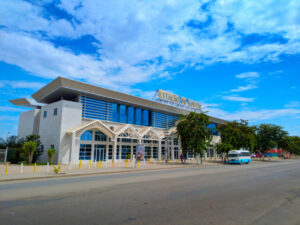
Welwitschia Mirabilis Airport serves Namibe and has limited domestic connections, primarily with Luanda. Flight schedules may operate only on selected days and can change. Confirm flights directly before traveling and arrange an airport pickup. Some visitors arrive by road from Lubango, but the journey should be completed during daylight.

Travel Insurance
Comprehensive travel insurance is essential for Namibe. The policy should cover emergency medical treatment, medical evacuation, road accidents, theft, flight disruption, and remote excursions. Confirm that Angola, desert tours, national park travel, and any planned activities are included. Evacuation costs can be extremely high when local treatment is insufficient.
Namibe Weather Averages (Temperatures)
Average High/Low Temperature
| Temperature / Month | Jan | Feb | Mar | Apr | May | Jun | Jul | Aug | Sep | Oct | Nov | Dec |
|---|---|---|---|---|---|---|---|---|---|---|---|---|
| High °C |
27 | 28 | 29 | 28 | 26 | 23 | 21 | 21 | 22 | 24 | 25 | 26 |
| Low °C |
19 | 20 | 20 | 19 | 15 | 15 | 13 | 14 | 15 | 17 | 18 | 19 |
| High °F |
81 | 82 | 84 | 82 | 79 | 73 | 70 | 70 | 72 | 75 | 77 | 79 |
| Low °F |
66 | 68 | 68 | 66 | 59 | 59 | 55 | 57 | 59 | 63 | 64 | 66 |
Angola - Safety by City
| City | Safety Index |
|---|---|
| Benguela | 53 |
| Huambo | 49 |
| Lobito | 52 |
| Luanda | 35 |
| Lubango | 55 |
| Malanje | 47 |
| Namibe | 56 |
| Soyo | 42 |
| Sumbe | 46 |