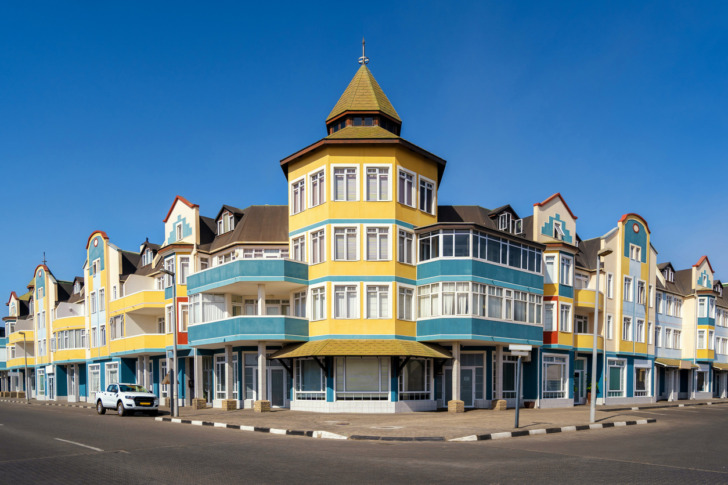
Swakopmund is one of Namibia’s most unusual travel destinations, sitting between the Atlantic Ocean and the Namib Desert on the country’s central coast.
It has German colonial architecture, foggy mornings, seafood restaurants, desert adventure tours, beach walks, nearby dunes, and easy access to Walvis Bay, Sandwich Harbour, and the Skeleton Coast route.
It feels part seaside town, part desert base camp, part old-world colonial postcard.
Compared with many African urban destinations, Swakopmund is fairly calm and tourist-friendly, but it still deserves sensible caution.
The main safety concerns are petty theft, vehicle break-ins, road safety, isolated beach areas, desert tour risks, cold ocean conditions, and walking around after dark in quiet places.
Warnings & Dangers in Swakopmund

OVERALL RISK: MEDIUM
Swakopmund is safer than many larger cities, but a medium rating is fair because theft, muggings, and vehicle break-ins can happen. Tourist areas are generally comfortable during the day, especially around the town center and waterfront, but visitors should avoid careless walking at night and secure valuables properly.

TRANSPORT & TAXIS RISK: MEDIUM
Transport risk is medium because many travelers self-drive in Namibia, and road conditions can be challenging outside towns. Gravel roads, long distances, fog, wildlife, and driver fatigue are real issues. In town, use trusted taxis, hotel-arranged transport, or reputable tour operators rather than random rides.

PICKPOCKETS RISK: MEDIUM
Pickpocketing and opportunistic theft can happen in Swakopmund, especially around busy streets, markets, beaches, parking areas, and tourist spots. Keep bags zipped, avoid flashing phones or cash, and never leave valuables unattended. Car break-ins are a more realistic concern than classic pickpocketing.

NATURAL DISASTERS RISK: LOW
Swakopmund has a low natural disaster risk overall, but the environment can still be dangerous. Desert heat, coastal fog, strong winds, cold ocean water, rough seas, and dehydration are practical concerns. Flash flooding is less common than in some desert regions, but weather can still affect roads and tours.

MUGGING RISK: MEDIUM
Mugging risk is medium compared with the safest resort towns. Most visitors have no problem, but incidents can happen, especially after dark, in quiet streets, beach areas, or when walking alone with valuables. Avoid isolated places at night and use taxis if returning late.

TERRORISM RISK: LOW
The terrorism risk in Swakopmund is low. Namibia is not generally considered a high-risk terrorism destination, and Swakopmund is mainly a coastal tourism and adventure hub. Travelers should still use normal awareness in public places, but terrorism is not a major concern here.

SCAMS RISK: LOW
Scams are not a major issue in Swakopmund, though tourists should still watch for unclear taxi fares, poor-value tours, inflated souvenir prices, or vague activity pricing. Most problems can be avoided by booking with reputable operators and confirming the price, pickup, route, and cancellation terms ahead of time.

WOMEN TRAVELERS RISK: MEDIUM
Swakopmund is generally manageable for women travelers, including solo travelers, but a medium rating is sensible because of nighttime safety concerns. Women should avoid isolated beach walks after dark, use trusted transport at night, and choose well-reviewed accommodation in central or tourist-friendly areas.

TAP WATER RISK: LOW
Tap water in Swakopmund is generally considered safe to drink in town, although some travelers prefer bottled or filtered water because of taste or stomach sensitivity. If heading into remote desert areas, carry plenty of bottled water. Dehydration is a bigger concern than tap water quality.
Safest Places to Visit in Swakopmund
Swakopmund Town Center
The town center is one of the safest and easiest areas for travelers during the day.
It has cafes, shops, tour offices, German-style buildings, restaurants, banks, and accommodation.
It is walkable and tourist-friendly, though visitors should still keep valuables secure and avoid quiet streets late at night.
The Waterfront and Jetty Area
Swakopmund’s waterfront and jetty area are popular, scenic, and generally safe during the day and early evening.
It is a good place for ocean views, restaurants, photos, and relaxed walks.
Be careful with phones and bags in busy spots, and avoid lonely beach sections after dark.
Desert Adventure Tour Areas
Sandboarding, quad biking, living desert tours, and dune excursions are some of Swakopmund’s best experiences.
These are safest when done with reputable operators who provide helmets, safety instructions, proper vehicles, and guides who understand desert conditions.
Do not wander into dune areas alone without water and orientation.
National Marine Aquarium Area
The area around the aquarium and nearby seaside streets is usually safe during regular visitor hours.
It is calm, family-friendly, and easy to combine with a town walk or waterfront visit.
As always, parked vehicles should be left empty of visible valuables.
Walvis Bay Day Trip Routes
Walvis Bay, about 30 to 40 minutes away by road, is a common and generally safe day trip from Swakopmund.
It is useful for lagoon visits, flamingos, Sandwich Harbour tours, kayaking, and boat trips.
Use a reputable operator for marine or desert excursions, especially if entering remote sand routes.
Places to Avoid in Swakopmund
Empty Beach Areas After Dark
Swakopmund’s beaches can feel peaceful, but quiet beach areas after dark are not ideal for walking alone.
Avoid isolated stretches, dunes near the beach, and poorly lit paths late at night.
If you want an evening walk, stay near active, lit areas and go with others.
Isolated Streets Away From the Center at Night
Swakopmund is small, but not every street is equally comfortable after dark.
Avoid wandering into quiet residential or industrial areas at night, especially with a phone or camera out.
If your accommodation is not close to the center, use a taxi or a hotel-arranged ride.
Parking Areas With Visible Luggage
Vehicle break-ins are one of the most realistic risks in Namibia’s tourist areas.
Avoid leaving bags, jackets, electronics, cameras, passports, or shopping visible in parked cars.
This applies near beaches, viewpoints, shops, restaurants, and tour offices.
An empty-looking car is much safer.
Dune Areas Without a Guide
The dunes around Swakopmund are beautiful but disorienting.
Avoid going deep into the desert alone, especially without water, sun protection, navigation, and local knowledge.
Fog, wind, heat, and soft sand can turn a casual walk or drive into a serious problem.
Long-Distance Roads After Dark
Avoid driving outside Swakopmund after dark if possible.
Namibia’s roads can involve animals, fog, gravel, limited lighting, and long empty stretches.
Even experienced drivers can be caught off guard.
Plan day trips so you return before sunset, especially from remote attractions.
Safety Tips for Traveling to Swakopmund
- Do not leave valuables in your car. This is one of the most important safety rules in Swakopmund and Namibia in general. Rental cars are easy to identify, and visible bags can attract break-ins. Take valuables with you or leave them locked at your hotel. Even a jacket or backpack on a seat can look tempting.
- Avoid walking alone at night. Swakopmund is pleasant during the day, but nighttime requires more caution. Streets can become quiet quickly, and beach areas are not ideal after dark. Use taxis, hotel transport, or walk with others if going out for dinner. This is especially important if your accommodation is outside the central tourist zone.
- Book desert activities with reputable operators. Swakopmund is famous for sandboarding, quad biking, desert tours, and trips into the dunes. These activities are fun, but they need proper safety standards. Choose operators with good reviews, helmets, clear instructions, working equipment, and experienced guides. Do not choose only by the lowest price.
- Take road safety seriously. Namibia is a self-drive dream, but it can be unforgiving. Roads outside town may be gravel, remote, and long. Drive slower than you think you need to, avoid sudden braking on gravel, keep headlights on in fog, and do not drive tired. Always carry water and know your fuel range.
- Watch out for coastal fog. Swakopmund often gets fog, especially in the morning. It can reduce visibility on roads and make the coast feel colder than expected. If driving between Swakopmund and Walvis Bay or heading inland, slow down and keep a distance from other vehicles. Fog plus speed is a bad mix.
- Dress for both desert and ocean weather. This is not a simple hot beach destination. Swakopmund can be cool, windy, foggy, sunny, and dry all in the same day. Bring layers, sunglasses, sunscreen, and a windbreaker. For dune activities, wear closed shoes and clothes you do not mind getting filled with sand.
- Be careful when swimming. The Atlantic Ocean around Swakopmund is cold and can have strong currents, rough surf, and sudden drop-offs. This is not the same as a warm tropical swimming beach. Swim only where conditions look safe, follow local advice, and do not enter rough water or swim alone.
- Keep cash and documents secure. Carry only the cash you need for the day. Keep your passport, extra cards, and backup money locked at your accommodation if possible. Use a money belt or secure pouch when moving between towns. Petty theft is easier to prevent than to fix afterward.
- Confirm tour and taxi prices in advance. Before getting into a taxi or booking an activity, confirm the full price, pickup point, duration, and what is included. For tours, ask about water, equipment, insurance, meals, permits, and cancellation policies. Clear details prevent awkward surprises and help you avoid low-quality operators.
- Carry water everywhere. Even when Swakopmund feels cool because of ocean fog, Namibia is still dry. Dehydration can sneak up during dune tours, walks, road trips, or outdoor activities. Keep water in your room, in your car, and in your day bag. For longer trips, carry more than you think you will need.
So... How Safe Is Swakopmund Really?
Swakopmund is one of Namibia’s more comfortable tourist bases, but it is not a place where travelers should switch off completely.
It is safer and calmer than many bigger cities, and most visitors enjoy it without serious problems.
The town center, waterfront, hotels, restaurants, and organized tours are generally easy and welcoming.
The reason I would not give Swakopmund a purely low-risk rating is that opportunistic crime exists.
Theft from cars, phone snatching, muggings after dark, and beach-area incidents are realistic enough to shape how you should behave.
This is not about fear.
It is about not creating easy opportunities.
The other safety story is the environment.
Swakopmund sits between desert and ocean, which means travelers need to respect dunes, fog, cold water, wind, long roads, and remote landscapes.
Many of the best experiences nearby, including sandboarding, quad biking, Sandwich Harbour, and Skeleton Coast routes, are safest with proper guides and planning.
So, how safe is Swakopmund really?
Medium-low risk.
It is a good, interesting, worthwhile destination, especially for desert adventure and coastal scenery, but it asks for practical travel habits: secure your car, avoid isolated night walks, book good operators, and treat the desert seriously.
How Does Swakopmund Compare?
| City | Safety Index |
|---|---|
 Swakopmund Swakopmund |
72 |
| Windhoek |
65 |
 Clear Lake Clear Lake | 84 |
| Jupiter | 87 |
 Faizabad Faizabad | 23 |
| New Bern | 77 |
 Lobito Lobito | 52 |
 Waterloo Waterloo | 85 |
Useful Information

Visas
Namibia allows visa-free entry for many nationalities for short tourism stays, while others need a visa before arrival or on arrival, depending on passport rules. Entry requirements can change, so check your nationality, allowed stay length, passport validity, and onward travel requirements before booking.

Currency
Swakopmund uses the Namibian dollar, which is pegged to the South African rand. South African rand is also accepted in Namibia, but Namibian dollars are not usually accepted in South Africa. Cards are widely accepted in hotels and restaurants, but carry cash for small purchases, tips, and markets.

Weather
Swakopmund has a cool desert-coastal climate, with foggy mornings, wind, dry air, and mild temperatures compared with inland Namibia. Pack layers, a light jacket, sunscreen, sunglasses, and comfortable shoes. The coast can feel chilly even when the desert nearby is hot and sunny.

Airports
Swakopmund has a small local airport, but most travelers use Walvis Bay Airport for the region. Walvis Bay is the main nearby airport and is about 30 to 40 minutes away by road. Travelers can reach Swakopmund by rental car, shuttle, private transfer, or hotel-arranged transport.

Travel Insurance
Travel insurance is strongly recommended for Swakopmund, especially if your trip includes self-driving, dune activities, quad biking, sandboarding, marine tours, or remote desert routes. Choose coverage for medical care, emergency transport, cancellations, theft, lost luggage, and adventure activities. Make sure risky activities are not excluded.
Swakopmund Weather Averages (Temperatures)
Average High/Low Temperature
| Temperature / Month | Jan | Feb | Mar | Apr | May | Jun | Jul | Aug | Sep | Oct | Nov | Dec |
|---|---|---|---|---|---|---|---|---|---|---|---|---|
| High °C |
25 | 26 | 27 | 25 | 24 | 23 | 21 | 21 | 21 | 22 | 23 | 24 |
| Low °C |
18 | 18 | 18 | 16 | 15 | 14 | 13 | 12 | 12 | 14 | 15 | 16 |
| High °F |
77 | 79 | 81 | 77 | 75 | 73 | 70 | 70 | 70 | 72 | 73 | 75 |
| Low °F |
64 | 64 | 64 | 61 | 59 | 57 | 55 | 54 | 54 | 57 | 59 | 61 |
Namibia - Safety by City
| City | Safety Index |
|---|---|
| Swakopmund | 72 |
| Windhoek | 65 |