


 Afghanistan : Safety by City
Afghanistan - safety as a country
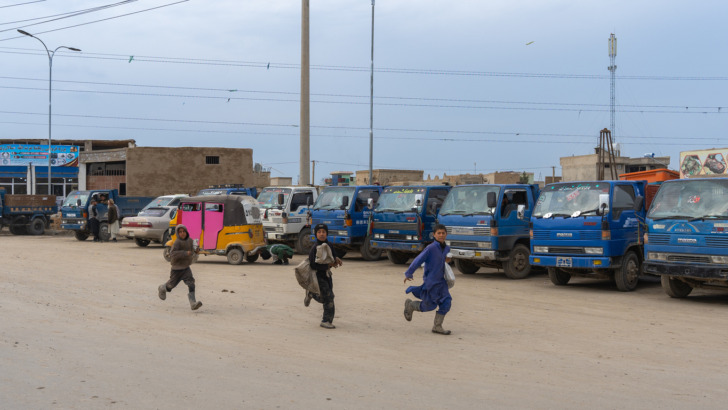
Kunduz is a historic city in northern Afghanistan, close to the Tajikistan border and surrounded by farmland, river plains, and old trade routes that once connected Central Asia with the wider region.
It is the capital of Kunduz Province and has long been strategically important because of its location between Kabul, Mazar-i-Sharif, Badakhshan, and Tajikistan.
On paper, it sounds like the kind of place serious travelers would want to understand: old bazaars, northern Afghan culture, agricultural life, and a very different atmosphere from the country’s mountain cities.
But this is not a normal tourist destination.
Kunduz has been heavily affected by conflict, armed groups, political instability, and weak emergency support.
I would not recommend Kunduz for casual tourism.
This is a high-risk destination where safety planning matters more than sightseeing.
Warnings & Dangers in Kunduz

OVERALL RISK: HIGH
Kunduz is a high-risk travel destination. Afghanistan as a whole remains extremely dangerous for ordinary tourism, and Kunduz has a history of conflict, armed activity, checkpoints, and unstable security conditions. Independent travelers should not visit casually. Only essential travel with expert local support, secure transport, and emergency planning should even be considered.

TRANSPORT & TAXIS RISK: HIGH
Transport in and around Kunduz is risky. Roads may involve checkpoints, poor driving standards, limited rescue services, armed activity, road closures, and unpredictable delays. Public transport is not suitable for most foreign travelers. If travel is unavoidable, it should be arranged through trusted local contacts with current security knowledge and private transport.

PICKPOCKETS RISK: MEDIUM
Pickpocketing is not the biggest concern in Kunduz, but petty theft can happen in markets, transport areas, crowded streets, and busy commercial zones. The greater risk is that any theft or confrontation can escalate quickly because foreign travelers stand out. Keep valuables hidden, carry minimal cash, and avoid crowded areas without local guidance.

NATURAL DISASTERS RISK: HIGH
Kunduz and northern Afghanistan face natural hazards, including earthquakes, floods, flash floods, drought, extreme heat, and harsh winter conditions. Afghanistan's emergency response systems are limited, especially outside major cities. Roads can become difficult or unsafe during heavy rain, and medical care may be hard to reach during disasters.

MUGGING RISK: HIGH
The mugging risk is high compared with normal tourist cities. Foreign visitors may attract attention, and the lack of reliable emergency assistance makes any street crime more serious. Do not walk alone, do not travel at night, do not display money or electronics, and do not move around without trusted local support.

TERRORISM RISK: LOW
The terrorism risk in Kunduz is high. Afghanistan continues to face threats from armed groups, extremist activity, targeted attacks, and violence near public places, checkpoints, government-linked sites, religious locations, and transport routes. Foreigners may be viewed as high-value targets. This is one of the main reasons Kunduz is unsuitable for casual tourism.

SCAMS RISK: MEDIUM
Classic tourist scams are less developed in Kunduz than in major tourist destinations because there is little normal tourism. However, overcharging, fake “helpers,” unofficial fixers, false transport promises, and bribery-style situations can happen. The bigger danger is not losing a little money, but being led into unsafe places or unreliable arrangements.

WOMEN TRAVELERS RISK: HIGH
Kunduz is a very high-risk destination for women travelers, especially solo women. Restrictions on women's movement, conservative social norms, harassment risk, limited legal protections, and unpredictable security conditions create serious concerns. Female travelers should not visit independently. If travel is unavoidable, it requires trusted local hosts, conservative dress, and strict movement planning.

TAP WATER RISK: HIGH
Tap water in Kunduz is not recommended for travelers. Water quality can vary, and stomach illness is a real risk. Drink sealed bottled water or properly treated water only. Avoid ice, raw produce washed in tap water, and food from unhygienic stalls. Medical care is limited, so preventing illness is especially important.
Safest Places to Visit in Kunduz
Central Kunduz by Day Only
If someone must be in Kunduz, the most manageable area is usually the central part of the city during daylight, especially around known commercial streets and places where local contacts can guide movement.
This does not mean the center is “safe” in a normal tourism sense.
It simply means it is more practical than isolated roads, outer districts, or rural areas.
Visitors should avoid wandering and should keep movements purposeful.
Trusted Guesthouse or Hosted Accommodation
In Kunduz, your safest “place to visit” may honestly be your accommodation.
That sounds boring, but this is not Paris with better tea.
A secure guesthouse, organization-arranged lodging, or private home with trusted local hosts is far safer than exploring randomly.
Accommodation should be chosen for security, local reputation, controlled access, and reliable communication rather than charm or price.
Local Markets With a Guide
Markets can be interesting because they show daily life, food trade, textiles, tools, and northern Afghan culture.
However, they should only be visited in daylight with a reliable local guide who understands the current situation.
Keep visits short, avoid photos unless clearly permitted, and do not carry visible valuables.
Markets can become crowded quickly, and crowds are not ideal in a high-risk security environment.
Cultural and Historic Sites Only With Local Clearance
Kunduz has historic interest, but formal tourist infrastructure is weak.
Any visit to old sites, shrines, cemeteries, or local landmarks should be cleared with trusted local contacts first.
The key question is not “Is this interesting?”
It is “Is this safe today, at this hour, with this route, and with this person guiding me?”
Places to Avoid in Kunduz
Checkpoints and Security Installations
Avoid lingering near checkpoints, police or Taliban posts, military vehicles, government offices, intelligence facilities, or any place connected to security forces.
These locations can become targets or flashpoints.
Do not take photos near them, do not ask unnecessary questions, and do not stand around watching.
Move through only when necessary and with local guidance.
Roads Outside the City
Road travel outside Kunduz can be one of the most dangerous parts of visiting.
Routes toward rural districts, border areas, Mazar-i-Sharif, Baghlan, Takhar, or Badakhshan can change in risk quickly.
Armed incidents, checkpoints, poor road conditions, and communication gaps make independent movement unsafe.
Avoid unnecessary road trips, especially after dark.
Crowded Religious or Political Gatherings
Large gatherings can be risky in Afghanistan, including religious events, public ceremonies, funerals, protests, speeches, and political gatherings.
Crowds may attract attacks, security responses, or sudden disorder.
If you notice a gathering forming, leave the area calmly.
This is not the place to satisfy curiosity by standing at the edge and filming.
Outer Districts and Rural Villages Without Trusted Hosts
Do not visit rural areas, agricultural outskirts, or surrounding districts without reliable local hosts and current security information.
Outsiders are noticeable, and misunderstandings can become serious.
Even peaceful-looking villages may have complex local power structures, checkpoints, or restrictions that a foreign traveler will not understand.
In Kunduz, “quiet” does not automatically mean “safe.”
Safety Tips for Traveling to Kunduz
- Do not visit Kunduz for casual tourism. This is the most important tip. Kunduz is not a destination for backpacking, sightseeing, spontaneous exploration, or “I want to see the real Afghanistan” travel. The risk level is too high, and emergency support is too limited. If your reason for visiting is curiosity, choose a safer destination. Kunduz should only be considered for essential, professional, family, humanitarian, or highly controlled travel.
- Use trusted local contacts before making any movement. In Kunduz, safety changes by road, neighborhood, day, time, and political situation. You need people on the ground who understand current conditions, not old blog posts or optimistic guesses. Before leaving your accommodation, confirm the route, destination, timing, driver, and return plan. A plan that was safe yesterday may not be safe today.
- Avoid traveling at night. Night travel in Kunduz is a bad idea. Visibility is lower, checkpoints are more stressful, roads are less predictable, and help is harder to access. If you must move, do it during daylight and keep the trip short. Plan your day so you are back indoors before evening. This is not the city for late-night wandering.
- Keep a very low profile. Foreign visitors can attract attention, and attention is not your friend in Kunduz. Dress conservatively, avoid expensive watches or cameras, keep your phone out of sight, and do not speak loudly in public about politics, religion, security, or money. The goal is not to look mysterious. The goal is to avoid becoming memorable.
- Do not photograph sensitive places. Never photograph checkpoints, armed personnel, government buildings, airports, bridges, security vehicles, protests, or religious sites without clear permission. A harmless photo can be misunderstood very quickly. Even street photography can create tension. When in doubt, put the camera away. In Kunduz, the best photo is often the one you decide not to take.
- Have an emergency communication plan. Before traveling, share your itinerary with someone outside Afghanistan and someone inside the country. Carry local SIM access if possible, keep backup battery power, and write down key phone numbers on paper. Internet and phone service may not always be reliable. If something goes wrong, you do not want your entire survival plan trapped inside a dead smartphone.
- Prepare for limited medical care. Medical facilities in Kunduz may not meet the standard many travelers expect. Serious injuries, infections, food poisoning, road accidents, or security incidents can become far more dangerous when evacuation is difficult. Bring essential medication, a first-aid kit, water purification backup, and travel insurance that actually covers Afghanistan, if you can find it.
- Use conservative behavior and dress. Kunduz is socially conservative. Men and women should dress modestly, avoid public displays of affection, and respect local religious and cultural expectations. Women face stricter limitations and should plan movement especially carefully. This is not about blending in perfectly. It is about reducing unnecessary friction in a place where mistakes can carry serious consequences.
- Avoid public discussions about politics or the Taliban. Do not debate politics, security, religion, women’s rights, foreign governments, military history, or the current authorities in public. Even casual comments can be risky or misunderstood. Keep conversations neutral, polite, and brief. Save opinions for private settings with people you truly trust. In Kunduz, silence can be excellent travel insurance.
- Use specialized travel insurance and read the exclusions. Many standard travel insurance policies do not properly cover Afghanistan, especially for war, terrorism, kidnapping, civil unrest, or evacuation. If travel is unavoidable, look for specialist high-risk insurance and read every exclusion. A policy that looks good at checkout may become useless exactly when you need it. Medical evacuation coverage is especially important.
So... How Safe Is Kunduz Really?
Kunduz is not safe for ordinary travel.
That is the honest answer.
It may be calmer on some days than its reputation suggests, and local life continues there, as it does in every difficult place.
People go to markets, families live their lives, businesses open, and the city is more than its conflict history.
But for a foreign traveler, safety is not measured by whether daily life exists.
It is measured by what happens when something goes wrong.
Kunduz carries multiple serious risks at the same time: terrorism, kidnapping, arbitrary detention, armed activity, checkpoints, poor roads, limited medical care, weak consular support, natural hazards, and unpredictable local conditions.
That combination makes it fundamentally different from a normal “be careful with your wallet” destination.
The city is especially unsuitable for solo travelers, women traveling independently, inexperienced travelers, photographers, content creators, and anyone without strong local support.
Even experienced travelers should think hard before going.
My view is simple: Kunduz may be culturally interesting, historically important, and geographically fascinating, but it is not a tourism destination right now.
If you must go, treat the trip like a security operation, not a vacation.
If you do not absolutely need to go, do not go.
How Does Kunduz Compare?
| City | Safety Index |
|---|---|
| Kunduz |
18 |
| Ghazni |
21 |
| Herat |
27 |
| Balkh |
26 |
| Faizabad |
23 |
| Kandahar |
35 |
| Kabul |
10 |
 Stonecrest Stonecrest | 53 |
| Macomb | 84 |
| Jefferson City | 75 |
| Old Saybrook | 91 |
 Korce Korce | 82 |
| Clear Lake | 84 |
Useful Information

Visas
Most foreign travelers need a visa to enter Afghanistan, and visa rules can change quickly. Tourist visas are usually arranged before arrival through Afghan diplomatic offices or newer online systems where available. Stays are commonly issued for limited periods such as 30 days, but conditions and fees vary by nationality and issuing office. Confirm requirements before making any plan.

Currency
Afghanistan uses the Afghan afghani. Cash is essential, and U.S. dollars may be useful for exchange, but bills should be clean and undamaged. Card payments and international banking access are very limited. Exchange money only through trusted channels, avoid displaying cash, and carry small notes for daily expenses.

Weather
Kunduz has hot summers, cold winters, and more comfortable spring and autumn periods. Summer heat can be intense, while winter can bring cold conditions and difficult roads. Dust, poor air quality, rain, and flooding can also affect travel. Pack modest clothing, layers, sun protection, sturdy shoes, and basic medical supplies.

Airports
Kunduz has a local airport, but flight availability can be limited and changeable. Most international travelers enter Afghanistan through Kabul, and some may route through Mazar-i-Sharif depending on current services and permissions. Airport transfers and intercity travel should be arranged in advance through trusted local contacts. Do not improvise airport transport.

Travel Insurance
Travel insurance for Kunduz is complicated because many standard policies exclude Afghanistan, terrorism, war, civil unrest, kidnapping, or evacuation. Travelers who must go should look for specialist high-risk coverage and confirm medical evacuation terms in writing. Without proper coverage, a medical or security emergency can become extremely expensive and difficult to manage.
Kunduz Weather Averages (Temperatures)
Average High/Low Temperature
| Temperature / Month | Jan | Feb | Mar | Apr | May | Jun | Jul | Aug | Sep | Oct | Nov | Dec |
|---|---|---|---|---|---|---|---|---|---|---|---|---|
| High °C |
11 | 14 | 20 | 27 | 33 | 38 | 39 | 37 | 34 | 26 | 18 | 13 |
| Low °C |
0 | 2 | 7 | 12 | 17 | 20 | 26 | 24 | 18 | 11 | 5 | 2 |
| High °F |
52 | 57 | 68 | 81 | 91 | 100 | 102 | 99 | 93 | 79 | 64 | 55 |
| Low °F |
32 | 36 | 45 | 54 | 63 | 68 | 79 | 75 | 64 | 52 | 41 | 36 |
Afghanistan - Safety by City
| City | Safety Index |
|---|---|
| Balkh | 26 |
| Bamiyan | 25 |
| Faizabad | 23 |
| Ghazni | 21 |
| Herat | 27 |
| Jalalabad | 20 |
| Kabul | 10 |
| Kandahar | 35 |
| Kunduz | 18 |






Have you found any safe spots or ways to experience local life in Kunduz despite the risks, or is it really best to just pass through carefully?