 Chile : Safety by City
Chile - safety as a country
Viña del Mar is Chile’s classic seaside escape, sitting on the Pacific coast just northwest of Santiago and right next to the port city of Valparaíso.
It is often called the “Garden City” because of its parks, flower clock, landscaped avenues, and more polished resort feel compared with its artsy, chaotic neighbor.
Travelers come for beaches, seafood, coastal walks, gardens, casinos, summer festivals, and easy access to Valparaíso’s colorful hills.
Viña del Mar is generally safer and more relaxed than many large Latin American cities, but it is still an urban beach destination, not a sealed resort bubble.
The main risks are petty theft, beach theft, car break-ins, nightlife issues, strong Pacific surf, earthquakes, occasional protests, and safety differences between busy tourist zones and quieter areas after dark.
Warnings & Dangers in Viña del Mar

OVERALL RISK: MEDIUM
Viña del Mar is moderately safe for tourists. Popular areas such as the waterfront, Reñaca, central hotel zones, and major attractions are generally comfortable during the day. The biggest concerns are petty theft, phone snatching, car break-ins, beach theft, and walking in quiet areas after dark. Use normal city awareness.

TRANSPORT & TAXIS RISK: MEDIUM
Transport is manageable, but travelers should use trusted taxis, ride-hailing apps, buses, or metro services carefully. Roads can be busy, and driving near Valparaíso or during summer traffic can be stressful. Avoid informal taxis, especially late at night. If using public transport, watch your belongings during crowded periods.

PICKPOCKETS RISK: MEDIUM
Pickpocketing and phone theft are realistic risks in Viña del Mar, especially around beaches, bus terminals, metro stations, crowded events, nightlife areas, and busy shopping streets. Do not leave valuables unattended on the sand. Keep phones secure, avoid back-pocket wallets, and be alert when taking photos in crowded areas.

NATURAL DISASTERS RISK: MEDIUM
Viña del Mar has a medium natural disaster risk because Chile is earthquake-prone and the coast has tsunami exposure. Strong Pacific surf, winter storms, coastal flooding, and landslides in the wider region can also affect travel. Most visits are uneventful, but travelers should know evacuation routes and respect ocean warnings.

MUGGING RISK: MEDIUM
Mugging is not something most tourists will face in busy daytime areas, but it can happen, especially at night, in isolated streets, poorly lit areas, and around transport points. Avoid walking alone late at night with visible valuables. Use ride-hailing or trusted taxis after dark if your destination is not close.

TERRORISM RISK: LOW
The terrorism risk in Viña del Mar is low. Travelers are far more likely to deal with theft, road safety, beach hazards, or earthquake awareness than terrorism. As in any city, avoid demonstrations, tense public gatherings, and police activity. Protests can occasionally happen in Chile and are best avoided by tourists.

SCAMS RISK: MEDIUM
Scams are not overwhelming, but overcharging and tourist-targeted tricks can happen. Be cautious with informal taxis, vague tour offers, fake parking attendants, restaurant pricing surprises, and rental issues. Confirm prices before accepting services. If someone is too pushy, say no and keep moving.

WOMEN TRAVELERS RISK: MEDIUM
Many women visit Viña del Mar safely, including solo travelers, but some caution is wise. Stick to active areas, avoid isolated beaches or quiet streets late at night, watch drinks in bars, and use trusted transport after dark. Reñaca and central hotel areas are generally more comfortable than remote streets.

TAP WATER RISK: LOW
Tap water in Viña del Mar is generally safe to drink. Some travelers may prefer bottled water because of taste or stomach sensitivity, but there is usually no safety need to avoid tap water. Bring a reusable bottle for beach days, coastal walks, and trips to nearby Valparaíso.
Safest Places to Visit in Viña del Mar
Reñaca
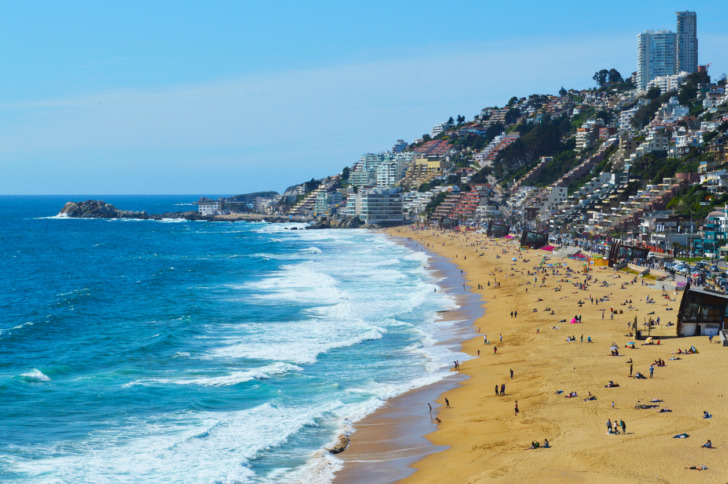
Reñaca is one of the safest and most popular beach areas near Viña del Mar.
It has restaurants, apartment buildings, beach access, surf, nightlife, and a lively summer atmosphere.
During the day, it feels comfortable and tourist-friendly.
The main risks are beach theft, strong waves, and late-night alcohol-related issues.
Keep valuables to a minimum and use trusted transport when returning after dark.
Quinta Vergara
Quinta Vergara is one of Viña del Mar’s best-known green spaces and a safe daytime attraction.
It has gardens, walking paths, the Vergara Palace, and the famous amphitheater used for the Viña del Mar International Song Festival.
It is a good break from the beach and city traffic.
Visit during daylight and keep normal awareness around crowds during events.
Flower Clock Area
The Flower Clock is one of the city’s classic tourist stops and is generally safe during the day.
It is close to the coast, hotels, and busy streets, making it easy to combine with a waterfront walk.
Because tourists gather here for photos, watch your phone and bag while distracted.
Quick stops are usually trouble-free.
Avenida Perú and the Waterfront
Avenida Perú and the coastal promenade are among the best areas for walking, sea views, and casual exploring.
They are busy and safe during the day and early evening.
The main safety concerns are phone theft, strong waves near rocks, and quiet stretches after dark.
Stay on main paths and avoid leaning too close to the water.
Museo Fonck Area
Museo Fonck and the surrounding central neighborhood are generally safe during daytime visits.
The museum is known for its Easter Island exhibit and the moai statue outside.
It is a useful cultural stop away from the beach.
As in any city, keep belongings close and avoid wandering into unfamiliar quiet streets late in the evening.
Places to Avoid in Viña del Mar
Empty Beach Areas After Dark
Viña del Mar’s beaches are pleasant during the day, but empty stretches after dark are not ideal.
The risks include theft, poor lighting, alcohol-related problems, and strong ocean conditions.
If you want an evening by the water, stay near active restaurants, hotels, and well-lit promenade areas.
Crowded Beaches With Valuables
Crowded summer beaches are fun, but they are also prime places for theft.
Avoid bringing passports, large amounts of cash, expensive jewelry, or multiple cards to the beach.
If everyone in your group goes swimming, your unattended bag becomes an easy target.
Beach theft is one of the most realistic tourist problems here.
Bus Terminals and Transit Points When Distracted
Transport areas are not necessarily dangerous, but they require more awareness.
Pickpockets look for people juggling luggage, tickets, phones, and directions.
Keep bags close, avoid displaying cash, and do not let strangers distract you while you are boarding buses or arranging transport.
Poorly Lit Streets Away From Tourist Zones
Viña del Mar is safer in active areas than in quiet streets away from hotels, restaurants, and the waterfront.
Avoid walking alone late through unfamiliar neighborhoods, especially with visible valuables.
Use a ride-hailing app or trusted taxi instead.
This is a simple way to reduce unnecessary risk.
Risky Ocean Areas
The Pacific coast around Viña del Mar can have strong waves, cold water, and dangerous currents.
Avoid swimming where signs warn against it or where locals are not swimming.
Do not climb wet rocks for photos, and keep children away from rough surf.
The ocean is beautiful, but it is not gentle.
Safety Tips for Traveling to Viña del Mar
- Keep your phone secure in public. Phone theft is one of the more realistic risks in Chilean cities and tourist zones. Do not stand near the street holding your phone loosely while checking maps or filming. Step back from traffic and keep a firm grip. Avoid leaving phones on restaurant tables, beach towels, or benches. A few seconds of distraction are all it takes.
- Do not leave valuables on the beach. This is one of the most important safety tips for Viña del Mar. Bring only what you need to the beach: small cash, sunscreen, water, maybe one card, and a phone if necessary. If you swim, have someone watch the bags or use a waterproof pouch. Do not bring passports, laptops, or expensive cameras to the sand.
- Use trusted transport at night. During the day, walking in central and coastal areas is usually fine. At night, use ride-hailing apps, hotel taxis, or trusted transport if you are moving between neighborhoods, restaurants, bars, or hotels. Avoid informal taxis and do not walk long distances through quiet streets after drinking. This is especially important if you are staying outside the main tourist zones.
- Respect the Pacific Ocean. Viña del Mar has beaches, but the water can be cold, rough, and powerful. Pay attention to flags, warning signs, lifeguards, and local behavior. Do not swim alone, do not swim after drinking, and do not go far from shore. Strong currents and waves are a more serious risk than many visitors expect.
- Know what to do in an earthquake. Chile is one of the most earthquake-prone countries in the world, and coastal cities also need tsunami awareness. If you feel strong shaking, drop, cover, and hold on. After shaking stops, move away from the coast and follow evacuation signs if a tsunami warning is issued or if the shaking was strong and long. Know your hotel’s evacuation route.
- Be careful with Valparaíso side trips. Valparaíso is fascinating and very close, but it has a different safety profile from Viña del Mar. If visiting, go during the day, stick to popular areas, avoid flashing valuables, and use trusted transport between neighborhoods. Do not wander into quiet hills or empty streets without knowing where you are going. Viña and Valparaíso are neighbors, not twins.
- Avoid carrying too much cash. Carry enough cash for the day, but keep the rest secured at your accommodation. Cards are widely used, and ATMs are available, though you should use them inside banks, malls, or other safe commercial areas. Split cards and cash between places so one lost wallet does not ruin the trip.
- Watch your drink during nightlife. Viña del Mar has bars, restaurants, clubs, and casino nightlife. Most nights out are safe, but alcohol raises risks. Watch your drink, avoid accepting open drinks from strangers, and know how you are getting home. Stay with your group if possible. If a place feels aggressive or uncomfortable, leave.
- Check weather and surf conditions. Weather can affect beach days, boat plans, and coastal walks. Winter storms and rough seas can make the shoreline dangerous, while summer heat can lead to dehydration and sunburn. Check conditions before swimming or planning a long beach day. Bring sunscreen, sunglasses, water, and a layer for cooler evenings.
- Keep your car empty of visible valuables. If you rent a car, do not leave bags, electronics, jackets, shopping, or luggage visible. Car break-ins can happen near beaches, viewpoints, shopping areas, and tourist stops. Put items in the trunk before you arrive, not after parking. Better yet, leave valuables at your hotel when possible.
So... How Safe Is Viña del Mar Really?
Viña del Mar is reasonably safe for travelers, especially compared with more chaotic urban destinations.
It is cleaner, calmer, and more resort-oriented than nearby Valparaíso, and many visitors enjoy its beaches, parks, restaurants, casino, waterfront, and gardens without serious problems.
During the day, central tourist areas and popular beach zones are generally comfortable.
The main safety issue is petty crime.
Phone theft, pickpocketing, beach theft, and car break-ins are more realistic than violent crime.
Nighttime safety depends heavily on where you are.
Busy restaurant and hotel areas are usually fine, while quiet streets and isolated beach zones are best avoided.
Natural risks also matter because this is a Pacific coastal city in earthquake-prone Chile.
I would rate Viña del Mar as medium risk overall.
That does not mean it is dangerous.
It means travelers should use city-level awareness instead of resort-level carelessness.
Stay in a good area, protect your phone, do not leave beach bags unattended, use trusted transport at night, and respect the ocean.
With those habits, Viña del Mar can be a safe, scenic, and enjoyable coastal stop in Chile.
How Does Viña del Mar Compare?
| City | Safety Index |
|---|---|
| Viña del Mar |
72 |
| Temuco |
31 |
| Santiago de Chile |
71 |
| Iquique |
42 |
| La Serena |
76 |
| Punta Arenas |
77 |
 New Glarus New Glarus | 83 |
 Tehran Tehran | 35 |
 Trondheim Trondheim | 86 |
 Goa Goa | 66 |
| Delaware City | 74 |
| Centralia | 52 |
Useful Information

Visas
Chile allows many nationalities to visit visa-free for tourism for a limited stay, often up to 90 days. Other travelers may need a visa before arrival, depending on nationality. Entry rules can vary, so check requirements before booking. Keep your passport, entry record, and proof of accommodation accessible.

Currency
Viña del Mar uses the Chilean peso. Credit and debit cards are widely accepted in hotels, restaurants, shops, and many attractions, but cash is useful for small purchases, markets, tips, and transport. Use ATMs in banks or secure indoor locations. Avoid carrying large amounts of cash in beach or nightlife areas.

Weather
Viña del Mar has a mild coastal climate. Summers are warm and dry, while winters are cooler and wetter. Even in summer, evenings can be breezy near the ocean. Pack light clothing, sunscreen, sunglasses, comfortable shoes, and a jacket for cooler nights. In winter, bring layers and rain protection.

Airports
Viña del Mar does not have a major international airport for most tourists. Most travelers arrive through Santiago's Arturo Merino Benítez International Airport, then continue by bus, rental car, transfer, or private driver. The trip from Santiago usually takes around 1.5 to 2 hours, depending on traffic.

Travel Insurance
Travel insurance is recommended for Viña del Mar, especially if your trip includes flights, buses, beach activities, Valparaíso visits, rental cars, or prepaid hotels. Good coverage should include medical care, cancellations, theft, lost luggage, delays, and emergency assistance. Make sure water activities and rental-car issues are covered if relevant.
Viña del Mar Weather Averages (Temperatures)
Average High/Low Temperature
| Temperature / Month | Jan | Feb | Mar | Apr | May | Jun | Jul | Aug | Sep | Oct | Nov | Dec |
|---|---|---|---|---|---|---|---|---|---|---|---|---|
| High °C |
21 | 21 | 20 | 18 | 16 | 15 | 15 | 15 | 16 | 17 | 19 | 20 |
| Low °C |
12 | 12 | 11 | 10 | 9 | 8 | 7 | 8 | 9 | 10 | 11 | 12 |
| High °F |
70 | 70 | 68 | 64 | 61 | 59 | 59 | 59 | 61 | 63 | 66 | 68 |
| Low °F |
54 | 54 | 52 | 50 | 48 | 46 | 45 | 46 | 48 | 50 | 52 | 54 |
Chile - Safety by City
| City | Safety Index |
|---|---|
| Iquique | 42 |
| La Serena | 76 |
| Punta Arenas | 77 |
| Santiago de Chile | 71 |
| Temuco | 31 |
| Viña del Mar | 72 |