


Eastern Europe has changed dramatically as a travel destination over the past two decades.
Visitors who once overlooked the region are now discovering cities packed with history, well-preserved old towns, reliable transport networks, and some of the lowest crime rates in Europe.
According to the latest Global Peace Index rankings and international travel advisories, several countries in Eastern and Central-Eastern Europe now rank among the safest places on the continent for tourists.
Slovenia
Slovenia regularly ranks among the most peaceful countries in the world, yet it remains surprisingly overlooked by many American travelers.
Nestled between Italy, Austria, Hungary, and Croatia, it combines spectacular scenery with a calm and relaxed atmosphere.
Ljubljana, the capital, is one of Europe’s cleanest and easiest cities to navigate.
The compact center is largely pedestrianized, making it pleasant to explore on foot.
The city feels safe throughout the day and into the evening, with riverside cafés and public spaces that are frequently busy with locals.
Beyond the capital, Lake Bled continues to attract visitors with its island church and dramatic mountain backdrop.
Triglav National Park provides excellent hiking opportunities, while the Soča Valley offers emerald-green rivers and some of the continent’s most beautiful outdoor scenery.
Czechia
Czechia has built a reputation as one of the safest and most accessible destinations in Central and Eastern Europe.
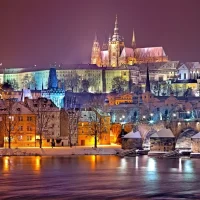
Prague remains the country’s main attraction, but the appeal extends far beyond the famous Charles Bridge and Old Town Square.
The country benefits from reliable public transportation, well-maintained infrastructure, and relatively low levels of violent crime.
Visitors can travel comfortably between major destinations using trains and buses, which are often more affordable than comparable services elsewhere in Western Europe.
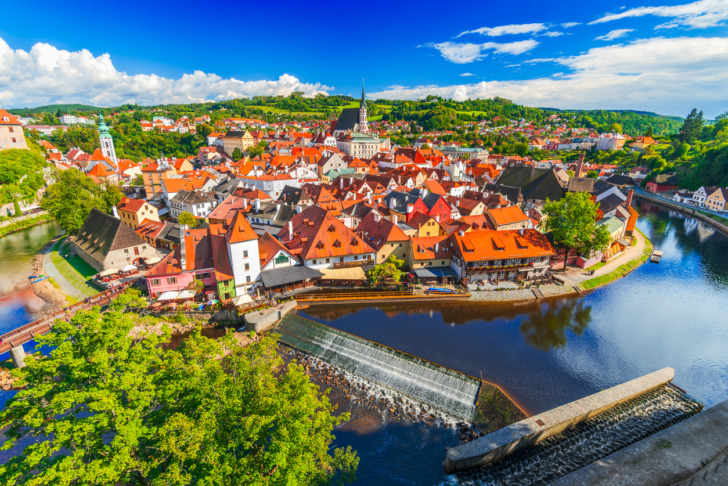
Brno has become increasingly popular thanks to its thriving food scene and youthful atmosphere, while Český Krumlov offers one of Europe’s most picturesque historic centers.
The country’s rich architectural heritage means travelers can move from Gothic cathedrals to Renaissance castles within a single trip.
Estonia
Estonia often surprises first-time visitors.
Despite its small size, it has become one of the most advanced digital societies in the world while retaining a strong connection to its history and traditions.
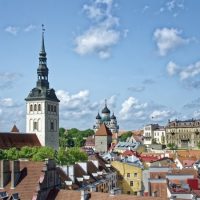
Tallinn‘s medieval Old Town is one of the best-preserved in Europe and is protected as a UNESCO World Heritage Site.
Cobbled streets, merchant houses, and centuries-old towers sit alongside modern cafés and technology startups, creating a distinctive atmosphere that feels both historic and contemporary.
Safety is a major advantage for visitors.
Estonia consistently performs well in European safety rankings, and travelers frequently comment on how easy it is to get around independently.
Public services are efficient, English is widely spoken in tourist areas, and connectivity is excellent.
If you’re planning your itinerary from public Wi-Fi networks while moving between cities, a trustworthy VPN extension can add an extra layer of security when accessing booking platforms or personal accounts.
Romania
Romania is often associated with Dracula legends and Transylvania, but the country offers far more than gothic folklore.
In recent years, it has gained growing recognition as a safe, affordable, and rewarding destination for international visitors.
Bucharest combines grand architecture with lively neighborhoods and an increasingly sophisticated restaurant scene.
Further north, the historic city of Brașov provides a gateway to the Carpathian Mountains and some of the country’s most impressive castles.
One of Romania’s biggest advantages is diversity.
Travelers can explore medieval Saxon towns such as Sighișoara, drive along the famous Transfăgărășan Highway, or visit the Danube Delta, one of Europe’s most important wildlife habitats.
While petty theft can occur in busy tourist areas just as it can anywhere else, Romania is generally regarded as a safe destination where normal travel precautions are sufficient for most visitors.















Wandering through Ljubljana’s pedestrian streets felt super chill, and watching locals hang out by the river made the city seem really safe and inviting even after dark.