


There comes a point when another weekend in a well-known European capital or another photo of a famous landmark no longer quite has the same pull.
That doesn’t mean travel becomes less interesting.
Often, it simply means interests have changed.
People start looking for places that feel less familiar, where the experience comes from the landscape, the wildlife, or the way daily life unfolds, rather than a checklist of attractions.
The destinations below sit far apart geographically, but they share something in common.
They tend to attract people who have already done many of the obvious trips.
Whether that’s standing on a ship deck in Antarctica, walking through a geothermal valley in Iceland, or watching river life unfold in Basel, these are places that hold attention for reasons that aren’t always obvious from a brochure.
Basel’s World-Class Art Scene and Gateway to the Swiss Alps
Basel rarely gets the same attention as Zurich, yet it often leaves a stronger impression on people interested in art and architecture.
The Kunstmuseum contains one of the country’s most important collections, while the Fondation Beyeler sits just outside the center in leafy Riehen.
Even those with only a casual interest in art often end up spending longer than planned.
Step away from the galleries, and Basel quickly feels like a city where people get on with daily life.
Market stalls fill Marktplatz during the week beneath the bright red Rathaus.
Around Spalenberg and Heuberg, narrow streets wind between old buildings, independent shops, and quiet courtyards that are easy to miss if someone is walking too quickly.
The Rhine cuts through the center of everything.
On warm evenings, locals gather along the riverbanks near Mittlere Brücke and Kleinbasel, often carrying waterproof swim bags that double as flotation devices while they drift downstream.
For anyone hoping to spend a day in the mountains, some handpicked day tours from Basel reach alpine villages and scenic valleys that can take several train changes to reach independently.
Back in the city, the paths along the Rhine usually stay busy well into the evening.
Iceland’s Geothermal Landscapes, Northern Lights, and Midnight Sun
One of the first things people notice about Iceland is how raw much of the landscape appears.
The road from Keflavík Airport passes through broad lava fields covered in thick moss, interrupted by patches of black volcanic rock that stretch toward the horizon.
Outside Reykjavík, geothermal activity appears almost everywhere.
Steam rises from hillsides and sulfur hangs in the air near hot springs. Around Haukadalur Valley, visitors gather around Strokkur geyser waiting for the next eruption.
It rarely takes long.
The Lake Mývatn area in northern Iceland feels completely different.
Craters, lava formations, and geothermal pools sit scattered across a landscape that often appears empty for miles at a time.
Along the Ring Road, roadside pullouts frequently turn into unplanned stops simply because something unusual appears in the distance.
Winter brings the Northern Lights.
Summer replaces darkness with nearly continuous daylight.
In June, people can still be walking Reykjavík’s harbor district close to midnight while the sky remains surprisingly bright.
Antarctica’s Frozen Frontier and the Scale of True Wilderness
Antarctica is one of those places where distance can be deceptive.
A mountain that looks just offshore may still take hours to reach, and even after several days at sea, it’s hard to judge the true scale of the landscape.
Most expeditions visit the Antarctic Peninsula, where ice-covered peaks rise directly from the water.
The Lemaire Channel is one of the most photographed sections, though quieter moments often happen elsewhere.
Places such as Neko Harbour and Danco Island can be surprisingly silent apart from the sound of moving ice and seabirds overhead.
People researching extraordinary Antarctica cruises often focus on wildlife, and there is plenty of it.
Penguin colonies occupy rocky shorelines, seals sleep beside landing sites, and humpback whales frequently surface near expedition vessels, sometimes close enough to hear their breath.
Conditions change quickly.
A calm morning can become windy within an hour.
Waterproof boots rarely stay clean for long.
Cameras fog up. Gloves get soaked.
Most passengers end up spending far more time outside than they expected.
Patagonia’s Wind-Scoured Peaks and End-of-the-World Quiet
Patagonia covers an enormous area across southern Chile and Argentina, and much of it feels genuinely remote.
Hours can pass on the road without encountering much traffic, particularly along sections of Argentina’s Route 40.
El Chaltén serves as the starting point for many hikes.
Dirt paths lead directly out of town toward viewpoints overlooking Mount Fitz Roy and the surrounding peaks.
Weather forecasts are posted around town because conditions can change several times in a single day.
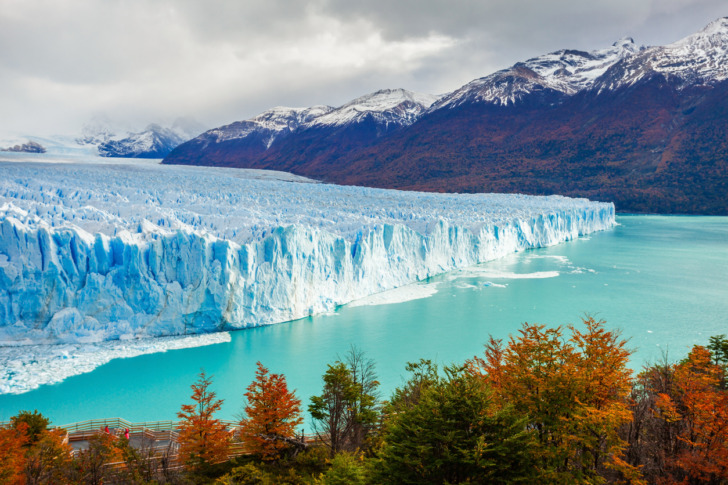
Further south, Perito Moreno Glacier remains one of the region’s most memorable sights.
Viewing walkways extend across multiple levels, allowing visitors to watch enormous blocks of ice break away from the glacier’s face and crash into Lago Argentino below.
Across the border in Torres del Paine National Park, strong winds are part of daily life.
Guanacos graze near parking areas.
Condors circle overhead.
Even carrying a camera steadily can become difficult during gusty afternoons.
The Galápagos Islands’ Living Laboratory of Natural Wonder
The Galápagos Islands don’t feel particularly unusual at first.
Puerto Ayora on Santa Cruz Island has shops, small hotels, fishing boats, and busy waterfront walkways.
Then the wildlife starts appearing.
Sea lions sleep on benches near the harbor.
Pelicans wait around fish-cleaning stations at the market.
Marine iguanas gather on volcanic rocks beside pedestrian paths, paying little attention to passing people.
The Charles Darwin Research Station provides useful background on conservation efforts throughout the islands.
Giant tortoises remain one of the highlights, though many visitors discover that the smaller wildlife becomes equally interesting after a few days.
Each island has its own character.
Española attracts nesting seabirds.
Isabela combines lava fields with excellent snorkeling sites.
Around North Seymour, blue-footed boobies perform their well-known courtship displays just a short distance from designated walking trails.
Even simple boat transfers between islands can bring sightings of dolphins, sea turtles, rays, and frigatebirds circling overhead.
Which of These Journeys Is on Your List?
Not every trip needs to involve somewhere remote.
What often changes is the type of experience people look for after years of travel.
Museums, wildlife, landscapes, and unusual environments begin to matter more than ticking off famous attractions.
Basel brings together art, architecture, and easy access to the Alps.
Iceland enchants with volcanic landscapes, long summer days, and winter skies filled with aurora activity.
Antarctica remains one of the few places where human presence still feels minimal across vast areas.
Patagonia rewards curiosity and patience, while the Galápagos continues to provide wildlife encounters that are difficult to match elsewhere.
None of these destinations relies on famous monuments to hold attention.
That’s often exactly why they remain exciting.
Additional Resources
 Off the Beaten Path: Discovering Hidden Gems in Paris
 How to Get Everything Delivered When You’re Staying Abroad for a Longer Period: 6 Tips to Know
 Happiest Countries in the World
 5 Landscape-focused Travel Destinations Across the Globe
 5 Destinations for Remote Exploration and Rugged Landscapes
 Exploring New Jersey: Family Adventures Off the Beaten Path











