


Some destinations are best understood by looking at the land first.
Hills, coastlines, rivers, and desert plains all influence how a place develops over time.
You see it in the layout of towns, the location of markets, and even in daily routines.
The following locations bring that relationship into focus, each shaped by a different kind of landscape and reflected in how everyday life unfolds.
Ancient Sites and Aegean Horizons in Greece
In Athens, the Acropolis sits above everything, visible from streets like Dionysiou Areopagitou, where people walk in the late afternoon as the light softens against the stone.
From there, it’s a short walk into Plaka, where narrow streets wind past small shops and old houses that feel unchanged in layout.
Monastiraki Square gets busier, especially near the flea market where vendors set up stalls selling antiques and everyday items.
Further out, the Aegean becomes the main feature.
On islands like Santorini, the caldera edge near Fira and Oia draws the most attention.
However, smaller villages such as Pyrgos offer a quieter view inland, with stone paths and churches set above vineyards.
Crete adds more variation, especially along the Chania waterfront and inland near the White Mountains, where villages like Theriso sit among steep valleys.
For longer stays, it’s worth taking the time to explore some of the most marvellous villa rentals in Greece.
Many are set near coastal areas or inland villages, making it easy to settle in without constantly moving between locations.
Staying close to places like Elounda in Crete or Naoussa harbour in Paros puts you within reach of local markets, small beaches, and everyday walking routes used by residents themselves.
Dramatic Glaciers and Volcanic Valleys of Southern Iceland
Southern Iceland’s landscapes shift quickly over short distances.
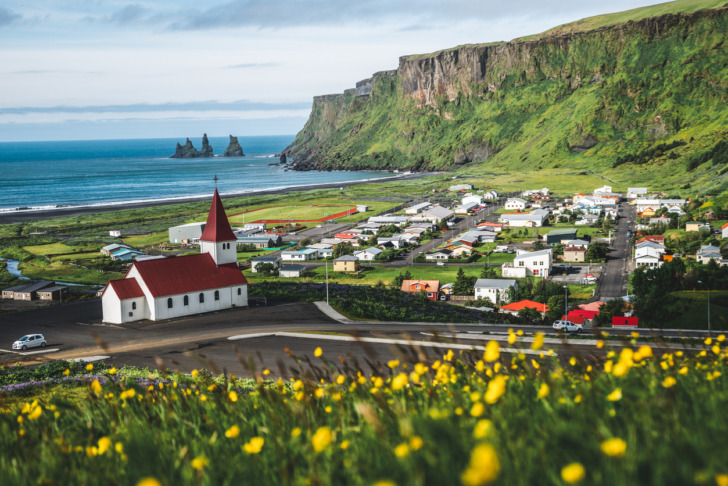
Near Vík, black sand beaches stretch beneath cliffs, with Reynisfjara’s basalt columns rising sharply along the shore.
Just outside the village, the road cuts through moss-covered lava fields that appear flat at first but feel uneven underfoot.
The setting is open, yet clearly shaped by past eruptions and constant weather changes.
Moving west, waterfalls line the route.
Skógafoss sits right beside the road, and you can climb the stairs to see the river above before it drops.
Seljalandsfoss lets you walk behind the water, which sounds simple until the wind shifts and you’re suddenly soaked.
These aren’t isolated stops; they sit within a larger valley where glaciers like Eyjafjallajökull and Mýrdalsjökull dominate the background.
Further east, Skaftafell National Park offers trails that lead toward the glaciers.
The route to Svartifoss passes through low birch woodland before opening onto a waterfall framed by dark hexagonal columns.
Jökulsárlón glacier lagoon feels quieter by comparison, with ice drifting slowly toward the ocean.
Across the road, Diamond Beach gathers smaller chunks of ice that wash ashore and sit on the black sand for a few hours before melting.
Lush Waterways and Tea-Carpeted Hills in India
In Kerala, the backwaters form a network of canals, lakes, and rivers that run parallel to the Arabian Sea.
In Alleppey, boats move through narrow waterways lined with palm trees and small houses where daily routines happen right at the water’s edge.
Locals use small wooden boats to get between homes, shops, and markets.
Near the Alleppey Lighthouse area, streets fill with vendors selling spices, dried fish, and fresh produce brought in from nearby farms.
Houseboats travel slowly through larger sections like Vembanad Lake, passing villages where temples and schools sit close to the shoreline.
Kumarakom Bird Sanctuary sits along one stretch of the lake, where herons and kingfishers are easy to spot early in the morning.
For a more relaxed way to experience the waterways, consider one of the scenic India river cruises, which travel along larger rivers like the Brahmaputra.
Here, riverbanks shift with the seasons, and villages appear along the edges as you move through the landscape.
These journeys show how water shapes entire regions, from transport routes to agriculture, in ways that only become clear over time.
Pristine Alpine Peaks and Turquoise Lakes of the Canadian Rockies
The Canadian Rockies stretch across Alberta and British Columbia, with Banff and Jasper National Parks drawing most visitors.
In Banff, Banff Avenue runs straight toward Cascade Mountain, so even a simple walk through town keeps the peaks in view.
Bow Falls sits just below the Fairmont Banff Springs area, where the Bow River widens and slows before continuing through the valley.
Lake Louise can get crowded near the main viewpoint, but walking further along the shoreline or taking the trail toward Lake Agnes offers a quieter experience.
Moraine Lake, set in the Valley of the Ten Peaks, has a deeper blue colour that shifts with the light.
The Rockpile Trail above the lake provides a clear view of the surrounding peaks without requiring a long hike.
Driving north along the Icefields Parkway, the landscape becomes more rugged.
Peyto Lake’s viewpoint sits above a glacier-fed lake shaped like a wolf’s head.
Further on, the Columbia Icefield spreads across the mountains, with sections accessible for guided walks on the ice.
Jasper feels less busy than Banff, especially around Maligne Lake, where Spirit Island sits surrounded by peaks that reflect on the water during calm weather.
Red Desert Dunes and Star-Filled Skies in the Namib
Namibia’s Namib Desert is one of the oldest deserts in the world, and its dunes show that age through their size and colour.
Near Sossusvlei, dunes rise sharply from the desert floor, with Dune 45 being one of the most climbed.
The sand changes colour throughout the day, shifting from deep red in the early morning to lighter tones by midday.
Deadvlei sits further inside the park, where a flat white clay pan is dotted with dead camel thorn trees that have stood for centuries.
The contrast between the pale ground, dark tree trunks, and surrounding dunes is striking on its own.
Getting in takes time, especially in the heat, but the area tends to quiet down once you move beyond the main entrance points.
Sesriem Canyon offers a different view, cutting through the desert floor with narrow passages formed by water over thousands of years.
It’s one of the few places in the area where shade and cooler air are noticeable.
At night, the sky opens up completely.
With little artificial light, stars fill the sky in a way that’s hard to compare to anywhere else.
Which landscape inspires you most?
Each of these places leaves a lasting impression because of how the land shapes what you see and do.
In Greece, coastlines sit alongside ancient sites that still play a role in daily life.
Iceland’s terrain shows how active the Earth can be over time.
In India, waterways and hills support entire communities in visible ways.
The Canadian Rockies feel wide and open, with long distances between towns and landmarks.
Namibia reduces the landscape to sand, sky, and silence.
The choice depends on the kind of environment that holds your attention and how you prefer to experience it.
Additional Resources
 10 Essential Travel Tips for a Smooth Journey to Your Favorite Destinations
 The Rise of Casino Tourism: How Gambling Destinations Are Redefining Travel Safety
 The Importance of Nomad Travel Insurance and Popular Worldwide Remote Work Destinations
 Affordable Travel Destinations for Students
 Top 9 Budget Travel Destinations for Students
 Best Camping Destinations in Montana











