


 Switzerland : Safety by City
Switzerland - safety as a country
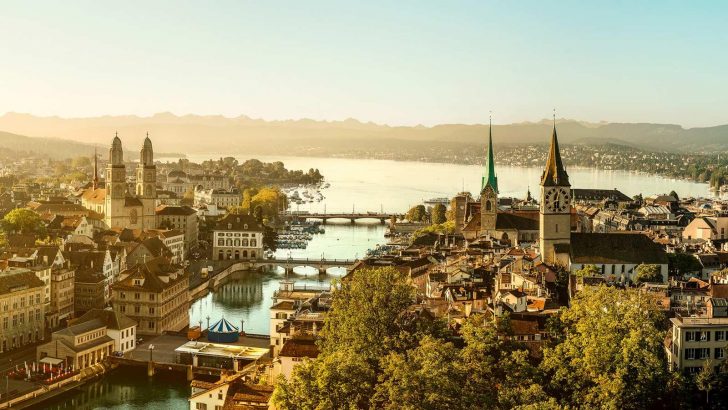
Set along the northern tip of Lake Zurich and framed by the distant Swiss Alps, Zurich is Switzerland’s largest city and arguably its most polished.
It sits in the heart of Europe, just a short train ride from Germany, France, Austria, and Italy.
While many travelers assume Switzerland’s capital is Zurich, the political center is Bern.
Zurich, however, is the financial and cultural powerhouse.
When I first visited, I was struck by how clean everything felt.
Trams glided quietly through medieval streets, locals swam in the Limmat River during lunch breaks, and even the main train station felt orderly.
But beyond the postcard perfection, one question matters most for travelers: Is Zurich actually safe?
Let’s break it down honestly and in detail.
Warnings & Dangers in Zurich

OVERALL RISK: LOW
Zurich consistently ranks as one of the safest cities in Europe. Violent crime rates are low, and serious incidents involving tourists are uncommon. Petty theft exists, as it does in any major city, but compared to most European capitals, Zurich feels calm and controlled.

TRANSPORT & TAXIS RISK: LOW
Public transportation in Zurich is efficient, punctual, and extremely safe. Trams, buses, and trains are clean and well monitored. Taxi scams are rare, and ride pricing is regulated. Late night travel on public transport is generally safe, though standard awareness still applies.

PICKPOCKETS RISK: MEDIUM
While Zurich is safe overall, pickpocketing can occur in busy areas like Bahnhofstrasse, Zurich Hauptbahnhof, and crowded trams. Incidents are not widespread, but tourists distracted by luxury storefronts are easy targets. Compared to cities like Paris or Barcelona, the risk is significantly lower.

NATURAL DISASTERS RISK: LOW
Switzerland experiences minimal natural disasters. Zurich occasionally sees winter snowstorms and rare flooding near the lake or river, but large scale disasters are extremely uncommon. Earthquakes are possible in Switzerland, though serious ones are rare in Zurich specifically.

MUGGING RISK: LOW
Street robberies are uncommon in Zurich. Violent crime rates are low compared to most European cities. Some late night incidents can occur near nightlife zones, particularly around Langstrasse, but random violent attacks on tourists are rare.

TERRORISM RISK: LOW
Switzerland maintains a neutral political stance and has not been a major target for terrorist attacks. While no European city is entirely immune to risk, Zurich’s threat level remains comparatively low. Authorities maintain strong surveillance and public security measures.

SCAMS RISK: LOW
Zurich is not known for aggressive tourist scams. You will not typically encounter fake petitions or distraction scams common in other European cities. The most likely issue is overpriced dining in tourist heavy areas, rather than organized fraud.

WOMEN TRAVELERS RISK: LOW
Zurich is considered one of the safest cities in Europe for solo female travelers. Streets are well lit, public transportation is reliable at night, and harassment levels are relatively low. Standard precautions still apply, but overall safety is excellent.

TAP WATER RISK: LOW
Zurich’s tap water is among the cleanest in the world. In fact, much of it comes directly from mountain springs and Lake Zurich. Drinking from public fountains is common and safe. There is no need to purchase bottled water.
Safest Places to Visit in Zurich
Zurich’s Old Town, known locally as Altstadt, is one of the safest and most charming areas in the city.
Cobblestone streets wind past historic guild houses, boutique shops, and medieval churches like Grossmünster and Fraumünster.
Police presence is visible but unobtrusive, and crime rates here are very low.
Bahnhofstrasse, one of the world’s most famous shopping streets, is also extremely safe.
It connects the main train station to Lake Zurich and is lined with luxury boutiques and Swiss banks.
Despite the wealth concentrated here, serious crime is rare.
Lake Zurich itself is another safe and relaxing area.
Locals swim, picnic, and paddleboard along its shores.
During summer, public swimming areas such as Seebad Enge are well supervised and family-friendly.
The university district and Zurich West, especially around the Viadukt area, have become trendy and safe neighborhoods with cafes, galleries, and open spaces.
Even at night, these districts feel controlled and secure compared to nightlife areas in many major cities.
Places to Avoid in Zurich
Zurich does not have large no-go zones, but some areas require more awareness, particularly late at night.
Langstrasse, located in District 4, is the city’s main nightlife and red light district.
During the day, it feels normal and lively.
At night, especially after midnight, the atmosphere changes.
Alcohol related incidents, occasional fights, and minor drug activity can occur.
It is not extremely dangerous, but it is the most crime-prone part of Zurich.
The area immediately around Zurich Hauptbahnhof can attract petty crime, particularly late at night.
While the station itself is well patrolled, nearby side streets may see loitering and minor drug dealing.
Some parts of District 5, especially industrial sections away from main roads, can feel isolated after dark.
Again, not highly dangerous, but less comfortable for solo travelers unfamiliar with the city.
Compared to most large cities, even Zurich’s “rough” areas are mild.
Still, awareness is your best tool.
Safety Tips for Traveling to Zurich
- Stay alert around Zurich Hauptbahnhof, especially late at night. Zurich’s main train station is efficient and well patrolled, but it is also the busiest transit hub in Switzerland. Late at night, particularly near the Sihlquai bus terminal side, you may notice loitering and minor drug activity. Keep your luggage close, avoid empty side corridors, and use well-lit main exits. If arriving after midnight, consider a short tram ride instead of walking with bags.
- Approach Langstrasse nightlife with strategy. Langstrasse in District 4 is lively and multicultural, but it is also where most alcohol related incidents occur. If you plan to go out, set a clear meeting point with friends and avoid ATM withdrawals on the street late at night. Stick to reputable bars and avoid getting drawn into arguments. The area is not extremely dangerous, but situational awareness matters here more than anywhere else in Zurich.
- Understand Switzerland’s strict laws and fines. Switzerland is orderly, and Zurich enforces rules consistently. Fare evasion on trams can result in fines exceeding 100 Swiss francs. Jaywalking can lead to penalties. Noise complaints after 10 pm are taken seriously in residential areas. Respecting local regulations not only keeps you safe from fines but also avoids unnecessary interactions with authorities.
- Use Zurich’s public fountains confidently but wisely. Zurich has over 1,000 public fountains supplying clean drinking water. They are safe and well-maintained. However, if a fountain is marked “Kein Trinkwasser,” do not drink from it. Carrying a reusable bottle is both practical and environmentally friendly. Staying hydrated is especially important when walking uphill in the Old Town or hiking nearby Uetliberg.
- Be cautious near the Limmat River during summer. Swimming in the Limmat and Lake Zurich is popular with locals, but currents can be stronger than they appear. Only swim in designated areas such as Oberer Letten or Seebad Enge. Avoid diving in unfamiliar spots and pay attention to posted warnings. Water safety is rarely discussed, but river currents cause more issues than street crime here.
- Secure high-value items in luxury shopping zones. Bahnhofstrasse is lined with luxury boutiques and watch shops. It is extremely safe, but visible wealth can attract discreet pickpockets. If you make a high-value purchase, request discreet packaging. Avoid displaying expensive watches or jewelry unnecessarily, particularly when transitioning from central areas to quieter streets.
- Prepare properly for winter conditions. Zurich winters can bring icy sidewalks and steep, slippery streets in the Old Town. Wear shoes with proper traction. Falls are a more realistic risk than crime during colder months. If driving, be aware that snow tires are expected in winter conditions. Even locals adjust their pace when streets freeze.
- Exchange money smartly and understand pricing culture. Switzerland is expensive, and tourists sometimes feel pressured into making poor financial decisions. Use ATMs affiliated with major banks like UBS or Credit Suisse for fair exchange rates. Avoid dynamic currency conversion when paying by card, as it often results in worse rates. Financial awareness is part of personal safety in a high-cost city.
- Respect cycling infrastructure and tram lanes. Zurich’s transportation system is precise. Trams have priority and cannot stop quickly. Always check for approaching trams before crossing tracks. Bike lanes are clearly marked, and stepping into one while distracted can lead to collisions. Traffic accidents are statistically more common than violent crime here.
- Take advantage of Switzerland’s emergency systems. Switzerland’s emergency number is 112 for general emergencies and 117 for police. Response times in Zurich are fast. Pharmacies are knowledgeable and can assist with minor medical issues. Save your embassy’s contact information in your phone. Zurich is safe, but preparedness reflects smart travel, not paranoia.
So... How Safe Is Zurich Really?
Statistically, Zurich ranks among the safest large cities in Europe.
Switzerland consistently places high in global safety indexes, often outperforming neighboring countries in crime prevention and quality of life metrics.
Violent crime rates are significantly lower than the European Union average.
Police response times are quick, and public infrastructure is well-maintained.
Social stability, strong governance, and economic prosperity all contribute to low crime levels.
That said, no city is entirely risk-free.
Petty theft and late night alcohol related incidents do occur.
However, compared to cities like London, Paris, or Rome, Zurich’s risk level is considerably lower.
In practical terms, most travelers experience Zurich as calm, orderly, and remarkably safe.
With basic common sense, it is one of the easiest European cities to navigate securely.
How Does Zurich Compare?
| City | Safety Index |
|---|---|
| Zurich |
92 |
| Zermatt |
93 |
| St. Moritz |
93 |
| Basel |
87 |
| Geneva |
90 |
| Bern |
85 |
| Lucerne |
91 |
 Launceston Launceston | 89 |
 Mexicali Mexicali | 40 |
 Birmingham Birmingham | 38 |
 Beirut Beirut | 45 |
| Grand Portage | 80 |
| Sturbridge | 88 |
Useful Information

Visas
Switzerland is part of the Schengen Area. Visitors from the United States, Canada, Australia, and many European countries can stay visa free for up to 90 days within a 180 day period. Travelers from other countries may need a Schengen visa, which typically costs around 80 euros and must be obtained before arrival.

Currency
Zurich uses the Swiss Franc, not the euro. While some businesses accept euros, change is usually given in francs at unfavorable rates. Use ATMs for the best exchange rates. Credit cards are widely accepted throughout the city.

Weather
Zurich has four distinct seasons. Winters are cold, often below freezing with snow. Summers are mild to warm, averaging around 20 to 25 degrees Celsius. Pack warm layers in winter and light clothing with a jacket in summer.

Airports
Zurich Airport is the main international gateway, located about 10 kilometers from the city center. Trains connect the airport to Zurich Hauptbahnhof in approximately 10 to 15 minutes. The system is fast, reliable, and affordable.

Travel Insurance
Travel insurance is strongly recommended. Swiss healthcare is high quality but expensive. Insurance covers medical emergencies, cancellations, and lost belongings, providing peace of mind in an already very safe city.
Switzerland - Safety by City
| City | Safety Index |
|---|---|
| Basel | 87 |
| Bern | 85 |
| Geneva | 90 |
| Interlaken | 90 |
| Lausanne | 78 |
| Lucerne | 91 |
| St. Moritz | 93 |
| Zermatt | 93 |
| Zurich | 92 |













I can’t help but wonder if Zurich’s peaceful vibe is just a front for all the corporate hustle going on behind the scenes; it’s nice to stroll by the lake, but it feels a bit strange knowing it’s also a financial powerhouse.
Really surprised how calm it felt seeing trams glide past and people swim in the Limmat at lunchtime.
Seeing people dive into the Limmat at noon and trams gliding past the old stone streets made me feel oddly reassured about safety here, even when nights calm down.
Spent a couple afternoons wandering the medieval streets, the trams were spotless but I still felt uneasy walking along the Limmat at dusk.
Seeing locals swim in the Limmat at lunchtime made me feel oddly relaxed, like Zurich’s neatness somehow soaks into you.