


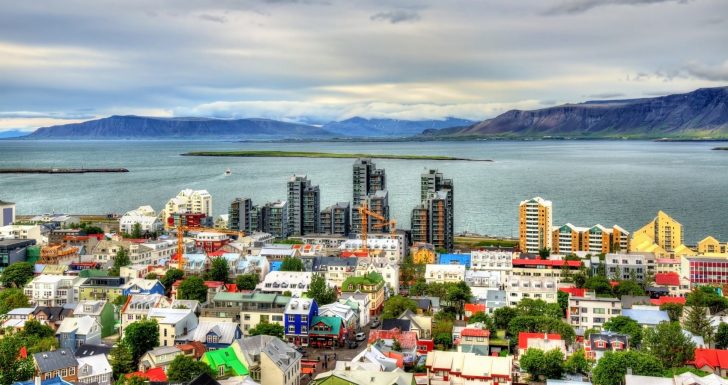
Reykjavik is the capital city of Iceland.
It is located in the southern part of the western coast of the Icelandic island.
It is just 226 miles south of the Arctic Circle.
Traveling to Reykjavik requires bringing a variety of outerwear since the weather is extremely changeable.
The best time to visit Reykjavík is from June to August, when the days are the longest, according to Rick Steves.
These are also the most crowded times, and because they are the popular months, prices will reflect that.
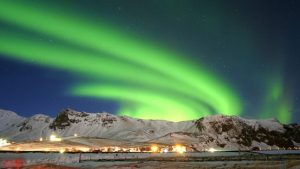
If you have hopes of seeing the Northern Lights, you need to visit from October to March.
During the winter, the daylight hours are very limited, but you will have much less company.
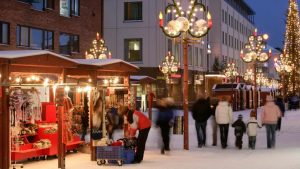
Christmas and New Year’s may be dark, but the festivities will provide plenty of lightness and joy.
Warnings & Dangers in Reykjavík

OVERALL RISK: LOW
The overall risk of a visit to Reykjavik is very low. Voted the safest city in the world to visit, you can feel safe walking around in light and in darkness. The people are friendly, and the welcome is warm. Learning a few words in the local language is always an icebreaker. Stunning landscapes make it a popular destination in spite of the unpredictable weather.

TRANSPORT & TAXIS RISK: LOW
Transport is exceptionally safe in Reykjavík, making the risk low. Buses travel on regular schedules, and taxis are regulated. Getting from the airport is easy by bus or prearranged pickup. Many hotels will make the reservations for you.

PICKPOCKETS RISK: LOW
The risk from pickpockets is low, much lower than in other European cities. Having said that, where there are crowds of tourists, there are always opportunities for thieves to steal. Hallgrimskirkja Church has gone as far as to put up a warning sign near the entrance to warn tourists of the danger. Always be aware of your surroundings.

NATURAL DISASTERS RISK: HIGH
The risk of natural disasters in Reykjavik is high. Between volcanic eruptions, earthquakes, floods, storms, avalanches, and landslides, the risk is always there. Be tuned in to emergency warnings so that you can take the appropriate actions to remain safe. The residents live with these dangers every day. Don't let them discourage you from visiting.

MUGGING RISK: LOW
The risk of being mugged in Reykjavik is low. However, you can increase that risk by consuming too much alcohol or getting involved in drug use. Keep in mind that this is a country where moderation is the norm, and don't be belligerent. Doing these things will keep your risk to a minimum.

TERRORISM RISK: LOW
Currently, the terrorism risk in Iceland is low. Given the political climate in the world, however, no place is completely safe. Don't make yourself an obvious American and refrain from expressing views on subjects that may be controversial.

SCAMS RISK: LOW
Compared to other Western countries, the scam risk in Reykjavik is low. Most of the fraud targets locals rather than tourists and is on the rise. One tourist scam that has been reported is rental cars. Don't fall for deals that seem too good to be true; use known rental companies.

WOMEN TRAVELERS RISK: LOW
Women consider Reykjavík one of the safest places to visit in the world, with a low risk. If you are traveling alone, this is one place where you can almost always be safe. Don't do anything foolish, be aware of your surroundings, and you can enjoy a wonderful vacation in this gorgeous city. Don't leave a drink unattended or accept a drink from someone you don't know.

TAP WATER RISK: LOW
The risk of tap water in Reykjavík is low. Iceland has some of the cleanest, best-tasting water in the world. Almost 95% of the water in Iceland is from springs. You don't need to buy expensive bottled water. Fill your water jugs at any water fountain or faucet.
Safest Places to Visit in Reykjavík
Since all the neighborhoods in Reykjavik are safe, the next thing to consider is convenience and what they offer.
Midborg is the downtown area of Reykjavik, home to many hotels, restaurants, and cafés.
It is also the home of the National Theatre of Iceland, Landakotskirkja Church, and Reykjavík’s landmark Hallgrímskirkja Church.
It is the beating heart of Reykjavík and a must-visit.
Vesturbær is mostly a residential area, but it is the most exclusive neighborhood in Reykjavik.
It is quiet, but for those who enjoy being among locals, it is the perfect destination.
Laugardalur is the place to come for outdoor adventures in the city.
Hiking and biking trails are abundant.
It is home to a zoo, arena, sports stadium, and a botanical garden.
Hlíðar is the central residential neighborhood right next to Midborg.
It is home to Perlan, and the only geothermal beach in Iceland, Nauthólsvík.
The Phallological Museum is one of the most unusual museums.
Places to Avoid in Reykjavík
There are almost no other places in the world where you can say this, but there are no places you need to avoid in Reykjavík.
You can walk into all areas of the city both day and night.
The Hallgrímskirkja Church does have a warning near the entrance about pickpockets, but that is about it.
There is a very low rate of homelessness in Iceland, the lowest in Europe.
With a population of about 139,000, Reykjavík is not a large city; it is a moderate-sized town.
It has no slums and very little poverty.
The social safety net is excellent, and people who are going through hard times have lots of help.
Outside of Reykjavík, there are a lot of dangers, but not from people, from the environment and weather.
Safety Tips for Traveling to Reykjavík
- Be prepared for changeable weather. According to the US Embassy in Iceland, 600–700 people require rescue every year. The weather in Iceland is erratic. Being trapped in an uninhabited area unawares can be extremely dangerous.
- Always carry your cellphone. Most visitors to Reykjavík will explore outside the city proper. You need to be well-prepared before adventuring. Test your phone to make sure that it works in Iceland. Have a full charge before you go out.
- Avoid buying and bringing home whale products. If you purchase and try to bring home whale items to the US, your items will be confiscated. You will face potential jail time and a $10,000 fine for violation of the Marine Mammal Protection Act.
- Use common sense when going out at night. Reykjavik is the safest place in the world to visit. There is still crime. While violent crime is rare, sexual assault is not. One in four women in Iceland has been sexually violated.
- Never leave your drink unattended, even when you go to the bathroom. It is just as likely to have a date rape drug put into your drink in Reykjavík as any other city. Use the buddy system when out partying.
- Beware of pickpockets. Pickpocketing is a crime of opportunity. Where crowds gather, opportunities arise. Avoid carrying large amounts of cash and always keep your credit card secure. Being distracted makes you vulnerable, so try to make sure you are always aware of your surroundings.
- Don’t criticize any head of state. Americans are used to voicing disapproval without repression. In Reykjavík and all of Iceland, this is illegal and can land you in hot water, and I don’t mean a thermal pool. Arrest can result under Article 95 of the Penal Code.
- Don’t leave things in a rental car. Iceland is safe, but theft happens. Don’t leave things in your rental car. Keep valuables in your hotel safe.
- Don’t leave possession unattended. It can feel so safe in Reykjavík that you forget to be guarded. Leaving your cellphone, purse, or other personal property unattended is foolhardy. Be as wary as you would at home, and you should be safe.
- Listen to weather reports daily in English. The weather is one of the main dangers in Reykjavík. It is very changeable. Dress accordingly, and if it’s bad, choose an indoor activity.
So... How Safe Is Reykjavík Really?
Voted the safest capital city in the world, Reykjavik is one of the safest places you can visit, especially if you are a woman.
Iceland has been ranked as the safest country in the world since 2008.
Having said that, some crimes are on the rise, but violent crime against tourists is almost nonexistent.
The most common crimes are traffic violations and account for 62% of the reported crimes.
The overall crime rate is 22.26, and when compared to the US rate of 47.7, it can only be considered very low.
Most of those who commit crimes in Reykjavík are adult males, and domestic violence is a common cause of the rate.
Much of this low rate is due to the fact that there is little variation in the population due to religions and other things that can initiate conflict.
Not following the law is not looked upon well in Reykjavík, and this is part of the reason the crime rate is low.
Between 1999 and 2018, there were 37 murders in all of Iceland.
In only 8 of these cases, the victim was unknown to the assailant.
How Does Reykjavík Compare?
| City | Safety Index |
|---|---|
 Reykjavík Reykjavík |
95 |
 Hood River Hood River | 82 |
| Florida | 70 |
 Gaoua Gaoua | 25 |
 Cuernavaca Cuernavaca | 60 |
| Marfa | 80 |
| Ely | 84 |
Useful Information

Visas
Beginning sometime in 2026, residents of the US and Canada will be required to apply for ETIAS (The European Travel Information and Authorization System) for traveling to Iceland. While ETIAS is not a visa, it is a travel authorization. You must have a 10-year passport and have at least three months until the expiration of your passport. Once you get the authorization, it is good for three years or until the expiration date on your passport.

Currency
The currency of Iceland is the Icelandic krona, abbreviated as kr. Credit and bank cards are widely accepted, and cash isn't used much. If you plan to travel by bus, you will need to use cash or buy a bus card in advance. The best way to get cash is at an ATM, They are easy to find. You can also use a cash exchange at the airport before arrival.

Weather
The weather in Reykjavik may come as a surprise, given that it is Iceland. The reality is that winters are not as severe in Reykjavík as they are in parts of the United States. Summer in Iceland is much like spring and fall in the US. The average temperature in the winter is 30 degrees and in the summer 52 degrees. Bring clothes that layer and you will be prepared.

Airports
Reykjavík is serviced by two airports, Keflavik, which is for international flights, and Rekjavik which is for domestic travel. Ideally, you will choose a hotel that provides airport pickup and drop-off, but if not, most will arrange pickup for you. If you are renting a car, it is about 50 km to downtown from Keflavik. The most economical option is the bus, but taxi and private drivers are available.

Travel Insurance
Hopefully, nothing will go wrong on your trip to Reykjavík, but it is better to be prepared than to be unready for surprises. Travel insurance provides the peace of mind that you need to just enjoy your visit without worry. Travel health insurance can also protect you from unforeseen medical incidents. The cost is low, and the benefits are worth considering.
Reykjavík Weather Averages (Temperatures)
Average High/Low Temperature
| Temperature / Month | Jan | Feb | Mar | Apr | May | Jun | Jul | Aug | Sep | Oct | Nov | Dec |
|---|---|---|---|---|---|---|---|---|---|---|---|---|
| High °C |
2 | 2 | 3 | 6 | 9 | 12 | 14 | 13 | 10 | 7 | 4 | 2 |
| Low °C |
-2 | -2 | -2 | 1 | 4 | 7 | 9 | 8 | 6 | 2 | 0 | -2 |
| High °F |
36 | 36 | 37 | 43 | 48 | 54 | 57 | 55 | 50 | 45 | 39 | 36 |
| Low °F |
28 | 28 | 28 | 34 | 39 | 45 | 48 | 46 | 43 | 36 | 32 | 28 |
Iceland - Safety by City
| City | Safety Index |
|---|---|
| Reykjavík | 95 |















Thanks for all the tips and information. I can’t wait to one day see the beautiful untouched nature Iceland has to offer.
Nowhere is safer
Reykjavik is the safest place on earth, literally, nothing bad ever happens.
It’s a great safe-travel destination, but note that it’s EXTREMELY COLD there, so bring warm clothes.
Picturesque city where I always feel at home
I’m not one for high temps so I always look for cities that won’t suffocate me during the warmer summer months. Reykjavík checks that box while also having lots and lots of places to visit along with great food.
Can’t believe it’s only 226 miles south of the Arctic Circle, I was wandering the harbor at 11pm with sunglasses on and felt oddly giddy.
The weather can flip in a day and the midnight sun in June messes with your sleep, but the cozy buzz at Christmas somehow makes the dark winter evenings feel special.
Standing outside in October with the sky suddenly ripping into green ribbons and the wind biting my cheeks left me oddly full of wonder.
Do you ever find the Christmas and New Year’s lights feel extra cozy when the daylight is so limited and we’re only 226 miles south of the Arctic Circle?
Long days in June sounded great, but with the crowds, the higher prices and the weather flipping so fast I was left cold and kinda annoyed.
Still can’t get over how the sky can be midnight-bright at 11 pm in July, yet a week later the harbor wind will sting your face like winter, and somehow that contrast feels oddly comforting.
Have you ever noticed if the weather changes suddenly during a single day, like switching from sunshine to rain in just a couple hours?
I’ve been there in July and it’s true the weather flips fast, but the crowds can be a bit much for how small the city feels.