


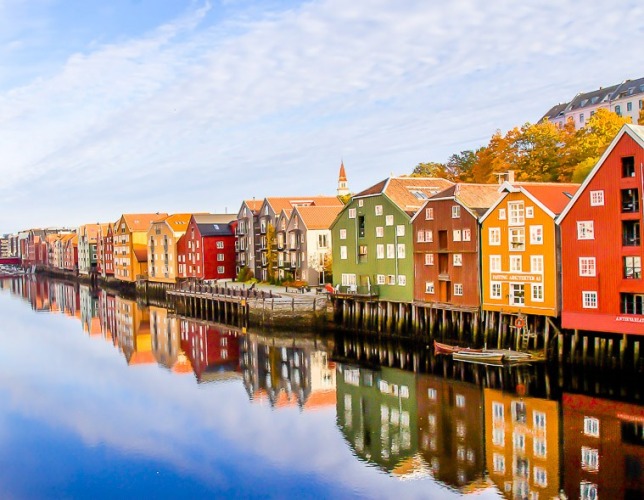
Trondheim is one of those cities that wins people over quietly.
Sitting on the Trondheim Fjord in central Norway, it mixes medieval history, colorful wooden neighborhoods, student energy, and that clean Scandinavian feel travelers tend to remember long after the trip ends.
It is Norway’s third-largest city, but it does not feel overwhelming.
You get the cultural weight of a major destination, especially around Nidaros Cathedral and the old riverfront, without the stress level of a giant capital.
I find Trondheim appealing because it feels both lively and manageable.
You can explore historic streets, modern waterfront areas, museums, and green spaces in the same day without constantly looking over your shoulder.
For most travelers, the biggest surprises here are not crime related at all.
They are the cold, the changing weather, and just how slippery the streets can get in winter.
Warnings & Dangers in Trondheim

OVERALL RISK: LOW
Trondheim is a low-risk destination for travelers. Violent crime against tourists is uncommon, and the city is generally orderly, well maintained, and easy to navigate. Most visitors will experience Trondheim as calm and safe. The main issues are usually minor theft, alcohol-fueled late-night disturbances, and seasonal hazards such as ice, snow, and reduced daylight in winter.

TRANSPORT & TAXIS RISK: LOW
Public transportation in Trondheim is reliable and generally very safe. Buses are widely used, and the city center is walkable. Taxis are also safe, but they are expensive by many travelers’ standards, so it is smart to use official taxi companies or app-based booking when possible. In winter, transport delays can happen during bad weather.

PICKPOCKETS RISK: LOW
Pickpocketing risk in Trondheim is low compared with many European cities, but that does not mean it is nonexistent. Crowded buses, train stations, nightlife areas, and major attractions can create opportunities for opportunistic theft. You probably will not deal with professional pickpocketing rings here, but careless travelers can still lose wallets, phones, or bags.

NATURAL DISASTERS RISK: LOW
Trondheim is not known for extreme natural disaster risk in the way some destinations are, but Norway does face weather-related hazards. Heavy snow, icy sidewalks, strong winds, flooding, and occasional landslide concerns in the wider region can affect travel. For most tourists in the city itself, the biggest real danger is slipping on ice during the colder months.

MUGGING RISK: LOW
Mugging risk is low in Trondheim. Street robbery is not a defining problem here, and most visitors will feel comfortable walking in central areas. That said, late-night drinking zones can sometimes bring arguments, rowdy behavior, or isolated incidents. It is still wise to avoid wandering alone while intoxicated or flashing expensive items after bars close.

TERRORISM RISK: MEDIUM
The day-to-day risk to tourists in Trondheim is low, but like much of Europe, Norway cannot be treated as risk free. Public places, transport hubs, and crowded events always require basic awareness. This is not something that should scare most travelers away, but it does justify normal caution in busy public areas and during large gatherings.

SCAMS RISK: LOW
Scams are not a major feature of travel in Trondheim, which is one reason the city feels refreshingly straightforward. Still, tourists can run into overpaying for taxis, fake rental listings, misleading online booking offers, or card payment issues if they are careless. The biggest “scam” for many travelers is simply not checking prices in an expensive country.

WOMEN TRAVELERS RISK: LOW
Trondheim is generally a very good destination for women travelers, including solo travelers. The city has a strong reputation for social order, gender equality, and low violent crime. Most women will find it comfortable to move around independently. The usual precautions still apply at night, especially around bars, student parties, and poorly lit side streets.

TAP WATER RISK: LOW
Tap water in Trondheim is safe to drink and is one of the easiest parts of the trip. Norway is known for high-quality drinking water, so carrying a reusable bottle is a smart move. Unless there is a rare local advisory, there is no reason for most travelers to rely on bottled water in the city.
Safest Places to Visit in Trondheim
Midtbyen
Midtbyen, the city center, is one of the safest and most practical places for visitors to spend time.
This is where you will find many of Trondheim’s shops, cafes, public squares, and historic buildings.
It is busy enough to feel active, but rarely chaotic.
During the day, it is ideal for walking, taking photos, and getting your bearings.
Even in the evening, it generally feels comfortable, especially on the main streets.
Bakklandet
Bakklandet is the postcard Trondheim neighborhood.
With colorful wooden houses, cozy cafes, and views along the Nidelva River, it is one of the city’s most charming and reassuring areas for travelers.
I would put it high on any itinerary, not only because it is beautiful, but because it encourages the kind of slow, relaxed exploring that feels safe and enjoyable.
It is especially good for couples, solo travelers, and anyone who likes scenic walks.
Nidaros Cathedral and the Archbishop’s Palace Area
This area is central, well known, and heavily visited, which makes it a comfortable stop for first-time visitors.
Nidaros Cathedral is the city’s big historic showpiece, and the surroundings are well suited to sightseeing on foot.
Because it is such an important cultural spot, the area tends to feel orderly and easy to navigate.
Solsiden and Nedre Elvehavn
Solsiden is a lively waterfront district with restaurants, outdoor seating, and a polished atmosphere.
It feels modern and social, especially in warmer months.
It is a nice place to spend an afternoon or evening, though standard nightlife awareness matters later at night.
For most visitors, it is one of the city’s safest and most pleasant entertainment zones.
Places to Avoid in Trondheim
Late-Night Bar Areas Without a Plan
Trondheim does not have a large collection of dangerous tourist neighborhoods, which is great news, but some common-sense caution still matters.
The biggest trouble spots for visitors are often not specific “no-go” districts, but late-night nightlife pockets where alcohol changes the mood.
Around closing time, even safe cities can get louder, sloppier, and less predictable.
If you are out late, especially on weekends, avoid drifting around alone without knowing how you are getting back.
Møllenberg at Night
Møllenberg is not a forbidden area, and calling it dangerous would be overstating things.
But it does have a reputation for being noisier and a bit rougher around the edges than the polished parts of central Trondheim, partly because of the student housing concentration.
Tourists do not need to panic about it, yet it is not the part of the city I would recommend for aimless late-night wandering.
Poorly Maintained or Isolated Paths in Winter
This is where Trondheim flips the usual travel safety script.
One of the biggest real risks is not crime at all, but the season.
In winter, icy sidewalks, hilly streets, and darker hours can make some routes far more hazardous than they look.
Isolated paths, steep side streets, and less-trafficked areas become riskier when surfaces are slick.
A fall can ruin a trip much faster than a pickpocket can.
Transit Hubs and Crowded Areas During Peak Travel Times
These are not dangerous in a dramatic sense, but they are the places where you are most likely to deal with petty theft, confusion, or tourist mistakes.
Keep a little extra attention at stations, busy bus stops, and crowded event areas, especially if you have luggage, an open backpack, or your phone out constantly.
Safety Tips for Traveling to Trondheim
- Dress for the weather, not the calendar. Trondheim can feel colder than visitors expect, especially because wind, rain, and damp air make the temperature hit harder. Bring layers, waterproof outerwear, and shoes that can handle wet streets. In winter, insulated clothing and traction-friendly footwear matter even more.
- Take icy sidewalks seriously. This sounds small until it is not. Winter ice is probably a more realistic travel threat here than violent crime. Walk carefully, avoid rushing downhill, and wear shoes with grip. If you are visiting during colder months, this one tip can save you from a painful and expensive accident.
- Use official taxis or book ahead. Taxi safety is generally good, but fares can be high, and tourists everywhere are more relaxed when they know exactly what ride they are taking. Use official taxi stands, reputable companies, or booking apps. If a price seems unclear, ask before the trip starts.
- Keep your valuables zipped up in crowded areas. Trondheim is not famous for pickpockets, but busy places still attract opportunists. Use a crossbody bag, zip your backpack, and avoid leaving your phone or wallet loose on cafe tables. You do not need to be paranoid, just less casual than the thieves are hoping for.
- Do not underestimate alcohol-related risk. A lot of unpleasant travel situations start with someone getting too relaxed after drinks. If you are enjoying the nightlife, keep track of your belongings, watch your drink, and know how you are getting back. Late-night bad decisions can happen even in cities that are otherwise very safe.
- Book accommodation carefully. Norway is expensive, so fake deals can be tempting. Stick with reputable booking platforms, check reviews, and be cautious about private offers that ask for unusual payment methods. If a rental looks dramatically cheaper than everything else nearby, that is your cue to slow down.
- Carry a bank card, but have a backup. Card payments are the norm in Norway, and many places operate almost cash free. That is convenient, but it means you should have a backup card or some emergency cash. Losing access to your main card in an expensive city can become a headache fast.
- Stay visible and alert in winter darkness. In the colder part of the year, daylight can be limited. Streets can feel emptier earlier in the day, and visibility drops quickly. Stick to well-lit routes, especially if you are walking alone, and do not rely on your phone battery as your only navigation plan.
- Respect nature and waterfront conditions. If you are venturing beyond the city center or spending time near trails, hills, or the fjord, weather changes matter. Wet surfaces, cold wind, and changing conditions can catch people off guard. Check the forecast and do not treat Nordic nature like a theme park.
- Buy travel insurance before you go. Even in a low-crime place like Trondheim, things can go wrong. Flights get disrupted, luggage gets lost, people slip on ice, and medical care in Norway is not where you want surprise costs. Travel insurance is one of the easiest ways to protect your budget and your trip.
So... How Safe Is Trondheim Really?
Trondheim is genuinely one of the safer urban destinations you can choose in Europe.
If you are looking for a city where you can walk around without constantly scanning for trouble, this is a strong pick.
Crime exists, of course, because no real city is risk free, but the pattern here matters.
Travelers are far more likely to encounter minor inconvenience than serious danger.
Petty theft can happen, especially in crowded areas, and late-night drinking scenes can get noisy, but violent crime aimed at tourists is uncommon.
What makes Trondheim interesting from a safety perspective is that the biggest risks are often practical rather than criminal.
Weather, ice, darkness, transport timing, and expensive mistakes tend to matter more than personal security threats.
That is actually a pretty good safety profile.
It means travelers who use common sense, dress properly, and stay moderately aware usually do very well here.
I would comfortably rank Trondheim as a low-risk destination overall.
It works especially well for solo travelers, women, older travelers, and anyone who wants a city break without constant stress.
The main thing is not to let the city’s calm reputation make you careless.
Stay aware, plan for the climate, and Trondheim is likely to feel not just safe, but pleasantly easy.
How Does Trondheim Compare?
| City | Safety Index |
|---|---|
 Trondheim Trondheim |
86 |
| Kristiansand |
81 |
| Stavanger |
80 |
| Oslo |
90 |
| Bergen |
71 |
 Williamstown Williamstown | 88 |
| Kendall | 87 |
| Key Largo | 84 |
| Beaumont | 51 |
| North Kingstown | 83 |
| Ottumwa | 51 |
Useful Information

Visas
Norway is part of the Schengen Area. Many travelers, including visitors from the United States, Canada, the United Kingdom, Australia, and much of Europe, can stay up to 90 days within a 180-day period without a tourist visa. Travelers from countries that require a visa should apply in advance through the Norwegian consular system and allow extra processing time.

Currency
The local currency is the Norwegian krone, often written as NOK. Cards are accepted almost everywhere, and many travelers barely use cash in Norway. In my view, the best approach is to use a bank card with low foreign transaction fees and withdraw only a small amount of local currency if you want backup cash.

Weather
Trondheim has cool summers and cold, snowy winters, with rain possible in multiple seasons. Even in warmer months, evenings can feel chilly, so layers are useful year-round. In winter, pack insulated clothing, gloves, and shoes with strong grip. Waterproof outerwear is a very smart addition no matter when you visit.

Airports
The main airport for Trondheim is Trondheim Airport Værnes, located outside the city. It is well connected to central Trondheim by airport bus, regional bus, and train. The train is often a convenient and budget-friendly option, while the airport express bus is popular for direct transfers into the city center.

Travel Insurance
Travel insurance is strongly recommended for Trondheim. Even though the city is low risk for crime, insurance can help with medical costs, trip cancellations, delayed baggage, and accidents such as winter slips and falls. It is one of those boring purchases that feels very clever the moment something unexpected happens.
Trondheim Weather Averages (Temperatures)
Average High/Low Temperature
| Temperature / Month | Jan | Feb | Mar | Apr | May | Jun | Jul | Aug | Sep | Oct | Nov | Dec |
|---|---|---|---|---|---|---|---|---|---|---|---|---|
| High °C |
-1 | -1 | 2 | 6 | 12 | 16 | 18 | 17 | 13 | 8 | 2 | -1 |
| Low °C |
-6 | -6 | -4 | 0 | 4 | 8 | 10 | 10 | 7 | 3 | -2 | -5 |
| High °F |
30 | 30 | 36 | 43 | 54 | 61 | 64 | 63 | 55 | 46 | 36 | 30 |
| Low °F |
21 | 21 | 25 | 32 | 39 | 46 | 50 | 50 | 45 | 37 | 28 | 23 |
Norway - Safety by City
| City | Safety Index |
|---|---|
| Bergen | 71 |
| Kristiansand | 81 |
| Oslo | 90 |
| Stavanger | 80 |
| Trondheim | 86 |














Come here at the end of July
Make sure to visit Trondheim at the end of July so you can experience the St. Olav Festival which is worthwhile. If you like Middle-Age plays and lectures this time of year is perfect.
“Normally, if you lose your wallet someone can try to find you to give it back.” I’ve actually had this happen to me and I couldn’t believe it! The people here are spectacular.
If possible I plan to come here every 2 years for the festival.
Never thought a Nidelva sunset would stop me in my tracks, that thin arctic blue strip of sky and the cold river breeze actually gave me goosebumps.
Seeing the St. Olav Festival crowds by Nidelva in late July, with the river turning that almost unreal orange at sunset, still gives me this quiet, bittersweet lump in my throat.
Did you also get that wistful feeling watching the Nidelva turn bright orange at sunset in July, like the whole city holds its breath?
Does anyone else get weirdly emotional watching the Nidelva sunset when that arctic blue creeps in, I got goosebumps the first time?
Never thought icy sidewalks would make me tiptoe more than the chill itself, but Trondheim really keeps you on your toes in winter.
Never thought chilly, slippery streets could be such a vibe until I actually slipped near the waterfront and laughed it off with some locals.