


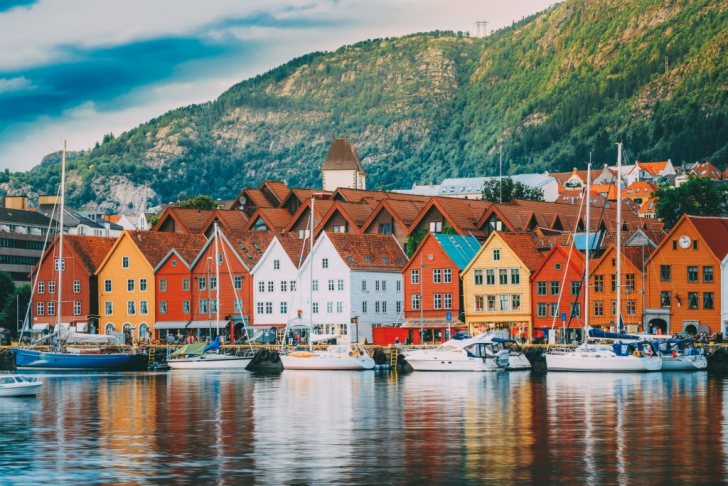
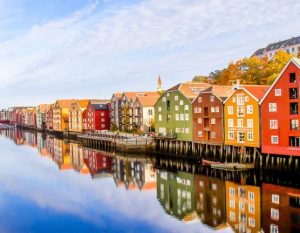
Bergen sits on Norway’s southwestern coast, wrapped around fjords, backed by steep mountains, and famous for colorful harborside buildings, seafood, and fast-changing weather.
It is Norway’s second-largest city, but it often feels more intimate than that, especially around Bryggen, the old wharf area that gives the city much of its postcard charm.
I think Bergen has one of those rare travel personalities where urban comfort and wild nature constantly overlap.
You can spend the morning in a historic district, the afternoon on a mountain trail, and the evening watching rain sweep across the harbor.
That mix is exactly why safety in Bergen is a little different from safety in many big European cities.
Crime is generally low, but weather, slick streets, and outdoor conditions matter more here than they do in most city-break destinations.
Warnings & Dangers in Bergen

OVERALL RISK: LOW
Bergen is a low-risk destination for most travelers. Norway remains a very safe country overall, and serious violent crime is uncommon by international standards. Most visitors are far more likely to deal with rain, slippery pavement, a missed tram, or an expensive dinner bill than a genuine security problem. Sensible city awareness is usually enough.

TRANSPORT & TAXIS RISK: LOW
Public transport in Bergen is reliable and straightforward, especially the light rail to and from the airport. Taxis are generally regulated and safe, though they can be expensive. The real transport hazard is not criminal, it is practical: wet roads, steep surfaces, and reduced visibility in bad weather. If you are walking, use extra caution on slick stone streets and stairways.

PICKPOCKETS RISK: LOW
Pickpocketing risk in Bergen is low compared with many major European tourist cities, but it is not zero. Petty theft does occur from time to time, especially in tourist seasons, and crowded transport hubs remain the most likely setting. In Bergen, visitors should stay alert around the fish market, transit stops, and busy harbor areas rather than expecting a major street-theft problem.

NATURAL DISASTERS RISK: MEDIUM
Natural disaster risk in Bergen is not extreme, but it is more relevant than many travelers expect. Western Norway is known for heavy rain, and flood and landslide hazards are taken seriously in this part of the country. In Bergen, persistent rain can create localized disruption, slippery walking conditions, and occasional transport headaches. Hikers should treat weather warnings seriously, especially on mountain routes and exposed trails.

MUGGING RISK: LOW
Mugging risk in Bergen is low. Serious crime is rare, and the more common traveler issues are petty theft and occasional minor scams rather than street robbery. Late at night, especially after drinking, basic urban caution still applies, but Bergen is not a city that typically feels threatening to visitors.

TERRORISM RISK: MEDIUM
The day-to-day risk to tourists in Bergen remains low, but terrorism cannot be dismissed entirely. Like most European countries, Norway continues to monitor a changing threat environment, especially around crowded events or symbolic public spaces. For ordinary travelers, this translates into awareness rather than alarm. It is something to keep in mind, not something that should dominate your trip planning.

SCAMS RISK: LOW
Scam risk in Bergen is low. You are not likely to encounter the aggressive tourist hustling seen in some European capitals. Still, basic travel scams exist everywhere, including overcharging by unofficial operators, distraction theft, or fake booking issues. I would be more cautious online with bookings and in very busy visitor areas than worried about elaborate street fraud.

WOMEN TRAVELERS RISK: LOW
Bergen is generally a very good destination for women travelers, including solo travelers. Norway is widely regarded as one of Europe’s safer countries, and Bergen does not stand out as a place of unusual concern. That said, normal precautions still matter at night, after drinking, or when walking alone in quieter areas away from the center.

TAP WATER RISK: LOW
Tap water risk in Bergen is low. Norway has a strong reputation for safe drinking water, and in practical terms travelers can usually drink tap water confidently. Carrying a reusable bottle here makes more sense than buying bottled water. Unless there is a rare local notice saying otherwise, the tap water in Bergen is perfectly fine for visitors.
Safest Places to Visit in Bergen
The safest and most enjoyable parts of Bergen for most tourists are the central, well-trafficked areas where locals and visitors mix throughout the day.
Bryggen is the obvious starting point.
It is historic, scenic, and usually busy enough that you rarely feel isolated.
Nearby, the Fish Market and harborfront are also comfortable zones for wandering, grabbing food, and getting your bearings.
These are the parts of the city where first-time visitors tend to feel relaxed quickly.
I also think the areas around the Fløibanen funicular approach, the city center shopping streets, and the route around Lille Lungegårdsvannet are among the best picks for travelers who want a safe, easy introduction to Bergen.
They are central, active, and simple to navigate even if the weather turns messy.
If you want panoramic views without committing to a long hike, taking the funicular up Mount Fløyen is a smart move because it reduces the physical risk that comes with steep, wet trails while still giving you that classic Bergen landscape.
For day trips, organized fjord tours and clearly marked attractions are also safe choices.
Bergen’s tourism infrastructure is strong, and the city is used to receiving international visitors.
The key is to separate “safe” from “easy.”
A mountain path can be perfectly safe in fair conditions and immediately less forgiving in rain or wind.
In Bergen, the safest places are often the ones where nature is accessible without asking you to underestimate it.
Places to Avoid in Bergen
Bergen does not have the kind of internationally notorious no-go neighborhoods that travelers worry about in some larger cities.
Still, there are places and situations I would treat with more caution.
Late at night, quieter stretches around transport nodes, isolated side streets away from the harbor, and poorly lit areas on the edges of the center can feel less comfortable, especially if you are alone or visibly intoxicated.
That does not make them highly dangerous, but it does make them less ideal.
If there is one category of place I would tell travelers not to underestimate, it is not a neighborhood, it is exposed outdoor terrain.
Bergen’s hills, viewpoints, and mountain access are part of the city’s magic, but rain and slick stone can turn a casual walk into a fall risk fast.
Trails around Mount Fløyen or Mount Ulriken are wonderful, yet they deserve proper footwear, layers, and a quick check of conditions before you head out.
Avoid heading onto unfamiliar paths late in the day or in poor visibility just because they look close on a map.
I would also be careful around nightlife when bars close.
Norway is generally safe, but anywhere alcohol is involved, the mood can get louder and less predictable.
The risk here is usually nuisance rather than serious violence.
Bergen is a city where avoiding trouble is mostly about avoiding bad timing, bad weather decisions, and the false confidence that comes from assuming a low-crime city has no risks at all.
Safety Tips for Traveling to Bergen
- Dress for rain even when the sky looks innocent. Bergen is famous for wet weather for a reason. A waterproof outer layer, water-resistant shoes, and something warm to add underneath will make your day safer and far more comfortable. Cold rain and wind can wear you down faster than travelers expect, especially if you are going from city streets straight to a viewpoint or fjord excursion.
- Treat wet pavement like a travel hazard. In many cities, rain is annoying. In Bergen, it can also be slippery enough to cause falls, especially on stone lanes, stairs, harbor edges, and steep side streets. Walk a bit slower than usual and do not assume your regular sneakers are enough if the forecast looks rough.
- Use the light rail from the airport when it fits your schedule. The Bybanen light rail is a straightforward, low-stress way into the city center. It is cheap, official, and easy to understand, which lowers the chance of confusion after arrival. Taxis are safe too, but they cost much more, and tired travelers sometimes make worse decisions when they feel rushed at the airport.
- Keep an eye on your bag in busy visitor zones. Bergen is not a pickpocket capital, but crowded places are still where opportunistic theft happens. Keep your phone and wallet zipped away around Bryggen, the Fish Market, transport stops, and on busy boats or buses. Low-risk does not mean no-risk.
- Do not turn a city walk into an accidental mountain hike. One of Bergen’s charms is how quickly the urban streets connect to steep natural terrain. That can fool visitors into thinking outdoor routes are casual. If you head uphill, bring water, a charged phone, and proper shoes. In this city, “close to town” does not always mean “easy.”
- Check the weather before any fjord or hiking plan. Conditions in western Norway can shift quickly. Even if the morning looks fine, wind, rain, and visibility can change the practical safety of an outing. I would especially do this before boat trips, mountain walks, or rides to scenic viewpoints where exposure matters more.
- Stay moderate with nightlife. Bergen’s bar scene is not wildly dangerous, but late-night judgment errors are still one of the easiest ways travelers create problems for themselves. Know how you are getting back, keep your hotel address handy, and do not wander off alone just because the city feels calm. Most trouble in safe cities starts with overconfidence.
- Use official booking channels and standard payment methods. Scam levels are low, but fake accommodation issues, misleading online offers, and small overcharge situations are still possible. Pay in ways that give you a record, double-check reservation details, and be skeptical of last-minute deals that feel oddly urgent. Bergen rewards organized travelers.
- Drink the tap water, but pay attention to local notices. Norway’s drinking water is generally excellent, and Bergen is a great city to skip bottled water. Still, the smart habit is the same anywhere: if your accommodation or local authorities issue a boil-water advisory, follow it immediately. Safe destinations still rely on travelers paying attention.
- Budget carefully so you do not make bad safety decisions to save money. Bergen is expensive by many travelers’ standards. When people underestimate that, they sometimes choose poorly located accommodation, late-night long walks, or rushed transport decisions. A realistic budget is actually a safety tool here. It lets you choose convenience when the weather is bad or the hour is late.
So... How Safe Is Bergen Really?
Bergen is genuinely one of the safer city destinations in Europe for ordinary travelers.
The broader picture is reassuring: Norway is a low-risk country overall, serious violent crime is rare, and the most common traveler problems are petty theft, weather exposure, and practical travel mistakes rather than deliberate targeting by criminals.
That is a very good safety profile.
What makes Bergen interesting is that its safety story is not just about policing or crime.
It is about environment.
Heavy rain, slick surfaces, and the city’s immediate access to steep outdoor terrain give Bergen a different risk pattern than many other European city destinations.
You do not need to be nervous here, but you do need to be weather-literate.
A careless traveler can have a worse day from soaked clothing or a bad slip than from any criminal incident.
If you travel with normal urban awareness, keep your belongings secure in busy areas, and respect the weather like a local would, Bergen is a very comfortable place to explore.
I would classify it as a low-risk destination overall, with a small reminder that nature and climate are part of the equation.
Bergen is not a city that feels unsafe.
It is a city that rewards common sense.
How Does Bergen Compare?
| City | Safety Index |
|---|---|
 Bergen Bergen |
71 |
| Stavanger |
80 |
| Oslo |
90 |
| Kristiansand |
81 |
| Trondheim |
86 |
 Muskegon Muskegon | 72 |
| Fredericksburg | 85 |
| Wellfleet | 92 |
 London London | 70 |
| West Yellowstone | 84 |
| Mandeville | 77 |
Useful Information

Visas
Norway is in the Schengen area. Many travelers can enter visa-free for up to 90 days in a 180-day period, while others need a visitor visa. Standard short-stay visa fees for adults are typically around 90 euros, with reduced or no fees for some children. Always check current entry rules before departure.

Currency
Bergen uses the Norwegian krone, abbreviated NOK. Card payments are widely accepted in Norway, often even for very small purchases, so you usually do not need much cash. I would avoid exchanging large amounts at airports unless necessary and rely mainly on cards or ATMs for a better practical exchange experience.

Weather
Bergen’s weather is famously wet and changeable. Pack a waterproof jacket, layers, and shoes that can handle slick surfaces. Even in summer, it is smart to bring something warm because coastal wind and rain can make the city feel cooler than the temperature suggests.

Airports
The main gateway is Bergen Airport Flesland. From there, the light rail takes about 45 minutes to the city center and is one of the easiest budget-friendly transfer options. The airport bus is faster at roughly 30 minutes, while taxis are available but much more expensive. For most travelers, arrival logistics in Bergen are pleasantly simple.

Travel Insurance
Travel insurance is a very good idea for Bergen, even though the city is low-risk. It is especially useful because weather disruptions, transport hiccups, medical costs, and outdoor activities can all get expensive quickly. I would not skip it, especially if your trip includes fjord tours, hiking, or multiple transport connections.
Bergen Weather Averages (Temperatures)
Average High/Low Temperature
| Temperature / Month | Jan | Feb | Mar | Apr | May | Jun | Jul | Aug | Sep | Oct | Nov | Dec |
|---|---|---|---|---|---|---|---|---|---|---|---|---|
| High °C |
3 | 3 | 5 | 8 | 11 | 14 | 16 | 16 | 14 | 10 | 7 | 4 |
| Low °C |
0 | 0 | 1 | 4 | 7 | 10 | 12 | 12 | 11 | 7 | 4 | 1 |
| High °F |
37 | 37 | 41 | 46 | 52 | 57 | 61 | 61 | 57 | 50 | 45 | 39 |
| Low °F |
32 | 32 | 34 | 39 | 45 | 50 | 54 | 54 | 52 | 45 | 39 | 34 |
Norway - Safety by City
| City | Safety Index |
|---|---|
| Bergen | 71 |
| Kristiansand | 81 |
| Oslo | 90 |
| Stavanger | 80 |
| Trondheim | 86 |













A safe, clean and special city
Bergen is very safe in my opinion. Of course you have to be careful and exercise caution and not expose valuables. But this goes for any other place in the world. Clean air from all the mountains and a lot of places to visit make this a wonderful place for a longer trip alone or with friends. It also seems like a good place to relax and unwind especially if you live in a bigger city and need to get some peace and quiet.
Outrageous to have pickpocketing as a medium risk. This might be the safest city in Europe.
That place sounds amazing, especially being surrounded by mountains; I can only imagine how beautiful the views must be.
Did you really find everything you needed at the tourist information point? I’ve heard it can be a total game changer for navigating the city!
Bergen really surprised me with how stunning the mountain views are, especially when you catch them at sunset; it’s like a whole different world up there.
Did you ever get caught by a sudden rain sweeping across the harbor so the slick streets made your shoes slide and you had to cut your afternoon plans short?
Didn’t expect to get soaked running down the slippery cobblestones by Bryggen and still grin about it.
Have you switched to waterproof boots after getting your shoes soaked on Bryggen’s cobbles, because slipping on those wet stones made me uneasy about heading up to the trails?
Postcard buildings are cute, but my shoes were soaked in ten minutes and I spent the afternoon hopping around on slippery streets trying not to look ridiculous.
Have you noticed if the slippery streets ever get so bad that it makes walking around Bryggen tricky?