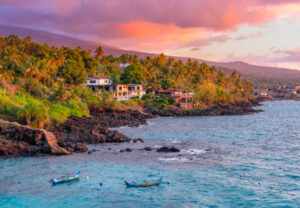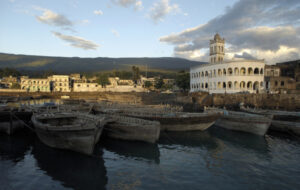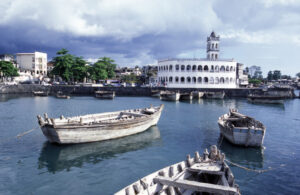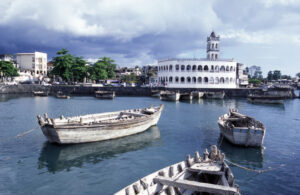
Mitsamiouli is a coastal town on the northwestern side of Grande Comore, the largest island in the Union of the Comoros.
Known for its beaches, clear tropical water, coral reefs, fishing communities, and laid-back atmosphere, it offers a much quieter experience than the capital, Moroni.
Travelers who make the journey north usually come for swimming, snorkeling, diving, coastal scenery, and a glimpse of everyday life away from the country’s main urban center.
The surrounding coastline contains some of Grande Comore’s most attractive beaches.
Mitsamiouli is generally manageable for travelers, but the Comoros requires more preparation than a developed resort destination.
Petty theft, poor road conditions, limited emergency services, unsafe drinking water, tropical storms, strong ocean conditions, and inadequate medical facilities are more realistic concerns than serious tourist-targeted violence.
Warnings & Dangers in Mitsamiouli

OVERALL RISK: MEDIUM
Mitsamiouli is generally peaceful, but visitors should exercise more caution than they might at a developed Indian Ocean resort. Petty crime and crimes of opportunity can occur, especially around beaches, markets, and transportation areas. The larger concern is limited infrastructure. Police, ambulance, medical, and emergency services may not respond as quickly or effectively as travelers are accustomed to. Avoid walking alone in isolated areas after dark, keep valuables discreet, and plan transportation before leaving your accommodation.

TRANSPORT & TAXIS RISK: MEDIUM
Road transportation is one of the biggest practical risks. The main coastal road around Grande Comore is paved, but driving conditions can still be difficult because of potholes, pedestrians, motorcycles, animals, poorly maintained vehicles, and limited lighting. Drivers may travel quickly on narrow stretches of road. Night driving should be avoided whenever possible. Using a trusted driver arranged through your accommodation is generally easier and safer than renting a vehicle if you are unfamiliar with local roads.

PICKPOCKETS RISK: MEDIUM
Pickpocketing is possible but is not usually an overwhelming concern. Mitsamiouli has fewer crowds than Moroni, which reduces opportunities for thieves. Markets, transportation areas, beaches, and public events still require basic awareness. Keep phones and wallets secure and do not leave bags unattended while swimming. Foreign visitors can stand out, so displaying expensive electronics or large quantities of cash unnecessarily is best avoided.

NATURAL DISASTERS RISK: MEDIUM
Tropical cyclones, heavy rainfall, flooding, landslides, earthquakes, and volcanic activity are the main natural hazards affecting Grande Comore. The rainy season generally falls between November and April, when tropical storms and cyclones are more likely. Heavy rain can damage roads and interrupt transportation. Grande Comore is also volcanic, with Mount Karthala remaining an active volcano. Visitors should monitor weather conditions and follow local instructions if volcanic or severe weather warnings are issued.

MUGGING RISK: MEDIUM
Violent robbery is less common than petty theft, but it can occur. Avoid isolated beaches, unlit roads, and quiet areas late at night. Do not carry your entire travel budget when exploring town or going to the beach. If confronted by someone demanding valuables, avoiding physical resistance is generally the safest response.

TERRORISM RISK: LOW
There is no recent pattern of frequent terrorist attacks targeting tourists in Mitsamiouli. The risk for an ordinary visitor is relatively low. Travelers should still remain generally aware around public gatherings, transportation facilities, government buildings, and major events. Follow instructions from local authorities if an unusual security situation develops.

SCAMS RISK: MEDIUM
Mitsamiouli has relatively little mass tourism, so sophisticated tourist scams are uncommon. Visitors may still encounter inflated transportation prices, unclear tour costs, unofficial guides, or misunderstandings involving accommodation and boat trips. Agree on prices before entering a taxi or hiring a driver. Confirm exactly what is included before paying for snorkeling, diving, boat trips, or other excursions.

WOMEN TRAVELERS RISK: MEDIUM
Women can visit Mitsamiouli independently, but additional awareness is sensible. Comorian society is predominantly Muslim and relatively conservative. Modest clothing is appropriate when walking through town or visiting villages, particularly away from beaches and hotels. Women traveling alone should avoid isolated beaches after dark and use trusted transportation at night.

TAP WATER RISK: HIGH
Visitors should not depend on untreated tap water for drinking. Use sealed bottled water or water that has been properly boiled, filtered, or disinfected. Water supplies can occasionally be inconsistent, so keeping extra drinking water at your accommodation is useful. Be cautious with ice, raw foods, and meals that have been sitting unrefrigerated in tropical heat.
Safest Places to Visit in Mitsamiouli
Mitsamiouli Beaches
The coastline around Mitsamiouli contains some of Grande Comore’s most attractive beaches.
During daylight, these areas are generally peaceful and comfortable for visitors.
The main risks involve the ocean rather than crime.
Check waves and currents before swimming and avoid leaving phones, wallets, passports, or cameras unattended on the sand.
Central Mitsamiouli
The town center provides access to shops, markets, restaurants, transportation, and everyday services.
Daytime is the easiest time to explore.
Foreign visitors may attract curiosity, but serious harassment is uncommon.
Dress respectfully, keep belongings secure, and avoid photographing people without permission.
Northern Grande Comore Coast
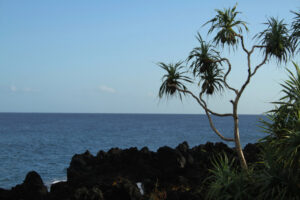
The coastline surrounding Mitsamiouli offers beaches, fishing villages, volcanic landscapes, and quieter stretches of road.
Exploring with a trusted driver allows visitors to see more of the area without worrying about navigating unfamiliar roads.
Bring drinking water and return before dark whenever possible.
Established Guesthouses and Beach Hotels
Reputable accommodation provides one of the safest and easiest bases for exploring northern Grande Comore.
Staff can often arrange transportation, recommend swimming areas, organize guides, and provide information about current road and weather conditions.
Accommodation with reliable water, electricity, and security is particularly valuable.
Places to Avoid in Mitsamiouli
Mitsamiouli does not have well-defined dangerous neighborhoods that travelers need to avoid completely.
Most safety problems depend on circumstances rather than location.
Isolated Beaches After Dark
Remote beaches can become completely deserted once the sun goes down.
There is little reason to remain alone on an unfamiliar beach late at night.
Visit during daylight and return to your accommodation before the area empties.
Roads at Night
Road lighting around northern Grande Comore can be extremely limited.
Pedestrians, animals, motorcycles, potholes, and vehicles without adequate lighting make driving after dark significantly more dangerous.
Plan longer journeys for daylight hours.
Coastline During Rough Weather
Do not swim or approach exposed rocks when waves are large.
Tropical weather can change sea conditions rapidly.
If local residents or accommodation staff advise against swimming, take the warning seriously.
Demonstrations and Political Gatherings
Political demonstrations occasionally occur in the Comoros.
Most are concentrated around larger population centers, but unrest can occur elsewhere.
Stay away from protests, roadblocks, and gatherings involving security forces.
Safety Tips for Traveling to Mitsamiouli
- Use a trusted driver. Road conditions and local driving habits can be challenging. Transportation arranged through your accommodation is usually the easiest option.
- Avoid road travel after dark. Poor lighting, potholes, pedestrians, animals, and unpredictable driving make nighttime journeys considerably more difficult.
- Drink bottled or treated water. Do not assume tap water is safe. Keep additional drinking water available, especially during excursions around northern Grande Comore
- Protect belongings at the beach. Do not leave your passport, phone, wallet, or camera unattended while swimming. Bring only what you need.
- Respect local customs. Mitsamiouli is predominantly Muslim. Swimwear is appropriate at beaches, but modest clothing is more suitable when walking through town or villages.
- Check sea conditions before swimming. Some beaches may have currents, waves, coral, or rocky entrances. Ask locals about conditions when you are unsure.
- Monitor tropical weather. The rainy season can bring intense storms, flooding, and transportation disruption. Keep plans flexible from roughly November through April.
- Protect yourself from mosquitoes. Use insect repellent, wear suitable clothing during the evening, and stay in accommodation with appropriate mosquito protection.
- Carry cash carefully. Cards are not universally accepted and ATM availability can be unreliable. Carry enough cash for necessary expenses but divide it between secure locations.
- Plan for limited medical assistance. Bring necessary medication and basic first-aid supplies. A serious medical emergency may require transportation to Moroni or evacuation outside the country.
So... How Safe Is Mitsamiouli Really?
Mitsamiouli is generally a peaceful place, and most visitors are unlikely to encounter serious crime.
It is a small coastal community rather than a large urban center, and everyday life tends to move at a relaxed pace.
That does not make it a completely effortless destination.
The greatest difference between Mitsamiouli and a developed tropical resort is infrastructure.
Roads can be challenging, emergency services are limited, medical facilities are basic, card payments are not always available, and transportation may require advance planning.
A minor problem that would be easy to solve in a major tourism destination can therefore become considerably more inconvenient.
The ocean deserves particular respect.
Northern Grande Comore has beautiful beaches, but not every section of coastline has lifeguards, warning signs, or clearly marked swimming areas.
Travelers should pay attention to currents and waves and avoid assuming that calm-looking water is automatically safe.
Weather is another important consideration.
The hotter, wetter months between roughly November and April can bring heavy rainfall and tropical storms.
Cyclones are less frequent than in some nearby Indian Ocean destinations, but they remain possible.
Grande Comore also has an active volcano.
Mount Karthala dominates much of the island and remains a natural hazard even though eruptions are relatively infrequent.
Petty crime is a more realistic concern than serious violence.
Keep valuables secure, avoid deserted areas late at night, and do not leave expensive belongings unattended at beaches.
Cultural awareness also improves the experience considerably.
The Comoros is predominantly Muslim, and communities outside Moroni can be especially traditional.
Dressing modestly away from beaches and behaving respectfully around mosques and villages will help visitors avoid unnecessary misunderstandings.
Healthcare is one of the strongest reasons to have appropriate travel insurance.
Routine problems may be handled locally or in Moroni, but serious illness or injury can require international medical evacuation.
Overall, Mitsamiouli can be a rewarding destination for travelers who are comfortable with basic infrastructure and independent travel.
Use reliable transportation, drink safe water, protect yourself from mosquitoes, respect local customs, monitor the weather, and take normal precautions with valuables.
Travelers who arrive prepared will find a quiet corner of Grande Comore with beautiful coastline and far fewer visitors than most Indian Ocean beach destinations.
How Does Mitsamiouli Compare?
| City | Safety Index |
|---|---|
 Mitsamiouli |
68 |
| Domoni |
63 |
| Moroni |
61 |
| Fomboni |
66 |
| Mutsamudu |
64 |
 Tallinn | 85 |
 Macon | 61 |
| Casa Grande | 91 |
| Pueblo | 48 |
| Caliente | 82 |
| Kalispell | 74 |
Useful Information

Visas
Entry requirements for the Comoros depend on nationality. Many international visitors can obtain a visa or entry permission upon arrival, but requirements can change. Make sure your passport has adequate remaining validity and confirm entry rules before departure. Immigration officials may request accommodation information, onward travel details, or proof that you can support yourself during the trip.

Currency
The Comoros uses the Comorian franc. Cash remains extremely important in Mitsamiouli. Do not assume that hotels, restaurants, drivers, shops, or tour operators will accept international credit cards. ATMs are easier to find in and around Moroni than in smaller northern communities, so obtaining enough cash before traveling to Mitsamiouli can prevent problems. Do not carry your entire cash supply in one place.

Weather
Mitsamiouli has a hot tropical climate throughout the year. The wetter and more humid period generally runs from around November through April. Heavy rain, tropical storms, and occasional cyclones are more likely during this period. The months from approximately May through October tend to be drier and somewhat more comfortable for beach activities and exploring the island. Temperatures remain warm year-round. Bring sunscreen, insect repellent, lightweight clothing, rain protection, and plenty of safe drinking water.

Airports
Prince Said Ibrahim International Airport is the main airport serving Grande Comore. It is located north of Moroni and south of Mitsamiouli, making Mitsamiouli accessible by road after arrival. The drive is not especially long by distance, but road conditions and local traffic can affect travel time. Arrange an airport transfer or trusted driver before arrival whenever possible. Visitors traveling onward to Anjouan or Mohéli may use domestic flights or ferries, although schedules can be affected by weather and operational conditions.

Travel Insurance
Travel insurance is strongly recommended for Mitsamiouli. A useful policy should include emergency medical treatment, hospitalization, trip interruption, weather-related delays, lost baggage, and medical evacuation. Medical evacuation coverage is particularly important because advanced healthcare options in the Comoros are limited. Travelers planning diving, snorkeling, hiking, boating, or other activities should confirm that those activities are included in the policy. Coverage for delays and cancellations can also be valuable because flights and sea transportation may be disrupted by tropical weather.
Mitsamiouli Weather Averages (Temperatures)
Average High/Low Temperature
| Temperature / Month | Jan | Feb | Mar | Apr | May | Jun | Jul | Aug | Sep | Oct | Nov | Dec |
|---|---|---|---|---|---|---|---|---|---|---|---|---|
| High °C |
28 | 28 | 29 | 29 | 28 | 27 | 26 | 26 | 26 | 27 | 28 | 29 |
| Low °C |
26 | 26 | 27 | 26 | 26 | 24 | 24 | 23 | 23 | 24 | 25 | 26 |
| High °F |
82 | 82 | 84 | 84 | 82 | 81 | 79 | 79 | 79 | 81 | 82 | 84 |
| Low °F |
79 | 79 | 81 | 79 | 79 | 75 | 75 | 73 | 73 | 75 | 77 | 79 |
Comoros - Safety by City
| City | Safety Index |
|---|---|
| Domoni | 63 |
| Fomboni | 66 |
| Mitsamiouli | 68 |
| Moroni | 61 |
| Mutsamudu | 64 |