


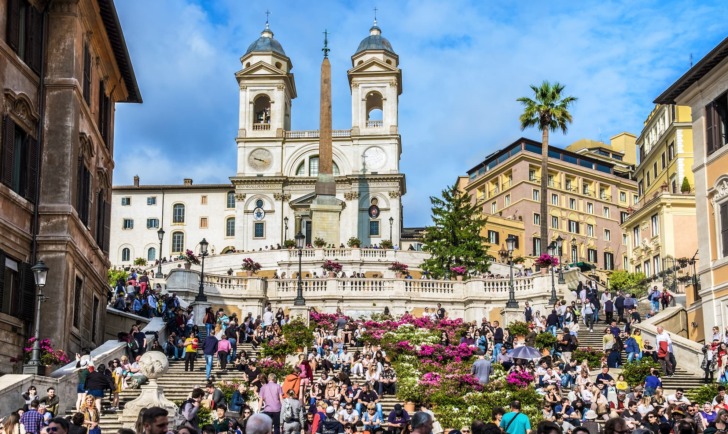
A trip to Italy is becoming less about the destination itself and more about the crowds you have to share it with.
Most of the well-visited places in the country fill rapidly in July and August and again over the Christmas holidays, leaving museums filled with tourists, streets clogged with people, and hotel prices generally inflated.
Those of us who prefer to travel at a slower pace can tell you that choosing the right time of year can make getting around Italy easier, and booking your trains in advance can help you save both money and valuable holiday time.
Anyway, planning around the right month isn’t just about getting more bang for your buck.
The right choice can further extend your budget and make getting around a lot easier, too.
February & March: savings with a side of compromise
At most, February and March get a nod when it comes to an off-peak visit.
Hotel rates are usually at their lowest point outside of the Christmas season: the further out from the holiday period, the better.
Museums, restaurants, and city centers feel quiet around the country.
But not in Venice, where the city comes alive with Carnival.
This international attraction means rates are jacked up, and the streets are full of people.
Check the schedule before setting your dates if you have Venice in your plans: everywhere else, you’ll do just fine.
Once the carnival is over (martedì grasso), the city tends to become quieter, the flow of tourists is less, and you can appreciate a more peaceful atmosphere; going to Venice from the third week of February or at the beginning of March is therefore ideal.
Weather is very dependent upon where you are.
In the north, it can still be damp and cold, while central and southern Italy give the first promise of springtime conditions.
Pack accordingly with layers, and don’t forget that occasional light rain is worth it for the still quiet sights and shorter lines.
November: enough space to spread out
November will attract the kind of person more interested in a great travel experience than sulking on the beach.
The summer crowds have dissipated, so throw on a jacket for the day, and in Southern Italy, it’s mostly cool and sunny.
Wait for the hotel prices to drop again; as a general rule, they will.
Those staying for churches, museums, local food, and markets will find this an ideal time, and spending time inside restaurants lets you enjoy the company of fellow diners.
Most travelers will do well if they want to visit in November, especially during the autumn days.
The shoulder season isn’t what it used to be
Many guidebooks still recommend the shoulder season in Italy as the perfect time to visit, but this isn’t always the case.
Some of the most popular destinations now see some heavy tourist traffic during the shoulder season too, including Rome, Florence, Venice, the Amalfi Coast, and Cinque Terre.
The reasons?
Walking / hiking weather is excellent, temperatures are comfortable for most Europeans, and school holidays and pleasant spring conditions make many destinations just as popular as they are in summer.
I found that a common-sense strategy worked way better.
Get to the top sights early in the day, stay overnight rather than visiting on a day trip, choose weekdays for famous tourist spots, and try to look for locations for your overnight stay that are not in the most intensely impacted part of a major city.
It is some of these smaller cities, perhaps Parma, Trieste, or Perugia, which provide respite and a more authentic Italian experience for much of the year.
Everything’s just easier in low season
Low-season rates are not the only boon: much less publicized discounts on rail and bus services are often passed on to tourists.
Any drop in seasonal demand is sure to be reflected in the price, and by booking trains in advance, you can save money and time off your holiday.
Aside from discounts and booking windows, transport can generally be less expensive in low season.
For most travelers, a simple bit of planning, maybe a few weeks in advance, will provide a head start on lower costs.
Buy your travel tickets before you leave home, look into departure times, and try to avoid leaving late on a Friday or departing or arriving on Sunday afternoons.
A less crowded travel calendar means less time standing in lines, more euros left in your pocket, and more time to enjoy Italy.
Additional Resources
 A Simple Travel Guide for a Cost-Effective Chicago Holiday
 What to Know Before Visiting Machu Picchu: Safety, Altitude and Planning Tips
 4 Best Destinations for a Lads Holiday
 Top 6 Dishes From the Italian South
 5 Holiday Locations to Experience Different Climates
 4 Cities You Should Explore in Italy











