


Travelling somewhere with a different climate does more than change what goes in the suitcase.
It affects how days are paced, when people eat, how cities move, and what time it feels sensible to go outside.
A cold destination reshapes routines around daylight and warmth.
Hot places demand slower afternoons or early starts.
Somewhere dry feels entirely different from somewhere humid, even at the same temperature.
Choosing a destination based on climate can make a trip feel genuinely different rather than just geographically far away.
Snow, desert air, sea breezes, and tropical humidity all shape daily life in ways that are easy to notice once you’re there.
The places below aren’t chosen for novelty.
They’re locations where the climate is central to how the destination works, and where visitors quickly adapt to it, sometimes without realising it.
Snowy Mountains: Val-d’Isère
Winter in Val-d’Isère is defined by cold that stays consistent rather than biting unpredictably.
Temperatures regularly sit below freezing, but the air is dry, which makes time outdoors manageable with the right layers.
Snowfall tends to be reliable from December through April, and the village is built around that certainty rather than hoping for it.
Days revolve around weather windows.
Mornings are often crisp and bright, with visibility improving as lifts open.
Afternoons can bring cloud or snowfall, which changes how the mountains feel within minutes.
Val-d’Isère’s high altitude keeps snow quality steady, and that’s why the ski season runs long compared to lower resorts.
Staying in Val d’Isere chalets puts visitors close to slopes and village life, meaning less time spent in transport and more time adjusting to the rhythm of mountain weather.
Even non-ski days involve snowshoeing, walking through compacted paths, or simply managing cold air that shapes every decision.
Desert Heat and Mountain Air: Marrakech
Marrakech’s climate revolves around heat, but it’s more layered than people expect.
Summer temperatures often push past 40°C, especially in July and August, making midday activity uncomfortable.
Locals tend to structure their days around this, with mornings and evenings carrying most of the movement while afternoons slow down significantly.
What surprises many visitors is how quickly the air changes with elevation.
The Atlas Mountains sit just outside the city, and a short drive can drop temperatures by ten degrees or more.
Places like Imlil or Ourika Valley have cooler air, especially at night, which gives relief from the city’s heat without travelling far.
Within Marrakech itself, narrow streets in the medina create shade and airflow, while riads are designed to cool the air naturally.
Courtyards, fountains, and thick walls aren’t decorative choices; they exist because of the climate.
Understanding how the heat shapes daily life makes time in Marrakech easier to manage and far more comfortable.
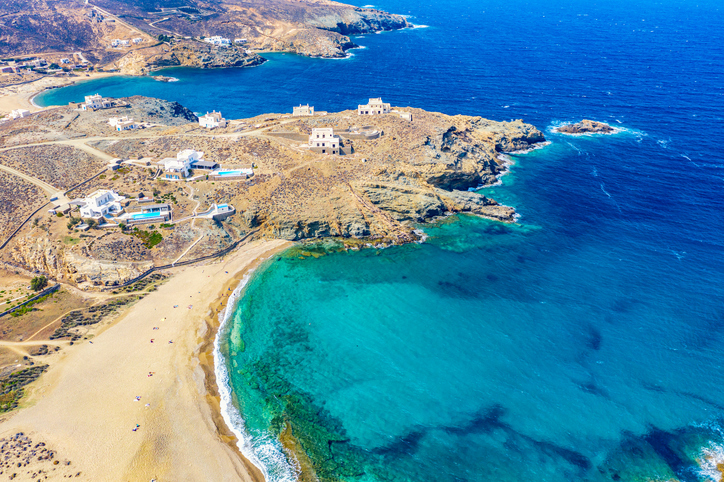
Relaxing Blue Skies: Mykonos
Mykonos is shaped by dry heat and near-constant sunlight during the summer months.
From June to September, rain is rare, skies stay clear, and temperatures usually hover in the high twenties.
It’s a predictable climate, which is why outdoor dining, walking between beaches, and evening strolls are part of everyday life.
The meltemi wind plays a big role here. It picks up in the afternoon, cooling the air and making heat feel less heavy.
It also affects which beaches feel comfortable on a given day, pushing swimmers toward sheltered coves like Agios Stefanos or Ornos when winds are stronger.
Because of this consistency, travellers often find cheap holidays in Mykonos outside peak weeks, especially in late May or early September, when the weather remains stable but crowds thin out.
The climate doesn’t demand much adjustment.
Light clothing, sun protection, and awareness of wind patterns usually cover it.
Dry Heat and Coastal Winds: Cape Town
Cape Town’s climate feels balanced but changeable.
Summers are warm and dry, with temperatures sitting comfortably in the mid-twenties.
Coastal winds pick up regularly, especially in the afternoon, cooling the city and shaping everything from beach conditions to how long people stay outside.
The meeting of mountains and ocean creates microclimates across short distances.
Table Mountain can be wrapped in clouds while the city below stays sunny.
Camps Bay might feel windy while Kalk Bay remains calm.
Locals often pay close attention to forecasts because conditions shift quickly.
Winter brings cooler air and rainfall, particularly between June and August, but even then, days often clear up enough for activities outdoors.
Hiking routes on Lion’s Head and Signal Hill stay accessible year-round.
Cape Town’s climate encourages flexibility rather than strict planning, which becomes part of daily travel decisions.
Tropical Heat and Humid Energy: Phuket
Phuket’s climate is warm year-round, but humidity is what defines it.
Temperatures rarely drop below the mid-twenties, and moisture in the air makes everything feel heavier.
Even simple walks can be tiring until the body adjusts, usually after a couple of days.
The island has clear wet and dry seasons.
November to April brings drier conditions and calmer seas, while May to October sees heavier rain and rougher water on the west coast.
Rain rarely lasts all day, but it shapes plans, especially for boat trips and snorkelling.
Humidity affects daily routines.
Early mornings are cooler and more comfortable for movement.
Afternoons slow down naturally, with indoor breaks or shaded areas becoming essential.
Visitors who adapt to it tend to find the experience easier and more enjoyable.
Summary
So why does travelling for the climate matter?
Climate shapes how destinations function on a daily level, not just what the weather feels like.
It affects sleep, movement, clothing choices, and how long people stay outside.
Travellers who understand this tend to settle in faster and enjoy places more realistically.
Experiencing cold, heat, dryness, wind, or humidity in different parts of the world gives context to how people live there.
It explains architecture, daily schedules, and even social habits.
These differences are often more memorable than seeing landmarks.
Choosing a destination based on climate doesn’t limit a trip.
It adds a layer of understanding that stays with travellers long after they return home.
Additional Resources
 4 Best Destinations for a Lads Holiday
 Live & Work in Dubai: 8 Tips For a Great Experience
 10 Most Dangerous Locations in Iceland
 Navigating Thailand’s New Biometric System for a Seamless Airport Experience
 Best Hiking Locations in the Netherlands
 A Simple Travel Guide for a Cost-Effective Chicago Holiday












Interesting take, but I’m not sure how much climate really changes the experience. A good trip can come down to much more than just the weather, right?
Been to Val-d’Isère, Marrakech, Mykonos, Cape Town and Phuket and the thing that stuck with me was how the dry mountain cold actually stung my cheeks.