 Benin : Safety by City
Benin - safety as a country
Grand-Popo is a laid-back coastal town in southwestern Benin, squeezed between the Atlantic Ocean, lagoons, coconut palms, fishing villages, and the winding Mono River.
It sits close to the border with Togo and feels worlds away from the traffic and intensity of Cotonou.
Travelers come here for wide beaches, pirogue trips through mangroves, traditional villages, seafood, and the Bouche du Roy, where the Mono River meets the Atlantic.
Grand-Popo has real charm precisely because it has not been transformed into a giant resort destination.
That also means tourism infrastructure and emergency services are limited.
Crime is not the biggest concern for most visitors.
Powerful ocean currents, malaria, tropical weather, road conditions, and isolated areas after dark are much more important.
Warnings & Dangers in Grand-Popo

OVERALL RISK: MEDIUM
Grand-Popo has a medium overall risk. The town is peaceful compared with large West African cities, and serious crime involving tourists is uncommon. However, travelers should take precautions against robbery, dangerous roads, malaria, unsafe ocean conditions, and limited medical services. Benin's more serious terrorism problems are concentrated much farther north.

TRANSPORT & TAXIS RISK: MEDIUM
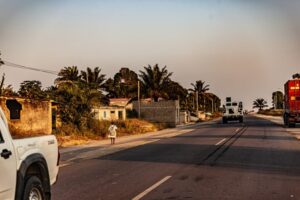
Transportation requires caution. The main coastal highway is paved, but local roads can be rough, poorly illuminated, or flooded during heavy rain. Motorcycle taxis are common but provide little protection in crashes. Use hotel-arranged drivers or trusted taxis when possible, wear seatbelts, and avoid unnecessary road travel after dark.

PICKPOCKETS RISK: LOW
Pickpocketing is not a major problem in Grand-Popo because crowds are limited. Opportunistic theft can still occur around markets, festivals, roadside transportation points, and busy beach gatherings. Foreign visitors carrying cameras and expensive phones may stand out. Keep bags closed, carry limited cash, and avoid leaving valuables unattended at the beach.

NATURAL DISASTERS RISK: MEDIUM
Grand-Popo faces coastal erosion, heavy rain, flooding, thunderstorms, strong surf, and occasional extreme weather. Southern Benin has two main rainy periods, with particularly heavy rain between roughly April and July. Low-lying roads can flood quickly, while erosion continually reshapes sections of the coastline and river mouth.

MUGGING RISK: MEDIUM
Muggings are not common in Grand-Popo's active daytime areas, but armed robbery does occur in Benin. Risk increases on deserted roads, isolated beaches, and poorly lit areas after dark. Avoid walking alone late at night, keep expensive equipment hidden, and arrange transportation between restaurants, hotels, and villages after sunset.

TERRORISM RISK: MEDIUM
Grand-Popo is far from Benin's highest-risk northern regions, where extremist violence and kidnappings have occurred. The direct terrorism risk in Grand-Popo is considerably lower, but the national threat should not be ignored completely. Avoid political gatherings, military facilities, security operations, and suspicious public gatherings.

SCAMS RISK: MEDIUM
Scams usually involve inflated transportation prices, unofficial guides, unclear excursion costs, or requests for unexpected fees. Agree on prices before getting into a taxi or boat, and ask your accommodation to recommend guides. Be particularly clear about whether boat-trip prices include waiting time, fuel, entrance fees, and return transportation.

WOMEN TRAVELERS RISK: MEDIUM
Women can visit Grand-Popo safely, including solo travelers, but additional precautions are sensible. Unwanted attention and persistent approaches may occur, while isolated roads and beaches should be avoided alone after dark. Dress relatively modestly away from hotel beaches, use trusted drivers, and arrange excursions through established accommodations or guides.

TAP WATER RISK: HIGH
Do not drink untreated tap water in Grand-Popo. Use sealed bottled water or properly purified water, and consider bottled water for brushing your teeth if you have a sensitive stomach. Avoid questionable ice and untreated freshwater. Stomach illness is particularly unpleasant when combined with tropical heat and limited nearby medical care.
Safest Places to Visit in Grand-Popo
Central Grand-Popo and Established Hotels
The central hotel and restaurant area is the easiest place for visitors to stay.
Established beachfront properties provide staff, transportation assistance, secure rooms, restaurants, and advice about current local conditions.
Walking nearby during daylight is generally comfortable.
After dark, use transportation for longer distances rather than walking along quiet beach roads.
Grand-Popo Beach by Day
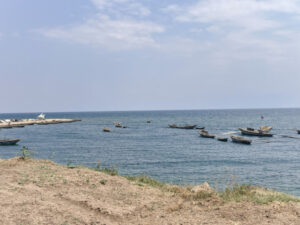
Grand-Popo’s huge Atlantic beach is beautiful, uncrowded, and excellent for long walks.
The safest sections are those directly in front of established hotels and restaurants where other people are present.
The important warning is about swimming.
The Atlantic surf can be powerful, with strong currents even when the beach looks inviting.
Ask locally before entering and never assume an empty beach means calm water.
Bouche du Roy
The Bouche du Roy is one of the area’s most interesting natural attractions, where the Mono River reaches the Atlantic through lagoons, mangroves, sandbanks, and wetlands.
Visit with an experienced local boat operator or guide.
Water levels, channels, waves, and access routes change, making local knowledge valuable.
Properly organized daytime trips are generally safe and fascinating.
Villa Karo
Villa Karo is a cultural center in Grand-Popo and offers a completely different experience from the beach.
Exhibitions, cultural programming, and local artistic connections make it a comfortable daytime stop for travelers interested in contemporary Beninese culture.
Places to Avoid in Grand-Popo
Isolated Beaches After Dark
Grand-Popo does not have clearly defined dangerous neighborhoods.
The most important places to avoid are isolated stretches of coastline after sunset.
The beach can become almost empty once fishermen, visitors, and hotel guests leave.
Poor lighting, limited assistance, robbery risk, and powerful surf make nighttime beach wandering unnecessary.
The River Mouth Without a Guide
The Bouche du Roy is worth visiting, but exploring the river mouth independently is not recommended.
Channels shift, currents can become strong, and boats need to understand local conditions.
Do not hire an obviously overloaded or poorly maintained boat.
Avoid trips during thunderstorms, rough weather, or fading daylight.
Coastal Erosion Zones
Parts of Benin’s coastline suffer significant erosion.
Avoid unstable sandbanks, damaged structures, collapsing coastal edges, and places where waves are cutting directly into the shore.
A section that looks solid can be undercut by water.
Keep children away from unstable edges and never climb abandoned coastal structures for photographs.
Quiet Roads Toward the Togo Border After Dark
Grand-Popo is close to Togo, and the coastal road is an important international route.
The southern border area is not subject to the same terrorism concerns as Benin’s far northwestern frontier.
However, nighttime road travel still carries risks from robbery, poor visibility, breakdowns, and reckless driving.
Cross the border during normal daytime hours whenever possible.
Safety Tips for Traveling to Grand-Popo
- Treat the Atlantic Ocean seriously. Grand-Popo’s beach looks wonderfully empty and peaceful, but the Gulf of Guinea can produce strong currents and heavy surf. There may be little or no lifeguard coverage. Ask hotel staff about conditions before swimming and remain close to shore. If locals tell you not to swim, take that advice seriously.
- Use a local guide for Bouche du Roy. Exploring the Mono River, mangroves, villages, and river mouth is one of the highlights of Grand-Popo. It is also much easier with someone who knows the waterways. Use a recommended boat operator, confirm the return time, and make sure the boat carries enough flotation equipment for passengers.
- Take malaria prevention seriously. Malaria occurs throughout Benin. Discuss preventive medication with a medical professional before traveling. Use mosquito repellent every day, sleep in screened or air-conditioned rooms when possible, and wear long trousers and sleeves in the evening. Wetlands around Grand-Popo create plenty of mosquito habitat.
- Carry proof of yellow fever vaccination. Travelers aged nine months and older are generally required to have proof of yellow fever vaccination when entering Benin. Keep your international vaccination certificate with your travel documents. Ideally, arrange vaccination well before departure so that protection is established before you arrive.
- Do not walk along deserted beaches at night. A moonlit beach walk sounds perfect until you realize there are no lights, no businesses, and almost nobody around. Stay close to your hotel after dark and arrange transportation if going to another restaurant or property. Isolation is what creates most of the avoidable risk.
- Use bottled or properly purified water. Drink only water from bottles with intact seals or water you know has been safely treated. Avoid swallowing freshwater during river excursions and be cautious with ice, raw salads, and cut fruit. Carry additional water during boat trips because heat and humidity can cause dehydration quickly.
- Avoid motorcycle taxis when possible. Motorcycles are convenient, but road accidents are a serious risk in Benin. A private car with seatbelts provides far more protection. If you do use a motorcycle, insist on a helmet and avoid riding after dark or during heavy rain.
- Protect yourself from the sun. Grand-Popo’s sea breeze makes the tropical heat feel easier than it really is. Apply sunscreen regularly, wear a hat, drink water, and spend part of the hottest afternoon hours in shade. Dehydration and sunburn are far more likely to affect an ordinary visitor than violent crime.
- Plan Togo border crossings carefully. Lomé is relatively close, making a combined Benin and Togo trip tempting. Make sure you have the correct entry documents for both countries before leaving Grand-Popo. Travel during daylight, use official border posts, and ignore anyone offering shortcuts or unofficial immigration assistance.
- Keep northern Benin separate from your Grand-Popo plans. Southern coastal Benin and the far north have very different security situations. Grand-Popo, Ouidah, Cotonou, and Porto-Novo can generally be visited with sensible precautions. Northern areas near Burkina Faso, Niger, and parts of Nigeria have much more serious terrorism and kidnapping risks. Do not assume advice for Grand-Popo applies nationwide.
So... How Safe Is Grand-Popo Really?
Grand-Popo is one of the more relaxing destinations in southern Benin.
It does not have Cotonou’s heavy traffic, crowded markets, and concentrated street-crime risks, and it receives enough visitors that hotels and local guides understand the needs of international travelers.
Most people who stay in established accommodation and explore during daylight should find the town peaceful.
That does not make it a conventional resort destination.
Grand-Popo has limited medical facilities, dark roads, weak pedestrian infrastructure, and huge stretches of almost empty coastline.
Travelers need to be more self-sufficient than they would be at an all-inclusive Caribbean resort.
The ocean is probably the most underestimated danger.
Strong Atlantic currents can make swimming hazardous, particularly where there is no lifeguard supervision.
Malaria is another significant risk and affects all parts of Benin, making mosquito prevention and appropriate medication important.
Benin’s terrorism problem deserves context.
The most serious attacks and kidnapping threats are concentrated far north of Grand-Popo around Burkina Faso, Niger, and northern border regions.
Grand-Popo is not part of those high-risk zones, although the broader national situation still justifies awareness.
My assessment is that Grand-Popo has a medium overall travel risk but a relatively low local crime risk.
Use trusted transportation, avoid empty beaches after dark, prepare for malaria, respect the Atlantic, and visit remote waterways with a guide.
With those precautions, Grand-Popo can be one of Benin’s most rewarding places to slow down.
How Does Grand-Popo Compare?
| City | Safety Index |
|---|---|
| Grand-Popo |
74 |
| Bohicon |
69 |
| Porto-Novo |
68 |
| Abomey |
71 |
| Ouidah |
72 |
| Cotonou |
65 |
 Red River Red River | 72 |
 Kolkatta Kolkatta | 48 |
 Hammamet Hammamet | 78 |
 Surrey Surrey | 77 |
 Winnipeg Winnipeg | 78 |
 Ruyigi Ruyigi | 52 |
Useful Information

Visas
Most foreign travelers need an electronic visa before visiting Benin. A 30-day single-entry eVisa costs approximately 32,798 CFA francs, roughly €50. A 30-day multiple-entry visa costs about €75, while a 90-day multiple-entry visa costs around €100. Applications are completed online, and processing can be as fast as about 24 hours.

Currency
Grand-Popo uses the West African CFA franc. The currency has a fixed relationship with the euro. Cash is important because smaller hotels, restaurants, guides, boat operators, and shops may not accept cards. Bring smaller notes, use established banks or ATMs, and avoid exchanging large amounts of money with strangers.

Weather
Grand-Popo is hot and humid throughout the year, with daytime temperatures commonly in the high 20s or low 30s Celsius. Southern Benin's main rainy season runs roughly from April to mid-July, followed by another wetter period around September and October. Pack breathable clothing, sunscreen, insect repellent, and waterproof protection.

Airports
The nearest major airport is Cotonou Cadjehoun Airport, approximately 80 to 90 kilometers east of Grand-Popo. The road journey generally takes around two hours but can be longer depending on Cotonou traffic and road conditions. Private transfers arranged through your hotel are usually the easiest option for first-time visitors.

Travel Insurance
Travel insurance is strongly recommended for Grand-Popo. Choose coverage for medical treatment, malaria-related illness, emergency evacuation, theft, road accidents, flooding, and trip disruption. If you plan to cross into Togo, confirm that both countries are included. Coverage for boat excursions and other water activities is also worth checking.
Grand-Popo Weather Averages (Temperatures)
Average High/Low Temperature
| Temperature / Month | Jan | Feb | Mar | Apr | May | Jun | Jul | Aug | Sep | Oct | Nov | Dec |
|---|---|---|---|---|---|---|---|---|---|---|---|---|
| High °C |
32 | 32 | 32 | 31 | 30 | 30 | 29 | 28 | 29 | 30 | 31 | 32 |
| Low °C |
25 | 27 | 26 | 26 | 25 | 25 | 24 | 24 | 24 | 25 | 25 | 25 |
| High °F |
90 | 90 | 90 | 88 | 86 | 86 | 84 | 82 | 84 | 86 | 88 | 90 |
| Low °F |
77 | 81 | 79 | 79 | 77 | 77 | 75 | 75 | 75 | 77 | 77 | 77 |
Benin - Safety by City
| City | Safety Index |
|---|---|
| Abomey | 71 |
| Bohicon | 69 |
| Cotonou | 65 |
| Grand-Popo | 74 |
| Ouidah | 72 |
| Porto-Novo | 68 |