



Gabon is one of those countries that manages to stay off most travelers’ radar, yet it sits on Africa’s west coast with nearly 90% of its land blanketed in rainforest.
Wedged between Equatorial Guinea, Cameroon, and the Republic of the Congo, it’s a place of stunning biodiversity and political unpredictability.
Once a French colony, Gabon gained independence in 1960 and was long considered one of Central Africa’s more stable nations until that reputation cracked in August 2023, when the military ousted President Ali Bongo following disputed elections.
In 2025, coup leader Brice Clotaire Oligui Nguema won the presidency with an overwhelming margin, returning the country to civilian rule on paper but leaving many questions about its future.
Despite the political turbulence, Gabon is blessed with extraordinary natural riches.
Its 13 national parks, spanning jungles, beaches, and wetlands, are among the most biodiverse on the continent.
This country is home to forest elephants, gorillas, and hippos that sometimes wander the surf.
The problem is that tourism barely exists here.
Infrastructure is thin, official data is scarce, and unpredictability tends to come in the stressful variety.
For those drawn to untamed wilderness and mystery, Gabon offers both in abundance.
However, even getting into the country can be a challenge for the wayward traveler.
Let’s get into all the safety facts to help you plan a trip.
Warnings & Dangers in Gabon

OVERALL RISK: MEDIUM
Gabon sits at a medium risk level. Crime, unreliable infrastructure, and lingering political tension make it a destination that requires situational awareness. Visitors should stay informed, avoid large gatherings, and rely on trusted local contacts or guides for updated safety information.

TRANSPORT & TAXIS RISK: MEDIUM
Public transportation in Gabon is risky due to poor maintenance, overcrowding, and frequent accidents. Only use taxis arranged through your hotel or a reputable service. Never flag down random taxis from the street, and avoid traveling at night. Overall, it's a medium risk.

PICKPOCKETS RISK: HIGH
Pickpocketing and petty theft are a steady issue in larger cities like Libreville and Port-Gentil. Crowded markets, beaches, and bus stations are prime targets. Keep valuables out of sight and use anti-theft bags when possible.

NATURAL DISASTERS RISK: MEDIUM
Gabon doesn’t face hurricanes or earthquakes, but heavy seasonal rains can flood roads and trigger landslides, especially in rural areas. Treat this as a medium risk if you're traveling outside the major cities. Poor drainage and road conditions can strand travelers for hours, so check weather forecasts before overland travel.

MUGGING RISK: MEDIUM
Muggings and carjackings are a medium concern, particularly after dark or in less-patrolled areas. Most incidents are opportunistic rather than targeted, but travelers should avoid isolated streets and keep windows closed and doors locked when driving.

TERRORISM RISK: LOW
The terrorism risk in Gabon is low, and there haven’t been any recent large-scale attacks. The bigger concern comes from internal political tension, not foreign extremist groups. Power struggles and opposition unrest can occasionally spark violence or unrest around election periods.

SCAMS RISK: HIGH
Scams are common and often low-tech, including inflated taxi fares, fake charity requests, and ATM skimming. Verify prices before paying and use official services whenever possible. Politely decline unsolicited offers or “help” from strangers.

WOMEN TRAVELERS RISK: MEDIUM
Solo female travelers face a moderate risk due to unwanted attention and limited local understanding of personal boundaries. Dress modestly, avoid isolated areas, and rely on reputable guides or tour operators when exploring outside main cities.

TAP WATER RISK: MEDIUM
Tap water in Gabon is not safe to drink. Contamination and unreliable sanitation systems make bottled or filtered water a must. Use bottled water for brushing teeth and avoid ice unless you’re certain it’s made from purified water.
Safest Places to Visit in Gabon
The Ministry of Tourism and Crafts is a great place to start when researching new information in Gabon.
That website is https://www.tourisme.gouv.ga.
You can also use the Discover Gabon website at www.discovergabon.com/visit.
Gabon’s network of national parks is its biggest draw.
Pongara National Park, just across the estuary from Libreville, is the most accessible.
Visitors can see elephants wandering the beach, watch whales offshore, and explore mangrove forests teeming with birdlife.
Akanda National Park, northeast of the capital, is smaller but rich in wetlands and ideal for birdwatching and kayaking.
Loango National Park is Gabon’s star attraction, where elephants and hippos occasionally roam the beach.
It’s one of the few places on Earth you can see that.
Lopé National Park, a UNESCO World Heritage Site, mixes rainforest and savanna and is home to mandrills, gorillas, and ancient rock art.
For serious adventurers, Ivindo National Park offers thick jungle, roaring waterfalls, and rare wildlife deep in Gabon’s interior.
If you prefer the coast, head to Pointe Denis, the most popular beach near Libreville, or Cap Esterias, a quieter escape with clear water and fishing villages.
Inland, the river and lagoon systems around Loango and Ivindo provide calm alternatives for boating and photography.
Urban travelers will likely start in Libreville, where you can find restaurants, art markets, and beachside bars.
Port-Gentil is another safe and scenic city known for its seaside hotels and expat-friendly vibe.
Further inland, Franceville offers a taste of local life near Gabon’s forested highlands and serves as a gateway for exploring the country’s southeastern parks.
Places to Avoid in Gabon
There aren’t any locations in Gabon higher than a Level 2 safety warning, which means using extra caution.
However, we do know that Libreville and Port Gentil have higher risks for petty and violent crimes.
Avoid going out after dark, even if there isn’t a curfew in place.
You should also know that it’s illegal to buy endangered wildlife items without a license.
That includes things like ivory or rhino horns.
Finally, always check the most recent travel advisories before visiting Gabon.
With so much unpredictability, conditions, rules, and expectations can change quickly.
Safety Tips for Traveling to Gabon
- Local police in Gabon are known as the Gendarmerie Nationale and Police Nationale. They handle different jurisdictions, but both answer to the Ministry of Interior. In an emergency, dial 1730, though response times can vary. Keep your embassy’s contact saved since they can often assist faster or help translate if things get complicated.
- You won’t find a reliable nationwide alert system here, so stay informed through your embassy, hotel, or the local news. The U.S. Embassy in Libreville regularly posts security updates on its website and via email alerts. Cell service can be spotty outside cities, so download offline maps and weather apps before you go.
- Foreign visitors can drive in Gabon with an international driver’s permit along with a valid home-country license. Roads outside Libreville are often unpaved or poorly marked, and police checkpoints are frequent. Always carry your documents and keep calm and polite if stopped, since confrontations can escalate quickly.
- Even though the nationwide curfew has been lifted, it’s not wise to wander after dark. Many streets lack lighting, crime rates rise at night, and taxis can be unsafe. Stick close to your hotel once the sun goes down and plan activities during the day when conditions are more predictable.
- Corruption is widespread, and some officers or officials may ask for “fees” to speed things up. Don’t pay. It can make you a target for more demands later. If pressured, stay polite but firm, and report the incident to your embassy afterward instead of escalating it on the spot.
- Gabon is largely a cash-based economy, and credit card fraud is common. Only high-end hotels and restaurants reliably accept cards. Stick to cash for most transactions, ideally in Central African francs. Use ATMs inside banks or hotels, never on the street, and shield your PIN. Traveler’s checks are accepted at some hotels and banks.
- Frequent power outages in Gabon stem from aging infrastructure, fuel shortages, and unreliable maintenance. Cities like Libreville experience rolling blackouts that can last hours. Bring a power bank and flashlight, and make sure your hotel has a generator if you need steady power for devices or refrigeration.
- Travelers to Gabon must show proof of a yellow fever vaccination to enter the country. Other smart precautions include vaccines for hepatitis A and B, typhoid, and rabies if you’re outdoors or around animals. Malaria is present year-round, so use repellent, sleep under nets, and ask your doctor about preventive medication before you go.
- French is Gabon’s official language, and English isn’t commonly spoken outside government offices or upscale hotels. In rural areas, communication can be tough without some French or a guide. Learn basic phrases or keep a translation app handy.
- Avoid photographing government or military sites. Taking pictures of airports, checkpoints, or uniformed personnel can lead to questioning or even arrest. Always ask before snapping photos in public, especially near official buildings.
So... How Safe Is Gabon Really?
Gabon sits at a Level 2 travel advisory from the U.S., Canada, and Australia, which means “exercise increased caution.”
On a four-level scale, Level 1 is the safest and Level 4 means “do not travel,” so Gabon lands in the middle.
It’s safe enough for cautious travelers, but not risk-free.
The biggest concern is violent crime, including armed robberies and assaults, particularly in Libreville and Port-Gentil.
Petty theft and pickpocketing are also common, especially at night or in crowded areas.
What makes things trickier is how little verified information comes out of the country.
Even official tourism data and park updates are sparse, and much less reliable crime data.
Gabon’s safety challenges go beyond crime.
The country is still adjusting to a military-led government, which means policies and enforcement can change without warning.
Infrastructure is weak outside major cities, and interactions with authorities can feel tense or unpredictable.
Combined with limited transparency and possible curfews put in place with little notice, that uncertainty makes travel here a bit of a gamble.
For now, it’s best to assume security can shift quickly, especially around elections or public gatherings.
Travelers who do visit often stick to organized tours, reputable guides, and daytime exploration.
Gabon’s forests and wildlife are remarkable, but visitors should weigh the lack of transparency and limited emergency infrastructure before deciding if it’s worth the risk.
How Does Gabon Compare?
| Country | Safety Index |
|---|---|
 Gabon Gabon | 45 |
 Belgium Belgium | 70 |
 Ukraine Ukraine | 30 |
 Belarus Belarus | 62 |
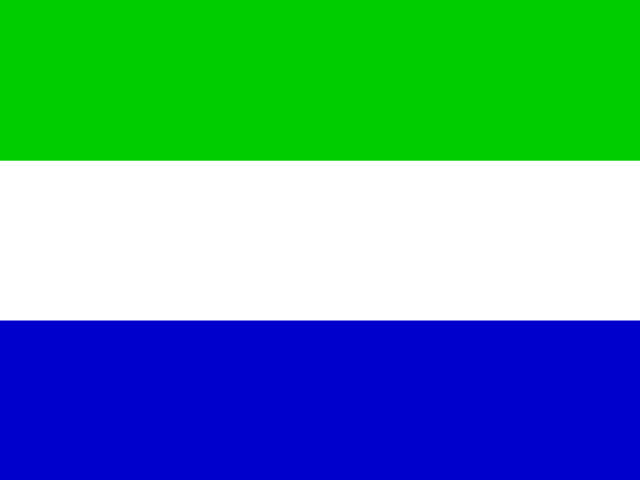 Sierra Leone Sierra Leone | 50 |
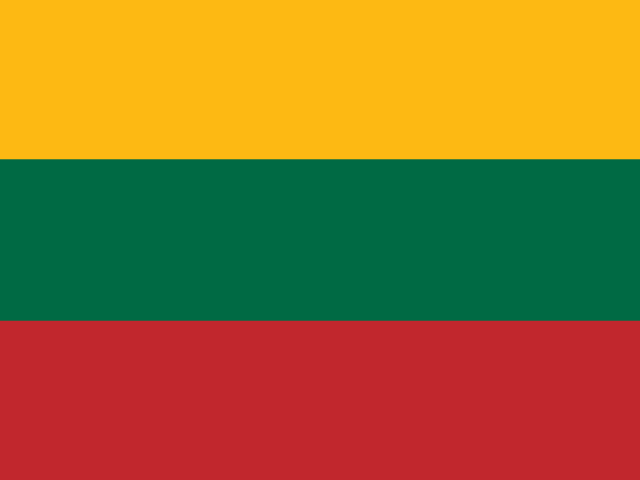 Lithuania Lithuania | 79 |
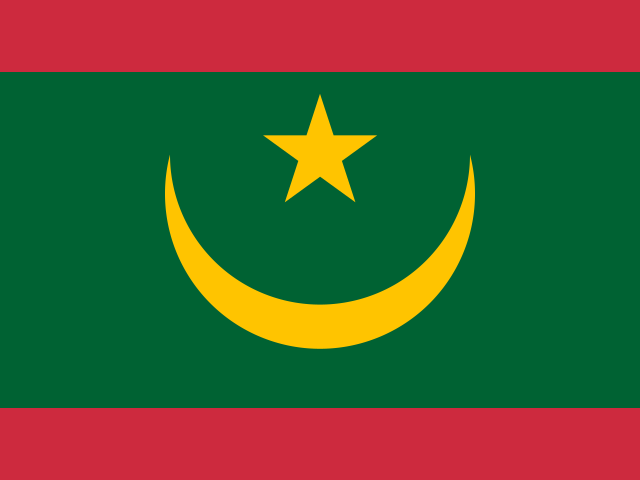 Mauritania Mauritania | 35 |
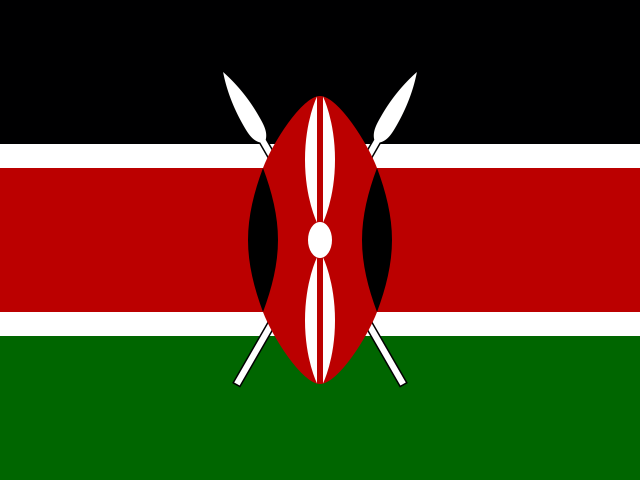 Kenya Kenya | 45 |
 South Africa South Africa | 48 |
Useful Information

Visas
Getting into Gabon isn’t exactly a quick-click process. You’ll need to apply online for an eVisa before your trip, upload documents, and wait for approval. Expect to show proof of your hotel booking or a letter of invitation if you’re visiting someone. Bring printed copies of everything, because officials at Libreville Airport may ask to see them before letting you in.

Currency
Gabon uses the Central African CFA franc (XAF), which is shared with several nearby countries. Credit cards aren’t widely accepted outside major cities, so carry cash. ATMs are available in Libreville and Port-Gentil, but they can run out of bills or have connectivity issues, so plan ahead if traveling beyond city limits.

Weather
Gabon sits on the equator, so expect warm, humid weather year-round with daily rain showers. The dry seasons run from June to September and again from December to January, offering the best travel conditions. The wettest months are October and November, when roads can turn into rivers and wildlife viewing gets tricky.

Airports
Libreville International Airport (LBV) is Gabon’s main gateway, serving flights from Paris, Addis Ababa, and other regional hubs. Smaller airports in Port-Gentil and Franceville handle domestic routes. The facilities are basic but functional. Arrive early for departures, as check-in and security lines can be slow-moving and sometimes unpredictable.

Travel Insurance
Don’t skip travel insurance when visiting Gabon. Healthcare is limited outside major cities, and medical evacuation can be costly. Choose a plan that covers emergencies, evacuation, and trip delays. Some national parks and tour operators may even ask for proof of insurance before confirming your booking.
Gabon Weather Averages (Temperatures)
Average High/Low Temperature
| Temperature / Month | Jan | Feb | Mar | Apr | May | Jun | Jul | Aug | Sep | Oct | Nov | Dec |
|---|---|---|---|---|---|---|---|---|---|---|---|---|
| High °C |
30 | 31 | 31 | 31 | 31 | 28 | 28 | 29 | 29 | 29 | 30 | 30 |
| Low °C |
23 | 23 | 21 | 23 | 21 | 20 | 20 | 21 | 21 | 22 | 23 | 23 |
| High °F |
86 | 88 | 88 | 88 | 88 | 82 | 82 | 84 | 84 | 84 | 86 | 86 |
| Low °F |
73 | 73 | 70 | 73 | 70 | 68 | 68 | 70 | 70 | 72 | 73 | 73 |












Lie Gabon is safe
AFRICA 8 SAFEST COUNTRU
STOP YOU NOOB! GABON IS SAFE, NOT VERY SAFE BUT SAFE
My experience at gabon was wonderful everyone was super nice and nobody stole from me and the ladies were hot
Just watch your whereabouts
I wouldn’t peg it as being that dangerous. Of course, there’s the risk of pickpocketing or the occasional mugging but I went through both in NY, that doesn’t mean I’m scrapping it from my list of places to go to.
Gabon looks like an intriguing mix of lush nature and off the beaten path culture, but the safety info reminded me it’s not a carefree beach vacation. Between petty crime, tricky transport, and needing thoughtful health prep, I’d go curios but cautious.
It’s surprising how a place with so much untouched beauty and biodiversity remains largely unexplored. The idea of seeing forest elephants and gorillas in their natural habitat is incredible, but I can’t help wondering how the ongoing political situation affects those amazing landscapes and the people living there.
Around here you learn to laugh when a hippo wanders onto the beach and the rainforest rain turns the road into a mud river, that weird mix of awe and nervousness is priceless.
I actually saw forest elephants right by the surf, but the thin infrastructure and random checkpoints kept me on edge.
Sure, 90% rainforest and 13 national parks sounds amazing, but after seeing a hippo wandering the surf I felt equal parts thrilled and annoyingly on-edge because infrastructure is thin and the political circus keeps things unpredictable.
Can’t believe I actually saw a hippo ambling along the surf here, my heart skipped a beat when the jungle fell quiet.
Hiking through those dense rainforests feels like stepping into another world, especially when you suddenly spot a hippo chilling near the water’s edge.
Oh sure, a place with forest elephants crashing the beach sounds like a dream until you realize you might actually have to figure out how to get there without losing your mind over border craziness.
Saw a few forest elephants close to the beach last year and it was honestly surreal and a bit nerve-wracking.
The feeling of seeing a hippo just ambling near the beach is something I won’t forget anytime soon, even if getting around was kind of a hassle.