


 France : Safety by City
- Annecy
- Avignon
- Bordeaux
- Cannes
- Chamonix
- Colmar
- Grenoble
- Le Havre
- Lille
- Lyon
- Marseille
- Martinique
- Montpellier
- Nantes
- Nice
- Nimes
- Paris
- Reims
- Rennes
- Strasbourg
- Toulon
- Toulouse
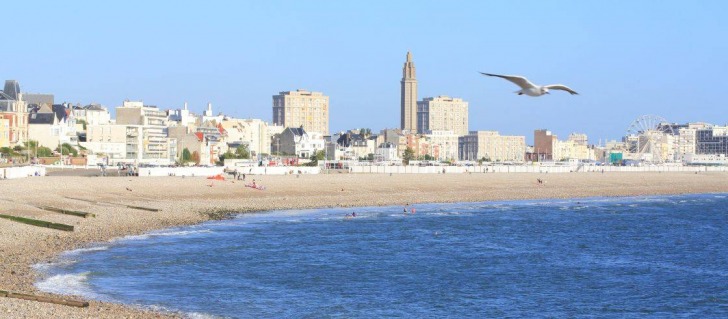
Le Havre sits on France’s Normandy coast at the mouth of the Seine, where the river opens into the English Channel.
That setting gives the city a split personality in the best way: part working port, part seaside escape, part architectural curiosity.
It is not the France of postcard half-timbered villages or Parisian boulevards.
Instead, Le Havre is known for its bold postwar reconstruction, broad avenues, maritime energy, and a city center recognized by UNESCO for its modern design.
It also works well as a base for exploring the coast, with Étretat, Honfleur, and Deauville within reach.
For travelers, Le Havre feels more practical and understated than flashy, which can actually be a safety advantage.
It does not usually attract the same overwhelming tourist crowds as France’s biggest hotspots, though visitors should still use normal urban precautions, especially around transport hubs and after dark.
Warnings & Dangers in Le Havre

OVERALL RISK: LOW
Le Havre is generally a low-risk destination for travelers. Violent crime is not the main issue for most visitors, and the city is calmer than many larger French urban centers. The bigger concerns are routine ones: petty theft, late-night street awareness, and the broader national security situation that affects all of France rather than Le Havre alone.

TRANSPORT & TAXIS RISK: LOW
Transport risk in Le Havre is low. The city is connected by train, tram, bus, and road, and central areas are fairly manageable for visitors. Standard caution is smart at the train station, on public transport, and when using taxis or ride services late at night. Stick with official taxis, confirm the route, and keep valuables close in transit zones.

PICKPOCKETS RISK: MEDIUM
Pickpocketing is not the first thing most people associate with Le Havre, but this is still France, and petty theft is a real travel issue nationwide. The risk rises in train stations, crowded transit areas, busy shopping streets, and anywhere tourists are distracted. You are far more likely to deal with a stolen phone or wallet than with serious crime.

NATURAL DISASTERS RISK: LOW
Le Havre’s natural-disaster risk is relatively low for short-term visitors, though coastal weather can be rough. Strong wind, rain, and occasional stormy conditions are more realistic concerns than major catastrophic events. Flooding and severe coastal weather can affect plans, especially in winter, so travelers should keep an eye on forecasts and dress for sudden changes.

MUGGING RISK: LOW
Mugging risk is low for most tourists, especially in the daytime and in central areas. That said, like many port cities, Le Havre has a few zones that feel less comfortable late at night, particularly around some transport, industrial, and quieter residential edges. Walking alone after dark in empty streets is where common sense matters most.

TERRORISM RISK: MEDIUM
For Le Havre specifically, terrorism is not a daily travel concern, but France as a whole continues to maintain a high level of alert and visible security presence. Travelers should understand that this is a national background risk, not something unique to the city. It is wise to stay aware in public places, stations, large events, and crowded areas.

SCAMS RISK: LOW
Scam risk in Le Havre is fairly low compared with heavily touristed European capitals. You are less likely to run into aggressive street scams than in major tourist magnets, but overcharging, distraction tactics, and fake helpfulness around stations are still possible. Be cautious with strangers who create urgency, ask for signatures, or offer unsolicited help with machines.

WOMEN TRAVELERS RISK: LOW
Le Havre is generally manageable for women travelers, especially in the center, by the seafront, and in the main visitor areas during the day. Solo travelers should still use ordinary city precautions after dark, avoid isolated streets, and stay alert in nightlife or station areas. Most visits are uneventful, but confidence and awareness matter everywhere.

TAP WATER RISK: LOW
Tap water risk is low. In France, tap water is subject to ongoing sanitary monitoring, and public information on local water quality is regularly updated. For most travelers, drinking tap water in Le Havre is perfectly normal. The only time to switch to bottled water is if there is a temporary local advisory, which is not the norm.
Safest Places to Visit in Le Havre
Perret City Center
The rebuilt center is the easiest place for most tourists to navigate.
Streets are broad, visibility is good, and the area feels more open and orderly than many older European city centers.
This is where you can admire the UNESCO-listed urban design, visit St. Joseph’s Church, and walk around without constantly feeling squeezed by crowds.
It is especially comfortable in daylight and early evening.
The Seafront and Beachfront Promenade
Le Havre’s waterfront is one of its most relaxed areas.
The long promenade, beach, and open sea views make it ideal for travelers who want fresh air and space rather than dense city pressure.
During the day, this is one of the best places to stroll, cycle, or just sit and watch the Channel weather do its thing.
Wind can be intense, but the vibe is usually calm and family-friendly.
Saint-François and the Marina Area
This district adds a more traditional maritime feel.
You will find restaurants, harbor energy, and a livelier but still approachable atmosphere.
It is one of the better choices for travelers who want to be near food and the waterfront without the chaos of a major tourist port.
Evening caution is still smart, but it is generally a comfortable area to explore.
Docks Vauban and Modern Redeveloped Areas
The redeveloped southern parts of Le Havre, including the Docks area, are useful for shopping, entertainment, and contemporary city life.
These zones reflect the city’s long-running urban renewal and are often more polished than outsiders expect from a port city.
They are practical, active, and usually safer for visitors than drifting into quieter fringe neighborhoods with no real sightseeing upside.
Places to Avoid in Le Havre
The Station Area Late at Night
Le Havre’s station zone is not necessarily dangerous in the dramatic sense, but it is the kind of place where travelers are more vulnerable to nuisance crime, loitering, and uncomfortable encounters after dark.
During the day, it is simply a transport hub.
Late at night, especially if you look lost or overloaded with bags, it becomes a place to stay sharp and keep moving.
Isolated Port and Industrial Edges
Le Havre is a major working port, and some areas are built for logistics, shipping, and infrastructure rather than tourism.
These zones can feel deserted, poorly lit, and uninviting outside business hours.
There is rarely any reason for a tourist to wander there on foot.
If your map sends you into a container-filled nowhere landscape, turn around and pick a more central route.
Some Outer Residential Districts After Dark
Neighborhoods such as Caucriauville, parts of Mare Rouge and Mont-Gaillard, and certain less central residential sectors are not automatic no-go zones, but they are not where visitors need to spend time at night unless they have a specific reason.
These are local living areas, not tourist quarters, and travelers can feel out of place there after dark.
The issue is more comfort and situational vulnerability than constant danger.
Quiet Streets With Little Foot Traffic
In Le Havre, emptiness can feel less reassuring than crowds.
The city’s broad postwar layout means some streets become very quiet in the evening.
That can make them feel exposed, especially for solo travelers.
Avoid choosing the shortest walking route if it takes you through dark, silent blocks when a busier road is available nearby.
Safety Tips for Traveling to Le Havre
- Keep your guard up around the train station and transit stops. Most travelers who run into trouble in French cities do so in transport environments, not while calmly sightseeing. When arriving or departing, keep your phone in hand only when needed, zip your bag fully, and avoid setting luggage down while checking directions.
- Do not confuse a quiet city with a risk-free city. Le Havre feels less frantic than Paris, which is part of its charm. But lower tourist pressure can make people let their guard down. Petty theft still happens where distraction exists, especially in stations, on transport, and around shopping zones.
- Stick to active, well-lit streets at night. The city’s wide avenues and modern layout can be easy to navigate by day, but some streets become surprisingly empty after dark. Choose routes with restaurants, traffic, or tram activity rather than the shortest line on the map.
- Use official taxis or well-known ride options. If you need a late ride, especially with luggage, go with formal transport rather than accepting random offers. Before getting in, check that the vehicle is legitimate and know roughly where you are going.
- Dress for wind and wet weather, not just temperature. Normandy’s coast can make a mild forecast feel colder than expected. Wind, drizzle, and shifting cloud cover are common, so a waterproof layer and good shoes are more useful than packing for a warm beach holiday.
- Keep valuables close on day trips and harbor walks. Seafront areas are pleasant, but visitors often relax too much there. Carry only what you need, use a crossbody bag, and do not leave your phone or wallet exposed while taking photos or sitting at outdoor cafés.
- Be careful with alcohol and late-night wandering. Le Havre is not a notorious party-trap city, but being drunk, alone, and unsure of your route makes any city less safe. Know how you are getting back before the night starts.
- Watch for France-wide security alerts and disruptions. The main safety context for Le Havre is often national rather than local. France can experience heightened security measures, transit changes, and occasional demonstrations or strikes. Stay flexible and check for updates if you are moving around the country.
- Drink tap water unless there is a local advisory. France has strong systems for monitoring drinking water. You generally do not need to spend extra on bottled water for safety reasons in Le Havre. It is one of the easier parts of travel here.
- Use Le Havre as a base, but return before things get too late if you are unfamiliar. The city works well for coastal exploring, but if you are new to the area, daylight returns are simpler. That is especially true in cooler months, when weather turns gray early and unfamiliar neighborhoods can feel less welcoming after dark.
So... How Safe Is Le Havre Really?
Le Havre is one of those cities that is safer than its industrial image might suggest.
It is a working port, yes, but also a structured, surprisingly open city with a UNESCO-listed center, a broad seafront, and fewer tourism-related pressures than France’s headline destinations.
What makes Le Havre different is that the main travel hazards are not dramatic.
They are ordinary.
Think station-area caution, nighttime route choices, weather that can turn cold and wet fast, and the occasional uneasy block in non-tourist districts.
Visitors are usually not dealing with a city that is actively hostile.
They are dealing with a city that rewards common sense.
I would call Le Havre a good destination for travelers who like practical, under-the-radar cities and do not need polished tourist packaging to enjoy a place.
If you stay central, mind your belongings, and avoid drifting into deserted or peripheral areas late at night, chances are high that your trip will feel straightforward and safe.
It is not flawless, but for a French port city, it is more manageable than many people expect.
How Does Le Havre Compare?
| City | Safety Index |
|---|---|
| Le Havre |
63 |
| Annecy |
88 |
| Grenoble |
68 |
| Bordeaux |
63 |
| Avignon |
78 |
| Nimes |
65 |
| Nantes |
56 |
 Juneau Juneau | 88 |
| Thousand Oaks | 86 |
| Santa Barbara | 72 |
| Ogunquit | 87 |
| Searchlight | 76 |
 Durban Durban | 38 |
Useful Information

Visas
France is part of the Schengen Area. Many travelers can enter visa-free for short stays of up to 90 days within a 180-day period, while others need a short-stay visa arranged through the official France-Visas process. Requirements and fees vary by nationality, so travelers should check before booking.

Currency
Le Havre uses the euro. Cards are widely accepted, but it is smart to carry a small amount of cash for minor purchases, markets, or transport situations. Exchange money through reputable banks or official exchange services, and avoid poor-value airport counters unless you only need a small amount immediately.

Weather
Expect a maritime climate: cool, breezy, and often damp rather than extreme. Even when temperatures look mild, wind off the Channel can make the city feel colder. Pack layers, a waterproof jacket, and comfortable shoes that can handle drizzle and slick pavement.

Airports
Le Havre has a local airport facility at Le Havre-Octeville, but many international visitors arrive via larger regional gateways and continue by road, rail, or coach. In practice, train and highway connections are often more important for reaching the city than air travel alone.

Travel Insurance
Travel insurance is worth having for Le Havre, just as it is for anywhere else in France. It can help with medical costs, trip delays, cancellations, theft, and lost baggage. Even in a relatively low-risk city, one transport disruption or stolen phone can make insurance feel like money well spent.
Le Havre Weather Averages (Temperatures)
Average High/Low Temperature
| Temperature / Month | Jan | Feb | Mar | Apr | May | Jun | Jul | Aug | Sep | Oct | Nov | Dec |
|---|---|---|---|---|---|---|---|---|---|---|---|---|
| High °C |
8 | 8 | 10 | 12 | 15 | 18 | 20 | 21 | 19 | 16 | 11 | 9 |
| Low °C |
4 | 4 | 5 | 7 | 10 | 12 | 14 | 15 | 13 | 10 | 7 | 5 |
| High °F |
46 | 46 | 50 | 54 | 59 | 64 | 68 | 70 | 66 | 61 | 52 | 48 |
| Low °F |
39 | 39 | 41 | 45 | 50 | 54 | 57 | 59 | 55 | 50 | 45 | 41 |
France - Safety by City
| City | Safety Index |
|---|---|
| Annecy | 88 |
| Avignon | 78 |
| Bordeaux | 63 |
| Cannes | 80 |
| Chamonix | 84 |
| Colmar | 86 |
| Grenoble | 68 |
| Le Havre | 63 |
| Lille | 56 |
| Lyon | 72 |
| Marseille | 55 |
| Martinique | 78 |
| Montpellier | 48 |
| Nantes | 56 |
| Nice | 73 |
| Nimes | 65 |
| Paris | 70 |
| Reims | 68 |
| Rennes | 65 |
| Strasbourg | 74 |
| Toulon | 64 |
| Toulouse | 57 |











So sad it’s a high-scam risk city
je confirme
Way better than other nearby cities
I’m in my mid 50’s so I’m not that good with technology but I still find it hard to understand how some people fall for super obvious scams in a city they’re visiting for the first time. Guys, you don’t travel the world to buy jewelry in the middle of the street. Keep your money safe, avoid weird situations and listen to your gut, it’s spot on most of the time.
It’s fascinating how the beauty of Le Havre’s landscape inspired the Impressionists, and seeing St. Joseph’s Church lit up at night really feels like a nod to that artistic legacy. There’s something special about walking through the city and catching glimpses of its rich history intertwined with modern life.
It’s strange how St. Joseph’s Church just pops up from so many streets, and when it’s lit at night the port feels oddly calmer while the Seine estuary’s light kind of makes the Impressionists’ obsession make sense.
Wandering around the port at dusk and seeing St. Joseph’s tower suddenly lit up made me grin and feel oddly at home.
Strolled the wide avenues at dusk and felt oddly calm despite the busy port, the rebuilt buildings actually give the town real character.
Spent an afternoon strolling along the broad avenues and felt this cool mix of industrial vibe and seaside calm that you don’t get in usual tourist spots.
I once got caught in a sudden downpour while wandering near the port and the way the city’s modern buildings reflected the rain was oddly comforting; do you think that mix of industrial grit and sleek design really shapes the vibe here?
The fresh sea air mixed with the buzz of the port gave me this weird but nice feeling of being both on the edge of adventure and right in the middle of something alive.