 Cambodia : Safety by City
Cambodia - safety as a country
Kampong Cham is a relaxed riverside city in eastern Cambodia, sitting along the Mekong River roughly 120 kilometers northeast of Phnom Penh.
It attracts far fewer international visitors than Siem Reap or Phnom Penh, making it a good destination for travelers interested in temples, rural villages, cycling, river scenery, and everyday Cambodian life without heavy tourism.
For most visitors, Kampong Cham is relatively safe.
Serious crimes involving tourists are uncommon, particularly around the central riverfront and main commercial streets.
Petty theft, traffic accidents, extreme heat, food and water hygiene, and seasonal flooding are much more realistic concerns.
The surrounding countryside is also easy to explore, but road conditions become less predictable outside the city.
Visitors should use established roads, avoid unfamiliar rural areas after dark, and take additional care during the rainy season when the Mekong and smaller waterways can rise considerably.
Warnings & Dangers in Kampong Cham

OVERALL RISK: MEDIUM
Kampong Cham is generally a safe destination for tourists, and its quieter atmosphere means visitors often encounter fewer hassles than in Cambodia's major tourist centers. Violent crime against foreigners is uncommon. The main risks involve road accidents, petty theft, poor lighting after dark, food and water hygiene, extreme heat, and seasonal flooding. Normal travel precautions are usually sufficient.

TRANSPORT & TAXIS RISK: MEDIUM
Traffic is one of the most important safety concerns in Kampong Cham. Motorcycles dominate local roads, traffic rules are not always followed, and vehicles may travel without adequate lights after dark. Roads outside the city can contain potholes, animals, pedestrians, and slow-moving agricultural vehicles. Use reputable tuk-tuk drivers and avoid driving a scooter unless you are comfortable with Cambodian traffic conditions.

PICKPOCKETS RISK: LOW
Pickpocketing occurs in Cambodia, but Kampong Cham has fewer crowded tourist areas than Phnom Penh or Siem Reap. Visitors should still secure phones, wallets, and bags around markets, bus stops, and busy streets. Motorcycle snatching is possible, so avoid holding your phone toward the roadway or leaving a bag loosely positioned beside you in a tuk-tuk.

NATURAL DISASTERS RISK: MEDIUM
Flooding is the main natural hazard. Kampong Cham sits directly beside the Mekong River, and water levels can rise significantly during the rainy season. Heavy rainfall may flood low-lying roads, temporarily disrupt rural transportation, and make some attractions difficult to reach. September is generally among the wettest periods of the year. Travelers visiting during the monsoon should monitor local conditions before countryside trips.

MUGGING RISK: LOW
Armed robbery and violent street crime against tourists are relatively uncommon in Kampong Cham. The risk increases late at night in isolated areas or when travelers display expensive phones, jewelry, or large amounts of cash. Avoid deserted streets after businesses close and use a tuk-tuk rather than walking long distances alone at night.

TERRORISM RISK: LOW
Kampong Cham is not considered a significant terrorism target, and incidents affecting foreign tourists are rare. Travelers should nevertheless avoid political demonstrations, military facilities, and large confrontational gatherings. Regional security developments elsewhere in Cambodia generally have little effect on normal tourism within Kampong Cham city.

SCAMS RISK: MEDIUM
Tourist scams are less prevalent than in Cambodia's major visitor centers, but overcharging and minor financial scams can still happen. Confirm tuk-tuk fares before starting a trip, understand entrance prices before paying, and count your change carefully. Use ATMs located at established banks rather than isolated machines whenever possible.

WOMEN TRAVELERS RISK: MEDIUM
Women frequently travel independently through Kampong Cham without encountering serious problems. The city is generally relaxed, but solo female travelers should avoid isolated streets late at night and arrange reliable transportation when returning to their accommodation. Keep drinks under your control and avoid accepting rides from unfamiliar people.

TAP WATER RISK: HIGH
Tap water should not be considered safe for tourists to drink. Use sealed bottled water or properly filtered water. Bottled water is inexpensive and readily available throughout Kampong Cham. Travelers with sensitive stomachs should also be cautious with ice, uncooked food, and street food that appears to have been sitting unrefrigerated for extended periods.
Safest Places to Visit in Kampong Cham
Kampong Cham Riverfront
The Mekong riverfront is the heart of the city and one of the most comfortable areas for visitors.
Hotels, restaurants, cafés, shops, and public spaces line the central streets, creating plenty of pedestrian activity during the daytime and early evening.
Walking along the river is generally safe, although visitors should remain aware of motorcycles and keep phones and bags away from the roadway.
Kampong Cham City Center
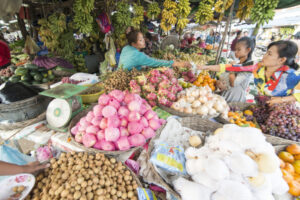
The compact downtown area surrounding the riverfront and central market is easy to explore on foot.
Petty theft is possible, particularly around markets, but violent crime involving tourists is uncommon.
Daytime exploration is straightforward, and tuk-tuks are readily available for longer trips.
Koh Paen
Koh Paen is a peaceful Mekong island located directly beside Kampong Cham and is one of the area’s most enjoyable places to explore by bicycle or tuk-tuk.
The island contains villages, farms, traditional houses, and quiet rural roads.
Stick to obvious roads and paths, particularly if exploring independently.
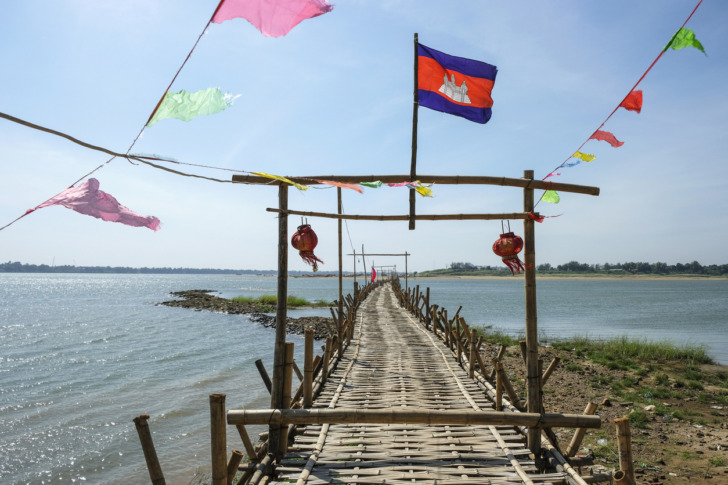
During the dry season, the famous seasonal bamboo bridge may provide access to the island.
Its availability depends heavily on Mekong water levels.
Wat Nokor
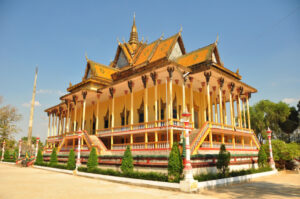
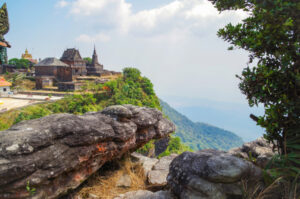
Wat Nokor is an ancient temple complex just outside central Kampong Cham and one of the area’s most important historical attractions.
The site is regularly visited by tourists and is generally safe during normal visiting hours.
Travel there during daylight and keep valuables secure, particularly if arriving by bicycle or motorcycle.
Phnom Pros and Phnom Srei
These twin hills are located several kilometers outside the city and contain temples, statues, viewpoints, and large numbers of monkeys.
The destination itself is generally safe, but visitors should be careful around monkeys.
Do not display food, approach young animals, or attempt to touch them.
The roads to the hills are easier to navigate during daylight.
Places to Avoid in Kampong Cham
Isolated Riverfront Areas Late at Night
The central riverfront is normally busy and comfortable, but pedestrian activity decreases significantly farther from restaurants and hotels.
Avoid walking alone along poorly illuminated sections of the river late at night when inexpensive tuk-tuk transportation is available.
Remote Rural Roads After Dark
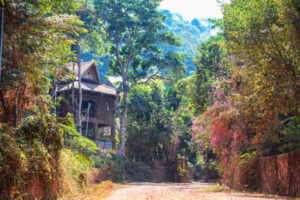
Kampong Cham Province contains extensive farmland and small villages connected by secondary roads.
Driving these routes after sunset can be difficult because of poor lighting, potholes, animals, pedestrians, bicycles, motorcycles without proper lights, and unexpected road conditions.
Schedule countryside sightseeing during daylight whenever possible.
Flooded Roads
Never assume a flooded road is shallow enough to cross safely.
Monsoon flooding can conceal potholes, damaged road surfaces, drainage channels, or unexpectedly strong water currents.
If locals are avoiding a flooded route, do not attempt to cross simply because another vehicle appears capable of doing so.
Unfamiliar Forest and Agricultural Areas
The most commonly visited countryside around Kampong Cham can be explored safely using normal roads and established paths.
However, there is little reason for visitors to wander through isolated forests, unused fields, construction areas, or unmarked rural land.
Stay on visible roads and paths when exploring independently.
Safety Tips for Traveling to Kampong Cham
- Be especially careful around traffic. Road accidents are a more realistic threat than violent crime. Look carefully in both directions before crossing streets, even on roads that appear quiet. Motorcycles can approach quickly and may travel against the expected flow of traffic.
- Keep your phone away from the roadway. Motorcycle snatching can occur in Cambodia. Avoid standing near the curb while concentrating on your phone, and do not hold expensive devices toward the open side of a tuk-tuk.
- Use reputable tuk-tuk drivers. Your hotel or guesthouse can usually arrange a reliable driver. Agree on the price before departing, particularly when hiring someone for several hours to visit Wat Nokor, Phnom Pros, Phnom Srei, or countryside attractions.
- Avoid inexperienced scooter riding. Renting a motorcycle may look like an easy way to explore the province, but Cambodian traffic can be unpredictable. Travelers without significant motorcycle experience are usually safer hiring a tuk-tuk or car with a driver.
- Watch the weather during the rainy season. Kampong Cham’s location beside the Mekong makes seasonal water levels particularly important. Heavy rain can flood smaller roads and interfere with trips to rural villages and islands.
- Drink plenty of safe water. Temperatures frequently exceed 30°C, and the combination of heat and humidity can cause dehydration quickly. Carry bottled water when cycling, visiting temples, or traveling through the countryside.
- Be cautious around monkeys. Monkeys around Phnom Pros and other temple areas may approach people looking for food. Do not feed them or attempt to touch them. Keep food concealed and maintain some distance.
- Carry only the cash you need. Cambodian riel is widely used, while U.S. dollars may also be accepted by some businesses. Leave unnecessary cash and valuables securely at your accommodation and inspect any change you receive.
- Plan countryside trips during daylight. Koh Paen and the surrounding villages are excellent places to explore, but rural roads become substantially more difficult after sunset. Begin longer excursions early enough to return before dark.
- Use established roads and paths. There is rarely any reason for tourists to leave recognized routes. Whether cycling around Koh Paen or visiting temples outside town, sticking to obvious roads reduces the chance of getting lost, encountering unsafe terrain, or becoming stranded.
So... How Safe Is Kampong Cham Really?
Kampong Cham is one of Cambodia’s more relaxed provincial cities and generally presents few serious safety problems for tourists.
Its relatively small tourism industry can actually work in a visitor’s favor.
There are fewer crowded attractions, fewer aggressive vendors, and fewer tourism-oriented scams than travelers may encounter in Phnom Penh or Siem Reap.
Crime should still be taken seriously, but it is unlikely to be the biggest problem during a typical visit.
Traffic deserves considerably more attention.
Cambodia has challenging driving conditions, and rural roads around Kampong Cham become especially difficult after dark or during periods of heavy rain.
The city’s location on the Mekong also makes flooding a genuine seasonal concern.
The river is central to Kampong Cham’s appeal, but rapidly changing water levels can affect roads, islands, boat transportation, and the seasonal bamboo bridge.
Visitors should also prepare for intense tropical heat, use bottled water, protect themselves from mosquitoes, and approach unfamiliar food cautiously during the first few days of their trip.
Stay around populated areas after dark, use dependable transportation, protect your phone and wallet, explore rural attractions during daylight, and take weather conditions seriously.
With these precautions, Kampong Cham is a relatively easy Cambodian destination to visit and offers a quieter alternative to the country’s heavily traveled tourist circuit.
How Does Kampong Cham Compare?
| City | Safety Index |
|---|---|
| Kampong Cham |
70 |
| Kep |
78 |
| Kratie |
71 |
| Kampong Thom |
67 |
| Kampot |
76 |
| Banlung |
64 |
| Siem Reap |
63 |
 Darwin Darwin | 70 |
 Palm Beach Palm Beach | 88 |
 Louisville Louisville | 65 |
| Bismarck | 82 |
 Wroclaw Wroclaw | 78 |
 Sao Paulo Sao Paulo | 50 |
Useful Information

Visas
Most foreign visitors need a visa to enter Cambodia. Tourist visas are generally available electronically or on arrival for eligible nationalities and normally permit a stay of approximately 30 days. Entry requirements can vary by nationality, so travelers should confirm passport validity and visa requirements before departure.

Currency
Cambodia's official currency is the Cambodian riel. U.S. dollars may also be accepted by businesses accustomed to foreign visitors, although everyday transactions are increasingly conducted in riel. ATMs are available in central Kampong Cham. Carry smaller denominations for markets, tuk-tuks, restaurants, and rural businesses.

Weather
Kampong Cham has a hot tropical climate throughout the year. The wet season generally begins around May and continues into October or November, with September typically experiencing particularly heavy rainfall. The drier months from approximately November through April are usually easier for sightseeing and countryside travel. March and April can become extremely hot.

Airports
Kampong Cham does not have a major commercial airport serving international travelers. Most visitors arrive through Phnom Penh and continue overland by bus, minivan, private car, or taxi. Kampong Cham is roughly 120 kilometers from Phnom Penh, making it relatively easy to include in a longer Cambodian itinerary.

Travel Insurance
Travel insurance is strongly recommended, particularly coverage for medical treatment, traffic accidents, emergency evacuation, theft, and trip interruption. Medical facilities in Kampong Cham are more limited than those available in Phnom Penh, and serious injuries or illnesses may require transportation to the capital or another regional medical center.
Kampong Cham Weather Averages (Temperatures)
Average High/Low Temperature
| Temperature / Month | Jan | Feb | Mar | Apr | May | Jun | Jul | Aug | Sep | Oct | Nov | Dec |
|---|---|---|---|---|---|---|---|---|---|---|---|---|
| High °C |
32 | 33 | 35 | 36 | 35 | 34 | 32 | 32 | 31 | 31 | 31 | 31 |
| Low °C |
23 | 23 | 25 | 26 | 26 | 25 | 25 | 24 | 24 | 24 | 24 | 23 |
| High °F |
90 | 91 | 95 | 97 | 95 | 93 | 90 | 90 | 88 | 88 | 88 | 88 |
| Low °F |
73 | 73 | 77 | 79 | 79 | 77 | 77 | 75 | 75 | 75 | 75 | 73 |
Cambodia - Safety by City
| City | Safety Index |
|---|---|
| Banlung | 64 |
| Battambang | 70 |
| Kampong Cham | 70 |
| Kampong Thom | 67 |
| Kampot | 76 |
| Kep | 78 |
| Kratie | 71 |
| Phnom Penh | 60 |
| Siem Reap | 63 |
| Sihanoukville | 55 |