 Burkina Faso : Safety by City
Burkina Faso - safety as a country
Gaoua is the main city of southwestern Burkina Faso and the cultural heartland of the Lobi people, sitting relatively close to the borders with Côte d’Ivoire and Ghana.
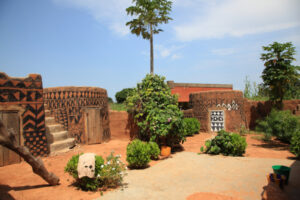
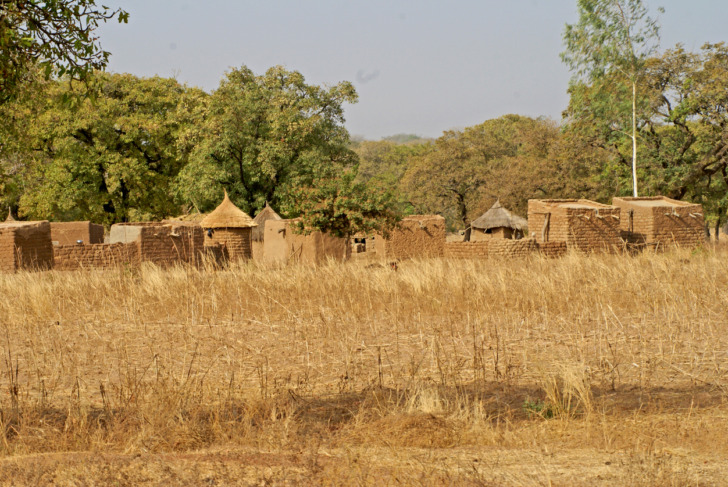
The region is known for distinctive Lobi architecture, traditional compounds, sacred sites, craft traditions, and the nearby Ruins of Loropéni, one of Burkina Faso’s most important archaeological sites.
Under normal circumstances, Gaoua would be one of the country’s most interesting cultural destinations.
Unfortunately, Burkina Faso’s current security crisis changes that calculation completely.
Terrorist groups operate across large areas of the country, kidnappings remain a serious threat, highways have been attacked, and foreign travelers can be specifically targeted.
Although Gaoua is far from the northern Sahel regions where the conflict has historically been most intense, southern and border areas can no longer be considered insulated from the national security situation.
Warnings & Dangers in Gaoua

OVERALL RISK: HIGH
Gaoua is currently a high-risk destination because Burkina Faso as a whole faces terrorism, kidnapping, violent crime, military operations, and severe travel disruption. Major international travel advisories recommend against all travel to the country. Independent tourism to Gaoua is particularly problematic because reaching it requires substantial overland travel outside Ouagadougou.

TRANSPORT & TAXIS RISK: HIGH
Road travel is one of the greatest dangers. Armed groups have attacked civilian, commercial, and government vehicles on highways throughout Burkina Faso. Roads can also be poorly maintained, unlit, flooded, or blocked by checkpoints. Night driving should be completely avoided. Essential travelers should use professionally arranged vehicles and current security information.

PICKPOCKETS RISK: MEDIUM
Petty theft can occur around markets, transport areas, commercial streets, and crowded public spaces. Phones, wallets, bags, and cash may attract attention. However, ordinary pickpocketing is overshadowed by more serious risks such as armed robbery, kidnapping, and attacks on roads. Keep valuables discreet and carry only what you need.

NATURAL DISASTERS RISK: MEDIUM
Gaoua has a tropical climate with intense heat, thunderstorms, seasonal flooding, and difficult road conditions during the rainy season. Heavy rain can wash out rural roads and make remote routes impassable. Heat exhaustion and dehydration are additional concerns, particularly during long road journeys or outdoor activities.

MUGGING RISK: HIGH
Armed robbery and violent crime occur throughout Burkina Faso. Travelers may encounter robbery on roads, in towns, or around transportation areas. Foreign visitors can be perceived as wealthy targets. Avoid unnecessary movement after dark, keep vehicle doors locked, and never resist an armed attacker.

TERRORISM RISK: HIGH
Terrorism is a serious national threat. Armed Islamist groups operate throughout Burkina Faso and have expanded into areas far beyond the traditional northern conflict zones. Attacks may target security forces, government facilities, roads, villages, hotels, restaurants, markets, or other places where foreigners could be present.

SCAMS RISK: MEDIUM
Visitors may encounter inflated transportation prices, unofficial guides, fake business offers, fraudulent requests for money, or people claiming they can arrange permits or security access. Financial scams are less concerning than physical security, but travelers should still rely entirely on established organizations and trusted local contacts.

WOMEN TRAVELERS RISK: HIGH
Women face the same terrorism, kidnapping, armed robbery, and road-security threats as other travelers, with additional risks involving harassment and sexual violence. Independent solo travel is particularly difficult to recommend. Women traveling for essential reasons should use secure accommodation, professional transportation, and reliable local support.

TAP WATER RISK: HIGH
Do not drink untreated tap water. Use sealed bottled, boiled, or properly filtered water for drinking and brushing teeth. Avoid questionable ice and be cautious with raw vegetables and food washed in untreated water. Gastrointestinal illness can become considerably more serious where high-quality medical care is limited.
Safest Places to Visit in Gaoua
No Location Should Currently Be Considered Completely Safe
The concept of a reliably safe tourist district does not fit Gaoua’s current security environment.
The places below are relatively more controlled than remote roads or countryside, but this does not mean leisure travel to them is recommended under current conditions.
Secure Accommodation
A hotel or guesthouse with controlled access, experienced management, secure parking, and reliable communications provides a safer base than informal accommodation.
Essential travelers should ask about backup electricity, transportation arrangements, emergency procedures, guards, and communication with local authorities.
Central Gaoua During Daylight
The populated center provides shops, administrative buildings, markets, restaurants, and other services.
If someone must be in Gaoua, essential errands are generally better conducted during daylight and with trusted local assistance rather than independently after dark.
Musée des Civilisations du Sud-Ouest
Gaoua is an important center for understanding the cultures of southwestern Burkina Faso, particularly Lobi traditions.
Under a normal security environment, the city’s cultural museum would be one of its most worthwhile attractions.
At present, any visit should depend entirely on current local security conditions and professionally arranged transportation.
Controlled Administrative Areas
Locations near functioning government facilities may have greater security presence than isolated residential or rural areas.
However, government and security installations can themselves become targets, so visitors should not linger around checkpoints, police facilities, military locations, or government compounds unnecessarily.
Private Compounds With Security
For humanitarian, diplomatic, development, or essential business travel, controlled work and residential compounds provide a more manageable environment than unrestricted movement around the city.
Security measures should include reliable communications and contingency plans for sheltering or evacuation.
Places to Avoid in Gaoua
Roads Outside Gaoua
Road travel beyond the city should be regarded as particularly hazardous.
Highways across Burkina Faso have experienced terrorist attacks, armed checkpoints, robbery, and kidnapping.
Even major paved routes cannot automatically be considered secure.
The Côte d’Ivoire and Ghana Border Areas
Gaoua’s location in southwestern Burkina Faso makes international borders relatively close, but travelers should not explore border regions casually.
Militant activity has expanded across the wider Sahel, and neighboring countries have increased security in areas adjacent to Burkina Faso because of the risk of terrorism and kidnapping.
The Ruins of Loropéni Without Professional Security Advice
The Ruins of Loropéni are among Burkina Faso’s most important historical attractions and would normally be a major reason to visit the region.
However, reaching archaeological and rural sites requires road travel outside Gaoua.
Under the current security environment, a cultural attraction is not a sufficient reason to disregard wider travel warnings.
Remote Lobi Villages
The countryside around Gaoua is culturally fascinating, but independent trips to isolated villages create additional exposure to road attacks, checkpoints, communication problems, and delayed emergency response.
Essential visits should only occur with trusted local organizations and current security information.
Military and Police Installations
Do not photograph checkpoints, soldiers, police stations, military bases, security vehicles, or government security operations.
These facilities may be terrorism targets, and unexplained photography can also lead to questioning or detention.
Demonstrations and Political Gatherings
Avoid all demonstrations regardless of whether they initially appear peaceful.
Political conditions in Burkina Faso remain sensitive, and security forces may respond quickly to gatherings.
Leave immediately if a crowd begins forming around government buildings or major intersections.
Safety Tips for Traveling to Gaoua
- Do not approach Gaoua as an ordinary tourism destination. Current international warnings advise against travel throughout Burkina Faso. Anyone considering a leisure trip should reconsider the timing. Essential travelers need professional security planning, reliable local contacts, communications, and contingency arrangements rather than simply a hotel reservation and transportation.
- Minimize overland travel. Reaching Gaoua involves considerable road travel, which is one of the biggest security vulnerabilities in Burkina Faso. Armed groups have targeted highways, checkpoints may appear unexpectedly, and roadside assistance is extremely limited. Never travel between cities after dark.
- Have a security plan before arrival. Know who will meet you, which vehicle you will use, where you will stay, and what you will do if security deteriorates. Avoid creating predictable daily routines and make sure someone outside Burkina Faso knows your itinerary.
- Take kidnapping risk seriously. Foreigners can be valuable targets for terrorist and criminal groups. Do not advertise travel plans publicly, avoid spontaneous rural excursions, and be cautious about newly made contacts proposing trips outside the city.
- Carry identification and copies. Checkpoints and document checks are common. Carry the documentation required by local law and keep secure digital and paper copies separately. Essential travelers should also store emergency contacts and insurance details where they remain accessible without internet service.
- Protect yourself against malaria. Malaria is a major health risk throughout Burkina Faso. Discuss preventive medication with a travel-health professional before departure. Use effective mosquito repellent, wear long clothing in the evening, and sleep under a treated mosquito net or in screened accommodation.
- Carry enough safe water and emergency supplies. Road disruptions can turn an ordinary journey into a much longer one. Keep drinking water, food, medication, a charged phone, power banks, basic first-aid supplies, and enough fuel for unexpected delays.
- Avoid photography around security forces. Military operations are widespread and politically sensitive. Do not photograph soldiers, checkpoints, security installations, government compounds, or military vehicles. Follow instructions immediately if stopped by security personnel.
- Do not depend on government evacuation. Foreign diplomatic services have extremely limited ability to assist citizens outside Ouagadougou. Anyone traveling to Gaoua should have an independent plan for leaving the area if the security situation changes.
- Verify that insurance actually covers Burkina Faso. Many ordinary travel policies become invalid when traveling against an official government warning. Essential travelers should obtain specialist coverage for medical evacuation, security evacuation, terrorism-related incidents, road accidents, and the specific work they will be performing.
So... How Safe Is Gaoua Really?
Gaoua would be a fascinating destination under different circumstances.
Southwestern Burkina Faso has distinctive cultures, traditional architecture, archaeological sites, markets, and landscapes that receive only a fraction of the visitors found in better-known West African destinations.
Unfortunately, present-day security conditions matter more than Gaoua’s tourism potential.
Burkina Faso remains under severe pressure from armed Islamist groups.
Terrorism, kidnapping, violent crime, military operations, and attacks on road transportation occur across the country.
The security situation has spread beyond the northern and eastern regions historically associated with the insurgency.
Gaoua is not necessarily exposed to the same intensity of violence as some areas of northern Burkina Faso, but reaching it requires leaving Ouagadougou and traveling hundreds of kilometers overland.
That alone creates a substantial security problem.
Another important warning sign is that foreign government personnel are generally prohibited from traveling outside Ouagadougou because emergency assistance cannot be reliably provided.
For those reasons, I rate Gaoua as high risk.
Ordinary tourism should be postponed until the national security situation improves significantly.
Anyone who must travel for humanitarian, diplomatic, family, journalism, development, or essential business reasons should use professional security support, minimize movement, avoid nighttime travel, and maintain an independent emergency departure plan.
How Does Gaoua Compare?
| City | Safety Index |
|---|---|
| Gaoua |
25 |
| Ouagadougou |
38 |
| Bobo-Dioulasso |
35 |
| Banfora |
31 |
| Ouahigouya |
18 |
| Koudougou |
34 |
 Elizabeth City Elizabeth City | 79 |
| Scranton | 66 |
| Wilson | 93 |
 Zaragoza Zaragoza | 79 |
| Naples | 91 |
 Jaipur Jaipur | 53 |
Useful Information

Visas
Most foreign visitors require authorization before entering Burkina Faso, with electronic visas available for many nationalities. Entry requirements vary according to passport and purpose of travel. Burkina Faso suspended the issuance of visas to U.S. citizens on December 30, 2025, so American travelers should not assume that ordinary tourist entry is currently available.

Currency
Gaoua uses the West African CFA franc. Cash is essential because card acceptance and ATM reliability become more limited outside Ouagadougou. Carry emergency cash in separate, secure locations rather than in one wallet. Use banks or established exchange services instead of informal street currency exchanges.

Weather
Gaoua has a hot tropical climate but receives considerably more rainfall than northern Burkina Faso. The wet season generally runs from roughly May through October, with the heaviest rain during summer. Roads can deteriorate or flood during this period. The dry season brings intense heat, dust, and strong sun.

Airports
Gaoua has a small airfield, but travelers should not expect dependable scheduled international or domestic passenger service. Ouagadougou International Airport remains the principal international gateway, leaving a long overland journey between the capital and Gaoua. Under current security conditions, that road journey is itself a major reason tourism is not advisable.

Travel Insurance
Standard travel insurance may exclude Burkina Faso because of official do-not-travel advisories. Essential travelers need specialist coverage and should obtain written confirmation that the policy remains valid. Coverage should include emergency medical treatment, evacuation, security evacuation, road incidents, terrorism-related disruption, and the full planned itinerary.
Gaoua Weather Averages (Temperatures)
Average High/Low Temperature
| Temperature / Month | Jan | Feb | Mar | Apr | May | Jun | Jul | Aug | Sep | Oct | Nov | Dec |
|---|---|---|---|---|---|---|---|---|---|---|---|---|
| High °C |
34 | 36 | 39 | 38 | 35 | 33 | 31 | 30 | 31 | 33 | 35 | 34 |
| Low °C |
19 | 21 | 25 | 26 | 24 | 24 | 23 | 23 | 23 | 23 | 22 | 20 |
| High °F |
93 | 97 | 102 | 100 | 95 | 91 | 88 | 86 | 88 | 91 | 95 | 93 |
| Low °F |
66 | 70 | 77 | 79 | 75 | 75 | 73 | 73 | 73 | 73 | 72 | 68 |
Burkina Faso - Safety by City
| City | Safety Index |
|---|---|
| Banfora | 31 |
| Bobo-Dioulasso | 35 |
| Gaoua | 25 |
| Koudougou | 34 |
| Ouagadougou | 38 |
| Ouahigouya | 18 |