


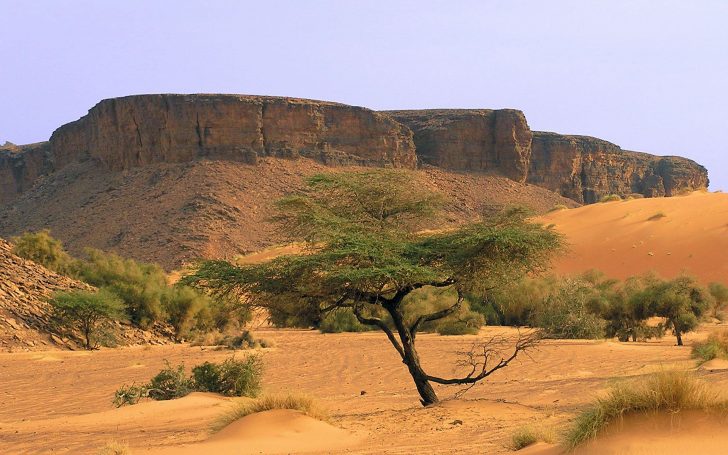
Mauritania is one of those places that looks vast and compelling on a map, yet remains largely unreachable in real life.
It sits in northwest Africa, where the Sahara meets the Atlantic, bordered by Morocco, Western Sahara, Algeria, Mali, and Senegal.
Much of the country is desert, with long coastlines, shifting dunes, and scattered cities separated by enormous distances.
After independence from France in 1960, Mauritania struggled with weak institutions, military coups, and regional instability.
Tensions tied to border disputes, terrorism across the Sahel, trafficking routes, and internal political shifts have kept the security environment fragile.
While the country has avoided some of the large-scale conflicts seen in neighboring states, risk remains persistent and unpredictable.
Tourism is so limited that there are no meaningful visitor statistics to track.
Obtaining a visa can be difficult, and most international travel advisories strongly discourage travel altogether.
Infrastructure is thin, medical services are basic, and legal and cultural restrictions create additional challenges for visitors.
Geographically, Mauritania is dramatic, spanning desert interiors, coastal wetlands, and sparsely populated cities.
But this is not a destination built for casual exploration.
Between security warnings, limited support systems, and ongoing regional risks, it is simply not a good time to plan a trip here.
Some countries are better understood from afar.
Warnings & Dangers in Mauritania

OVERALL RISK: HIGH
Mauritania is a high-risk country, with the "best" rating being a Level 3: Reconsider travel from Western governments. The risks here go beyond basic crime; there is even a section that can land you as a military target if you don't heed the warnings.

TRANSPORT & TAXIS RISK: HIGH
This is another high-risk category. If you must visit, plan to hire a local driver and insist on traveling via convoy. Roads aren't common, especially in rural areas, and your GPS app won't be able to help you much here. Public transportation and taxis are too dangerous to use, and most governments prohibit their employees from using those forms of transportation. Don't travel at night.

PICKPOCKETS RISK: HIGH
This is a high risk, but the crime concerns go far beyond petty theft. Do your best to blend in, as standing out as a foreigner can quickly make you a target. Even crowded areas with other tourists come with theft risks.

NATURAL DISASTERS RISK: HIGH
Mauritania’s main natural risks come from extreme heat, sandstorms, and periodic drought. Coastal areas can experience strong winds and rough seas, while desert regions face life-threatening conditions if travel goes wrong. Flash flooding can occur during rare heavy rains, damaging roads and isolating communities. The weather can quickly become a safety issue here. Check the weather forecast several times a day if you have access to it.

MUGGING RISK: HIGH
This is another high-risk, with violent crimes being very common. Stay away from unpatrolled beaches even during the daytime. Stay in large groups and go back to your hotel room after dark. It's worth noting that robberies can also turn into kidnapping or more violent crimes.

TERRORISM RISK: HIGH
This is another high-risk, with terrorist groups operating throughout the country. Places frequented by Westerners can easily become targets. Take special note to avoid the militarized zone, where you'll be seen as a threat, even if you accidentally end up there.

SCAMS RISK: HIGH
With little tourism oversight, this is another high risk. However, criminals are more likely to get your valuables by force than by manipulation. Treat everyone as a scammer and don't rely on anyone but a trusted tour guide to give you information.

WOMEN TRAVELERS RISK: HIGH
Women face a high risk here, as anyone else does, but with an additional concern of being harassed or worse. Don't travel here alone and stick with large groups during daytime hours. Dress conservatively and blend in as best you can.

TAP WATER RISK: MEDIUM
Tap water in Mauritania is not safe to drink. Treatment standards vary, pipes are unreliable, and contamination is common, especially outside major hotels. Use bottled or properly filtered water for drinking and brushing teeth. In remote or desert areas, clean water can be scarce, so dehydration and waterborne illness are real risks if you are not prepared.
Safest Places to Visit in Mauritania
While the tourism industry here isn’t well-developed, there is an official tourism website at visitmauritania.com.
Keep in mind that this website won’t highlight the largest safety risks we’ve detailed in this article.
If you insist on visiting Mauritania despite the risks, the limited places of interest are concentrated along the western coast, mainly in and around Nouakchott and Nouadhibou.
Nouakchott offers the National Museum of Mauritania, local markets, and a glimpse of coastal life along the Atlantic.
Banc d’Arguin National Park, farther up the coast, is known for birdlife and fishing villages, though access requires careful planning and local guidance.
Nouadhibou, the country’s second city, is best known for its working port and the nearby ship graveyard, an unusual but stark industrial landmark.
The coastal desert landscapes and ocean sunsets are visually striking, but travel should remain tightly controlled and locally guided.
This is not about discovering hidden gems.
It is about understanding what exists if you choose to go anyway.
Mauritania’s cultural and natural features are real, but current conditions mean these places are better appreciated when the country is more stable.
Places to Avoid in Mauritania
If you look at the travel advisories from the United States, the United Kingdom, Canada, and Australia, you’ll get easy-to-read maps of the areas to avoid.
Most warnings in Mauritania are either Level 3: Reconsider Travel or Level 4: Do Not Travel.
These borders largely fall around the cities of Nouakchott and Nouadhibou.
In any case, avoid the areas of eastern and northern Mauritania.
This holds especially true for Westerners who want to visit this area.
There is one area in Mauritania you absolutely must not enter, for any reason.
The government has declared a large military zone in the northeast where civilians are banned.
Officials have stated plainly that anyone found inside may be treated as a military target.
This isn’t a “restricted area.”
It’s a life-or-death boundary.
Safety Tips for Traveling to Mauritania
- Mauritania’s main law enforcement bodies are the National Police and the Gendarmerie. For emergencies, you can dial 117 for police assistance, though response times vary widely outside Nouakchott. In remote areas, help may be hours or days away. Always share your itinerary with your hotel or guide and assume you are largely responsible for your own safety.
- There is no national emergency alert system for travelers. Updates on security issues, weather events, or disruptions usually come through embassies, international news, or local contacts. Mobile coverage can drop outside cities, and internet access is inconsistent.
- Foreign nationals can drive with valid documentation, but most of Mauritania lacks developed roads. Outside major routes, you’re dealing with sand tracks, poor signage, and limited fuel access. Breakdowns are not minor inconveniences here. If you must travel, hire a local driver who knows the terrain, checkpoints, and security landscape. Self-driving is not advised.
- Yellow fever vaccination is required if arriving from a risk country. Travelers should also be protected against hepatitis A and B, typhoid, and meningococcal disease, with malaria prevention recommended in some areas. Medical facilities are limited even in the capital.
- Arabic is the official language, and French is widely used in government and business. English is rarely spoken. Outside hotels and higher-end services, communication can be difficult without Arabic or French. This matters during police encounters, medical situations, or travel disruptions. If you don’t speak either language, you’ll need local assistance more often than you might expect.
- Political demonstrations and protests occur regularly and can escalate quickly. They often take place on Fridays after afternoon prayer, when crowds are the largest. Even peaceful gatherings can turn volatile with little warning and may trigger road closures or transport disruptions. Avoid rallies entirely, steer clear of large crowds, and change plans immediately if tensions rise.
- Mauritania strictly enforces bans on alcohol and pork products. Bringing these items into the country, even from airport duty-free, can result in confiscation, fines, or detention. This is not treated as a minor customs issue. Do not pack or carry restricted items, and don’t assume international travel norms apply at the border or airport.
- Mauritania has no legal protections against discrimination based on sexual orientation. Same-sex relationships between men are criminalized and may carry severe penalties, while same-sex relationships between women are punishable by imprisonment and fines. Enforcement varies, but societal attitudes are deeply conservative. LGBTQ+ travelers face serious legal and personal risks and should understand the realities before considering travel.
- Travel in remote desert regions is high-risk due to extreme heat, isolation, and lack of infrastructure. Cell service is unreliable, roads may not exist, and help is far away. Getting lost, running out of fuel, or suffering heat-related illness can become life-threatening quickly. Never travel alone, carry redundant supplies, and avoid unplanned or unguided desert excursions.
- Mauritania is an Islamic state with strict expectations around modesty, behavior, and religious practice. Proselytizing is illegal, unauthorized Christian gatherings are prohibited, and actions seen as violating Islamic morals can lead to fines or detention. Dress conservatively, avoid religious discussions in public, and respect local customs.
So... How Safe Is Mauritania Really?
Most countries rank travel risks based on a four-tiered scale.
Level 1 is the lowest, and Level 4 is the highest.
Unfortunately for anyone wanting to visit Mauritania, most advisories put the country at either Level 3 or Level 4, the two highest.
Level 3 means “Reconsider Travel.”
I recommend reading all the travel advisories to get a full picture, because not all of them are redundant.
For example, the United States puts most of Mauritania at Level 3, with some regions at Level 4.
The FCDO out of the United Kingdom gives a little more leeway around the city of Nouadhibou.
Canada puts that same city at Level 3, as does Australia.
At the end of the day, we’re really splitting hairs about the dangerous vs. “more dangerous” sections of this country.
The real risk comes from the Level 4 areas, where not only do agencies tell you to avoid them, but the government of Mauritania won’t tolerate tourists in these areas.
You’ll be at imminent risk of serious injury or death if you defy this order.
How Does Mauritania Compare?
| Country | Safety Index |
|---|---|
 Mauritania Mauritania | 35 |
 Finland Finland | 86 |
 Republic of the Congo Republic of the Congo | 54 |
 Puerto Rico Puerto Rico | 48 |
 Cabo Verde Cabo Verde | 74 |
 Zambia Zambia | 52 |
 Cyprus Cyprus | 75 |
 Vanuatu Vanuatu | 70 |
 Grenada Grenada | 80 |
Useful Information

Visas
Visa rules for Mauritania vary by nationality, and most travelers must obtain a visa in advance or on arrival, depending on their passport. However, new rules in late 2025 require booking a visa before arriving. Always verify directly with an official Mauritanian embassy or government source before traveling. Do not rely solely on airline advice or outdated travel forums.

Currency
Mauritania uses the ouguiya (MRU). Cash is essential outside Nouakchott, and ATMs are limited and unreliable. Credit cards are rarely accepted. Bring euros or U.S. dollars to exchange at banks or authorized offices. Plan for limited access to banking services and avoid assuming you can withdraw money easily during your trip.

Weather
Mauritania is hot, dry, and desert-dominated. Daytime temperatures can be extreme, especially from April through October. Coastal areas are slightly cooler but still intense. Sandstorms and heat exhaustion are real risks. Travel is most comfortable in the cooler months, but you should expect sun exposure, dehydration risk, and large temperature swings.

Airports
Most international travelers arrive at Nouakchott–Oumtounsy International Airport. Flight options are limited, often routing through Europe, North Africa, or West Africa. Domestic air service exists but is sparse and subject to schedule changes.

Travel Insurance
Travel insurance is strongly recommended for Mauritania. Medical facilities are basic, especially outside Nouakchott, and evacuation to another country may be necessary for serious care. Choose a policy that covers medical treatment, evacuation, trip disruption, and security-related issues. Given the high risk level in most of the country, you'll have a hard time finding a policy that covers a trip here.
Mauritania Weather Averages (Temperatures)
Average High/Low Temperature
| Temperature / Month | Jan | Feb | Mar | Apr | May | Jun | Jul | Aug | Sep | Oct | Nov | Dec |
|---|---|---|---|---|---|---|---|---|---|---|---|---|
| High °C |
28 | 31 | 33 | 34 | 34 | 34 | 32 | 33 | 33 | 35 | 34 | 30 |
| Low °C |
16 | 17 | 19 | 20 | 22 | 24 | 24 | 25 | 26 | 26 | 20 | 17 |
| High °F |
82 | 88 | 91 | 93 | 93 | 93 | 90 | 91 | 91 | 95 | 93 | 86 |
| Low °F |
61 | 63 | 66 | 68 | 72 | 75 | 75 | 77 | 79 | 79 | 68 | 63 |







High terrorist threat
As a former resident of this country, I can attest to the danger you’d be putting yourself in by visiting it. I fled in 2014 to Europe which thankfully wasn’t too difficult as my mother is already a French citizen. I lived in Chinguetti which was fast becoming uninhabitable at the time, I had to abandon my home and business. Another beautiful country destroyed by terrorism.
Not safe
I spent years traveling places that weren’t considered the safest to document wildlife and I can say that this place is not safe at all. I would not travel here by choice. If you have to travel to see family or some other reason, go as a group of 5 or larger and stay together at all times.
Quick Question
Hi Matt,
Thank you for sharing your experience. In which year did you travel to Mauritania? I am considering travel there but would like to know how recent your review is.
Wow, very bad!
I was under the impression this place has changed but not by this much! Wow, I am glad I decided to go elsewhere a few years ago. I was looking up another location on this site and happened to spot this one and was curious. Yikes! It sounds terrible there now!
False information!!
If your going to change your mind then please do and dont let this website judge your opinion. Your hearing from experience, this place is beautiful the food, culture, ocean, i was proudly born in this place and its not a danger after 2014 its very unique and interesting. Please consider this an encouragement.
i see your point
mauritania sounds like a place where people are proud of their culture, the food, and country, and I can respect that because many people love their country. this country sounds like an amazing place to visit, but terrorism is a big threat, which is very sad. if the government can deal with terrorism, then maybe people will consider visiting.
I belive you are right Muhammad. One day I would like to travel to Mauritania.
I am a Spanish citizen, I have lived 5 years in Mauritania (2012-2017). I never had a problem. I always felt very safe, and the people there very friendly. Now I am back in Spain but I feel like going back again. I made lots of friends. ALWAYS FELT SAFE.
It's safe place
Mauritania is a good place to visit.
I have been working there for over one year.
Now I am planning to start business there.
Mauritania is good place to visit for any good purpose.
I am Pakistani citizen and have been working for oilfield for 40 years around the world including Mauritania in year 2010 for more than a year on an offshore rig.
Have been travelling frequently to and fro every month without any fears.
I have been going to restaurants for meals with local colleagues.
I met many foreigners came there for tourism,work and business purposes.
As being an ex-oilfield worker I am planning to start oilfield Vendor business there.
I would like to ask someone reading these comments to give me some information to start business there please.
The country is as safe as any other country in the world.
Talking about dangerous situations so it could be in any country.
Please do not insult anyone’s country with stupidity.
African visits
I have always wanted to visit Mauritania and will be doing so next month.
Insha Allah being born in Africa I have always had pleasant experiences during my travels from North, South, East and West Africa. Africa is no more dangerous than the west Europe or US.
Please visit Africa
I’m coming to moritanya let see
Talking about Mauritania I so much love the country more than Nigeria, Mauritania is my dream country that I want to stay and also work, and enjoy the country food.
Mauritania is one of the safest places in Africa and there is NO TERRORISM.
We have foreigners from all over the world working and living here in peace.
The beaches are amazing and safe.
Don’t go
do not go to mauritania it is not safe
😉
High-risk Terrorist Threat? Since When?
I am not sure why some of the people above have rated Mauritania as being a high-risk terrorist threat. I am an American who has lived here for thirteen years. I have traveled to different parts of Mauritania and have even traveled to Senegal via road a couple times as well. I have not felt threatened nor unsafe. This is coming from someone who has lived on five continents and who travels quite a lot. My experience is, the government works hard to make sure that the country is safe. Also, the people are kind overall. Sure! No place is perfect, but those extreme negative ratings above seem very unfair.
It’s one of those places that makes you curious, but I think I’ll stick to exploring it through documentaries for now! The idea of vast deserts and that coastline sounds stunning, but I’ll take my adventures a little closer to home.
So, should we bring our own dune buggy and first aid kit, or is that “adventure” package only for the truly daring explorers?
Did you find the long coastline at dusk as weirdly beautiful and a bit unnerving with so few lights and hardly anyone around?
After a quick stop there, the salty Atlantic wind and endless shifting dunes felt strangely majestic, but the visa headaches and basic clinics had me laughing nervously at how unprepared I felt.
Around here the empty coastline and those shifting dunes leave a strange ache in my chest, like the sea and desert are holding their breath and I can’t shake it.
Out here the endless dunes and that salty Atlantic breeze make you feel tiny and a bit uneasy, but the sunsets over the coast are strangely calming.
Did you manage to get a feel for the vibe in Nouakchott at all? I found the heat near the coast pretty intense even in the mornings.