


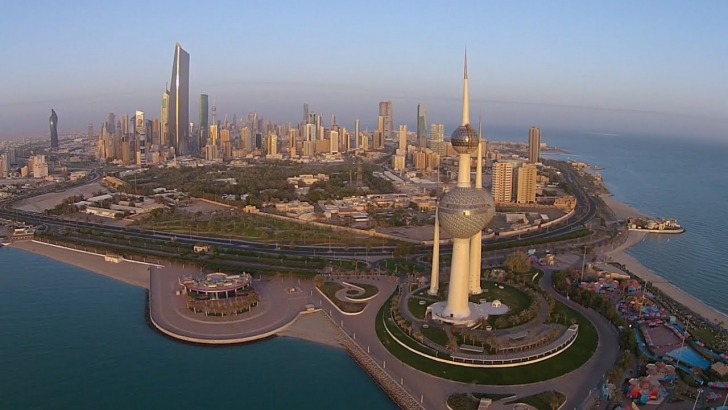
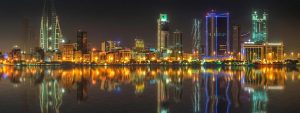
Kuwait City sits on the northern edge of the Arabian Gulf, where glassy towers, grand mosques, old souks, and waterfront promenades share space with one of the hottest urban climates on earth.
It is the political and commercial heart of Kuwait, and on an ordinary day, it often feels organized, polished, and calmer than many other capitals in the region.
Travelers usually notice that violent street crime is not the city’s defining problem.
The bigger story in 2026 is that local day-to-day safety and broader regional security are not the same thing.
Kuwait City can feel very safe in a practical, on-the-ground sense, while still carrying an elevated travel risk because of regional tensions, flight disruptions, and the possibility of spillover from wider conflict in the Gulf.
That contrast is what makes Kuwait City a destination that rewards careful planning rather than casual improvisation.
Warnings & Dangers in Kuwait City

OVERALL RISK: MEDIUM
Kuwait City is generally orderly, modern, and easier to navigate than many travelers expect. Every day, violent crime against visitors is relatively uncommon, but the overall picture is pushed upward by regional conflict risk, recent embassy security alerts, and disruptions to aviation. In 2026, this is not a destination I would call carefree, even if many neighborhoods still feel calm on the ground.

TRANSPORT & TAXIS RISK: LOW
Getting around Kuwait City is usually straightforward by taxi, ride-hailing app, or private car. The main issues are not widespread transport crime but poor driving habits, speeding, confusion over fares if you do not agree in advance, and occasional disruption tied to broader security events. Use official airport transport or well-known apps and avoid random roadside offers late at night.

PICKPOCKETS RISK: LOW
Pickpocketing exists, especially in crowded commercial zones, markets, and transit areas, but Kuwait City is not famous for aggressive tourist theft on the scale seen in some major global capitals. That said, distracted travelers are easy targets anywhere. Keep your phone secured in malls, souks, and busy waterfront spots, especially during evenings and holiday crowds.

NATURAL DISASTERS RISK: LOW
Kuwait City does not face frequent classic natural disasters like earthquakes or tropical storms, but travelers should not ignore the climate. Extreme summer heat is the biggest environmental threat, and dust storms plus seasonal rain can create dangerous driving conditions and flash flooding in low-lying areas. Heat exhaustion is a much more realistic risk than anything dramatic.

MUGGING RISK: LOW
Street mugging is not usually the first concern for visitors in Kuwait City, and violent opportunistic robbery is relatively uncommon compared with many cities of similar size. The risk rises in specific lower-income districts and isolated areas after dark, especially if you are on foot and visibly unfamiliar with your surroundings. Most tourists can reduce this risk sharply by sticking to well-lit, active areas.

TERRORISM RISK: MEDIUM
This category matters more in Kuwait City than petty theft does. The concern is less about daily visible instability in the city center and more about the broader regional situation, threats linked to armed conflict, and the possibility of drone, missile, or aviation-related disruption. Even travelers who never feel unsafe on the street should take this risk seriously when deciding whether to go now.

SCAMS RISK: LOW
Kuwait City is not a scam-heavy tourist city, but small hustles still happen. Taxi overcharging, unofficial airport transport offers, fake service fees, and inflated prices for visitors who do not know the usual rate are the most realistic annoyances. This is more a convenience problem than a major safety issue, but it can sour the start of a trip if you land unprepared.

WOMEN TRAVELERS RISK: MEDIUM
Women can and do travel in Kuwait City, but the city is socially conservative and rewards situational awareness. Dress modestly in public spaces, avoid isolated areas, and be extra careful with taxis and public transit late at night. Many female travelers find the city manageable, but it is not the kind of place where ignoring local expectations usually works in your favor.

TAP WATER RISK: LOW
Kuwait’s water system is generally considered safe, and official and local reporting has supported the quality of treated drinking water. The practical issue is often not the national supply but storage tanks, pipes, or building maintenance. For that reason, many visitors still prefer bottled or filtered water, especially during short stays.
Safest Places to Visit in Kuwait City
Gulf Road and the Waterfront
If you want Kuwait City at its most comfortable, start along Gulf Road and the Corniche-style waterfront areas.
These stretches are popular, visible, and generally well-trafficked, especially around family-oriented zones, cafés, and public landmarks.
They are good choices for first-time visitors who want a soft landing in the city.
The Avenues and Major Shopping Districts
Large modern malls such as The Avenues are among the easiest places for travelers to spend time comfortably.
They offer air conditioning, security presence, familiar services, and a predictable environment.
For nervous first-time visitors, this is often where Kuwait City feels least intimidating and most convenient.
Cultural Landmarks in Central, Well-Patrolled Areas
Places such as the Grand Mosque, Souq Al Mubarakiya, and the area around the Kuwait Towers are usually among the most rewarding stops for visitors.
They combine sightseeing value with strong public visibility.
During daylight hours and early evening, these are usually better bets than wandering into outlying residential districts with no clear purpose.
Hotel Zones and Business Districts
Upscale hotel clusters and business-oriented neighborhoods are typically the safest base for tourists because they are built around international travelers, professional staff, and easy access to transport.
If you choose accommodation in a central, reputable area rather than near the airport fringe or in a poorly reviewed apartment block, your trip gets easier immediately.
Places to Avoid in Kuwait City
Jleeb Al Shuyoukh
This is the area most often singled out in official travel guidance.
It sits near Kuwait International Airport and has been identified as a higher crime district than the parts of Kuwait City most tourists actually want to see.
I would not choose accommodation there, and I would not wander there casually, especially at night.
Jahra and Outlying Districts With Little Tourist Value
Jahra is more relevant to local life than to tourism, and official guidance has repeatedly flagged it as an area where travelers should use extra care.
It is not necessarily a no-go zone in a dramatic sense, but it is not where most visitors gain anything by drifting without local context or a specific reason to be there.
Isolated Industrial Areas After Dark
Industrial and warehouse districts such as parts of Shuwaikh are not classic tourist danger zones, but they become poor choices at night because they are quiet, car-dependent, and not designed for foot traffic.
A traveler who ends up there on foot after dark is more vulnerable to confusion, transport problems, and unwanted attention.
Desert Fringes and Border Directed Excursions
This is the category I would take most seriously outside the city core.
Desert areas near the Iraqi border remain dangerous because of old unexploded ordnance and landmines, and broader border sensitivity adds another layer of risk.
For normal tourists, there is no upside in trying to explore remote northern areas casually.
Safety Tips for Traveling to Kuwait City
- Check the regional security picture right before you fly. Kuwait City’s street-level atmosphere can feel calm even when regional tensions are high. That means you cannot judge risk only by hotel reviews or old blog posts. Recheck advisories shortly before departure, and again before your return flight, because aviation disruption can change quickly.
- Stay in a reputable central hotel. This is not the trip to save money by booking the cheapest apartment in an unfamiliar district. Choose a well-reviewed hotel in a central or business-oriented area with professional staff, visible security, and easy access to transport. Your safety, comfort, and ability to get help all improve immediately.
- Do not stay near high-crime fringe districts just because they are close to the airport. Airport convenience can be tempting, but in Kuwait City, that tradeoff is not always worth it. Areas like Jleeb Al Shuyoukh are repeatedly mentioned in travel warnings. A slightly longer airport transfer is better than waking up in the wrong neighborhood.
- Use official taxis or a known ride-hailing app. Random drivers and vague fare negotiations are where avoidable stress begins. Arrange transport through your hotel, use an established app, or take official airport options. Screenshot your destination in advance and keep your phone charged so you are never negotiating from a position of confusion.
- Dress conservatively and read the room. Kuwait City is more relaxed than some outsiders imagine, but it is still socially conservative. Covering shoulders and knees in many public settings is the smart default, especially for women. This is not about fashion panic. It is about reducing friction, unwanted attention, and cultural misunderstandings.
- Treat heat like a real safety issue. In Kuwait, the weather is not background scenery. Extreme heat can knock out even experienced travelers. Carry water, avoid long daytime walks in summer, use sun protection, and plan outdoor sightseeing early or late. Heat exhaustion is far more likely than dramatic crime for many visitors.
- Avoid demonstrations and do not hover around political situations. Even if a gathering looks small or peaceful, there is no tourist upside to getting close. Leave quickly, keep a low profile, and do not stop to film. The smartest move in Kuwait City is usually to be unremarkable.
- Be cautious with nightlife assumptions. Travelers coming from party-oriented destinations can misread Kuwait City completely. Alcohol laws are strict, and the social scene works differently here. Keep your behavior respectful, do not try to test local legal boundaries, and do not assume hotel comfort means anything goes outside it.
- Keep your documents and communications organized. Save passport copies, hotel details, emergency contact numbers, and flight updates in more than one place. Because regional disruptions can affect flights and embassy operations, it is wise to have paper backups and a simple communication plan with someone back home.
- Do not wander into non-tourist districts. Kuwait City rewards intentional travel more than spontaneous urban exploration. Stick to known attractions, malls, waterfront areas, museums, and hotel districts unless you are with a knowledgeable local. The city is much easier and safer when you move with purpose.
So... How Safe Is Kuwait City Really?
Kuwait City is one of those destinations where the honest answer has to be two-layered.
If you judge only by ordinary urban experience, it can feel quite safe.
Many visitors spend their time in polished hotel districts, malls, cultural sites, and waterfront areas without encountering serious crime.
Petty theft and mugging are not the city’s defining travel problem, and compared with many large capitals, Kuwait City often feels more controlled and less chaotic.
But if you zoom out, the safety calculation changes.
As of March 2026, official U.S. travel guidance places Kuwait at Level 3, citing armed conflict risk, crime, and recent threats tied to the wider confrontation involving Iran and the United States.
Embassy operations were suspended, commercial flights were disrupted, and official alerts told travelers to stay prepared and keep a low profile.
That matters.
It means Kuwait City is not unsafe in the same way a high-crime destination is unsafe, but it is exposed to bigger geopolitical forces that can affect your trip fast.
My bottom line is this: Kuwait City is manageable for informed travelers, but right now it is best approached as a carefully planned trip, not a casual one.
How Does Kuwait City Compare?
| City | Safety Index |
|---|---|
 Kuwait City Kuwait City |
69 |
 Ghardaia Ghardaia | 48 |
 Waterloo Waterloo | 85 |
 Kettering Kettering | 71 |
| Greater Wilmington | 45 |
 Bandar Seri Begawan Bandar Seri Begawan | 91 |
 North Sound North Sound | 93 |
Useful Information

Visas
Kuwait offers an official eVisa system for many travelers, and tourist visas are generally issued for stays of up to 90 days from entry. Applicants are typically asked for a passport copy, photo, confirmed travel ticket, and hotel reservation. Because rules can shift during exceptional circumstances, check current eligibility and processing terms before booking nonrefundable plans.

Currency
The local currency is the Kuwaiti dinar, often considered one of the world’s strongest currencies by value. Card payments are common in hotels, malls, and major restaurants, but it is still smart to carry a small amount of cash for taxis, smaller shops, or market purchases. Exchange money at reputable counters or bank-connected outlets rather than informal sources.

Weather
Kuwait City is brutally hot for a large part of the year, with summer stretching from late May into early November and temperatures often soaring well above 40°C. Dust, humidity, and fierce sun can wear travelers down quickly. Pack lightweight, modest clothing, sunglasses, strong sunscreen, and one layer for heavily air conditioned indoor spaces.

Airports
The main gateway is Kuwait International Airport, which serves the capital and lies south of the city center. You can reach central Kuwait City by taxi, prearranged transfer, ride-hailing service, or public bus, though most tourists find taxis or hotel pickups much easier. Given recent regional tensions, keep an eye on flight status and airport updates.

Travel Insurance
Travel insurance is essential for Kuwait City right now. Standard trip protection is not enough unless it covers medical care, cancellation, delays, and unexpected disruption tied to regional instability. Because flight interruptions have already affected Kuwait in 2026, I would not travel here without a policy that clearly covers emergency changes and extra accommodation costs.
Kuwait City Weather Averages (Temperatures)
Average High/Low Temperature
| Temperature / Month | Jan | Feb | Mar | Apr | May | Jun | Jul | Aug | Sep | Oct | Nov | Dec |
|---|---|---|---|---|---|---|---|---|---|---|---|---|
| High °C |
19 | 22 | 25 | 32 | 40 | 44 | 47 | 47 | 43 | 36 | 28 | 20 |
| Low °C |
9 | 10 | 16 | 19 | 25 | 28 | 29 | 29 | 26 | 23 | 15 | 9 |
| High °F |
66 | 72 | 77 | 90 | 104 | 111 | 117 | 117 | 109 | 97 | 82 | 68 |
| Low °F |
48 | 50 | 61 | 66 | 77 | 82 | 84 | 84 | 79 | 73 | 59 | 48 |
Kuwait - Safety by City
| City | Safety Index |
|---|---|
| Kuwait City | 69 |















Ok thats all lies i live in kuwait
no terrisom
no taxi higacking
NOTHING
Totally didn’t expect to get a little teary watching the Kuwait Towers at sunset, and the abaya they lent me at the mosque was heavier than I thought but oddly comforting.
Spent a few days there last month and even in the intense heat it amazes me how calm the streets feel compared to other places nearby. The mix of old souks and shiny skyscrapers made wandering around feel like stepping through different worlds in one afternoon.
Never thought a place could feel so calm and safe walking around but still have that uneasy vibe hanging in the air because of stuff happening around the region.
Didn’t expect the breeze along the waterfront promenade to make the city feel so chill, especially with that intense heat hanging around.