 Botswana : Safety by City
Botswana - safety as a country
Maun is the gateway to Botswana’s extraordinary Okavango Delta and one of southern Africa’s most important safari towns.
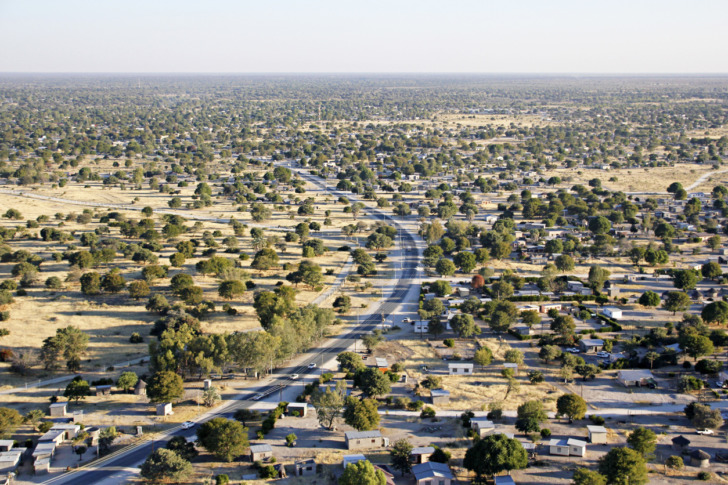
Sitting along the Thamalakane River in northern Botswana, Maun has grown from a small settlement into a busy tourism hub filled with safari operators, lodges, supermarkets, air-charter companies, and 4×4 vehicles heading toward Moremi Game Reserve.
It still feels distinctly rural in places, with cattle, donkeys, sandy roads, and wildlife never very far away.
Most travelers spend only a night or two in Maun before heading into the Delta, but the town deserves careful planning of its own.
Crime is higher than in Botswana’s remote safari camps, malaria is a genuine concern, roads become hazardous after dark, and nearby waterways contain crocodiles and hippos.
Overall, Maun is manageable for prepared travelers.
Warnings & Dangers in Maun

OVERALL RISK: MEDIUM
Maun has a medium overall risk. Tourism is well established and attacks on visitors remain relatively uncommon, but theft, burglary, robbery, and vehicle crime do occur. Travelers also face malaria, road accidents, wildlife encounters, extreme heat, and risks associated with remote safari travel. Avoid unnecessary nighttime walking and use reputable operators.

TRANSPORT & TAXIS RISK: HIGH
Road safety is one of Maun’s biggest concerns. Traffic can be chaotic, street lighting is limited, and cattle, donkeys, goats, pedestrians, and wildlife may enter roads unexpectedly. Rural roads become especially dangerous after dark. Use licensed taxis, reputable transfers, and experienced 4x4 drivers. Avoid long-distance nighttime driving whenever possible.

PICKPOCKETS RISK: MEDIUM
Pickpocketing and opportunistic theft can occur around shopping centers, bus areas, markets, bars, ATMs, and busy commercial streets. Maun does not have enormous tourist crowds, but visitors carrying expensive safari equipment stand out. Keep phones and wallets secured and avoid leaving bags unattended in restaurants or vehicles.

NATURAL DISASTERS RISK: MEDIUM
Maun experiences extreme heat, drought, thunderstorms, flash flooding, and seasonal heavy rain. Botswana’s rainy season generally runs from November through March. Flooded tracks can become impassable, particularly outside town. The Okavango Delta’s annual flood cycle also changes access to safari areas, although this is a normal natural process rather than a disaster.

MUGGING RISK: MEDIUM
Muggings and robberies are possible, especially after dark and in quieter areas. Travelers should avoid walking alone at night, even over relatively short distances. Use hotel-arranged transportation or licensed taxis when returning from restaurants or bars. Carry limited cash and do not resist if confronted by someone carrying a weapon.

TERRORISM RISK: LOW
The terrorism risk in Maun is low. Botswana has no recent pattern of major terrorist attacks, and Maun is not considered a significant international terrorism hotspot. Visitors should maintain ordinary awareness at airports, busy events, government buildings, and crowded public places, but terrorism should not dominate travel planning.

SCAMS RISK: LOW
Tourist scams are relatively uncommon, particularly when booking through established safari companies. Problems are more likely to involve questionable tour offers, inflated transportation prices, or unofficial guides. Confirm the full price of activities beforehand and be cautious with anyone offering unusually cheap safaris, scenic flights, or wildlife excursions.

WOMEN TRAVELERS RISK: MEDIUM
Women regularly travel through Maun safely, including solo safari travelers, but normal precautions are important. Avoid walking alone after dark, use trusted taxis, and choose reputable accommodation. Unwanted attention can occur around bars and nightlife venues. Solo travelers heading into remote areas should always use established safari operators.

TAP WATER RISK: MEDIUM
Municipal water in Maun is treated, but quality and supply can vary, particularly after infrastructure problems or flooding. Many short-term visitors prefer bottled or properly filtered water. Never drink directly from rivers, lagoons, or Delta channels. Natural waterways can contain microorganisms as well as crocodiles and hippos.
Safest Places to Visit in Maun
Established Lodge Areas
Maun has numerous lodges, guesthouses, and safari properties accustomed to international travelers.
Staying at an established property usually provides secure parking, transportation assistance, safari bookings, and staff who understand current road and wildlife conditions.
Lodge grounds are generally comfortable, but doors and windows should still be locked when leaving.
Central Shopping Areas During Daylight
Maun’s major supermarkets and shopping centers are useful for buying water, food, sunscreen, insect repellent, SIM cards, and last-minute safari supplies.
They are generally comfortable during normal daytime hours.
Keep valuables secured around parking areas and ATMs, and avoid displaying large quantities of cash.
Thamalakane River Lodges
Several pleasant lodges and restaurants sit along or near the Thamalakane River.
These areas offer attractive sunset views and a quieter atmosphere than central commercial streets.
Remember that waterways in northern Botswana are wildlife habitat.
Do not approach riverbanks at night or assume that an apparently empty stretch of water is safe for swimming.
Organized Okavango Delta Excursions
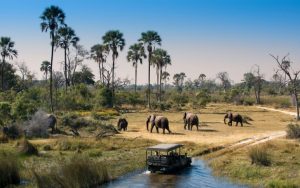
The Okavango Delta is the main reason most travelers reach Maun.
Mokoro canoe trips, boat excursions, scenic flights, and safari drives are generally safe when arranged through reputable operators.
Follow your guide’s instructions completely.
Wild animals are not accustomed to the behavioral rules of a zoo, and encounters can change within seconds.
Places to Avoid in Maun
Quiet Streets After Dark
Maun does not have a simple list of neighborhoods tourists must completely avoid.
The more important issue is time of day.
Commercial streets that feel ordinary in daylight may become very quiet after shops close.
Avoid walking long distances after dark, particularly while carrying cameras, phones, or luggage.
Use a licensed taxi or accommodation transfer instead.
Riverbanks at Night
Do not wander along the Thamalakane River or other waterways after dark.
Hippos leave the water at night to feed and can travel surprisingly far across land.
Crocodiles are another reason to stay away from water edges.
An apparently peaceful riverside walk can become dangerous when visibility is limited.
Remote Safari Tracks Without Proper Equipment
Do not attempt independent travel deep into Moremi, the Delta, or surrounding wilderness in an ordinary rental car.
Tracks may involve deep sand, mud, water crossings, wildlife, and extremely limited services.
If self-driving, use a capable 4×4 and carry recovery gear, extra water, fuel, maps, and communication equipment.
Informal Swimming Spots
Avoid swimming in rivers, lagoons, channels, and natural pools around Maun and the Okavango region unless an experienced local operator specifically confirms an area is safe.
Crocodiles, hippos, water-borne disease, currents, and changing water levels make casual freshwater swimming a bad idea.
Bush Areas Outside Town After Sunset
Do not walk into undeveloped bush surrounding Maun simply to explore.
Wildlife can move close to populated areas, particularly at night.
Elephants, snakes, hyenas, and other animals require space.
If locals tell you wildlife has recently been seen nearby, take the warning seriously.
Safety Tips for Traveling to Maun
- Do not walk around Maun unnecessarily after dark. Maun is spread out, lighting is inconsistent, and quiet streets provide opportunities for robbery. There are also road hazards, loose animals, and occasional wildlife. Use your lodge transfer or a licensed taxi even when your destination does not appear particularly far away.
- Take malaria prevention seriously. Maun sits in Botswana’s Ngamiland region, where malaria occurs. Risk is generally greater during and shortly after the rainy season, but mosquito precautions are sensible throughout the year. Discuss preventive medication with a medical professional, use repellent, and sleep behind screens or mosquito nets where necessary.
- Never swim casually in Delta waterways. Hippos and crocodiles are responsible for dangerous encounters throughout sub-Saharan Africa. Water that looks empty may not be empty at all. Do not swim, wade, or stand beside remote riverbanks unless your guide specifically tells you the location and conditions are safe.
- Avoid nighttime driving outside town. Cattle, donkeys, goats, elephants, pedestrians, and other animals may stand directly on the roadway. Many roads have little lighting, making hazards difficult to see until the last moment. Plan longer journeys so that you arrive well before sunset.
- Choose safari companies carefully. A cheap safari is not a bargain if the vehicle breaks down deep inside Moremi without proper communication equipment. Use established companies with experienced guides, maintained vehicles, emergency procedures, and appropriate insurance. Confirm exactly what your package includes before paying.
- Keep valuables out of vehicles. Do not leave cameras, passports, phones, bags, binoculars, or cash visible inside a parked vehicle. Safari travelers often carry thousands of dollars worth of equipment, which makes rental cars attractive targets. Store unnecessary belongings securely at your accommodation.
- Carry much more water than you think you need. Maun can become extremely hot, particularly before the summer rains. Dehydration develops quickly during long drives, walking safaris, or vehicle breakdowns. Keep drinking water in your room and vehicle, and bring additional supplies whenever traveling beyond town.
- Never leave a safari vehicle without permission. Animals that appear calm can react rapidly. Lions, elephants, buffalo, hippos, and other wildlife may be hidden by vegetation or terrain. If your guide tells you to remain seated, stay seated. Do not approach animals for photographs or attempt to improve your camera angle on foot.
- Carry emergency supplies when self-driving. Independent safari travel requires preparation. Carry spare tires, tools, extra fuel, food, water, recovery equipment, offline maps, and reliable communication. Tell someone your planned route and expected arrival time. In remote areas, another vehicle may not pass for hours.
- Buy insurance that includes medical evacuation. Safari camps may be hundreds of kilometers from advanced medical facilities. A serious injury can require evacuation by aircraft. Choose insurance covering medical emergencies, safari activities, evacuation, vehicle accidents, lost baggage, canceled charter flights, and any walking or water-based activities you plan to undertake.
So... How Safe Is Maun Really?
Maun is not one of Botswana’s most dangerous places, but it should not be treated like a small European tourist town either.
Crime has become a greater concern in Botswana’s larger population centers, including Maun, and visitors should take burglary, vehicle theft, mugging, and opportunistic robbery seriously.
Fortunately, most travelers move through a relatively controlled tourism environment.
They are collected from Maun International Airport, stay at established lodges, use professional safari operators, and travel into the Okavango Delta with trained guides.
That approach reduces risk substantially.
The less obvious dangers may actually be more important.
Malaria occurs in northern Botswana, roads are hazardous after dark, and wildlife can appear close to populated areas.
Once you enter the Delta or Moremi, medical facilities and reliable phone coverage may be far away.
Water also deserves respect.
Hippos and crocodiles inhabit northern Botswana’s rivers and wetlands, so swimming in natural waterways is generally a terrible idea.
My assessment is that Maun has a medium overall travel risk.
It is perfectly suitable for families, couples, solo travelers, and first-time safari visitors who use reputable operators and follow local guidance.
Avoid walking at night, prepare properly for malaria, use experienced drivers, and remember that the wilderness around Maun is genuinely wild.
How Does Maun Compare?
| City | Safety Index |
|---|---|
| Maun |
82 |
| Gaborone |
74 |
| Jwaneng |
82 |
| Palapye |
76 |
| Francistown |
72 |
| Serowe |
79 |
| Kasane |
84 |
 Binghamton Binghamton | 61 |
 Kamakura Kamakura | 91 |
| West Covina | 88 |
 Sosua Sosua | 65 |
 Isla Holbox Isla Holbox | 85 |
| Logan | 78 |
Useful Information

Visas
Citizens of many countries can visit Botswana without obtaining a visa in advance, commonly for stays of up to 90 days. Travelers from visa-required countries can apply for a Botswana tourism visa, including through the electronic visa system. Applications normally require passport details, accommodation information, an itinerary, and proof of onward travel.

Currency
Maun uses the Botswana pula. Cards are widely accepted at larger lodges, supermarkets, safari companies, and restaurants, but cash remains useful for smaller businesses, tips, markets, and transportation. ATMs are available in Maun. Carry enough money before entering remote safari areas, where banking services may disappear completely.

Weather
Maun has a hot semi-arid climate. The dry season from roughly May through October brings cooler nights and excellent safari conditions, while September and October can become extremely hot. The rainy season usually runs from November through March. Pack sun protection, lightweight clothing, insect repellent, warm layers for winter mornings, and waterproof gear during the rains.

Airports
Maun International Airport is the principal gateway to the Okavango Delta and sits very close to central Maun. Scheduled flights connect Maun with major regional hubs, while numerous small charter aircraft carry travelers to remote safari camps. Baggage limits on bush flights can be much stricter than on normal commercial flights, particularly for hard-sided suitcases.

Travel Insurance
Travel insurance is essential for a Maun safari. Choose coverage for medical treatment, emergency air evacuation, safari activities, wildlife-related injuries, malaria, road accidents, baggage loss, and flight disruption. If your itinerary includes walking safaris, mokoro excursions, self-driving, or charter flights, confirm that each activity is specifically covered.
Maun Weather Averages (Temperatures)
Average High/Low Temperature
| Temperature / Month | Jan | Feb | Mar | Apr | May | Jun | Jul | Aug | Sep | Oct | Nov | Dec |
|---|---|---|---|---|---|---|---|---|---|---|---|---|
| High °C |
33 | 33 | 32 | 31 | 29 | 27 | 26 | 29 | 33 | 36 | 35 | 33 |
| Low °C |
21 | 21 | 19 | 17 | 12 | 9 | 9 | 12 | 16 | 21 | 21 | 21 |
| High °F |
91 | 91 | 90 | 88 | 84 | 81 | 79 | 84 | 91 | 97 | 95 | 91 |
| Low °F |
70 | 70 | 66 | 63 | 54 | 48 | 48 | 54 | 61 | 70 | 70 | 70 |
Botswana - Safety by City
| City | Safety Index |
|---|---|
| Francistown | 72 |
| Gaborone | 74 |
| Jwaneng | 82 |
| Kasane | 84 |
| Maun | 82 |
| Palapye | 76 |
| Serowe | 79 |