


 Armenia : Safety by City
Armenia - safety as a country
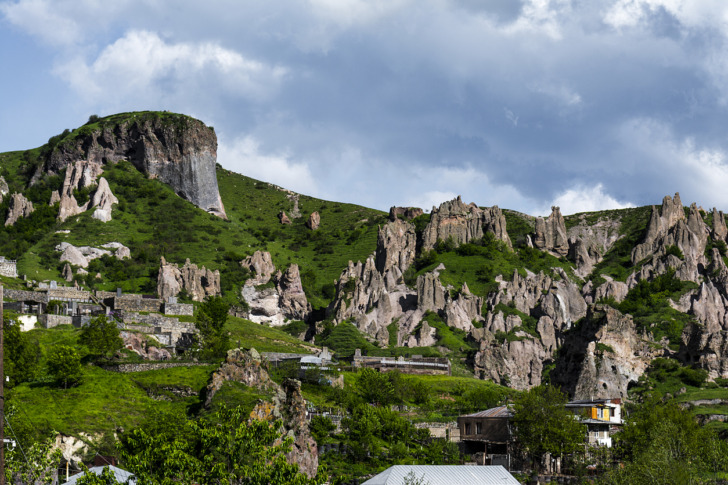
Goris is one of Armenia’s most visually distinctive towns, set among green mountains and strange volcanic-rock formations in the southern province of Syunik.
Its stone houses, tree-lined streets, traditional balconies, nearby cave settlements, and cool highland climate make it feel far removed from the bustle of Yerevan.
The town is commonly used as a base for visiting Tatev Monastery, the Wings of Tatev cableway, Old Khndzoresk, and the dramatic landscapes of southern Armenia.
Goris itself is peaceful, walkable, and welcoming, with low everyday crime.
However, its location in Syunik means travelers must pay close attention to the security situation near Armenia’s border with Azerbaijan.
The town can be visited safely, but border roads and remote eastern areas require much greater caution.
Warnings & Dangers in Goris

OVERALL RISK: MEDIUM
Goris itself has low street-crime levels and generally feels calm, including for solo visitors. However, the wider Syunik region has experienced military tension, road restrictions, checkpoints, and border incidents. Travelers should stay in established tourist areas, confirm routes locally, and avoid roads, villages, or viewpoints close to the Azerbaijani border.

TRANSPORT & TAXIS RISK: MEDIUM
Taxis and ride-hailing services are generally affordable and safe, but mountain roads can be winding, poorly lit, icy, or damaged. Some routes in Syunik pass close to sensitive border areas. Use an experienced local driver, avoid night travel, and confirm the planned route before leaving Goris for Tatev, Kapan, or rural attractions.

PICKPOCKETS RISK: LOW
Pickpocketing is uncommon in Goris because the town receives modest tourist numbers and rarely feels crowded. Basic precautions are still sensible around the bus area, markets, festivals, and popular attractions. Keep valuables in a zipped bag, do not leave phones unattended in cafes, and secure belongings during shared minibus journeys.

NATURAL DISASTERS RISK: MEDIUM
Goris is exposed to earthquakes, landslides, rockfall, heavy snow, flash flooding, and severe winter road conditions. Mountain weather can change quickly, particularly outside summer. Travelers should avoid cliff edges, unstable caves, and unmarked trails. During winter, check road conditions before traveling and bring proper footwear, warm clothing, food, and water.

MUGGING RISK: LOW
Muggings are rare in central Goris, and violent crime against tourists is uncommon. The town center is generally comfortable during the day and evening. Risk increases slightly on dark roads, isolated paths, and remote viewpoints after sunset. Carry limited cash, avoid displaying expensive equipment, and use a taxi when returning late.

TERRORISM RISK: LOW
The direct terrorism risk in Goris is low. The more relevant security concern is possible armed conflict or military activity near the Armenia-Azerbaijan border. Visitors should avoid checkpoints, military facilities, demonstrations, and border-facing roads. Never photograph soldiers, guarded infrastructure, defensive positions, or official vehicles, even from a distance.

SCAMS RISK: LOW
Scams are not widespread in Goris. Travelers may occasionally encounter inflated taxi fares, vague excursion prices, unofficial guides, or accommodation charges that were not clearly explained. Confirm prices before accepting transportation or tours, use recommended drivers, and book guesthouses through established channels. Serious tourist-targeted fraud is uncommon.

WOMEN TRAVELERS RISK: LOW
Goris is generally safe for women, including solo travelers. The atmosphere is quiet, conservative, and community-oriented. Unwanted attention can occur, but serious harassment is uncommon in central tourist areas. Women should avoid isolated hiking routes alone, use reputable taxis after dark, and dress modestly when entering churches, monasteries, or rural villages.

TAP WATER RISK: LOW
Tap water in Goris is generally considered safe, although the quality of internal plumbing can vary between older homes, guesthouses, and apartment buildings. Ask your accommodation about its water system. Bottled water is inexpensive and widely available for travelers with sensitive stomachs or concerns about pipes and storage tanks.
Safest Places to Visit in Goris
Central Goris
Central Goris is the safest and easiest area for visitors.
Its main streets contain guesthouses, restaurants, supermarkets, cafes, banks, and small parks.
The town is quiet enough to explore on foot, and residents are generally welcoming toward tourists.
The area around Saint Gregory the Illuminator Church is particularly convenient.
Streets remain comfortable during daylight and early evening, though lighting becomes limited farther from the center.
Goris Geological Museum
The Goris Geological Museum is a safe daytime attraction that introduces visitors to the archaeology, culture, wildlife, and landscape of Syunik.
It is a useful first stop because staff may also provide practical local information about nearby attractions and current road conditions.
Tatev Monastery
Tatev Monastery is one of Armenia’s most important historic attractions and is generally safe when reached by the established route.
Many visitors drive to Halidzor and continue using the Wings of Tatev cableway.
Weather can interrupt cableway operations, so confirm schedules before leaving.
Use a trusted driver and avoid improvised routes through remote villages.
Old Goris Cave Area by Day
The rock formations and cave dwellings above Old Goris are fascinating, but they should be explored during daylight and in dry weather.
Remain on established paths, avoid unstable openings, and wear sturdy shoes.
A local guide is worthwhile if you want to explore beyond the main viewpoints.
Places to Avoid in Goris
Roads Near the Azerbaijani Border
The main places to avoid are not neighborhoods within Goris, but roads and rural areas near the international border.
Conditions can change quickly, checkpoints may appear, and routes can be closed without notice.
Do not rely entirely on navigation apps, since they may suggest shortcuts through sensitive territory.
Ask your accommodation, driver, or local authorities whether a route is currently considered safe before leaving town.
Military Sites and Checkpoints
Avoid approaching military installations, defensive positions, guarded roads, communications towers, or checkpoints.
Do not stop nearby to take photographs or watch military activity.
If officers stop your vehicle, remain calm, keep documents ready, and follow instructions.
Never argue about photography or attempt to enter a restricted road simply because it appears open on a map.
Remote Areas East of Goris Without Guidance
Villages and landscapes east of Goris can be beautiful, but some lie closer to sensitive border areas.
Travelers should not explore remote roads, hilltops, or abandoned tracks without current local guidance.
Conditions that were acceptable during an earlier trip may no longer be suitable.
Organized daytime excursions are safer than independent driving through unfamiliar eastern Syunik.
Unstable Caves and Cliff Edges
The cave landscapes around Goris and Khndzoresk contain steep drops, loose stones, damaged stairs, and unprotected openings.
Avoid entering abandoned caves or climbing unstable formations.
Rain, snow, and ice make these areas much more dangerous.
Children should remain closely supervised, and visitors should not cross barriers for photographs.
Mountain Roads After Dark
Roads around Goris can be narrow, winding, and poorly illuminated.
Fog, snow, fallen rocks, livestock, and potholes add to the risk.
Avoid unnecessary nighttime journeys, especially in winter or during storms.
Plan day trips early enough to return before sunset.
Safety Tips for Traveling to Goris
- Check the regional security situation before every excursion. Goris may be calm even while a nearby road or border area is restricted. Ask your guesthouse or driver about current conditions before visiting Khndzoresk, Kapan, Tatev, or remote villages. Do not assume that yesterday’s route remains appropriate today. Local, same-day advice is more useful than an old travel itinerary.
- Avoid the Azerbaijan border. Do not approach border markers, military positions, fenced areas, or hilltops overlooking sensitive territory. Some roads in Syunik come surprisingly close to the border. Stay on established tourist routes and follow all signs and checkpoint instructions. Curiosity is not a good reason to test a security boundary.
- Use a trusted local driver. An experienced driver understands road conditions, checkpoints, weather, and which routes should be avoided. Ask your accommodation to recommend someone rather than accepting an unverified street offer. Confirm the total price, stops, waiting time, and return schedule before beginning a day trip.
- Do not photograph military infrastructure. Keep cameras and phones away near soldiers, checkpoints, bases, guarded buildings, border roads, bridges, and communications equipment. Even innocent photography may be viewed as suspicious. When unsure, ask your driver or guide before taking a picture.
- Prepare for mountain weather. Goris can be cool even when Yerevan is hot. Pack layers, a rain jacket, sun protection, and sturdy shoes. During winter, bring warm clothing and footwear with grip. Weather can shift quickly, and shaded roads may remain icy long after snow has stopped falling.
- Stay on established hiking paths. The formations around Old Goris and nearby cave settlements are dramatic but not fully protected. Avoid unmarked caves, unstable rock faces, and cliff edges. Tell someone where you are going, carry water, and return before dark. Solo hikers should consider hiring a guide for longer routes.
- Carry cash and backup supplies. Cards work at some hotels, restaurants, and supermarkets, but cash remains useful for taxis, guesthouses, village shops, entrance fees, and roadside cafes. Carry Armenian dram in small notes. Bring water, snacks, medication, and a charged power bank when leaving town.
- Avoid driving at night. Mountain roads may have limited lighting, sudden bends, potholes, livestock, and fallen rocks. Winter adds ice and snow, while fog can reduce visibility quickly. Complete longer journeys during daylight and avoid rushing back from Tatev or other attractions after sunset.
- Choose centrally located accommodation. Staying near central Goris makes restaurants, shops, taxis, and essential services easier to reach. Guesthouses outside town can be peaceful, but may leave you dependent on transport after dark. Confirm heating, hot water, road access, and emergency contact details before booking during winter.
- Buy insurance that covers regional disruption. Choose travel insurance covering medical treatment, road accidents, hiking injuries, earthquakes, cancellations, and emergency transportation. Read territorial exclusions carefully because some policies limit coverage near disputed borders or areas affected by armed conflict. Keep a copy of the policy available offline.
So... How Safe Is Goris Really?
Goris presents an unusual safety picture.
The town itself is peaceful, with low violent crime, little organized tourist theft, and a welcoming local atmosphere.
Most visitors can walk through central streets, eat in local restaurants, use taxis, and stay in guesthouses without feeling threatened.
From a normal urban-crime perspective, Goris is safer than many better-known destinations.
The main concern is geography.
Goris lies in Syunik, a strategically sensitive province bordering Azerbaijan.
Military tensions, border incidents, checkpoints, and road restrictions can affect travel outside town.
These risks do not mean that central Goris is constantly dangerous, but they make spontaneous exploration toward the border unwise.
Natural conditions also matter.
Goris sits in mountainous terrain where snow, fog, landslides, earthquakes, and difficult roads can complicate travel.
Cave settlements and cliffside viewpoints often lack the barriers visitors might expect at heavily managed attractions.
I assess that Goris has a low crime risk but a medium overall travel risk because of regional security and mountain conditions.
It can be an excellent destination for experienced travelers, couples, solo visitors, and small groups who stay informed.
Use trusted drivers, avoid border areas, travel during daylight, and check conditions before each excursion.
With those precautions, Goris is both manageable and deeply rewarding.
How Does Goris Compare?
| City | Safety Index |
|---|---|
| Goris |
78 |
| Yerevan |
70 |
| Jermuk |
89 |
| Gyumri |
87 |
| Dilijan |
90 |
| Vagharshapat |
88 |
| Tsaghkadzor |
89 |
 Algiers Algiers | 48 |
 Bodden Town Bodden Town | 82 |
 Guangxi Guilin Guangxi Guilin | 76 |
 Chisinau Chisinau | 72 |
 Ankara Ankara | 58 |
 Brest Brest | 48 |
Useful Information

Visas
Citizens of many countries can enter Armenia without a visa for stays of up to 180 days within one year. Eligible travelers who require a visa can apply electronically. A visitor e-visa valid for up to 21 days costs US$8, while one allowing up to 120 days costs US$39. Processing can take up to three working days.

Currency
Goris uses the Armenian dram. Cards are accepted at some hotels, restaurants, supermarkets, and larger businesses, but cash remains important for guesthouses, taxis, markets, village shops, and excursions. Use bank ATMs or established exchange offices. U.S. dollars and euros can be exchanged, but normal purchases should be made in dram.

Weather
Goris has warm, comfortable summers and cold, snowy winters. Summer daytime temperatures commonly reach the low to mid-20s Celsius, while nights remain cool. Winter brings freezing temperatures, snow, and icy roads. Pack layers throughout the year, along with rain protection, sturdy shoes, sunscreen, and serious winter clothing from November through March.

Airports
Goris has no major commercial airport. Most international visitors arrive through Zvartnots International Airport near Yerevan and continue by car, minibus, or private transfer. The drive usually takes around four to five hours, depending on weather and stops. Syunik Airport near Kapan has limited services and should not be relied upon without confirmation.

Travel Insurance
Travel insurance is strongly recommended for Goris and southern Armenia. Look for coverage that includes medical care, evacuation, road accidents, hiking injuries, earthquakes, cancellations, and weather disruption. Check whether border tensions or armed conflict exclusions affect coverage in Syunik, and keep emergency details available without relying on internet access.
Goris Weather Averages (Temperatures)
Average High/Low Temperature
| Temperature / Month | Jan | Feb | Mar | Apr | May | Jun | Jul | Aug | Sep | Oct | Nov | Dec |
|---|---|---|---|---|---|---|---|---|---|---|---|---|
| High °C |
2 | 3 | 8 | 13 | 18 | 23 | 25 | 25 | 21 | 15 | 9 | 4 |
| Low °C |
-8 | -6 | -2 | 2 | 7 | 11 | 14 | 14 | 10 | 5 | -1 | -5 |
| High °F |
36 | 37 | 46 | 55 | 64 | 73 | 77 | 77 | 70 | 59 | 48 | 39 |
| Low °F |
18 | 21 | 28 | 36 | 45 | 52 | 57 | 57 | 50 | 41 | 30 | 23 |
Armenia - Safety by City
| City | Safety Index |
|---|---|
| Dilijan | 90 |
| Goris | 78 |
| Gyumri | 87 |
| Jermuk | 89 |
| Tsaghkadzor | 89 |
| Vagharshapat | 88 |
| Yerevan | 70 |











Wait, did you notice how quiet the streets get at night in Goris? I didn’t expect it to feel so safe and peaceful, especially being so close to a tense border area. How do locals handle that mix of calm town life with the need to stay alert?
The quiet streets and cool breeze in Goris made it a perfect escape from the city noise, though we stayed cautious when heading towards the border areas.