


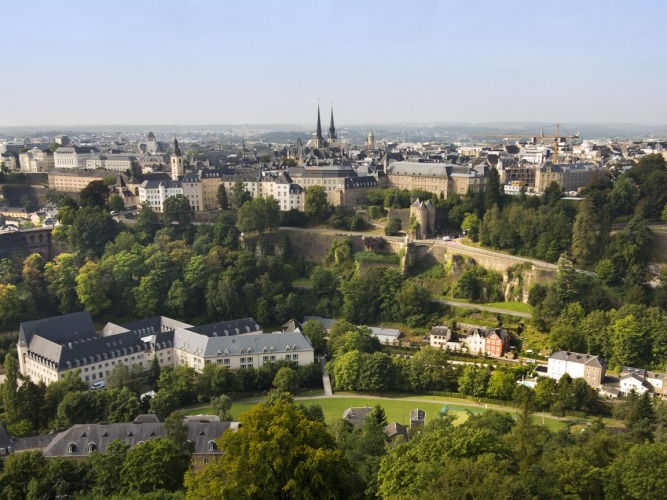
Luxembourg often surprises people.
It looks small on a map, then quietly delivers castles, forests, vineyards, and a capital city stacked across cliffs like it is showing off.
Size-wise, it is comparable to Rhode Island, just smaller and easier to cross in a single afternoon.
That compact footprint is part of the appeal.
You can see a lot without feeling like you are racing the clock.
Luxembourg sits between France, Belgium, and Germany, right at the cultural crossroads of Western Europe.
You feel it in the food, the languages, and the architecture.
The country has long been a strategic prize, fortified and fought over for centuries before becoming a sovereign Grand Duchy in the 19th century.
Today, it is one of the world’s last remaining grand duchies and a founding member of the European Union, with a stable economy and strong international presence.
Tourism has been climbing steadily.
In 2024, Luxembourg welcomed around one and a half million visitors staying in paid accommodations, with millions of overnight stays tied largely to travelers from neighboring countries.
For a country this small, that is a meaningful number, and it shows in how polished and visitor-friendly things feel.
People come for variety without hassle.
Luxembourg City mixes medieval walls with modern institutions.
Northern regions offer forests and hiking routes.
The east delivers rock formations and trails.
The Moselle Valley offers wine, charming river towns, and leisurely afternoons.
It is a place where history, nature, and comfort coexist effortlessly.
It’s refreshingly safe, and wait until you hear about the free transportation!
Warnings & Dangers in Luxembourg

OVERALL RISK: LOW
Luxembourg comes with a low risk all-around. Crime rates are low, transportation is easy, and risks are rare.

TRANSPORT & TAXIS RISK: LOW
This is another low-risk, and the first thing to know is that public transportation is free here (as of early 2026). That means you can avoid spending money on cabs or rental cars if you choose.

PICKPOCKETS RISK: LOW
The risk is low, but that's more to say it's standard for any busy tourist area. Don't display signs of wealth, never leave a bag unattended, and watch out for potential thieves in busy areas.

NATURAL DISASTERS RISK: LOW
The risk is low, but you'll still want to stay on top of the weather forecasts. Winter rain can mean flooding and landslides. Spring and summer heat mixed with dry conditions can cause wildfires, a risk that can also impact air quality quite a distance away.

MUGGING RISK: LOW
Here's another low, but not unheard of, risk. Use standard precautions. Don't walk around at night alone and stick to well-traveled roads and sidewalks.

TERRORISM RISK: LOW
While terrorism concerns are across Europe, there's a low risk here. You can check the risk level through the LU Alert system daily. Vigilance goes a long way, and you should report anything suspicious to the local police.

SCAMS RISK: LOW
One of the main scams I saw during research was people dressed up as police officers demanding money for "fines." Unless force is used, you should never pay these fake fines. Check your government advisory for new scams that might pop up, but with such strong tourism regulation, the risk is low.

WOMEN TRAVELERS RISK: LOW
The is a low risk, and with the safe infrastructure and tourist-friendly economy, even solo travelers will find plenty to do here. If you want to explore with the utmost safety, stick with tour guides.

TAP WATER RISK: LOW
All tap water meets the EU standards, and the water is safe to drink. Some people prefer bottled water because tap water is very hard here.
Safest Places to Visit in Luxembourg
The official tourism website for Luxembourg is easy enough — www.visitluxembourg.com.
Consider downloading the Visit Luxembourg app.
You should look at the option of the Luxembourg Pass.
It’s designed to give tourists access to the top sites, whether you’re staying for one day or a long weekend.
Luxembourg City anchors the experience.
Its UNESCO-listed old town, dramatic clifftop views, and underground casemates blend medieval defenses with modern EU institutions.
Museums, cafés, and river walks fill in the gaps between historic landmarks.
North of the capital, the Ardennes region leans rural and rugged.
Vianden Castle is the headline attraction, rising above a storybook town near the German border.
Nearby Clervaux mixes castle history with contemporary photography exhibitions and quiet village charm.
This area is popular year-round for hiking, cycling, and winter walks, even without major ski resorts.
To the east, the Mullerthal region offers a very different feel. Often called “Little Switzerland,” it’s known for sandstone rock formations, forest trails, waterfalls, and small towns like Echternach, Luxembourg’s oldest city.
The Moselle Valley along the southeastern border shifts the tone again.
Vineyards line the river, and towns like Remich and Grevenmacher focus on wine tasting, river cruises, and relaxed dining.
Spring through fall is prime time here.
Most museums and castles will have a guided tour option.
Just be sure to wear comfortable shoes because you’ll do a lot of walking.
Places to Avoid in Luxembourg
There aren’t dangerous neighborhoods or towns in Luxembourg that would cause you to re-arrange travel plans.
Even after weeding through all the travel advisories, there aren’t many facts that fit this topic.
I did find a few things that might help you make travel plans.
Luxembourg is a “commuter country,” meaning it doubles in population each weekday.
Whether you’re driving, biking, or walking, expect congestion and traffic.
It’s also worth noting that crime increases during Schueberfouer, a three-week summer festival.
If you’re visiting during this time, just use extra safety steps, whether you’re walking around, leaving valuables in your hotel room, or parking a car.
Also, if you’re walking around at night, be cautious near city parks since there have been recent reports of drug dealers trying to sell their product to people walking by
Safety Tips for Traveling to Luxembourg
- Luxembourg is very safe, but the Grand Ducal Police handle emergencies. Dial 113 for police, 112 for general emergencies, and 112 or 115 for medical help. The emergency number 112 works across the EU. Response times are fast, especially in cities, and officers are generally English-friendly and tourist-accustomed.
- Sign up for the LU-Alert system to receive official notifications about major incidents, severe weather, or public safety issues. The organization also lists a daily “risk level.” MeteoAlarm is also useful for weather-related alerts across Europe.
- There are no special driving requirements for foreign nationals beyond a valid license. Luxembourg is very walkable and public transport is free nationwide, so many visitors never drive. If you rent a car in another country, check that country’s rules. Rental agencies may have their own requirements, especially for non-EU licenses.
- Fog and ice can cause sudden slowdowns on highways and secondary roads from fall through early spring. From October to April, cars must be equipped with all-weather or snow tires. This rule is enforced. Even if roads look clear, conditions can change fast, especially in the morning and late evening.
- There are no required vaccinations to enter Luxembourg. Routine vaccines should be up-to-date. Travelers spending time outdoors may consider tick protection in warmer months, especially in wooded areas. If you’re bringing prescription medications into the country, check with Customs to confirm they are allowed.
- Luxembourg has three official languages: Luxembourgish, French, and German. English is widely spoken, especially in hotels, restaurants, shops, and public offices. You will have no trouble communicating as a visitor. Signage often appears in multiple languages, which makes navigating the country straightforward.
- Bladed weapons of any kind are strictly prohibited. That includes pocketknives, multi-tools, and anything with a blade, even small ones. Do not pack them in carry-ons or day bags. Tourists sometimes get caught off guard by this rule, so leave knives at home to avoid fines or confiscation.
- There have been cases of people posing as police officers asking tourists to pay on-the-spot fines for minor offenses. Real police do not do this. Do not hand over money or documents. Ask to go to a police station instead. If it happens, report it immediately and contact your embassy for guidance.
- Luxembourg is peaceful, but demonstrations do happen, especially around EU-related issues or labor matters. Avoid protests and large gatherings, even if they appear calm. Situations can change quickly, and police may restrict movement. Tourists are best off steering clear and choosing alternate routes.
- The legal drinking age is 16, which surprises many visitors. That said, public drunkenness is illegal and taken seriously. Fines or even short jail stays are possible for disruptive behavior. Enjoy the relaxed drinking laws responsibly, especially in public spaces and on public transport.
So... How Safe Is Luxembourg Really?
Luxembourg is a safe place to visit, with other governments giving the lowest risk level possible.
That’s a Level 1: Exercise Standard Precautions on a four-tiered scale.
No regions of the country have a higher risk.
The only caution is to let the low crime rate and strong infrastructure give you a false sense of safety.
Low risk doesn’t equal no risk.
Use standard precautions, especially when you’re on the train to or from Brussels.
Don’t leave your items lying around in public areas.
If you’re visiting during a busy season, use hotel room or rental home safes to keep your valuables locked.
That’s due to an increasing number of burglaries when visitors are away exploring.
Since this is such a small country, there’s a good chance you’ll be visiting other neighboring countries during your trip.
Be sure to read the travel safety articles we have about those countries on this website to get a complete snapshot of safety for your trip.
How Does Luxembourg Compare?
| Country | Safety Index |
|---|---|
 Luxembourg Luxembourg | 74 |
 New Zealand New Zealand | 90 |
 Guyana Guyana | 43 |
 Greenland Greenland | 80 |
 Saint Kitts and Nevis Saint Kitts and Nevis | 70 |
 Sri Lanka Sri Lanka | 60 |
 Albania Albania | 75 |
 United Kingdom United Kingdom | 77 |
 French Polynesia French Polynesia | 92 |
Useful Information

Visas
Luxembourg follows Schengen Area rules. U.S., Canadian, UK, Australian, and EU passport holders can visit visa-free for up to 90 days within a 180-day period. Your passport should be valid for at least three months beyond departure. There’s no separate Luxembourg visa process.

Currency
Luxembourg uses the euro. Cards are widely accepted everywhere, including small cafés and public transport, but carrying a little cash is still smart. ATMs are easy to find. Prices are comparable to Belgium and Germany, though dining and hotels can creep higher in central Luxembourg City.

Weather
Expect a mild continental climate. Winters are cool with occasional snow, but rarely extreme. Summers are comfortable, usually topping out in the 70s°F. Rain is spread throughout the year, not dumped all at once. Layers and a light rain jacket cover most scenarios, no matter the season.

Airports
Luxembourg Airport is the country’s main international gateway and sits just minutes from the city center. It’s small, efficient, and easy to navigate. Many travelers also fly into Brussels, Frankfurt, or Paris and connect by train, which works well thanks to strong regional rail links.

Travel Insurance
Travel insurance isn’t required, but it’s a good idea. Healthcare is excellent and costly without coverage. Insurance should include medical care, emergency transport, and trip interruptions. If you’re combining Luxembourg with other European countries, a single Schengen-friendly policy usually covers everything cleanly.
Luxembourg Weather Averages (Temperatures)
Average High/Low Temperature
| Temperature / Month | Jan | Feb | Mar | Apr | May | Jun | Jul | Aug | Sep | Oct | Nov | Dec |
|---|---|---|---|---|---|---|---|---|---|---|---|---|
| High °C |
2 | 3 | 8 | 14 | 17 | 21 | 23 | 22 | 18 | 12 | 7 | 4 |
| Low °C |
-2 | -2 | 1 | 4 | 7 | 11 | 13 | 12 | 9 | 5 | 2 | -1 |
| High °F |
36 | 37 | 46 | 57 | 63 | 70 | 73 | 72 | 64 | 54 | 45 | 39 |
| Low °F |
28 | 28 | 34 | 39 | 45 | 52 | 55 | 54 | 48 | 41 | 36 | 30 |







Chalk this up to typical American ignorance of geography but I always forget about Luxembourg. I didn’t know it was a hub for France, Belgium, and Germany! What a great way to tour four European nations in one trip without a lot of travel. I’m hoping the pandemic quiets down soon so I can return to Europe and Luxembourg is high on my list.
It was nice reading through Luxembourg cost of living, economic, jobs and ect.
What is if I am not an American citizen, how easy is it to get a visa for Luxembourg as an international citizen?
It didn’t overhype Luxembourg as super dangerous or perfect, just truthful about low crime, easy transport, and sensible precautions that seasoned travelers will actually use. Useful if you want realistic preparation rather than just cheerleading.
Who knew that a country smaller than my neighborhood could pack in so much charm and history, like it’s trying to win a contest for the cutest place in Europe?
Did you get to try any of the local wines while you were there? The Moselle Valley sounds like such a chill spot for a leisurely afternoon!
The combination of history and nature sounds intriguing, but I wonder if the tourist experience really lives up to the hype, especially with so many people visiting. It’s hard to imagine how a place can feel both cozy and crowded at the same time.
Free transportation, really, so when my calves were killing me after hiking those forest trails and I reached that dramatic cliffside overlook, did you actually hop on a tram without waiting ages?
Took the free transportation from the capital stacked on cliffs to the Moselle vineyards, and sitting there with a slow afternoon and a glass of wine actually made me breathe easier and notice how small it all feels in the best way.
Sure, because nothing screams adventure like shuffling around a tiny country where you can literally hop from castle to vineyard before lunch without breaking a sweat.
The free transportation sounds great, but I wonder if it actually makes getting around any less stressful when you’re trying to fit everything into one afternoon.