


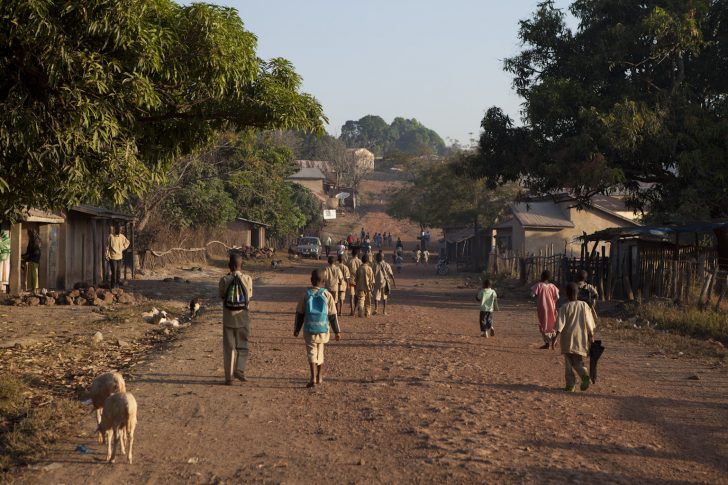
Guinea holds one of West Africa’s biggest natural secrets.
Several major rivers, including the Niger and Senegal, begin here.
The country sits on the Atlantic coast of West Africa, bordered by Senegal, Mali, Côte d’Ivoire, Liberia, Sierra Leone, and Guinea-Bissau.
Guinea gained independence from France in 1958 and quickly moved into decades of authoritarian rule, military takeovers, and political unrest.
While civilian government returned in the 2010s, instability never fully eased.
A 2021 military coup reshaped power again, and heading into 2026, the political situation remains tense, with protests, strikes, and security crackdowns still part of daily life, especially in Conakry.
This is not a major tourist destination.
Fewer than 50,000 international visitors arrive each year.
People who do visit are usually drawn by Guinea’s raw landscapes rather than comfort or convenience.
Highlights include coastal islands, inland waterfalls, the Fouta Djallon highlands, and remote biodiversity zones like Mount Nimba.
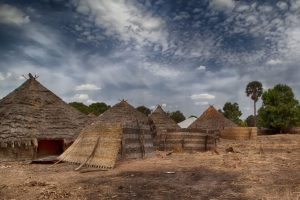
Cultural traditions, music, and village life are also part of the draw.
Travel here comes with expectations that need adjusting.
Infrastructure is limited, transportation can be unreliable, and tourism services are sparse.
Guinea also presents specific and detailed safety risks, from political unrest to health and road conditions, that travelers should understand fully before planning a trip.
Warnings & Dangers in Guinea

OVERALL RISK: MEDIUM
Guinea has a medium risk, and there are several reasons why that we'll detail throughout this article. A lot of it goes beyond standard safety measures, but there are ways to work around the risks, as we'll help you discover.

TRANSPORT & TAXIS RISK: HIGH
This is a high risk unless you're using private transportation. Taxis are hotbeds for crime. Plus, taxi conditions can be overcrowded and unmaintained. Even the U.S. government doesn't let its employees use Guinea taxis. Public transportation isn't really a thing here. Driving yourself requires nerves of steel while facing aggressive drivers who don't follow safety steps, poor road conditions, and aggressive bystanders when accidents occur.

PICKPOCKETS RISK: MEDIUM
There's a medium risk of being a victim of petty theft, and that risk goes up a bit in crowded markets. Theft can also happen if you leave items behind in vehicles or unsecured lodging. It's worth noting that even children can be thieves.

NATURAL DISASTERS RISK: MEDIUM
As for natural disasters, this country is prone to many catastrophic disasters, some of which are floods, earthquakes and tsunamis. To add insult to injury, it has also been known to battle numerous epidemics and diseases, such as Ebola outbreak in 2015.

MUGGING RISK: MEDIUM
We talked about petty theft, but kept violent crimes as a medium risk consideration, too. Avoid anyone who offers to give you a ride from the airport; they might be robbers trying to get you alone. Even people who appear to be military or law enforcement can be robbers in disguise.

TERRORISM RISK: MEDIUM
International terrorism isn't the risk to worry about here. It's more about the civil unrest and tension that brews within the country and near the border areas. Check recent headlines before a trip and follow the government advisories for regions to avoid.

SCAMS RISK: MEDIUM
This is another medium risk, but not in the sense that there are "trending" scams. Guinea is a country where criminals will try to get your valuables through theft, force, or manipulation. You have to keep your guard up here.

WOMEN TRAVELERS RISK: MEDIUM
The risk for female travelers is also medium, but you won't face the same type of domestic situations the female residents do. It would be wise to travel in groups and stay safely inside your lodging after dark.

TAP WATER RISK: HIGH
This is a high risk. Tap water here isn't safe to drink, and the country frequently experiences shortages. Stick to bottled water and don't even trust the ice cubes in a drink, as they might come from tap water.
Safest Places to Visit in Guinea
First, let’s clarify which Guinea we are discussing here, because many countries across the globe have some iteration of this name.
- Guinea –West Africa, on the Atlantic coast. Borders Senegal, Mali, Côte d’Ivoire, Liberia, and Sierra Leone.
- Guinea-Bissau –West Africa, just north of Guinea. A small coastal country with lots of islands.
- Equatorial Guinea –Central Africa. Mostly on the mainland with several islands off the coast of Cameroon.
- Papua New Guinea –Oceania, in the southwestern Pacific.
The challenge with Guinea is trying to find official tourism information.
The website that is provided by the government for tourists is tourisme.gov.gn.
However, at the time of this publication, it isn’t working.
In fact, when you try to find any travel information about Guinea, you’re met with subreddit conversations that don’t paint a safe picture and government advisories.
What we can do is piece together some of the information that draws tourism here, though it is not a robust industry.
Conakry, the capital, is chaotic and coastal, with lively markets, street food everywhere, and music woven into daily life.
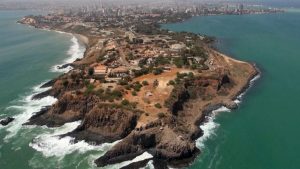
Nearby, the Îles de Los offer beaches, fishing villages, and a slower pace that feels worlds away from the city.
Inland Guinea is where things really open up.
The Fouta Djallon highlands are often called the water tower of West Africa.
Rivers like the Niger and Senegal start here, and the region is known for rolling plateaus, waterfalls, and hiking routes that cut through traditional Fulani villages.
Dalaba and Pita are common bases for exploring the area.
Nature lovers tend to focus on Mount Nimba, a UNESCO World Heritage Site near the borders with Liberia and Côte d’Ivoire.
It is one of the most biodiverse areas in West Africa, though access can be challenging and often requires a guide.
The Upper Niger National Park offers wildlife viewing and river scenery, but visits require planning.
Places to Avoid in Guinea
There aren’t particularly dangerous places in Guinea to avoid, but there aren’t necessarily very safe places either.
The risk is pretty consistent.
If we had to pin ourselves down to a specific place to avoid, it would be anywhere at night.
Stay off the roads after dark.
Don’t wander around cities, even if they are well-lit and crowded.
You also want to steer clear of any demonstrations, as political tensions and civil unrest can turn dangerous quickly.
Even seeing what appears to be law enforcement isn’t always reassuring, since several travel advisories warn of excessive checkpoints where bribes, robbery, and carjackings happen.
Safety Tips for Traveling to Guinea
- The Guinean National Police handle local policing in cities and the Gendarmerie in more rural areas. Emergency response is limited and inconsistent. Police emergency numbers may not always connect, and response times can be slow. If something serious happens, your embassy and trusted local contacts are often more reliable than expecting a fast emergency response.
- Guinea does not have a national emergency alert system for travelers. There are no push alerts, as you might expect elsewhere. Your best options are monitoring local news, following your embassy’s security alerts, and staying in close contact with your hotel or local contacts.
- Foreign nationals need an International Driving Permit along with their home license. Driving here is challenging. Roads are poorly maintained, weather damage is common, and flooding can wash out key routes. Police and military checkpoints are frequent. Expect delays, document checks, and rough conditions, especially outside Conakry and during the rainy season.
- A yellow fever vaccination is required to enter Guinea. Proof is checked on arrival. Other recommended vaccines include hepatitis A and B, typhoid, meningitis, and routine boosters. Malaria prevention is essential. Medical facilities are limited, so travelers should be fully vaccinated and carry necessary medications rather than assuming they can get treatment locally.
- French is the official language and is used in government, healthcare, and education. English is not widely spoken, even in hotels or airports. Learning basic French goes a long way. Local languages such as Fulani, Malinké, and Susu are widely spoken in daily life, especially outside the capital.
- Guinea does not have a formal tourism system backing you up. You are largely on your own. Emergency services and advanced medical care are not available if something goes wrong. That means planning ahead matters more here than in most places. Travel insurance, evacuation coverage, and realistic expectations are not optional.
- Photography can cause real problems if you are careless. Stick to private settings and always ask permission before taking photos of people. Never photograph government buildings, military sites, transportation facilities, or infrastructure. Taking photos in public without approval can lead to arrest or confrontations that escalate quickly, even if your intentions are harmless.
- Same-sex sexual relations are illegal in Guinea. Penalties can include fines and prison sentences of up to three years. Enforcement varies, but the law is on the books. LGBTQ+ travelers should be extremely discreet and understand that legal protections common elsewhere do not exist here.
- Air pollution is a real issue in Conakry, especially during the dry season from late October through May. Dust, smoke, and heavy particulates can trigger breathing problems. Air quality fluctuates by season and weather. Travelers with asthma or heart and lung conditions should talk to a doctor before visiting.
- Fuel and water shortages happen regularly in Conakry. These disruptions affect transportation, electricity, and daily life. Shortages have sparked protests and civil unrest, sometimes with injuries or deaths. Even routine plans can fall apart quickly. Visitors should expect delays, outages, and sudden changes tied to supply problems.
So... How Safe Is Guinea Really?
Guinea comes with multiple levels of safety concerns, and that’s why it’s given a Level 2: Exercise Increased Caution advisory level from Canada, Australia, and the United States.
The first concern is crime.
We’ve gone through some of the details in this article, but what really raises the risk is that people who appear to be law enforcement can actually be carjackers, robbers, or attackers.
Then, there’s the health infrastructure that causes the increased risk level.
Then, there’s the health infrastructure that drives the higher risk level.
It’s not just a shortage of doctors.
Many facilities lack basic equipment, reliable electricity, medications, and emergency transport, especially outside Conakry.
Even routine care can be hard to come by.
Third, we get to civil unrest.
Protests and political demonstrations flare up with little warning, especially in Conakry.
Roadblocks, strikes, and clashes with security forces can disrupt daily life quickly.
Even when events are not aimed at foreigners, movement can become restricted and unpredictable.
All that said, Level 2 is the second-lowest of a four-tiered scale.
It’s best to read these advisories in their entirety and then figure out your comfort level.
There are a lot of red flags to consider.
How Does Guinea Compare?
| Country | Safety Index |
|---|---|
 Guinea Guinea | 39 |
 Namibia Namibia | 71 |
 Paraguay Paraguay | 45 |
 New Zealand New Zealand | 90 |
 Tonga Tonga | 70 |
 Ivory Coast Ivory Coast | 37 |
 Poland Poland | 84 |
 Andorra Andorra | 89 |
 Nigeria Nigeria | 33 |
Useful Information

Visas
Most travelers need a visa to enter Guinea. U.S., Canadian, UK, and EU passport holders must apply in advance. Guinea offers an eVisa for many nationalities, which is the easiest option. Passport validity of at least six months and proof of onward travel are typically required.

Currency
Guinea uses the Guinean franc (GNF). It is a cash-heavy country, and credit cards are rarely accepted outside major hotels. ATMs are limited and unreliable, even in Conakry. Bring euros or U.S. dollars and exchange money at banks or authorized exchange offices.

Weather
Guinea has a tropical climate with two main seasons. The dry season runs roughly from November through April. The rainy season lasts from May through October and can be intense, especially along the coast. Heat and humidity are common year-round, so lightweight clothing and hydration are essential.

Airports
Most international travelers arrive via Conakry International Airport (CKY), the country’s main gateway. It handles flights from Europe, North Africa, and neighboring West African countries. Domestic flights are limited and unreliable, so most travel inside Guinea is done by road.

Travel Insurance
Travel insurance is strongly recommended for Guinea. In fact, I wouldn't travel there without it. With a lack of health resources being one of the reasons for increased travel advisories, you want to ensure you'll get the help you need in case you need it.
Guinea Weather Averages (Temperatures)
Average High/Low Temperature
| Temperature / Month | Jan | Feb | Mar | Apr | May | Jun | Jul | Aug | Sep | Oct | Nov | Dec |
|---|---|---|---|---|---|---|---|---|---|---|---|---|
| High °C |
29 | 30 | 31 | 31 | 31 | 28 | 26 | 25 | 26 | 27 | 27 | 28 |
| Low °C |
19 | 20 | 20 | 21 | 20 | 20 | 19 | 19 | 19 | 19 | 20 | 19 |
| High °F |
84 | 86 | 88 | 88 | 88 | 82 | 79 | 77 | 79 | 81 | 81 | 82 |
| Low °F |
66 | 68 | 68 | 70 | 68 | 68 | 66 | 66 | 66 | 66 | 68 | 66 |












Too Corrupt And Poor
You Shouldn’t Go To Guinea It’s One Of The Most Corrupt Countries In Africa And Is Kinda Risky
Lies show me a country that is not the most corrupt in the world. You must be-dum or blindly minded while thinking that
YARE RIGHT
Ooh this is a strange, I have been interested in Guinea, but now I’m scared little bit yet my husband to be is from there. Maybe we shift to my own nationality. Cause I love him so much but after visiting this information, I’m scared.
Don’t be scared I went there for 6 years and nothing happened to me.
Hello,
It is very sad what you wrote about Guinea. I have lived in Guinea for eighteen years. I have never encountered what you said about the country. I don’t think the one who wrote this has even been to this nice country.
Everything that you said about this country is a lie. look at the picture that you put on the cover of your journal! It is like all the country is like that. Anyone who wants to go there can go.
Brother, I would love to come to Guinea, Conakry. I am African-American and I love the culture there. I play djembe and I want to go to a doundounba party and dance with my cousins! Lol How do you think I will be received?
they love it when people come to play drums with them.
Be sure and tip them a little.
Brother I’m residing in Qatar, i am traveling to Guinea in Jan 2024.
can i get in touch with you before I travel there?
Nice beaches
Don’t keep your wallet on display, don’t keep your valuables in the car and don’t tell anyone your travel route. We visited it a few years ago, and we had no issue then. Also, please keep in mind that it is forbidden to photograph military sites, police stations and Presidential Palace.
Whats the state of Guinea now? would like to go there in August
Reading this made me realize Guinea isn’t some typical tourist spot. The mix of wild landscape and tricky safety realities hit me I’d love to see the highlands and waterfalls, but I’d definitely plan around local conditions and be extra cautions at night.
Visited recently and gotta say, the scenery is absolutely breathtaking but be ready for some unexpected detours along the way!
Seeing the natural beauty and raw landscapes really shifts your perspective on what traveling is all about; it’s not just about the comforts but the experience itself.
Seems like a real adventure for those who like a little uncertainty with their travel. Just hope you’re ready for some rough patches along the way!
Did you really experience the chaotic vibe of the protests in Conakry, or was it more about the stunning landscapes that kept you there?
Walking through Conakry during a daytime protest, with market stalls closed and the smell of burning tires in the air, I felt oddly captivated by the rhythms of people singing but also really on edge about how quickly things could flare up.
Nice waterfalls and all, but after three hours on those bumpy red-dust roads and a power cut at dusk, “adventure” starts to feel like poor planning.
Been to the Fouta Djallon at sunrise and that cool mist and rooster calls make you forget about the sketchy roads for a bit.
Didn’t expect the constant power cuts and the sharp salt smell off the bay to leave me feeling both unsettled and oddly at home.
Visiting Guinea really made me realize how untouched and wild some places still are, but it’s definitely not for someone who wants everything smooth and polished, especially with how unpredictable the roads and local situation can be.
Hiking around the Fouta Djallon was amazing but getting there felt like a real adventure on its own.