


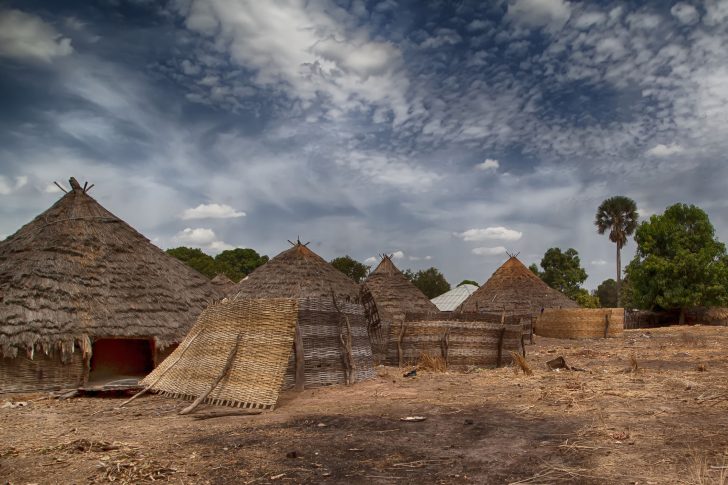
Guinea-Bissau is the kind of place most travelers have never heard of, which is exactly why the few who go remember it forever.
It sits on the Atlantic coast of West Africa, bordered by Senegal to the north and Guinea to the south and east, with dozens of islands scattered offshore.
And yes, the name causes confusion.
This is not Guinea, not Equatorial Guinea, and definitely not Papua New Guinea.
Guinea-Bissau is its own small, coastal country with a very different story.
Formerly a Portuguese colony, Guinea-Bissau fought a long and brutal independence war that ended in 1974.
Political instability followed, which helps explain why tourism never really developed.
Even at its peak, the country welcomed only about 50,000 visitors in 2019.
That is fewer than many single resorts elsewhere in the world.
What travelers do find here is raw and largely untouched.
The capital, Bissau, feels lived-in rather than polished.
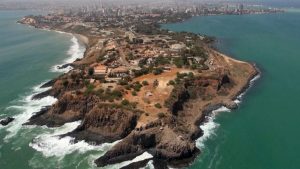
The Bijagós Archipelago is the standout, with protected islands, empty beaches, traditional villages, and the rare sight of saltwater hippos living in mangroves.
National parks, river systems, birdlife, and deep-rooted cultural traditions shape the experience.
Guinea-Bissau is not built for tourism.
It is built for travelers who value curiosity, patience, and places that still feel genuinely undiscovered.
It also comes with a slew of safety tips we need to walk through before you book the trip.
Warnings & Dangers in Guinea-Bissau

OVERALL RISK: MEDIUM
Guinea-Bissau has a medium risk, and not just because of crime concerns. There seems to be a deterrent around every corner, which will either deter people from visiting or pique their interest, depending on the type of traveler they are!

TRANSPORT & TAXIS RISK: MEDIUM
This is a medium risk, but pretty close to a high risk. Here's why: taxis can be poorly maintained and overcrowded. The public transportation systems are too dangerous to use for similar reasons. Driving is risky on bad roads with even worse drivers. Hiring a private car is really the only safe option to get around.

PICKPOCKETS RISK: MEDIUM
This is a medium risk, as crowded areas and tourist spots are known to have thieves lying in wait. You should start with your guard up at the Bissau airport and keep it up until you depart.

NATURAL DISASTERS RISK: MEDIUM
Guinea-Bissau faces seasonal flooding during the rainy season, especially from June to October, which can damage roads and isolate communities. Coastal erosion affects low-lying areas and islands. Severe storms can disrupt travel with little warning. I'm going to call it a medium risk since getting information isn't easy. If you can find the weather forecast, you'll be prepared for what's to come!

MUGGING RISK: MEDIUM
This is another medium risk, especially after dark. Don't expect to find many (if any) well-lit areas after dark. Keep travel to the daytime hours and don't flash valuables anywhere in Guinea-Bissau.

TERRORISM RISK: MEDIUM
While the traditional warnings of "terrorism can happen anywhere" apply here, it's more about the political and civil unrest, especially near border areas, that cause a medium risk here.

SCAMS RISK: MEDIUM
This is a medium risk, especially when you consider there's not a formal tourism industry in place here. That means there's nobody to verify if a business is legit. Plus, panhandlers and vendors can be uncomfortably pushy or downright aggressive.

WOMEN TRAVELERS RISK: MEDIUM
Women should treat travel here as a medium risk, and it's best to avoid traveling alone unless you're with a trusted guide. Don't draw attention to yourself.

TAP WATER RISK: MEDIUM
Don't drink the tap water here or use ice cubes made from tap water. Stick to bottled water for all drinks. Even brushing your teeth should be done with bottled water.
Safest Places to Visit in Guinea-Bissau
There isn’t an official travel and tourism website for Guinea-Bissau, as no government agency exists to help build this industry (yet).
However, there is a website tourismgb.com that has some information, though it has a Canadian address.
It appears to be more of a travel agency than a dedicated tourism site.
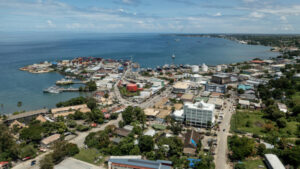
Bissau is the main hub, with Bandim Market, the port area, the National Ethnographic Museum, Fortaleza d’Amura, and remnants of Portuguese-era architecture scattered throughout town.
Bolama, a former capital, is worth a visit for its crumbling colonial buildings and quiet island feel.
The Bijagós Archipelago is the headline destination.
Islands like Bubaque, Rubane, Orango, and João Vieira draw travelers to beaches, wildlife, fishing villages, and national parks.
Orango National Park and João Vieira–Poilão Marine National Park are known for sea turtles, birds, and rare ecosystems.
The islands also host traditional ceremonies that still shape local life.
On the mainland, Cacheu stands out for its historic sites and access to the Cacheu River Mangroves Natural Park.
Varela, in the north, has one of the country’s most accessible beach areas, plus nearby lakes and wetlands.
Further south, the regions around Quinhamel and Bafatá show rural Guinea-Bissau, with river systems, cashew plantations, and village life.
Nature lovers will also hear about Cufada Lagoons Natural Park, one of the country’s largest protected areas.
Places to Avoid in Guinea-Bissau
Between the United States, Australia, and Canada, there are varying opinions about the areas to avoid in Guinea-Bissau.
The one consistency is that the higher-risk areas are near the borders with other countries.
For example, Australia says the border with Mali is the highest risk level (Level 4, Do Not Travel), and the borders with the Ivory Coast, Liberia, and Sierra Leone are Level 3: Reconsider Travel.
Canada says the border with Senegal is Level 3: Avoid Non-Essential Travel.
The United States takes it a bit further and puts the whole country at Level 3: Reconsider Travel.
One similarity between all three is to avoid nighttime travel.
That means driving, walking, or taking public rides.
Safety Tips for Traveling to Guinea-Bissau
- Local law enforcement is the Polícia de Ordem Pública, often just called the POP. In theory, you dial 112 for emergencies. In practice, response times vary, and help may not arrive quickly, especially outside Bissau. If something serious happens, your embassy is often the most reliable backup. Save embassy numbers before you arrive, and do not assume emergency services work as they do at home.
- Guinea-Bissau does not have a nationwide emergency alert system for visitors. No texts. No push notifications. You are on your own. Register with your embassy before traveling so they can reach you if things escalate. Keep an eye on local radio, hotel staff, or trusted local contacts for updates about protests, storms, or sudden political issues.
- Driving yourself is a bad idea. Guinea-Bissau does not participate in the international driving permit program, and police checkpoints are common. Road conditions are poor, signage is minimal, and breakdown help is limited. If something goes wrong, it can turn complicated fast. Hiring a local driver is the safest and most realistic option.
- Yellow fever vaccination is required to enter Guinea-Bissau. Proof is checked. Hepatitis A and B, typhoid, and tetanus are strongly recommended. Malaria is a serious risk year-round, so talk to a doctor about prevention meds. Medical care is extremely limited, so this is not a place to wing it.
- Stray dogs, cats, and birds are common, and they are not safe to interact with. Rabies is present, and avian flu has been reported in the region. Even animals that look friendly or well-fed should be avoided. Do not pet them. Do not feed them. Do not try to rescue them. If you are bitten or scratched, you need immediate medical advice and likely evacuation.
- Portuguese is the official language, but most people speak Guinea-Bissau Creole in daily life. English is rarely spoken outside a few hotels or NGOs. Do not assume you can explain problems easily if something goes wrong. Learning a few basic phrases or traveling with a local guide helps more than you might expect.
- There is no real tourism infrastructure. That means limited emergency response, few reliable medical facilities, and almost no safety net if something goes wrong. Tours, transportation, and activities are informal. If you get hurt or sick, help may not be available locally.
- Same-sex relationships are not illegal, but that does not mean they are accepted. Strong social stigma exists, and discrimination is common. Violence or harassment may go unreported due to fear or retaliation. Public displays of affection of any kind can draw attention. LGBTQ+ travelers should be discreet and cautious, especially outside Bissau.
- Bissau city itself has been declared free of landmines, but that does not apply everywhere else. Outside the capital, unexploded landmines remain a risk, especially in rural areas. Stick to paved roads and well-traveled routes. Do not wander off-road or explore abandoned areas.
- Staying out of jail here is not just about inconvenience. It is about personal safety. Detention conditions are extremely poor. Overcrowding, lack of sanitation, limited food, and little medical care are common. Legal processes move slowly, and foreign nationals are not treated gently.
So... How Safe Is Guinea-Bissau Really?
For countries that rank on a four-tiered safety level, such as the United States, Canada, and Australia, as well as Guinea-Bissau, there are some mixed messages.
To clarify, the ranking system has Level 1 as the lowest and Level 4 as the highest.
Here’s how it breaks down:
- United States — Level 3: Reconsider travel due to landmines, poor health infrastructure, and civil unrest.
- Canada — Level 2: Exercise a High Degree of Caution for most of the country (due to excessive crime rates and poor infrastructure), with Level 3: Reconsider Travel along the Senegal border.
- Australia – Level 2: Exercise a High Degree of Caution overall (due to civil unrest), with Level 3: Reconsider Travel to the border region with the Ivory Coast, Liberia, and Sierra Leone.
The United Kingdom doesn’t always use the four-tiered scale for countries, and while the advisory is detailed, it doesn’t list specific regions to avoid.
While sometimes these travel advisories can be outdated, the ones for Guinea-Bissau have all been updated in late 2025.
It’s important to read the advisories in their entirety and follow the latest news headlines from this region.
Civil unrest risks can become greater or less depending on current events.
Visiting this country should only be considered by experienced travelers with a real need to visit.
There are a lot of red flags, including access to basic human needs and no established tourism industry.
We’re not saying you should avoid this country, but there are a lot of reasons to reconsider.
Only you can determine your comfort level with a trip to Guinea-Bissau.
How Does Guinea-Bissau Compare?
| Country | Safety Index |
|---|---|
 Guinea-Bissau Guinea-Bissau | 36 |
 Eritrea Eritrea | 32 |
 Equatorial Guinea Equatorial Guinea | 48 |
 Moldova Moldova | 67 |
 Nigeria Nigeria | 33 |
 Belgium Belgium | 70 |
 Indonesia Indonesia | 58 |
 Slovenia Slovenia | 87 |
 Saudi Arabia Saudi Arabia | 46 |
Useful Information

Visas
Most travelers need a visa before arriving in Guinea-Bissau. You usually apply through an embassy or consulate, since visas on arrival are unreliable and can disappear without notice. Passport validity should extend at least six months beyond your stay. Entry rules can change quickly, so double-check requirements close to departure.

Currency
The official currency is the West African CFA franc. Cash rules here. ATMs are limited and unreliable, and credit cards are rarely accepted outside a few hotels in Bissau. Bring euros in small, clean bills and exchange them locally. Plan like it’s 1998, and you’ll be fine.

Weather
Guinea-Bissau has a hot, humid tropical climate year-round. The dry season runs roughly from November through May and is the most practical time to visit. June through October brings heavy rains, flooding, and miserable road conditions. Temperatures stay warm regardless, but humidity spikes hard during the rainy season. Light clothing is smart. Rain gear is smarter.

Airports
Most international travelers arrive through Osvaldo Vieira International Airport in Bissau. You will almost always connect through Lisbon, Dakar, Casablanca, or Abidjan, depending on the airline and season. Direct long-haul options are rare. Flight changes and cancellations happen, so padding your schedule is smart. Treat arrival day as a soft plan, not a promise.

Travel Insurance
Travel insurance is not optional in any practical sense. Medical care is extremely limited, evacuation is expensive, and payment is often required up front. You want coverage that includes medical evacuation to Senegal or Europe, trip interruption, and emergency care. If your policy feels “basic,” it is probably not enough for Guinea-Bissau.
Guinea-Bissau Weather Averages (Temperatures)
Average High/Low Temperature
| Temperature / Month | Jan | Feb | Mar | Apr | May | Jun | Jul | Aug | Sep | Oct | Nov | Dec |
|---|---|---|---|---|---|---|---|---|---|---|---|---|
| High °C |
33 | 35 | 35 | 35 | 35 | 33 | 30 | 30 | 30 | 32 | 33 | 32 |
| Low °C |
18 | 19 | 20 | 20 | 22 | 23 | 23 | 23 | 23 | 23 | 21 | 18 |
| High °F |
91 | 95 | 95 | 95 | 95 | 91 | 86 | 86 | 86 | 90 | 91 | 90 |
| Low °F |
64 | 66 | 68 | 68 | 72 | 73 | 73 | 73 | 73 | 73 | 70 | 64 |








Mali
Molly
Not That Safe
I Don’t Think About Going To Guinea-Bissau Because Of The High Crime
HORRIBLE
It was a quick two day stay for us but I for sure wouldn’t go back. We were there to film a documentary and the list of travel safety tips we got when we landed was huge, from not driving after dark to always being aware of our surroundings, I felt like a sitting duck.
Guinea-Bissau sounded intriguing at first, but the safety overview really grounded my expectations. Reading about the political unrest, limited healthcare, and tough infrastructure made me rethink planning a solo trip there without solid support or a guide.
So, is the raw charm of Guinea-Bissau just what you were looking for, or do you secretly wish for a little more polish and a lot less confusion?
Seeing a saltwater hippo in the mangroves while walking those empty Bijagós beaches gave me a weird calm, did you feel that too?
Did you find the local food in the Bijagós Archipelago as surprisingly good as I did, especially after a long day exploring the islands?