


 Belgium : Safety by City
Belgium - safety as a country
Antwerp is one of Belgium’s most fascinating cities, located in the northern part of the country along the Scheldt River.
Known as the world’s diamond capital, Antwerp is also famous for its historic architecture, vibrant fashion scene, and one of Europe’s largest ports.
Visitors come here to admire landmarks like the Cathedral of Our Lady, stroll through the medieval Old Town, and enjoy Belgium’s renowned cuisine and cafés.
Despite being a major international trade hub and the second largest city in Belgium, Antwerp generally feels relaxed and welcoming to travelers.
The city blends centuries old history with modern culture, making it a favorite destination for art lovers, food enthusiasts, and architecture fans.
Like any large European city, however, Antwerp has some safety considerations travelers should keep in mind.
Understanding where to go, what to watch out for, and how to move around safely can make your visit far more enjoyable.
Warnings & Dangers in Antwerp

OVERALL RISK: LOW
Antwerp is considered a relatively safe destination for tourists. Violent crime rates are low, and most visits occur without major incidents. The biggest concerns tend to be petty crimes such as pickpocketing in busy areas or train stations. Travelers who stay aware of their surroundings and follow normal city safety practices usually experience a very safe trip.

TRANSPORT & TAXIS RISK: LOW
Public transportation in Antwerp is reliable and generally safe. Trams, buses, and trains are widely used by locals and visitors alike. Taxi services are regulated and trustworthy, although it is best to use licensed taxis or ride apps. Late at night, travelers should remain aware of their surroundings around major transit hubs.

PICKPOCKETS RISK: LOW
Like many popular European cities, Antwerp has some pickpocket activity in crowded places. Busy areas such as Antwerp Central Station, Meir shopping street, and tourist attractions can attract petty thieves. Keeping valuables secure, using anti theft bags, and avoiding displaying expensive items will significantly reduce the risk.

NATURAL DISASTERS RISK: LOW
Belgium experiences very few natural disasters, and Antwerp is not located in an earthquake or hurricane zone. Occasionally, the region can experience heavy rain, storms, or minor flooding due to its proximity to the Scheldt River, but these events rarely affect tourists significantly.

MUGGING RISK: LOW
Muggings and violent robberies are uncommon in Antwerp, especially in the main tourist districts. However, poorly lit streets or isolated areas late at night can increase risks slightly. Travelers should remain cautious when walking alone late at night, particularly outside the central districts.

TERRORISM RISK: MEDIUM
Belgium has experienced terrorism threats in the past, particularly due to its position within the European Union and its proximity to Brussels. Security measures across major cities, including Antwerp, are strong. Visible police presence, surveillance, and security checks help maintain a high level of safety for visitors.

SCAMS RISK: LOW
Tourist scams exist but are not widespread in Antwerp. The most common scams involve distraction tactics used by pickpockets or overcharging in unofficial taxis. Avoid accepting unsolicited help at ATMs or train ticket machines and only use official services when possible.

WOMEN TRAVELERS RISK: LOW
Antwerp is generally safe for solo female travelers. The city is modern, progressive, and well policed. Women can comfortably explore most neighborhoods during the day and evening. As in any city, it is wise to avoid poorly lit areas late at night and to remain aware of surroundings when traveling alone.

TAP WATER RISK: LOW
Tap water in Antwerp is safe to drink and meets strict European health standards. Many locals drink tap water daily. Visitors can confidently refill reusable water bottles in hotels, restaurants, or public facilities without concern.
Safest Places to Visit in Antwerp
Antwerp offers many beautiful and safe areas where travelers can explore comfortably.
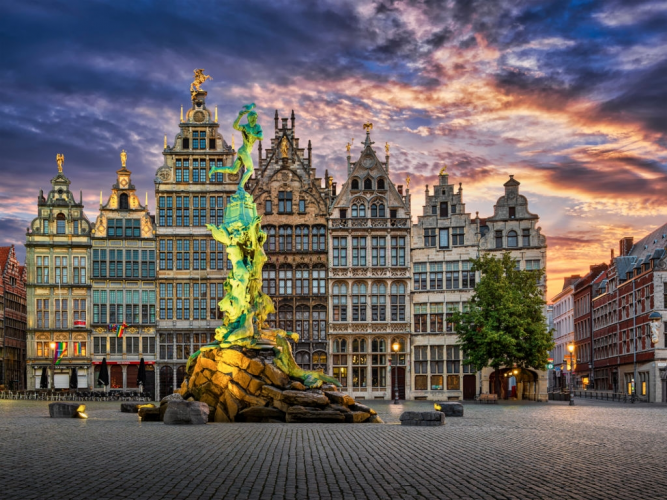
The Historic Center is one of the safest and most visited parts of the city.
Here you will find Grote Markt, a stunning square surrounded by colorful guild houses and the impressive Cathedral of Our Lady.
The area is lively, well lit at night, and heavily visited by tourists.
Another popular area is the Meir district, Antwerp’s main shopping street.
This pedestrian friendly boulevard is lined with international brands, historic buildings, and bustling cafés.
Because it is always busy, it tends to feel very safe during both the day and evening.
Het Zuid is another excellent neighborhood for travelers.
Known as Antwerp’s art district, it is home to museums, galleries, and stylish restaurants.
The streets here are wide, clean, and generally quiet, making it a pleasant area to walk around.
The Eilandje district has transformed from an old harbor area into one of the city’s trendiest neighborhoods.
Visitors come here to see the MAS Museum, waterfront promenades, and modern architecture.
It is well maintained, lively, and considered very safe for tourists.
Antwerp Central Station itself is worth visiting.
Often ranked among the most beautiful train stations in the world, it features grand architecture and serves as a major transportation hub.
While busy, it is heavily monitored and safe during the daytime.
Places to Avoid in Antwerp
Antwerp is overall a safe city, but there are a few areas where travelers should exercise extra caution, particularly at night.
The neighborhoods immediately surrounding Antwerp Central Station can feel slightly rough after dark.
Areas near De Keyserlei and Pelikaanstraat sometimes attract pickpockets and loitering groups due to the high number of tourists and commuters.
The Borgerhout district has a mixed reputation.
While parts of it are vibrant and culturally diverse, certain sections can experience higher crime rates compared to the rest of the city.
Visitors should remain cautious when exploring unfamiliar streets there, especially late at night.
Another area that sometimes receives safety warnings is the northern port districts.
These areas are mostly industrial and not designed for tourism.
While not necessarily dangerous, they can feel isolated and poorly lit at night.
Schipperskwartier, historically known as the red light district, has improved significantly in recent years.
It is more regulated and safer than it used to be, but travelers should still remain cautious when walking through late at night.
Generally speaking, Antwerp’s tourist zones are safe.
Most issues arise in less visited neighborhoods or around nightlife areas after midnight.
Staying in well populated districts and using common sense significantly reduces risks.
Safety Tips for Traveling to Antwerp
- Keep valuables secure in crowded areas. Busy attractions such as Antwerp Central Station, Meir shopping street, and Grote Markt can attract pickpockets. Use bags that close securely and keep wallets in front pockets when walking through crowds.
- Stay aware near train stations. Large transport hubs naturally attract both tourists and opportunistic thieves. Remain alert when using ticket machines or handling luggage at Antwerp Central Station.
- Use licensed taxis or rideshare services. While taxis are generally safe, it is always best to choose official taxi stands or trusted rideshare apps. Avoid accepting rides from individuals offering transportation informally.
- Avoid poorly lit streets late at night. Most central districts are safe, but quieter residential streets can feel empty after midnight. Stick to well lit main roads when returning to your hotel late at night.
- Protect personal belongings in cafés and restaurants. When dining outdoors, avoid placing phones or wallets on tables where they can be easily grabbed. Keep bags secured to your chair or lap.
- Be cautious with ATMs. Use ATMs inside banks or shopping centers rather than machines on quiet streets. Cover the keypad when entering your PIN and ignore strangers offering assistance.
- Follow local cycling rules. Antwerp has many cyclists, and bike lanes are everywhere. Pay attention when crossing streets or walking along bike paths to avoid accidents.
- Watch out for distraction tactics. Some thieves use simple distractions such as asking for directions or spilling something on you while an accomplice attempts to steal valuables. Politely decline unexpected approaches.
- Keep emergency numbers handy. Belgium’s emergency number is 112 for police, fire, and medical services. It works across the entire European Union and is helpful to know in case of emergencies.
- Research neighborhoods before booking accommodation. Choosing accommodation in areas like the Historic Center, Het Zuid, or Eilandje ensures easy access to attractions and generally safer surroundings.
So... How Safe Is Antwerp Really?
Antwerp is widely regarded as one of the safer large cities in Europe.
Belgium maintains strong public safety systems, and the city benefits from effective policing and modern infrastructure.
Most visitors spend their time in tourist friendly districts where crime rates are low and streets remain busy throughout the day.
Statistically, Antwerp experiences some urban crime like any large metropolitan area, but violent crime against tourists is rare.
Petty theft such as pickpocketing remains the most common issue, particularly in crowded shopping streets and transportation hubs.
The city’s tourism infrastructure is well developed.
Public transportation is reliable, emergency services respond quickly, and local residents are generally welcoming to visitors.
English is widely spoken, making communication easier for international travelers.
Security awareness across Belgium has increased in recent years, particularly following past terrorism concerns in Europe.
Major cities, including Antwerp, now maintain strong surveillance systems and visible police patrols in busy areas.
For most travelers, Antwerp feels safe, organized, and easy to navigate.
By practicing normal travel awareness and following simple precautions, visitors can comfortably explore the city’s historic sites, museums, and vibrant neighborhoods without major safety concerns.
How Does Antwerp Compare?
| City | Safety Index |
|---|---|
| Antwerp |
65 |
| Ghent |
70 |
| Waterloo |
85 |
| Leuven |
87 |
| Mechelen |
84 |
| Brussels |
60 |
| Mons |
86 |
 Mountain Lakes Mountain Lakes | 74 |
| Battle Mountain | 79 |
 Novosibirsk Novosibirsk | 76 |
 Abu Dhabi Abu Dhabi | 88 |
| Ferguson | 43 |
 Wroclaw Wroclaw | 78 |
Useful Information

Visas
Belgium is part of the Schengen Area. Travelers from the United States, Canada, the United Kingdom, Australia, and many other countries can enter visa free for up to 90 days within a 180 day period. Visitors must have a passport valid for at least three months beyond their departure date.

Currency
Belgium uses the Euro. Credit and debit cards are widely accepted across Antwerp, including in restaurants, shops, and hotels. ATMs are easy to find throughout the city. Travelers usually receive better exchange rates by withdrawing Euros from ATMs rather than exchanging cash at airports.

Weather
Antwerp has a temperate maritime climate with mild summers and cool winters. Summer temperatures average between 65°F and 75°F, while winters range from 35°F to 45°F. Rain can occur throughout the year, so packing a light waterproof jacket and comfortable walking shoes is recommended.

Airports
The closest airport is Antwerp International Airport, located about 15 minutes from the city center. However, most international travelers arrive through Brussels Airport, about 45 minutes away by train. Direct trains connect Brussels Airport to Antwerp Central Station frequently throughout the day.

Travel Insurance
Travel insurance is highly recommended when visiting Antwerp or anywhere in Europe. A good policy can cover medical emergencies, lost luggage, trip cancellations, and travel delays. Healthcare in Belgium is excellent but can be expensive for uninsured visitors, making insurance a wise precaution.
Antwerp Weather Averages (Temperatures)
Average High/Low Temperature
| Temperature / Month | Jan | Feb | Mar | Apr | May | Jun | Jul | Aug | Sep | Oct | Nov | Dec |
|---|---|---|---|---|---|---|---|---|---|---|---|---|
| High °C |
6 | 8 | 11 | 15 | 18 | 23 | 23 | 24 | 20 | 16 | 10 | 7 |
| Low °C |
0 | 1 | 2 | 3 | 7 | 10 | 12 | 12 | 9 | 6 | 3 | 1 |
| High °F |
43 | 46 | 52 | 59 | 64 | 73 | 73 | 75 | 68 | 61 | 50 | 45 |
| Low °F |
32 | 34 | 36 | 37 | 45 | 50 | 54 | 54 | 48 | 43 | 37 | 34 |
Belgium - Safety by City
| City | Safety Index |
|---|---|
| Antwerp | 65 |
| Bruges | 84 |
| Brussels | 60 |
| Dinant | 88 |
| Ghent | 70 |
| Leuven | 87 |
| Mechelen | 84 |
| Mons | 86 |
| Namur | 85 |
| Waterloo | 85 |






Be Prepared
Antwerp is a very busy city and as you will find in most countries around the world, bigger busier cities come with a risk. I have been to Antwerp three times. I got pick-pocketed once. They managed to get my wallet. Not a big deal as I was easily able to cancel the two cards I had and left my bank card and passport in my hotel. I also kept cash in a separate area. It was not ideal but it happened. Just go there prepared so it doesn’t ruin your trip.
Save more with BnBs
There are a lot of cozy bed and breakfasts to find here, you could save a bit more if you don’t want to spend on a snazzy hotel. I saw a lot of people using bikes but I’m just not that kinda guy but its pretty cool that they have that available. There are some neighborhoods that aren’t too safe, so I think you need to adjust accordingly with the bed and breakfast of your choice too.
Antwerp City Card
Get an Antwerp City card, it gaves us a lot of free entrances to the popular attractions in the city, free use of public transpo and a ton of discounts on shops. Also their Central Station looks so beautiful. I can’t believe I’m using the word “beautiful” to describe a train station but seriously it really is.
Is safe
I Travel through Belgium all the time, Antwerpen is very safe. Just some paranoid or pampered people that think otherwise. In cities with thousands of people obviously you can run in to some crazies. But that can also happen in the middle of nowhere. Just enjoy your time!
It's generally safe
I didn’t exactly feel unsafe in Antwerp while visiting ot alone, it’s a beautiful city but there are however unsafe spots they are listed here, I did end up in one of those ” high crime” spots accidently but nothing happened it was during the day also. Wierd thing that did happen was at the end of the trip in the Antwerpen Central station, I was just looking around in the small Delhaize and and old guy spoke to me in English and insulted me some stuff about “YOU PEOPLE ARE ANIMALS” I just told him to get lost he was probably drunk or on drugs.
Every time I wander around Antwerp I end up staying out way later than planned because the mix of old streets and that lively nightlife just pulls you in.
I always end up just wandering around the old streets here and losing track of time, do you have any less obvious spots you’d personally recommend beyond what’s listed on the city website?
Can’t believe how lively Antwerp is with its mix of modern vibes and those stunning old buildings!