


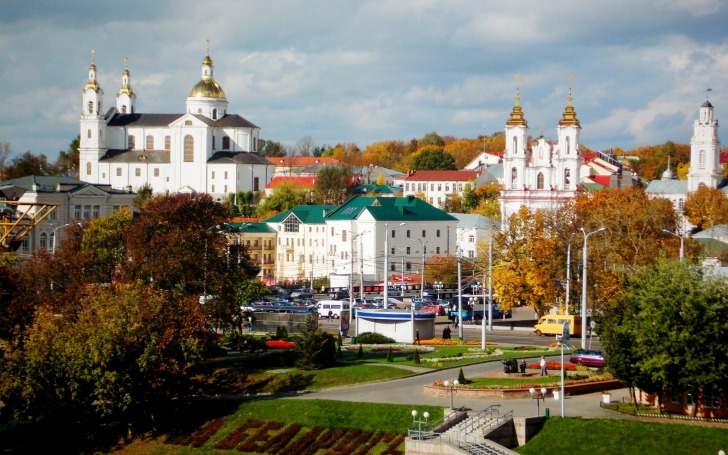
Belarus is one of the most dangerous countries in the world for travelers, especially for Western passport holders.
It is not unsafe in the way people usually imagine, with street crime or chaos.
It is unsafe because of politics, surveillance, detention practices, and its role in a major regional conflict.
Geographically, Belarus sits between Russia, Ukraine, Poland, Lithuania, and Latvia.
That location has placed it directly in the middle of the Russia–Ukraine war.
Belarus allowed Russian forces to use its territory as a staging ground, making it a strategic partner in the conflict rather than a neutral neighbor.
That alignment has reshaped how the country is treated internationally and how visitors are viewed.
Historically, Belarus emerged from the Soviet Union with strong centralized control.
Under long-standing authoritarian leadership, civil liberties have steadily eroded.
After mass protests in 2020, the government intensified crackdowns on dissent, the media, and foreign influence.
Arbitrary detentions, phone searches, restricted movement, and harsh prison conditions are now well documented.
While more than six million people visited in 2023, most came from neighboring countries with close political or economic ties.
Western tourism has collapsed and continues to decline as the conflict drags on.
On paper, Belarus has culture, history, and nature.
In reality, the legal, political, and security risks make it a country best understood from a distance.
Warnings & Dangers in Belarus

OVERALL RISK: HIGH
Belarus has a high risk and should be avoided at all costs. It's not a safe place to visit, and the risks far outweigh any unique experiences.

TRANSPORT & TAXIS RISK: HIGH
At first glance, the transportation risks don't look that tough in Belarus, but it's still a high risk. Driving comes with risky roads, poor lighting, and random road stops. Official taxis are available, but there are also unregistered versions that bring a greater risk. Public transportation options like the Minsk subway can be in good working order, but often harbor thieves looking for a victim.

PICKPOCKETS RISK: HIGH
Despite all the big risks, petty theft isn't the biggest concern here. However, it's still a high risk, especially near any kind of large gathering spot or transportation hub.

NATURAL DISASTERS RISK: LOW
Belarus has a low natural disaster risk compared to many regions. There are no major earthquake zones, volcanoes, or hurricanes. The main concerns are seasonal flooding from rivers and heavy rains, especially in spring, plus winter storms that can disrupt travel. The weather is more inconvenient than dangerous, making nature the least of the country’s risks.

MUGGING RISK: HIGH
Again, crime rates aren't high, but tourists can be targeted. If you are a victim, don't expect the police to be particularly helpful. Visitors should consider getting personal security guards to help lower the risk. It's another high-risk category simply because of the arbitrary laws and aggression toward Westerners.

TERRORISM RISK: MEDIUM
Belarus does not face the kind of domestic terrorism seen in some regions, but its risk profile is shaped by geopolitics. The country sits at the center of the Russia–Ukraine war and is closely aligned with Moscow. That makes it vulnerable to spillover, military activity, and politically motivated incidents tied to a wider regional conflict. Plus, you might feel like the local law enforcement officers are terrorizing you when they enforce arbitrary laws.

SCAMS RISK: MEDIUM
Scams here aren't the street variety you might expect in a travel destination. At the same time, the high risk comes from the elaborate high-tech and romance scams. Don't use dating apps before or during your visit here.

WOMEN TRAVELERS RISK: HIGH
Women face a high risk, like everyone else. This is not a place to consider visiting solo. Avoid Belarus and stick to one of the western neighboring countries, where it's a bit safer for everyone.

TAP WATER RISK: HIGH
Tap water is inconsistent, at best, in Belarus. There's a high risk when consuming tap water or ice cubes made from the water. Use bottled water and drinks for drinking, cooking, and brushing your teeth.
Safest Places to Visit in Belarus
The official website of the Belarus government offers a trip planning website at www.belarus.by/en/travel.
Even though about six million people visit here annually, you should know that there is still a great deal of risk that won’t be reflected on the government website.
While Belarus isn’t safe to visit, we can paint a picture of what a trip here would look like if it weren’t so dangerous.
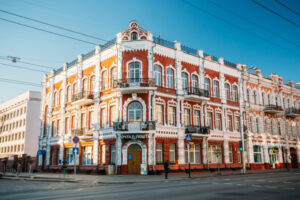
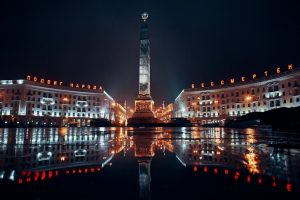
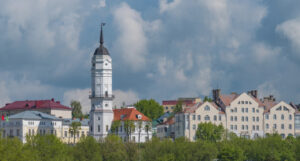
Minsk would anchor most itineraries, with Soviet-era architecture, Independence Square, Victory Park, the National Library, and a surprisingly active café and arts scene.
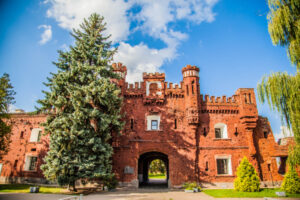
Brest would draw history-focused travelers for the Brest Fortress and World War II sites.
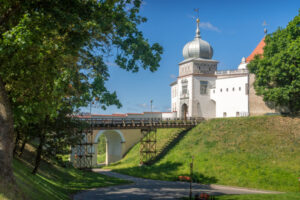
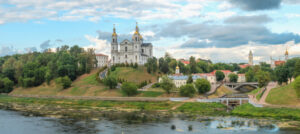
Grodno offers preserved old-town streets, churches, and Polish-Lithuanian heritage.
Vitebsk connects to Marc Chagall, with museums and cultural festivals.
Mogilev and Gomel round out the major cities with regional museums and riverfronts.
Outside the cities, travelers would head for Mir Castle and the Nesvizh Palace, both UNESCO-listed and central to the country’s noble history.
Belovezhskaya Pushcha National Park, one of Europe’s last primeval forests, is known for bison, deep woods, and quiet trails.
The Pripyat wetlands in the south attract birders and nature photographers.
Soviet-era monuments, folk villages, and seasonal festivals would fill in the cultural gaps.
On paper, Belarus offers history, architecture, and wilderness.
In reality, the safety risks overshadow everything else.
Places to Avoid in Belarus
You should avoid Belarus entirely.
The country is listed at the highest risk level, Level 4: Do Not Travel, by most governments.
The conflict between Russia and Ukraine is one of the big reasons why, and that means you should avoid those countries, too.
If you’re looking to visit this region, look to the western bordering countries like Latvia, Poland, or Romania.
Many of those countries have closed the border crossing with Belarus.
The risks in Belarus aren’t something an experienced traveler can work around.
Visitors, especially Westerners, can be targeted and illegally detained.
Consider this: the United States forced all employees and suspended Minsk embassy services back in 2022.
Most countries have followed suit.
That means if something happens, you’ll have no help from your government to get home safely.
Safety Tips for Traveling to Belarus
- Belarusian law enforcement has broad authority, and interactions with foreigners are not always predictable. For emergencies, dial 102 for police and 103 for medical services. Do not expect the same rights or transparency you would in Western countries. If stopped, remain calm, comply with instructions, and avoid arguing. This is not a destination where “talking your way out of it” works.
- There is no reliable public alert system for travelers. News is tightly controlled, and internet access can be restricted during major events. Your best updates come from your embassy (if one even exists), hotel staff, and official government advisories. Register your trip before arrival.
- You need a valid home license and typically an International Driving Permit. Police stops are common, and fines can be issued on the spot. Road conditions vary, signage can be inconsistent, and accident procedures are strict. If anything goes wrong, the legal process will not favor visitors. Most advisories recommend avoiding driving altogether unless necessary.
- No special vaccines are legally required, but routine immunizations should be current. Hepatitis A and B are commonly recommended. Medical facilities are limited, especially outside Minsk, and emergency care can be inconsistent. Evacuation may be the only option for serious issues, and that’s a complicated process.
- Belarusian and Russian are the official languages. English is rarely spoken outside hotels and a few international businesses. Misunderstandings with authorities are more likely when you cannot communicate clearly. Translation apps help, but do not expect patience or flexibility. In a high-risk environment, language barriers become more than an inconvenience.
- Same-sex relationships are not explicitly illegal, but LGBTQ+ people and allies have faced harassment and physical abuse. Social acceptance is low, and authorities offer little protection. Public displays of affection or advocacy can attract attention you do not want. Travelers who are LGBTQ+ should understand that legal ambiguity does not equal safety here. Discretion is essential in daily life.
- If authorities ask you to unlock your phone, you should comply. Do not expect any digital privacy. Messages, photos, contacts, and social media can be reviewed. Some advisories even suggest traveling with minimal or “clean” devices, but being disconnected creates other safety risks. Assume everything on your phone can be seen and interpreted, and act accordingly.
- There is a restricted area near the Ukrainian border that includes land affected by the Chernobyl disaster. Access is limited, and travelers should not attempt to visit independently. Outside that zone, radiation risk is considered negligible. Still, wandering near restricted regions can raise suspicion and legal trouble.
- Check whether your prescriptions are legal in Belarus before you travel. Do not expect to bring opioids or strong pain medications, even with a prescription. Drug laws are enforced aggressively, and penalties are severe. What seems routine at home can become a criminal issue here. Carry documentation for all medications and avoid transporting anything that could be questioned.
- If you are detained, conditions can be extremely harsh. Facilities often lack basic health standards. Food, clean water, and medical care may be limited, and reports of violence are common. Legal recourse is minimal. This is not meant to frighten you, but to be honest: detention in Belarus is dangerous. It is a core reason many governments advise against travel entirely.
So... How Safe Is Belarus Really?
Belarus isn’t safe to visit, especially for Westerns.
All countries that rank on the four-tiered scale, with Level 1 at the low end and Level 4 at the high end, give Belarus a Level 4: Do Not Travel.
The risks in Belarus go far beyond violent crime or health concerns.
We’re looking at risks like arbitrary detention, long-term isolation, and no ability for your government to help you if things go sideways.
Also, as long as the Russia-Ukraine conflict is underway, Belarus is quite literally caught in the middle.
Weapons can fly over or land in parts of Belarus.
It’s also possible that conflict will spill over the borders.
Even if you’re visiting and think you’re doing everything safely, the government in Belarus will likely monitor all of your phone and internet activity, looking for something they deem illegal.
If you insist on visiting Belarus, you do so at your own risk.
Never expect to have privacy and plan on getting searched and questioned often.
How Does Belarus Compare?
| Country | Safety Index |
|---|---|
 Belarus Belarus | 62 |
 South Africa South Africa | 48 |
 Malawi Malawi | 53 |
 Cambodia Cambodia | 68 |
 Niger Niger | 37 |
 Nauru Nauru | 80 |
 Dominican Republic Dominican Republic | 54 |
 Singapore Singapore | 90 |
 Mauritania Mauritania | 35 |
Useful Information

Visas
Most U.S., Canadian, U.K., and EU travelers need a visa before arrival. Earlier visa-free programs have been suspended or restricted, especially for Western passport holders. Border rules often change, and overland entry can be complicated.

Currency
Belarus uses the Belarusian ruble (BYN). Sanctions limit card acceptance, so expect to rely on cash for many transactions. ATMs exist in major cities, but foreign cards rarely work. Exchange money at official banks or exchange offices.

Weather
Belarus has a continental climate. Winters are long, cold, and snowy, with temperatures often below freezing from December through February. Summers are mild to warm, with July and August the most pleasant for travel. Spring and fall are short and changeable. Pack for rain, wind, and sudden temperature shifts regardless of season.

Airports
Most international arrivals go through Minsk National Airport (MSQ). Flight options are limited, with most routes connecting to Russia, Türkiye, and a handful of regional hubs. Direct service from North America and much of Western Europe is minimal or unavailable. Expect longer travel times, possible layovers, and stricter border checks on arrival.

Travel Insurance
Travel insurance is not optional here. Proof of medical coverage is required for visa issuance and may be checked at the border. Choose a policy that explicitly covers Belarus and includes evacuation. The challenge will be finding a policy that works, since most providers won't issue insurance for high-risk countries.
Belarus Weather Averages (Temperatures)
Average High/Low Temperature
| Temperature / Month | Jan | Feb | Mar | Apr | May | Jun | Jul | Aug | Sep | Oct | Nov | Dec |
|---|---|---|---|---|---|---|---|---|---|---|---|---|
| High °C |
-5 | -2 | 5 | 13 | 19 | 22 | 24 | 23 | 17 | 10 | 4 | -1 |
| Low °C |
-8 | -7 | 0 | 5 | 9 | 13 | 17 | 15 | 9 | 4 | 0 | -5 |
| High °F |
23 | 28 | 41 | 55 | 66 | 72 | 75 | 73 | 63 | 50 | 39 | 30 |
| Low °F |
18 | 19 | 32 | 41 | 48 | 55 | 63 | 59 | 48 | 39 | 32 | 23 |
Belarus - Safety by City
| City | Safety Index |
|---|---|
| Brest | 48 |
| Gomel | 45 |
| Grodno | 50 |
| Minsk | 77 |
| Mogilev | 53 |
| Nesvizh | 55 |
| Vitebsk | 54 |












Belarus is safe, as long as you stay away from the police and any law enforsment personel.
Staying in Minsk is safe but traveling in Belarus is not.
In case you run into any trouble – or you commit the slightest wrong behaviour you will be on your own. Local authorities do not speak English and are hostile to tourists.
Police will be against you especially if they will consider you wealthy. Expect to pay high penalties, hudreds or thousands of dollars, if you drive to fast or don’t pay some road fee. Tourists pay higher fees always than locals, by the law. Very few European embassies operate in Belarus at the moment.
Belarusians (besides the goverment officials) are friendly and polite.
Very true, the safety number one rule in Belarus is to avoid police or any other uniformed guys at any cost. See a uniform – cross the street and avoid meeting them. In general Belarusians are very friendly, but you may also run across some crazy xenophobics if you look very foreign. They do not see many tourists in general, so be ready for people to stare at you.
Outdated
Belarus has been getting incredibly unsafe after the 2020 presidential elections and the stepping up of repression by the government.
it was pretty safe until some stuff went down in 2020, but you should still be fine. Just don’t mess with the police, and don’t carry anything of value on you, and not really anyone speaks English on you so maybe try to learn a little bit of Russian or Belarussian at least enough to get by. That’s all you need to know!
Belarus is extremely unsafe: although I tried to avoid police, they trapped me and I almost went to jail
This article is very naive and misleading: although Belarus police is very kind, courteous and professional indeed, they are also excellent at elaborating sophisticated traps and schemes to push citizens to break the law (tourists or not, it doesn’t matter. All citizens are equal before the law), with the goal to send the citizen to jail and collect hefty fines.
Even if you stand clear from politics, it can happen, it’s a totalitarian state that can interfere with all spheres of life.
In my case, within a couple of days in Belarus, I got caught in a “police sting” through Tinder dating app, and 15 minutes later, I was handcuffed (in a very polite and kind way), and almost kindly sent to torture chamber and face criminal charges.
Fortunately, after 2 hours of searching my phone (I gladly shared my pin code with the “nice” police inspector, he asked for it so kindly), and since the undercover police team was too amateurish this time (I somehow outsmarted them, this time. I was lucky, I won’t play again), I got released.
I will not come again to Belarus, until they stop infiltrating the society that much , and stop looking at citizens as preys to laminated by a bureaucratic repressive machine.
In other words, you were looking for under age …… lets just call it what it is lad.
This gave a decent overview of basic safety and crime vibes, but it felt incomplete without the major travel warning context from government advisories that strongly discourage visits right now. Good for general facts, not for real world planning.
Reading about Belarus really makes you think about how a place with so much history and culture can feel completely off-limits for most travelers; it’s wild to imagine the beautiful landscapes being overshadowed by all that political tension.
Did you feel that tension while you were there, or was it more of a background vibe you picked up?
It’s kind of wild to think about all the history here, but with everything going on, it feels like a place best left unexplored for now.
Did you ever get that same low-level unease I felt when plainclothes officers stopped me to check passports outside the Minsk metro, or was I just being paranoid?
How did you manage to keep calm visiting museums when my phone was searched at the airport and I felt my stomach drop?
Still can’t shake the knot in my stomach from the time my phone was checked at a border control, and I keep wondering how people here carry on like nothing’s wrong.
Around here the checkpoints and the idea that phones might be searched made me oddly jumpy, I kept glancing at my messages even when there was nothing new.
I still get a knot in my stomach remembering my phone being searched while everyone around me kept their heads down and spoke in whispers.
With Belarus letting Russian forces use its territory and phone searches and arbitrary detentions being real, am I the only one who feels weirdly nervous about even being near the Polish border anymore?
Never thought a place with such rich history could feel so tense and risky just because of politics; the way they monitor and control every move must be suffocating for anyone visiting or living there.
It must be so strange walking around and feeling like you’re constantly watched, does it affect how people act in everyday situations?
Never thought a place with such rich history and nature could feel so tense and unsettling, especially knowing people get arrested just for having the wrong opinion or their phones checked without reason.