


 Belarus : Safety by City
Belarus - safety as a country
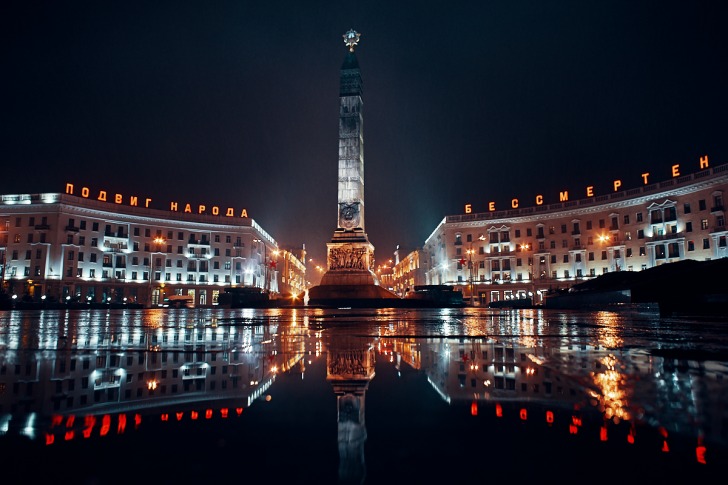
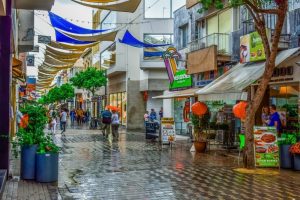
Minsk sits in the heart of Belarus, a broad, orderly capital of grand avenues, Soviet-era monuments, leafy parks, and surprisingly polished café streets.
At first glance, it can feel calmer than many major European cities.
The metro is efficient, the center is spacious, and everyday street crime has long been lower than in a lot of comparable capitals.
That said, Minsk is not a destination you judge by pickpocket rates alone.
The bigger issue is the wider national situation: political tensions, strict law enforcement, shifting border rules, limited consular help for some travelers, and regional instability tied to Belarus’s relationship with Russia and the war in neighboring Ukraine.
So yes, Minsk can feel physically calm on the surface, but travelers need to think beyond the usual tourist checklist.
In this city, safety is as much about the political environment and entry rules as it is about what happens on the sidewalk.
Warnings & Dangers in Minsk

OVERALL RISK: MEDIUM
Minsk is not a classic high-crime city, and many visitors find the streets cleaner, calmer, and more controlled than expected. Still, the overall risk is medium because the biggest concerns are political sensitivity, strict policing, possible surveillance, and the unpredictable regional situation. It is a destination where rules matter, and mistakes can become serious very quickly.

TRANSPORT & TAXIS RISK: LOW
Public transport in Minsk is generally reliable, cheap, and easy to use, especially the metro and official buses. Roads in the center are wide and organized. The main issues are unlicensed taxis, language barriers, and occasional payment confusion. Use official taxi apps or hotel-booked rides rather than flagging random cars late at night.

PICKPOCKETS RISK: LOW
Compared with many major European capitals, pickpocketing in Minsk is relatively limited. Tourist-heavy zones, stations, markets, and crowded metro cars still require common sense, especially during busy hours. Keep your phone and wallet secured, avoid back pockets, and do not leave valuables unattended in cafés, hotel lobbies, or vehicles.

NATURAL DISASTERS RISK: LOW
Minsk is not known for severe natural disasters on the scale seen in earthquake, cyclone, or tsunami zones. The more realistic weather-related risks are winter ice, heavy snow, freezing temperatures, and slippery sidewalks. Road accidents and falls are more likely than any dramatic natural catastrophe, especially between December and February.

MUGGING RISK: LOW
Violent street robbery is not among the city’s most common risks, especially in central districts and well-lit public areas. Most travelers who run into problems face petty theft or bureaucratic trouble rather than direct assault. Still, poorly lit outer neighborhoods, late-night drinking areas, and isolated transit zones are not places to test your luck.

TERRORISM RISK: MEDIUM
Minsk does not see frequent terrorist incidents, but the risk cannot be dismissed entirely, especially in a tense regional environment. Transport hubs, government-related areas, and crowded public sites deserve extra awareness. For most tourists, terrorism is not the top day-to-day worry, but the broader security climate raises the category above low.

SCAMS RISK: MEDIUM
Classic tourist scams are less aggressive here than in some heavily visited capitals, but overcharging by unofficial drivers, payment issues, fake fines, and nightlife-related billing disputes can happen. The bigger concern is not flashy street hustles but misunderstanding local rules, paperwork, or police interactions. Travelers should keep documents in order and use formal services whenever possible.

WOMEN TRAVELERS RISK: LOW
Women can often move around central Minsk with fewer street harassment issues than in many other capitals, especially during the day. Even so, solo travelers should stay cautious at night, avoid accepting drinks from strangers, and use official transport. The main concern is not constant harassment but the same broader rule-based and political environment affecting everyone.

TAP WATER RISK: MEDIUM
Tap water in Minsk is often used by locals for cooking and daily life, but many travelers still prefer filtered or bottled water, especially if they have sensitive stomachs. The issue is not that tap water is automatically unsafe everywhere, but consistency and personal tolerance can vary. Bottled water is an easy, low-cost precaution.
Safest Places to Visit in Minsk
Upper Town
If I were telling a first-time visitor where to start, I would point them straight to Upper Town.
This is one of the more comfortable parts of Minsk for tourists because it combines walkability, major landmarks, open squares, and a steady flow of people.
You will find churches, museums, restaurants, and enough activity to feel visible rather than isolated.
It is a good place for daytime wandering and evening dining.
Trinity Hill
Trinity Hill is one of the prettiest and most relaxed pockets of Minsk.
It feels more intimate than the giant boulevards elsewhere in the city, with restored historic buildings and riverfront views that make it easy to explore at a slower pace.
It is ideal for travelers who want charm without chaos.
During daylight hours and early evenings, it is one of the city’s easiest areas to enjoy calmly.
Independence Avenue and the Central Districts
The broad central stretches around Independence Avenue are among the most practical places for visitors to stay and explore.
They are busy, well-connected, and full of the kinds of places travelers actually use: metro stations, hotels, cafés, pharmacies, shops, and official services.
In safety terms, central visibility matters, and Minsk’s main avenues offer exactly that.
These are the districts where navigating the city feels simplest.
Victory Park and Major Public Green Spaces
Victory Park and other major green areas are solid choices for daytime sightseeing, especially for families or travelers who want space and quiet.
Large city parks in Minsk can feel orderly and less stressful than cramped urban centers elsewhere.
Daytime visits are best.
Stick to populated paths, especially if you are alone, and you should find them among the city’s more comfortable areas.
Places to Avoid in Minsk
Isolated Outer Residential Districts at Night
Minsk is not famous for one single no-go neighborhood in the way some cities are, but that does not mean every area is equally smart to visit.
Outer residential districts with little reason for tourists to be there can feel empty, dark, and disconnected after hours.
If you are not staying there or meeting someone you trust, there is rarely a good reason to wander far from the center at night.
Train Station Surroundings Late at Night
Areas around major transport hubs always deserve more caution, and Minsk is no exception.
The central station area can be convenient by day, but late at night it becomes less appealing for aimless walking, especially with luggage, cash, or visible electronics.
These zones attract the usual mix of opportunists, confusion, and travelers who are distracted or tired.
Move with purpose and avoid lingering.
Government Buildings and Protest-Sensitive Areas
This is where Minsk differs from a standard city break destination.
Areas near government institutions, security sites, or any place where a gathering could form should be treated carefully.
Even if you are only watching or taking photos, you can attract unwanted attention.
Avoid demonstrations entirely, do not photograph police or security infrastructure, and step away quickly if a public situation starts to build.
Nightlife Spots with Unclear Pricing
Some bars and clubs are perfectly fine, but avoid venues that seem pushy, unusually empty, or vague about menus and prices.
Tourists in unfamiliar nightlife settings are easier to overcharge, mislead, or separate from their valuables.
If a place does not feel transparent, skip it.
Minsk is not the city to improvise your way through questionable late-night scenes.
Safety Tips for Traveling to Minsk
- Treat Minsk as a politically sensitive destination, not just a city break. The most important mindset shift is this: your biggest risk may not be street crime. It may be falling foul of local rules, entering the country under the wrong assumptions, or doing something that seems harmless elsewhere, like photographing the wrong place or commenting publicly on politics.
- Check entry rules right before you travel. Belarus entry requirements can change, and routes involving Russia add extra complications. Make sure your visa, insurance, registration requirements, and entry airport all match your exact travel plan. Do not rely on old forum posts or broad assumptions.
- Keep your passport and migration paperwork organized. In Minsk, paperwork matters more than many travelers expect. Keep digital and printed copies of your passport, visa, insurance, hotel booking, and any registration details. If your accommodation handles registration, confirm it. If not, know what your obligations are before day ten.
- Avoid all demonstrations and politically charged gatherings. Do not stop to watch. Do not record. Do not take photos out of curiosity. In some destinations, tourists can blend into the edge of a protest. Minsk is not a place where that is a smart gamble.
- Use official taxis or reputable ride apps only. Skip random cars offering rides outside stations, bars, or airports. Arrange transport through your hotel, a recognized app, or an official airport taxi. This cuts down the chance of overcharging, route games, and uncomfortable interactions.
- Stay in the center unless you have a strong reason not to. For most travelers, central Minsk is the safest and simplest base. You will have better transport, more foot traffic, easier access to services, and fewer chances of ending up lost in a quiet outer district after dark.
- Be discreet with photography. This is not the place to casually photograph police, military personnel, transport infrastructure, checkpoints, or official buildings. Even if you are only interested in architecture, be conservative. When in doubt, put the camera away.
- Prepare for winter seriously. If you are visiting in the colder months, slippery streets, freezing temperatures, and snow-related travel issues are real concerns. Good boots, warm layers, gloves, and a proper coat are not optional. A stylish city jacket will lose this battle.
- Watch your digital footprint. Use a VPN if appropriate for your circumstances, avoid sensitive conversations on public networks, and be cautious with social media posts while in the country. Digital privacy should not be treated casually in a place with a strong security culture.
- Buy comprehensive travel insurance and read the fine print. Do not buy the cheapest policy and assume you are covered. Make sure it includes medical care, disruptions, cancellations, and emergency evacuation if possible. In a destination with higher geopolitical uncertainty, strong coverage matters more than usual.
So... How Safe Is Minsk Really?
Minsk is one of those cities that can confuse travelers because two realities exist at once.
On the street level, it often feels orderly, calm, and less crime-heavy than many large capitals.
Violent crime against tourists is not typically the headline issue, and many central areas feel surprisingly manageable.
If you judged Minsk only by pickpockets, transit safety, and general urban cleanliness, you might come away thinking it is fairly safe.
But that is only half the picture.
The real safety question in Minsk is broader.
Belarus remains a politically controlled environment with strict enforcement, a sensitive security atmosphere, and a regional position deeply affected by Russia’s war against Ukraine.
That means the risks are more structural than street-level.
Travelers face possible complications from border rules, surveillance, limited freedom around public expression, and rapidly changing diplomatic or transport realities.
In other words, Minsk is not necessarily dangerous in the classic tourist sense, but it is not carefree either.
My honest take is this: if your trip is well planned, your paperwork is correct, you stay out of politics, and you keep a low profile, Minsk can be navigated without major trouble.
Still, because the wider environment is unpredictable, I would rate it as a medium-risk destination overall, even though everyday crime alone might suggest something lower.
How Does Minsk Compare?
| City | Safety Index |
|---|---|
| Minsk |
77 |
| Brest |
48 |
| Gomel |
45 |
| Vitebsk |
54 |
| Nesvizh |
55 |
| Grodno |
50 |
| Mogilev |
53 |
 St. Louis St. Louis | 58 |
| Lecompton | 83 |
| Portage | 87 |
| Clarksburg | 70 |
 Sochi Sochi | 66 |
| Derry | 79 |
Useful Information

Visas
Visa rules depend heavily on nationality and route. Some travelers can use visa-free entry or an e-visa for short stays, while others need to apply in advance through a Belarusian embassy or consular process. Requirements can include a valid passport, medical insurance, proof of funds, and a specific point of entry. Always verify the latest rules before departure.

Currency
The local currency is the Belarusian ruble, usually shown as BYN. In Minsk, card payments are common in many urban businesses, but cash is still useful for smaller purchases. Exchange money at banks or official exchange offices rather than through informal offers. Carry a backup payment method in case foreign cards have limited acceptance.

Weather
Minsk has a humid continental climate, which means cold winters, mild to warm summers, and a fair amount of precipitation throughout the year. Winter travelers need serious cold-weather gear, while summer visitors should still pack layers for cool evenings and occasional rain. Comfortable walking shoes are useful year-round because the city is very spread out.

Airports
The main gateway is Minsk National Airport, located outside the city center. Most travelers reach central Minsk by official taxi, prearranged transfer, or airport bus. It is best to sort out transport before arrival rather than improvising after a late landing. If you are arriving with visa or registration concerns, keep all documents easy to access.

Travel Insurance
Travel insurance is strongly recommended for Minsk, and I would not skip it here. Choose a policy that covers medical treatment, cancellations, delays, lost baggage, and emergency assistance. Because Belarus can be affected by sudden political or transport changes, stronger coverage is worth the extra cost. This is one destination where basic insurance may not be enough.
Minsk Weather Averages (Temperatures)
Average High/Low Temperature
| Temperature / Month | Jan | Feb | Mar | Apr | May | Jun | Jul | Aug | Sep | Oct | Nov | Dec |
|---|---|---|---|---|---|---|---|---|---|---|---|---|
| High °C |
-3 | -1 | 3 | 11 | 18 | 21 | 22 | 22 | 16 | 10 | 3 | -1 |
| Low °C |
-8 | -7 | -3 | 2 | 7 | 10 | 12 | 11 | 7 | 3 | -1 | -6 |
| High °F |
27 | 30 | 37 | 52 | 64 | 70 | 72 | 72 | 61 | 50 | 37 | 30 |
| Low °F |
18 | 19 | 27 | 36 | 45 | 50 | 54 | 52 | 45 | 37 | 30 | 21 |
Belarus - Safety by City
| City | Safety Index |
|---|---|
| Brest | 48 |
| Gomel | 45 |
| Grodno | 50 |
| Minsk | 77 |
| Mogilev | 53 |
| Nesvizh | 55 |
| Vitebsk | 54 |












Please note that Minsk is not located in Russia, it is a capital of a different state, Republic of Belarus (and thanks to that you can arrive here without visa for up to 30 days). So “still enjoying that native Russian vibe” is not a politically correct description for tourist experiences in Minsk. Unlike most Russian cities, Minsk provides high-quality public transportation, is not characterized by cars parked in the middle of pedestrian path and is, indeed, quite welcoming to tourists from whichever country of Europe or Americas. Majority of Belarusians (70 – 85% according to different surveys, and that number is even higher in Minsk) support the idea of independent sovereign Belarus, that is why I mention this point.
Russian vibe
Interesting and opportune comment about the independency of belarus, however, it was not the intention of the author to question that. When it’s said “native Russian vibe”, there wasn’t any reference to politics or even detracting the national Belarusian culture: the author only highlighted the links between Russia and Belarus are remarkable to the point someone can feel far away from the vibration of the European Union and much closer to the Russian world.
My personal opinion: i had the best of impressions about Belarus and it has indeed a strong Russian vibe (which for me has a meaning of compliment)
Minsk is one of the most beautiful cities in the world.
And i completely disagree that transportation in Russian cities is bad.
Did you really find that mix of old and new in Minsk as fascinating as it sounds, especially along the rivers?
Minsk has this odd mix of old and new, and while it’s nice to explore the history, the whole vibe feels a bit overshadowed by its past. I sometimes wonder if the charm is just a facade over a more complex reality.
It’s kind of surprising how you can stroll past these grand old buildings and then pop into a sleek shopping center right around the corner. The mix of history and modern life really gives the city a unique charm!
Minsk has this cool mix of old and new that really makes it stand out, and the vibe just hits differently when you’re exploring the streets full of history.
Sure, you can shop and eat like in the EU, but walking past those giant Soviet monuments at dusk gave me this weird mix of nostalgia and unease.
Did you ever get that goofy grin standing by the Nyamiha River watching Soviet statues glare at the shiny mall windows as the light goes soft?
You make it sound calm, but when I rode the metro and felt tense walking the central avenues, shouldn’t travelers be warned more about the political climate and shifting border rules?
Strolling along the polished café streets on a misty afternoon, I felt oddly soothed by the wide avenues but also this tight pit in my stomach thinking about the border rules and how quickly things can change.
Does anyone else get that oddly peaceful vibe wandering the center at dusk, then feel a bit on edge when police patrols go by and you remember the border and political stuff?
A beautiful and very clean city
I have visited Minsk several times, and it is a beautiful city that Belorusians can be proud of. It is very safe, exceptionally clean, has very good public transport and wonderful parks and gardens, and the people are helpful and friendly.
Sure, the metro runs smoothly but don’t let that fool you into thinking you can just wander around without a hint of tension lingering in the air.