


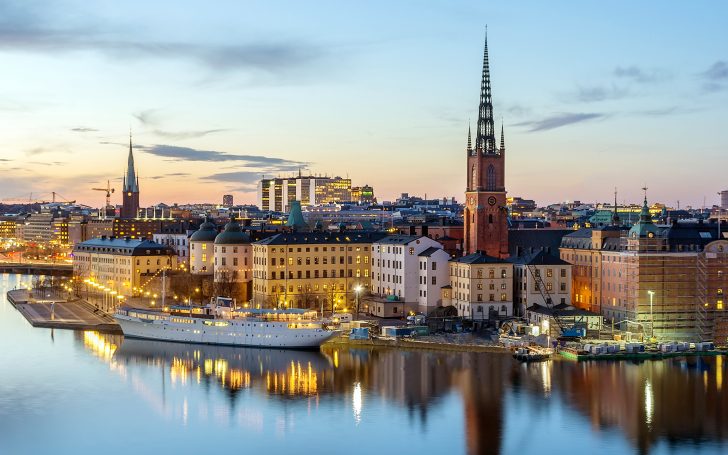
Spread across 14 islands where Lake Mälaren meets the Baltic Sea, Stockholm is one of Europe’s most photogenic capitals.
Cobblestone streets wind through pastel colored buildings in Gamla Stan, ferries glide between islands, and sleek Scandinavian design blends seamlessly with medieval architecture.
As the political and cultural heart of Sweden, Stockholm consistently ranks high for quality of life, sustainability, and public safety.
But no city is perfect.
Over the past decade, Sweden has faced headlines about gang related violence and organized crime, which makes many travelers wonder whether the image of a peaceful Nordic paradise still holds up.
After researching crime data, government travel advisories, and traveler reports, here is my honest, practical breakdown of how safe Stockholm really is.
Warnings & Dangers in Stockholm

OVERALL RISK: LOW
Stockholm remains one of the safer major capitals in Europe. Violent crime against tourists is rare, and the city benefits from strong policing, social services, and infrastructure. Most visits are trouble free. The main issues travelers encounter are petty theft and occasional disturbances linked to gang conflicts in specific suburbs.

TRANSPORT & TAXIS RISK: LOW
Public transportation is clean, reliable, and well monitored. The metro system, buses, and commuter trains are generally safe even at night, though late evening travel can attract minor disorder. Licensed taxis are regulated and trustworthy. Avoid unlicensed drivers and use official taxi companies or rideshare apps.

PICKPOCKETS RISK: MEDIUM
Like most European capitals, Stockholm has pickpocketing hotspots. Crowded areas such as Gamla Stan, central train stations, and popular museums attract petty thieves. Incidents are not rampant, but tourists distracted by photos and maps are easy targets. Keep valuables secured, especially on public transport.

NATURAL DISASTERS RISK: MEDIUM
Stockholm faces minimal natural disaster threats. Earthquakes are extremely rare, and severe storms are uncommon. Winters can be icy, which increases slip and fall accidents. During heavy snowfall, transport disruptions can occur, but infrastructure is generally well prepared for cold weather conditions.

MUGGING RISK: LOW
Street robberies targeting tourists are uncommon in central Stockholm. Most violent crime incidents are gang related and occur in specific suburban districts rather than tourist areas. Walking in well lit, populated neighborhoods at night is typically safe, though caution is always wise after midnight.

TERRORISM RISK: MEDIUM
Sweden has experienced isolated extremist incidents in recent years, including a truck attack in 2017. While such events are rare, authorities consider the threat level moderate. Security is visible in public spaces, and intelligence services actively monitor risks. Travelers should remain alert but not alarmed.

SCAMS RISK: LOW
Stockholm does not have a strong scam culture compared to some other European capitals. You may encounter minor issues like card skimming or inflated taxi fares from unofficial drivers. Overall, consumer protections are strong, and businesses operate transparently.

WOMEN TRAVELERS RISK: LOW
Stockholm is widely regarded as one of the safest cities in the world for solo female travelers. Gender equality is deeply embedded in Swedish society. Harassment exists, as in any large city, but violent crime against women tourists is rare. Standard precautions apply at night.

TAP WATER RISK: LOW
Tap water in Stockholm is exceptionally clean and safe to drink. Sweden has strict environmental regulations and high water quality standards. Carrying a reusable bottle is encouraged, and locals proudly drink straight from the tap without hesitation.
Safest Places to Visit in Stockholm
Many of Stockholm’s most famous attractions are located in areas that are not only beautiful but also very safe.
Gamla Stan, the old town, is one of the most secure and heavily visited neighborhoods.
Its narrow medieval alleys, boutique shops, and cafés are packed with tourists and locals alike.
While you should watch for pickpockets, violent crime here is extremely rare.
The island of Djurgården is another highlight.
Home to open green spaces, walking paths, and museums like the Vasa Museum and Skansen, it feels peaceful and family friendly.
Police presence and organized tourism make it comfortable even for first time visitors.
Norrmalm and Östermalm, central districts filled with shopping streets, hotels, and restaurants, are also considered very safe.
These areas benefit from strong lighting, surveillance cameras, and regular patrols.
Waterfront promenades throughout the city are well maintained and ideal for evening walks during the long Scandinavian summer days.
Overall, Stockholm’s main tourist zones are orderly, clean, and secure by international standards.
Places to Avoid in Stockholm
It is important to separate perception from reality.
Media reports often focus on gang related shootings and organized crime conflicts.
These incidents are generally concentrated in specific outer suburbs rather than central tourist areas.
Districts such as Rinkeby, Tensta, Husby, and parts of Södertälje have experienced higher crime rates and gang activity.
These neighborhoods are primarily residential and far from major attractions.
Tourists rarely have a reason to visit them.
While daytime visits are not automatically dangerous, late night wandering in unfamiliar outer suburbs is not advisable.
Certain metro stations late at night can feel less comfortable, especially if platforms are empty.
Drunk behavior around nightlife areas may also increase minor disturbances after midnight.
That said, even these areas are not comparable to high risk neighborhoods in some global cities.
The key is awareness and sensible planning.
Staying in central districts, using licensed transport, and avoiding unnecessary late night travel to unfamiliar suburbs significantly reduces risk.
Safety Tips for Traveling to Stockholm
- Stay in Central Districts. Choose accommodation in Norrmalm, Gamla Stan, Östermalm, or Södermalm. These neighborhoods are well connected, lively, and generally safer than distant suburbs.
- Secure Your Valuables. Use anti theft bags or money belts in crowded areas. Keep phones and wallets out of back pockets, especially on metro trains and near tourist attractions.
- Use Official Transport. Stick to licensed taxis and public transportation. Avoid accepting rides from drivers who approach you at stations or airports without clear identification.
- Be Weather Prepared. Winter ice increases injury risk. Wear proper boots with traction and walk carefully on sidewalks during colder months.
- Limit Late Night Wandering. While central areas are safe, avoid isolated parks or quiet industrial zones after midnight, especially if alone.
- Monitor Local News. If there are protests or isolated security incidents, adjust your plans accordingly. Swedish authorities communicate clearly about public safety.
- Avoid Flashing Expensive Items. Stockholm is affluent, but showing off luxury watches or large amounts of cash can still attract unwanted attention.
- Use Contactless Payments Safely. Sweden is nearly cashless. Keep your cards secure and enable transaction alerts to monitor unusual activity.
- Respect Local Laws. Sweden enforces strict alcohol, drug, and public order laws. Violations can lead to heavy fines.
- Register With Your Embassy. If staying long term, registration ensures you receive updates in case of emergencies.
So... How Safe Is Stockholm Really?
By European standards, Stockholm remains very safe for tourists.
Sweden’s homicide rate is lower than that of many Western countries, though gang related shootings have increased in recent years.
Importantly, these incidents are typically targeted and occur outside tourist centers.
Petty theft is the most common issue visitors report.
Violent crime affecting tourists is statistically rare.
Infrastructure, emergency services, and healthcare are excellent.
The city consistently ranks high in global safety and livability indexes.
Compared with other capitals of similar size, Stockholm performs well in terms of public order, transport safety, and cleanliness.
Terror threats exist at a moderate level, as in most European capitals, but visible security measures and proactive intelligence reduce risks.
In my assessment, Stockholm is a low risk destination for travelers who exercise standard urban awareness.
The narrative of widespread danger does not match the reality most visitors experience.
How Does Stockholm Compare?
| City | Safety Index |
|---|---|
 Stockholm Stockholm |
82 |
| Gothenburg |
78 |
| Malmo |
78 |
| Lund |
92 |
 Jackson Hole Jackson Hole | 81 |
| Ashtabula | 45 |
| Asheville | 57 |
| Irving | 79 |
 Medellin Medellin | 60 |
| Moreno Valley | 82 |
Useful Information

Visas
Sweden is part of the Schengen Area. Visitors from the United States, Canada, the UK, and many other countries can enter visa free for up to 90 days within a 180 day period. Passport validity must extend beyond your stay. Longer stays require a residence permit application.

Currency
Sweden uses the Swedish Krona (SEK). The country is largely cashless, and credit or debit cards are accepted almost everywhere. Exchange small amounts of cash if desired, but using cards with low foreign transaction fees is usually the best option.

Weather
Stockholm has cold winters and mild summers. Winter temperatures often fall below freezing, with limited daylight. Summer offers long, bright days and comfortable temperatures. Pack warm layers in winter and light jackets for cool evenings even in July.

Airports
The main international gateway is Stockholm Arlanda Airport, located about 40 kilometers north of the city. The Arlanda Express train connects to central Stockholm in about 20 minutes. Buses and taxis are also widely available.

Travel Insurance
Healthcare in Sweden is high quality but expensive for non residents. Comprehensive travel insurance covering medical emergencies, trip interruptions, and theft is strongly recommended. It provides peace of mind in case of unexpected delays or health issues.
Sweden - Safety by City
| City | Safety Index |
|---|---|
| Gothenburg | 78 |
| Lund | 92 |
| Malmo | 78 |
| Stockholm | 82 |














Not to bad
Havent been back to Sweden for several years. Spent several days in Stockholm and visited Malmo (on business). Like so many European cities, the Europeans were very helpful and no issues. It was so obvious that the migrants are the problem. Paris, London, Amsterdam and other cities around the world have the same issue with Africans, Romanians, Indians and Jamaicans. It is just to bad that these migrants have been able to create fear and mistrust wherever they show up.
It is obvious, when you look at the state of the world, that Europeans have been the problem, creating substance abuse, slavery, fear, indoctrination, mass incarceration, mistrust and poverty wherever they show up.
We are talking about Stockholm and I agree with Mike.
This is a big problem in the larger cities of Sweden.
That terrorism risk definitely needs an update.
Ten days to see it all? Sounds like Stockholm might be trying to win the award for most ambitious itinerary ever! But I guess with all that fresh air and greenery, I wouldn’t mind getting a bit lost along the way.
edited: "Stockholm is a must!"
Great experience, clean air, clean environment, fascinating history. Helpful citizens, even if they are more reserved.
I stayed at the “Red Boat” RAN Hotel on the water. Private Room/Bath. The boat swayed at times – so you DID know you were on a boat 🙂
I visited Sweden to experience the society under one of the least corrupt governments in the world.
Swedish Citizens love their Gov’t overall; people of the USA (where I’m from) have not had much respect for their Gov’t for decades: a dysfunctional corporate-infested cesspool of political squabbling with money the first value for many in Congress.
Sweden’s federal Gov’t has values, compared, and eight political parties in their Legislature, bringing new ideas for positive consideration. Swedish Society is blessed to have a Gov’t that thinks about THEM, not just themselves. Enjoy a free Government tour at the Riksdaag–the capital building of Sweden in Stockholm across a bridge from the Old Town region of GamlaStan.
Southern California (USA) (where I’m from) is much friendlier than Stockholm; but wait – in Stockholm it’s a different kind of “friendlly” – the reserved kind where it’s very possible to have conversations with the Locals more quietly, with good laughs here and there if you initiate the conversation meaningfully – and especially if you courteously bring up an interesting issue or share an incident that brings laughter.
Small talk isn’t appreciated, but meaningful conversation can be. I found that Swedes seemed to want to open-up more – to warm up their sometimes-stoicism in that often cold-weather ambience. And if you get lost in Stockholm, the people are there to help–happily.
Restaurants are relatively quiet (yay), conversations on slow-muffle, not the nervy loudness heard in many USA restaurants. Take initiative, be yourself, be curious: it’s a curious place. More relaxedly.
And take an extensive boat ride under the many bridges of Stockholm that span across all the refreshing waterways. Go to the Ice Bar and have a cold drink without ice…then warm up at the nearby hotel lounge. (You don’t dare have a hot drink at the Ice Bar – the counter will melt, and we don’t want that!) Visit a favorite coffeehouse: maybe Downtown Camper Cafe in the Norrmalm region. Or explore one of the many Espresso Houses.
Take the subway to wherever. People are quiet, the subway is quiet. Time to “meditate”, but don’t miss your destination! Go to the Swedish History Museum in Ostermalm–and in their calm, spacious, beautifully decored restaurant, have a salmon special (one of the best dishes ever!).
Visit the wild-Nature campus of the University of Stockholm (I’ve visited prettier campuses in the USA), but enjoy that this is a highly rated university with emphasis on human collaboration, not just you and the Internet. See how the students are collaborating in their Student Union (over various coffees, of course).
Sweden is a coffee-drinking mecca with their FIKA / coffee, confection, & conversation or just alone breaks. Enjoy an opera (yes, in Swedish) at the Folk Opera in Sodermalm–the artsy region of Stockholm. If you don’t understand Swedish, just ask someone official what the opera is about, at least, and enjoy the top-talent Singers and Actors and more!
If it’s snowing while you’re there, no problem. Have the right boots (or good cleats on your boots), dress as if in the Arctic, gain rosy cheeks in the cold, clean, fresh air; be surprised at how so many are walking the streets because snow is a way of life here. Cozy quality restaurants and bars will give relief before venturing back out into the invigorating “freeze”. If you have the right heavy coat, ample warming scarf and headgear, gloves, boots and all–it’s more fun than a bug’s ear!
If you are there in Spring or Summer, enjoy the appreciated few weeks or more of sunshine – and sun-filled treks.in nearby forests; gather all the berries you want. Take an Archipelago tour, seeing the many outlying islands beyond the (I believe) fourteen islands upon which Stockholm is built!
If you are American, switch to a quieter society whie in Sweden’s Stockholm; for me it was even healing–just being there 🙂
EnJOY!
Taking the ferry to Djurgården still calms me down even when the headlines feel heavy, though I do get a knot in my stomach walking through some subway stations at night.