


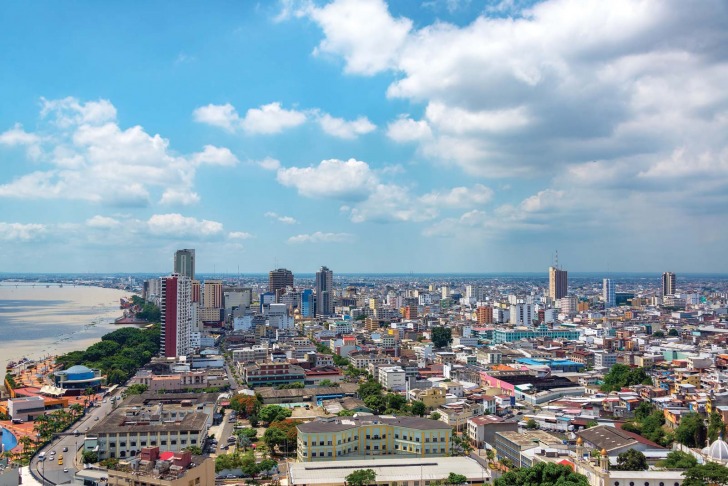
Guayaquil is Ecuador’s largest city and its main port, located along the Guayas River near the Pacific coast.
Unlike the colonial charm of Quito or the wildlife appeal of the Galápagos, Guayaquil is a gritty, fast-moving commercial hub.
It is known for the revitalized Malecón 2000 waterfront, the colorful Las Peñas neighborhood, tropical heat, seafood cuisine, and as the primary gateway to the Galápagos Islands.
But Guayaquil also appears frequently in international headlines related to crime in Ecuador.
Over the past few years, rising gang violence connected to drug trafficking has affected parts of the country, and Guayaquil has been one of the focal points.
Naturally, this raises serious questions for travelers.
So, how dangerous is Guayaquil really?
Is it safe to visit?
The answer is nuanced.
Some neighborhoods are relatively secure and popular with tourists.
Others should be strictly avoided.
Understanding where you are, when you are there, and how you move around the city makes a significant difference.
Here is a detailed, realistic breakdown of safety in Guayaquil.
Warnings & Dangers in Guayaquil

OVERALL RISK: MEDIUM
Guayaquil currently carries a medium to high overall safety risk compared to many South American tourist cities. While millions of travelers pass through without incident, the city has experienced elevated crime rates tied to organized gangs and narcotics trafficking. Tourist zones are generally safer than residential districts, but situational awareness is essential. Visitors who stay in secure neighborhoods and avoid unnecessary movement at night significantly reduce risk.

TRANSPORT & TAXIS RISK: MEDIUM
Transportation is one of the more important safety considerations in Guayaquil. Public buses are inexpensive but can be targets for theft. Pickpocketing and occasional robberies occur on crowded routes. Registered yellow taxis are common, but ride-sharing apps are often safer because they track drivers and routes. Avoid unmarked taxis and never accept rides from drivers who approach you at the airport without official identification.

PICKPOCKETS RISK: MEDIUM
Pickpocketing occurs in crowded areas such as bus terminals, markets, and parts of downtown. Phone snatching by individuals on motorcycles is also reported. Tourists checking maps on sidewalks or standing near roads while using phones are particularly vulnerable. Keeping electronics discreet and avoiding distracted behavior reduces exposure significantly.

NATURAL DISASTERS RISK: MEDIUM
Guayaquil is located in a seismically active region of Ecuador. Earthquakes are possible, though major events are infrequent. The city also experiences heavy rainfall during the wet season from January to April, which can cause localized flooding. Unlike Caribbean destinations, hurricanes are not a concern, but infrastructure disruptions during strong storms can occur.

MUGGING RISK: HIGH
Armed robberies are a documented issue in certain neighborhoods of Guayaquil, particularly outside tourist zones and after dark. While tourist districts are more heavily patrolled, isolated streets and residential outskirts can present a higher risk. Avoid walking alone at night, especially outside secure areas like Samborondón or Puerto Santa Ana.

TERRORISM RISK: MEDIUM
There is no traditional international terrorism threat aimed at tourists, but gang-related violence has increased in recent years. Most of this activity is targeted and occurs between criminal groups, not tourists. However, it contributes to overall instability in some districts.

SCAMS RISK: MEDIUM
Common scams include distraction theft, fake police requests for documents, and overcharging by informal taxi drivers. Some visitors report ATM related fraud in isolated areas. Using ATMs inside banks and avoiding street money exchangers reduces risk.

WOMEN TRAVELERS RISK: MEDIUM
Solo female travelers can visit Guayaquil, but extra caution is required. Harassment can occur in crowded or less secure districts. Staying in reputable accommodations, using ride apps at night, and avoiding walking alone after dark are important measures.

TAP WATER RISK: HIGH
Tap water in Guayaquil is not considered safe for visitors to drink. Bottled water should be used for drinking and brushing teeth. Ice in reputable hotels and restaurants is typically purified, but caution is advised in smaller establishments.
Safest Places to Visit in Guayaquil
Safety in Guayaquil depends heavily on neighborhood choice.
Samborondón is widely regarded as the safest area in the metropolitan region.
It is technically across the river from central Guayaquil and features gated communities, shopping centers, modern restaurants, and private security presence.
Many expatriates and business travelers stay here because of its controlled environment.
Puerto Santa Ana is another relatively secure district.
This revitalized waterfront development includes residential towers, restaurants, and river views.
Security patrols are visible, and access points are more limited than in older neighborhoods.
The Malecón 2000 waterfront area is generally safe during the day and early evening.
It is heavily patrolled and popular with families.
However, caution increases after dark when foot traffic decreases.
Las Peñas, the colorful hillside neighborhood with stairways leading to a lighthouse, is safe during daylight hours when tourists are present.
Visiting in the evening is possible, but should be done with awareness and preferably in groups.
The airport area is secure within the terminal itself, but travelers should pre-arrange transportation rather than accept unsolicited offers outside.
Places to Avoid in Guayaquil
Certain districts in Guayaquil carry a significantly higher crime risk.
Parts of southern Guayaquil have experienced gang-related violence and higher robbery rates.
These are not tourist areas and should be avoided entirely.
The port and industrial zones are also not appropriate for visitors.
These areas may experience organized criminal activity and have little reason for tourism.
Some sections of central Guayaquil become quiet and poorly lit at night.
Even if they appear close to tourist zones, venturing a few blocks in the wrong direction can change the environment quickly.
Bus terminals, particularly late at night, are high risk for pickpocketing and robbery.
If you must use intercity buses, choose daytime departures.
The key rule in Guayaquil is simple: do not wander.
Move intentionally between secure locations and avoid unnecessary exploration outside established safe districts.
Safety Tips for Traveling to Guayaquil
- Stay in Samborondón or Puerto Santa Ana – In Guayaquil, your neighborhood choice is your most important safety decision. Samborondón offers gated communities, private security patrols, shopping centers, and modern infrastructure. Puerto Santa Ana has a visible police presence and controlled residential access. Avoid booking budget accommodations in unknown districts to save money. Where you sleep determines your exposure.
- Do Not Wander Without a Plan – Guayaquil is not a city built for casual exploration. Tourist zones can shift into high-risk streets within a few blocks. Before leaving your hotel, know exactly where you are going and how you are getting back. Move directly between destinations rather than exploring aimlessly. Intentional movement reduces risk dramatically.
- Use Ride Apps for All Transportation – Even short walks can increase exposure, especially after sunset. Ride-sharing apps provide driver identification, route tracking, and digital payment records. Avoid unregistered taxis and never accept rides from drivers who approach you in public areas. Confirm license plates before entering the vehicle.
- Keep Your Phone Out of Street View – Motorcycle phone snatching is a documented issue. Do not stand near the curb while texting or checking maps. If you need directions, step inside a shop, restaurant, or hotel lobby. Keep your phone secured in a front pocket or zipped compartment when not in use.
- Avoid Public Buses and Crowded Terminals – Public transportation in Guayaquil is affordable but not ideal for visitors unfamiliar with the city. Pickpocketing and occasional robberies occur on crowded routes. If you must use intercity buses, travel during daylight and secure belongings tightly.
- Blend In Instead of Standing Out – Flashy jewelry, luxury watches, designer bags, and visible cameras can attract unwanted attention. Dress casually and keep valuables discreet. The goal is to look like you belong, not like you are carrying expensive items.
- Withdraw Cash Inside Banks or Malls – Use ATMs located inside banks or major shopping centers rather than sidewalk machines. Avoid counting money in public. Carry only what you need for the day and separate larger amounts in different compartments.
- Avoid Walking After Dark – Even if an area appears calm, the atmosphere can shift quickly at night. Plan your evening return before leaving your accommodation. Use ride services instead of walking, particularly outside well-lit tourist districts.
- Monitor Local Conditions During Your Stay – Security conditions in Ecuador have fluctuated in recent years due to gang-related violence. While most incidents do not target tourists, staying informed helps you avoid emerging hotspots. Hotel staff can provide practical, current guidance.
- Drink Bottled Water and Choose Busy Restaurants – Tap water is not considered safe for visitors. Use sealed bottled water for drinking and brushing teeth. Eat at well-reviewed restaurants with steady customer flow, not at empty establishments. Health issues can disrupt travel just as easily as crime.
So... How Safe Is Guayaquil Really?
Guayaquil is not a carefree tourist city.
Compared to destinations like Cartagena or Lima’s Miraflores district, it requires more deliberate planning.
However, it is not an automatic no-go destination either.
Most violence in Guayaquil is linked to gang activity and is concentrated in specific districts.
Tourists staying in secure neighborhoods and avoiding risky behavior typically complete visits without incident.
The city functions as a transit hub to the Galápagos Islands, and many travelers spend only one night before flying onward.
In that context, risk exposure is limited.
For experienced travelers comfortable navigating Latin American urban environments, Guayaquil is manageable with precautions.
For those seeking a relaxed, walk-everywhere type of vacation, it may feel stressful.
In short, Guayaquil demands awareness, but it is not uniformly dangerous.
Your safety largely depends on where you stay and how you move.
How Does Guayaquil Compare?
| City | Safety Index |
|---|---|
 Guayaquil Guayaquil |
45 |
| Quito |
55 |
| Manta |
62 |
 Fairmont Fairmont | 70 |
 Serowe Serowe | 79 |
| Ormond Beach | 83 |
 Cairo Cairo | 40 |
| Deming | 62 |
 Le Havre Le Havre | 63 |
Useful Information

Visas
Many travelers from the United States, Canada, the European Union, and several other countries can enter Ecuador visa-free for up to 90 days within a 12 month period. Passports must generally be valid for at least six months beyond arrival. Always verify current entry rules before departure.

Currency
Ecuador uses the United States Dollar as its official currency. Credit cards are accepted in hotels and restaurants, but cash is widely used. Withdraw funds from bank-affiliated ATMs rather than street machines.

Weather
Guayaquil has a tropical climate. The rainy season runs from January through April with high humidity and heavy downpours. The drier season from May through December is more comfortable, though still warm.

Airports
José Joaquín de Olmedo International Airport serves Guayaquil and is located close to the city center. The airport itself is modern and secure. Pre-arrange transportation upon arrival.

Travel Insurance
Travel insurance is strongly recommended. Ensure your policy covers medical treatment, theft, and trip disruptions. Medical facilities in private hospitals are adequate, but insurance provides financial protection and peace of mind.
Guayaquil Weather Averages (Temperatures)
Average High/Low Temperature
| Temperature / Month | Jan | Feb | Mar | Apr | May | Jun | Jul | Aug | Sep | Oct | Nov | Dec |
|---|---|---|---|---|---|---|---|---|---|---|---|---|
| High °C |
31 | 31 | 32 | 31 | 31 | 30 | 29 | 29 | 30 | 30 | 31 | 31 |
| Low °C |
23 | 23 | 23 | 23 | 22 | 22 | 21 | 20 | 20 | 21 | 21 | 22 |
| High °F |
88 | 88 | 90 | 88 | 88 | 86 | 84 | 84 | 86 | 86 | 88 | 88 |
| Low °F |
73 | 73 | 73 | 73 | 72 | 72 | 70 | 68 | 68 | 70 | 70 | 72 |
Ecuador - Safety by City
| City | Safety Index |
|---|---|
| Guayaquil | 45 |
| Manta | 62 |
| Quito | 55 |













Really awesome travel tips here, thank you!
Ecuador is a very beautiful country. When travelling I rarely felt like I was in a sketchy area though a lot of locals would tell me stories about the unsafe areas. Stay closer to tourist safe area’s like the Malecon 2000 and Guyarte and avoid staying out late. Most importantly, enjoy all the food and amazing prices.
A lovely city
When here make sure to visit Malecon 2000, La Perla, Garza Roja Parque Cultural and El Faro de Guayaquil. Many other places to visit but these stood out to me at least. I highly recommend Hotel del parque as it’s absolutely amazing (in and out). Radisson Hotel is also nice and a lot cheaper if you’re on a budget.
Fake rating
How could such a dangerous city with a high likelihood of crime have a score so high? This should be in the 30s!
Super dangerous but very fun
I love the city but it is crazy dangerous, you should never walk the streets or get a taxi without an app. Every one of my friends there has multiple stories of being robbed at gun or knife point. Look at the news, it’s undergoing a curfer to curb the gang violence.
Update this, this is so wrong
Mid
Mid it’s safe but can be dangerous in the night markets are so beautiful made my subscriber ceviche
The vibe along the Malecon 2000 was just so refreshing, especially with all the greenery and the river views.
Spent a day wandering along the Malecon and it was such a chill vibe with great views and street performers everywhere.
That riverfront promenade really shines at sunset, but those hills can definitely get your heart racing if you decide to trek up!
The Malecón at sunset feels lively and safe, but I still get nervous walking some side streets alone after dark.
Malecón 2000 looks great and the seafood is worth it, but the tropical heat had me sweating and a bit wary about which neighborhoods to wander into.
Seeing the Malecón full at sunset and tasting fresh ceviche made the place feel alive, but the sticky humidity and a police checkpoint by the bridge had me wondering how safe it really is after dark.
Walking Malecón 2000 at dusk, the warm, sticky air and smell of fried seafood felt alive, but I kept checking over my shoulder in the quieter streets and it makes me wonder how a few blocks can feel so different.
I stayed near Malecón 2000 and felt fine walking around during the day, but I definitely avoided some spots after dark since it felt sketchy.
The heat by the waterfront can be brutal but sitting by the Malecón at sunset makes the hustle feel worth it.
Can’t believe how spicy the seafood is when you get it fresh by the river, it really wakes you up more than the heat!