 Costa Rica : Safety by City
Costa Rica - safety as a country
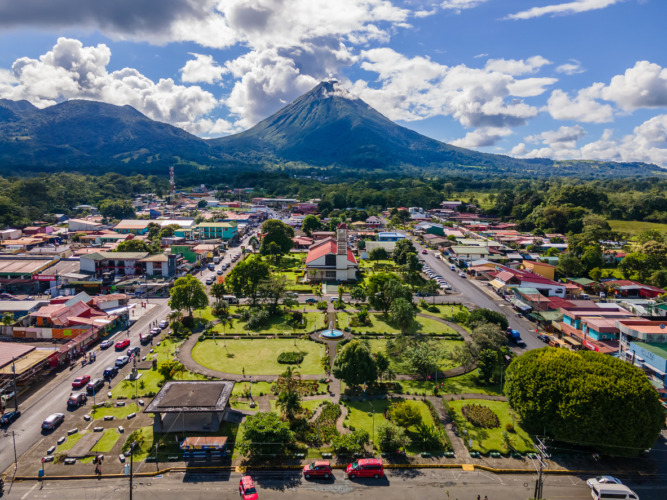
La Fortuna is one of Costa Rica’s most popular adventure destinations, sitting beneath the dramatic Arenal Volcano in the northern part of the country.
Travelers come for hot springs, waterfalls, rainforest hiking, hanging bridges, wildlife watching, rafting, zip-lining, and spectacular views of the volcano.
For most visitors, La Fortuna is relatively safe.
The town has a well-developed tourism industry, plenty of hotels and restaurants, organized tours, and a steady flow of international travelers throughout the year.
The biggest concerns are usually petty theft, vehicle break-ins, road conditions, adventure-sport accidents, flash flooding, landslides, and rapidly changing tropical weather.
Costa Rica currently carries an increased-caution travel advisory because of crime, but La Fortuna generally has fewer serious security problems than some larger urban and coastal destinations.
Visitors who secure valuables, choose reputable tour companies, avoid isolated places late at night, and take weather warnings seriously should have few problems exploring the area.
Warnings & Dangers in La Fortuna

OVERALL RISK: LOW
La Fortuna is generally a safe destination for tourists. Serious violence against visitors is uncommon, and the center of town remains busy with restaurants, hotels, shops, tour offices, and travelers throughout much of the day and evening. Petty theft and vehicle break-ins are more realistic concerns. Costa Rica has experienced increasing crime nationally, so visitors should still avoid becoming overly relaxed with valuables, rental cars, and nighttime travel.

TRANSPORT & TAXIS RISK: MEDIUM
Official taxis and transportation arranged through reputable hotels and tour companies are generally safe. Driving presents more difficulty. Roads around La Fortuna vary from modern paved highways to narrow rural roads with potholes, steep sections, limited shoulders, and poor lighting. Heavy rain can dramatically reduce visibility and occasionally cause flooding or landslides. Avoid unfamiliar rural driving after dark whenever possible.

PICKPOCKETS RISK: MEDIUM
Traditional pickpocketing is not a major problem in La Fortuna, but opportunistic theft definitely occurs. Phones, wallets, backpacks, cameras, and other valuables can disappear from restaurants, buses, hot springs, trailheads, or tourist attractions when left unattended. Vehicle break-ins are an especially important concern. Never leave passports, laptops, luggage, cameras, or wallets visible inside a rental car.

NATURAL DISASTERS RISK: MEDIUM
La Fortuna is surrounded by mountains, rainforest, rivers, and volcanic terrain, so natural hazards deserve serious attention. Heavy rain can cause flash flooding, landslides, falling trees, and road closures, particularly during the rainy season from roughly May through November. September and October are often among the wettest months. Arenal is an active volcano, although it is not currently experiencing the type of frequent eruptive activity that made it famous in previous decades. Costa Rica is also earthquake-prone. Follow park closures and instructions from local authorities rather than approaching restricted volcanic or river areas.

MUGGING RISK: LOW
Muggings and violent street robberies involving tourists are relatively uncommon in central La Fortuna. The risk increases in deserted areas after dark or when travelers openly display valuable electronics, jewelry, or large amounts of cash. Use a taxi or arranged transportation if your hotel is far outside town rather than walking along dark rural roads at night. If confronted during a robbery, do not resist.

TERRORISM RISK: LOW
The terrorism risk in La Fortuna is very low. Costa Rica does not normally experience terrorist attacks affecting tourists. Visitors should maintain ordinary awareness at airports, transportation terminals, festivals, and other crowded locations but do not need to take unusual terrorism precautions.

SCAMS RISK: MEDIUM
Scams are possible in a destination with such a large tourism industry. Travelers may encounter overpriced tours, unofficial guides, misleading attraction offers, rental-car disputes, inflated transportation charges, or businesses selling activities that are less impressive than advertised. Book adventure activities through established companies and confirm what is included before paying. Be especially cautious with extremely cheap volcano, rafting, canyoning, or wildlife tours.

WOMEN TRAVELERS RISK: LOW
La Fortuna is generally comfortable for women traveling alone. Solo female travelers regularly stay in hostels and hotels, join group tours, use local transportation, and explore central La Fortuna without serious problems. Normal precautions remain important at night. Avoid isolated roads, keep control of drinks, do not accept rides from strangers, and use reputable transportation when returning to accommodation outside the center.

TAP WATER RISK: LOW
Tap water in La Fortuna is generally safe to drink in established accommodations and developed areas. Costa Rica has relatively good drinking-water standards compared with much of the region. Travelers staying in remote rural accommodations should ask whether the property uses municipal water, treated spring water, or another source. Never assume that untreated water from rivers, waterfalls, or hiking trails is safe to drink.
Safest Places to Visit in La Fortuna
Downtown La Fortuna
Central La Fortuna is compact, busy, and easy to explore.
Hotels, restaurants, cafés, supermarkets, tour offices, pharmacies, banks, and shops surround the central park.
The area generally remains active into the evening and is one of the easiest places for visitors to navigate independently.
Keep ordinary awareness around belongings but there is little reason to feel uncomfortable walking around the center.
La Fortuna Waterfall
La Fortuna Waterfall is one of the area’s most popular natural attractions.
The developed entrance, viewing areas, and official trail are generally safe when visitors follow instructions.
The staircase to the waterfall is steep and can become slippery when wet.
Swimming conditions can also change depending on rainfall and river flow, so follow any restrictions imposed by staff.
Arenal Volcano National Park
Arenal Volcano National Park contains hiking routes, lava fields, forests, wildlife, and excellent views of the volcano.
The established trails are generally safe for visitors who follow park regulations.
Never enter closed areas or attempt to climb directly toward the volcanic cone.
Rain, mud, roots, uneven volcanic rock, and changing weather are more immediate concerns than volcanic activity during a typical visit.
Mistico Arenal Hanging Bridges
The hanging bridges area is a popular rainforest attraction with maintained trails and elevated bridges.
The primary risks are slippery surfaces, steep sections, tropical weather, and wildlife rather than crime.
Wear shoes with good traction and avoid rushing across wet bridges or stairs.
Hot Springs Areas
La Fortuna has numerous hot spring resorts and thermal pools fed by geothermal activity around Arenal.
Established resorts are generally very safe.
Visitors should still be careful around wet walkways and extremely hot pools.
Alcohol combined with prolonged hot-water exposure can contribute to dehydration or dizziness.
Places to Avoid in La Fortuna
Remote Roads After Dark
Many hotels, hot springs, farms, and vacation rentals are spread across rural areas outside downtown La Fortuna.
Roads may have limited lighting, pedestrians, cyclists, animals, potholes, and narrow shoulders.
Avoid unnecessary nighttime walking along rural roads and drive slowly after sunset.
Unofficial Volcano Trails
Do not follow unofficial trails toward Arenal Volcano simply because someone claims they provide a better view.
The volcano and surrounding terrain include protected and restricted areas.
Unofficial trails may expose visitors to unstable terrain, private property, dangerous weather, or areas where emergency assistance would be difficult.
Rivers During Heavy Rain
Rainfall upstream can cause river levels to rise rapidly even when conditions at your location do not initially appear severe.
Avoid swimming, rafting independently, or approaching riverbanks during intense rainfall.
Flash flooding can develop surprisingly quickly in tropical mountain environments.
Closed Hiking Trails
Trail closures may occur because of landslides, flooding, fallen trees, volcanic concerns, or maintenance.
Do not climb around barriers or continue onto closed routes for photographs.
Conditions beyond the closure may be substantially more dangerous than they appear.
Isolated Parking Areas
Rental-car break-ins are a more realistic risk than violent crime.
Avoid leaving vehicles containing luggage or electronics at quiet roadside viewpoints, unofficial trailheads, or isolated swimming areas.
Use designated parking facilities whenever possible.
Safety Tips for Traveling to La Fortuna
- Never leave valuables in your rental car. Vehicle break-ins are one of the easiest crimes to prevent. Take passports, phones, cameras, wallets, laptops, and bags with you rather than hiding them inside the vehicle.
- Choose reputable adventure companies. Rafting, canyoning, zip-lining, rappelling, horseback riding, and other activities involve genuine physical risk. Choose established operators with proper equipment and experienced guides.
- Take heavy rain seriously. La Fortuna receives substantial rainfall. Intense storms can trigger flash flooding, falling trees, landslides, and dangerous river conditions.
- Avoid rural driving after dark. Road markings and lighting can be limited. Potholes, pedestrians, cyclists, animals, and sharp curves become significantly harder to see at night.
- Stay on official volcano trails. Arenal is an active volcano surrounded by protected terrain. Use designated national park trails and respect all closures and restricted areas.
- Wear proper footwear. Rainforest trails can become extremely muddy and slippery. Shoes with good traction are much safer than sandals on waterfalls, hanging bridges, and forest hikes.
- Protect yourself from mosquitoes. Use insect repellent, particularly around forests, rivers, and during the early morning and evening. Mosquito-borne illnesses occur in Costa Rica.
- Do not underestimate rivers and waterfalls. Strong currents, slippery rocks, sudden drops, and rapidly changing water levels can make beautiful swimming locations dangerous. Follow local warnings.
- Keep belongings with you at hot springs. Use lockers whenever available rather than leaving phones, wallets, or bags unattended beside pools.
- Carry rain protection and water. Weather can shift quickly around Arenal. Even a sunny morning can turn into a heavy tropical downpour, so carry lightweight rain protection and sufficient drinking water.
So... How Safe Is La Fortuna Really?
La Fortuna is one of Costa Rica’s easier destinations for tourists to visit safely.
The town is heavily oriented toward tourism, with established hotels, restaurants, tour companies, transportation services, and attractions accustomed to international visitors.
Violent crime is not the main concern for most travelers.
Petty theft and vehicle break-ins deserve more attention.
Leaving a backpack or suitcase visible inside a rental car while stopping at a waterfall or restaurant creates an unnecessary opportunity for thieves.
Adventure activities create another important category of risk.
La Fortuna is popular precisely because visitors can spend their days rafting, rappelling beside waterfalls, hiking volcanic terrain, riding horses, crossing hanging bridges, swimming, and zip-lining through rainforest.
These activities are generally safe when operated professionally, but accidents become more likely when visitors choose inexperienced companies or ignore weather conditions.
Rainfall is particularly important.
Costa Rica’s rainy season generally runs from May through November, with September and October often bringing especially heavy precipitation.
Flash flooding, landslides, and road problems can develop during prolonged storms.
Arenal Volcano understandably attracts attention as well.
The volcano produced frequent eruptive activity for decades after its major 1968 eruption but has been comparatively quiet since 2010.
It remains an active volcano, meaning monitoring and access restrictions should still be respected.
Visitors do not generally need to be afraid of staying in La Fortuna because of Arenal.
The more practical rule is simply to remain on authorized trails and follow official instructions if conditions ever change.
Road safety is another concern.
Rural roads around the volcano can become dark, wet, foggy, or difficult to navigate, especially during storms.
Secure your valuables, choose reputable tour companies, respect rivers and weather conditions, avoid unofficial trails, and drive cautiously.
With those precautions, La Fortuna is a relatively safe destination and one of the best bases in Costa Rica for adventure and nature tourism.
How Does La Fortuna Compare?
| City | Safety Index |
|---|---|
| La Fortuna |
80 |
| Puerto Viejo |
52 |
| Manuel Antonio |
58 |
| Tamarindo |
57 |
| Santa Teresa |
72 |
| San Jose |
59 |
| Quepos |
55 |
 Nuremberg | 87 |
 Victorville | 63 |
 Brisbane | 90 |
 Pas de la Casa | 90 |
 Barranquilla | 47 |
| Pierre | 81 |
Useful Information

Visas
Costa Rica’s entry requirements depend on nationality. Citizens of many countries, including the United States, Canada, and numerous European countries, can enter for tourism without obtaining a traditional visa in advance for eligible short stays. Visitors should carry a valid passport and may need evidence of onward or return travel. Entry permission and permitted length of stay are determined by immigration authorities.

Currency
Costa Rica uses the Costa Rican colón, abbreviated CRC. U.S. dollars are also widely accepted in La Fortuna, particularly at hotels, attractions, tour companies, and businesses serving international visitors. Credit cards are accepted throughout most of the town. Carrying some colones is useful for smaller restaurants, local shops, parking, tips, and minor purchases. ATMs are available in central La Fortuna.

Weather
La Fortuna has a warm, humid tropical climate throughout the year. Daytime temperatures usually remain in the upper 20s Celsius, although humidity can make conditions feel warmer. Rain is possible throughout the year because of La Fortuna’s rainforest environment. The wetter period generally extends from May through November, while February through April tend to be comparatively drier. Even during the dry season, short tropical showers remain possible.

Airports
The nearest small airport is La Fortuna Arenal Airport, which may offer domestic connections depending on current airline schedules. Most international visitors arrive through Juan Santamaría International Airport near San José or Daniel Oduber Quirós International Airport near Liberia. Driving to La Fortuna from either major airport usually takes several hours because of mountainous roads, traffic, and weather. Private transfers, rental cars, shared shuttles, and buses are common options.

Travel Insurance
Travel insurance is strongly recommended for La Fortuna, particularly for visitors participating in adventure activities. Look for coverage that includes emergency medical treatment, hospitalization, evacuation, trip interruption, theft, rental-car issues, and weather-related disruption. Travelers planning rafting, zip-lining, canyoning, horseback riding, hiking, or other adventure activities should confirm that those activities are covered by their policy.
La Fortuna Weather Averages (Temperatures)
Average High/Low Temperature
| Temperature / Month | Jan | Feb | Mar | Apr | May | Jun | Jul | Aug | Sep | Oct | Nov | Dec |
|---|---|---|---|---|---|---|---|---|---|---|---|---|
| High °C |
27 | 28 | 29 | 30 | 30 | 28 | 27 | 28 | 28 | 28 | 27 | 26 |
| Low °C |
20 | 20 | 20 | 21 | 22 | 22 | 22 | 22 | 22 | 22 | 21 | 20 |
| High °F |
81 | 82 | 84 | 86 | 86 | 82 | 81 | 82 | 82 | 82 | 81 | 79 |
| Low °F |
68 | 68 | 68 | 70 | 72 | 72 | 72 | 72 | 72 | 72 | 70 | 68 |
Costa Rica - Safety by City
| City | Safety Index |
|---|---|
| La Fortuna | 80 |
| Manuel Antonio | 58 |
| Monteverde | 74 |
| Puerto Viejo | 52 |
| Quepos | 55 |
| San Jose | 59 |
| Santa Teresa | 72 |
| Tamarindo | 57 |