


 Austria : Safety by City
- Bregenz
- Eisenstadt
- Graz
- Hallstatt
- Innsbruck
- Klagenfurt
- Linz
- Saint Pölten
- Salzburg
- Vienna
- Zell am See
Linz is one of those Austrian cities that sneaks up on you.
It sits in northern Austria on the Danube River, between Vienna and Salzburg, and it has a very different personality from both.
It is less postcard-polished than Salzburg and less grand than Vienna, but that is part of its charm.
Linz mixes old-town streets, riverside paths, modern art, technology museums, student neighborhoods, and a strong industrial backbone.
It is also known for Linzer torte, which gives the city an automatic bonus point in my book.
From a safety perspective, Linz is a comfortable destination for most travelers.
It feels organized, clean, practical, and easy to navigate, with the usual urban precautions needed around train stations, nightlife areas, and crowded public spaces.
Warnings & Dangers in Linz

OVERALL RISK: LOW
Linz is generally a safe city for tourists, with low levels of violent crime and a calm, orderly atmosphere. Most visitors are unlikely to face anything more serious than occasional petty theft, late-night rowdiness, or minor travel hassles. It is a city where common sense goes a long way.

TRANSPORT & TAXIS RISK: LOW
Public transport in Linz is reliable, clean, and easy to use, with trams and buses covering the main tourist areas well. Taxis are regulated, and ride-hailing or hotel-booked taxis are usually safe. The bigger concern is not crime, but checking schedules late at night and watching belongings at busy stops.

PICKPOCKETS RISK: LOW
Pickpocketing is not a major problem in Linz compared with larger European capitals, but it can happen in crowded areas. Be more alert around Linz Hauptbahnhof, busy trams, markets, shopping streets, and tourist-heavy spots along the Danube. Keep phones and wallets secured, especially during festivals and Christmas markets.

NATURAL DISASTERS RISK: LOW
Linz is not a high-risk natural disaster destination, but its location along the Danube means flooding can be a concern during periods of heavy rain or snowmelt. Winter can also bring icy sidewalks and slippery roads. Travelers should monitor weather alerts if visiting during stormy or cold seasons.

MUGGING RISK: LOW
Muggings are rare in Linz, especially in central tourist areas. The city does not have the kind of street-crime reputation that would make travelers feel constantly on guard. Still, avoid poorly lit, isolated places late at night, especially if walking alone after drinking or leaving nightlife areas.

TERRORISM RISK: LOW
Austria, like much of Europe, maintains awareness of terrorism risks, but Linz itself is not a major symbolic or high-profile target. Large gatherings, transport hubs, and public events are the places where travelers should remain generally aware. The everyday risk for visitors remains low.

SCAMS RISK: LOW
Tourist scams are not common in Linz. You are less likely to encounter aggressive street scams here than in bigger tourist cities. Still, be cautious with strangers asking for donations, suspicious petitions, unofficial taxi offers, overpriced “special” deals, or anyone trying to distract you while another person gets close to your bag.

WOMEN TRAVELERS RISK: LOW
Linz is a good city for women travelers, including solo travelers. Public transport is safe, streets are generally well-lit, and harassment is not commonly reported as a major issue. Normal precautions apply at night: avoid empty parks, stay aware in nightlife areas, and use taxis if you feel uncomfortable walking.

TAP WATER RISK: LOW
Tap water in Linz is safe to drink and usually of excellent quality. Travelers can refill bottles from hotel rooms, restaurants, and public fountains where drinking water is marked. This is one of those cities where buying bottled water every day is unnecessary unless you simply prefer it.
Safest Places to Visit in Linz
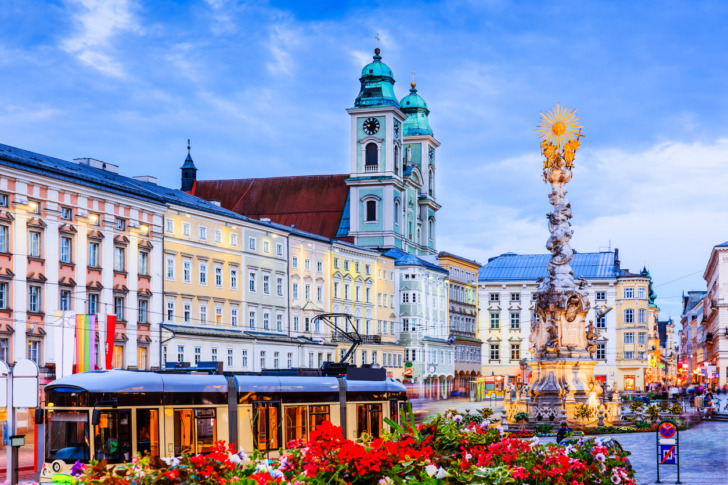
Hauptplatz and the Old Town
Hauptplatz is the big central square of Linz and one of the best starting points for visitors.
It is spacious, lively, and surrounded by cafés, historic buildings, shops, and tram connections.
During the day, it feels very safe and easygoing.
The nearby old town streets are pleasant for walking, especially around Landstraße, the main shopping street.
This is the kind of area where you can wander with a coffee, look up at the architecture, and not feel like you need a complicated safety strategy.
Ars Electronica Center and the Danube Riverfront
The Ars Electronica Center is one of Linz’s most famous attractions and sits right by the Danube.
The area around the river is one of the city’s nicest places for a walk, especially during daylight and early evening.
The riverside paths are popular with locals, cyclists, students, and visitors, which gives the area a comfortable public feel.
As always, keep an eye on your bag if you sit on benches or stop for photos.
Pöstlingberg
Pöstlingberg is one of the safest and most scenic places to visit in Linz.
You can take the mountain tram up for views over the city, the Danube, and the surrounding countryside.
The area is quiet, family-friendly, and peaceful, with the pilgrimage basilica, viewing platforms, and a relaxed pace.
It is a great choice if you want a break from the city center.
Lentos Art Museum and Brucknerhaus Area
The area near the Lentos Art Museum and Brucknerhaus is clean, open, and popular with culture lovers.
It is especially nice during events, concerts, and riverside walks.
The wide public spaces make it feel safe, and it is close enough to the center that you are rarely far from transport or other people.
Places to Avoid in Linz
Linz Hauptbahnhof Late at Night
The main train station is not a dangerous place, but like most European train stations, it deserves a little more caution, especially late at night.
During the day, it is busy, practical, and well-connected.
After dark, you may notice loitering, intoxicated people, or the usual train-station mix of tired travelers and opportunists.
Keep your luggage close, avoid leaving bags unattended, and do not flash cash or phones around the platforms.
Empty Parks and River Paths After Dark
Linz has pleasant green spaces and riverside walking routes, but some can feel isolated late at night.
Volksgarten, parts of the Danube paths, and quieter park areas are fine during the day, but I would not treat them as ideal late-night shortcuts.
The risk is still low, but the combination of darkness, fewer people, and alcohol from nearby nightlife areas can make them less comfortable.
Industrial and Port Areas
The Industriegebiet-Hafen area is not a tourist zone, and there is very little reason for most visitors to wander there.
It is more industrial and practical than dangerous, but it can feel empty, poorly suited for sightseeing, and confusing if you do not know where you are going.
Stick to central Linz, Urfahr, Pöstlingberg, the museum areas, and established neighborhoods unless you have a specific reason to visit.
Nightlife Spots Around Busy Streets
Linz nightlife is not wild by major European standards, but bars and clubs can still produce the usual late-night issues: drunk arguments, loud groups, and people acting less charming than they did at 8 p.m.
Areas around central nightlife streets are generally safe, but solo travelers should avoid confrontations, keep drinks in sight, and plan the ride back before the night gets messy.
Safety Tips for Traveling to Linz
- Stay alert around the main train station. Linz Hauptbahnhof is one of the main places where tourists are more likely to be distracted, tired, or carrying luggage. That makes it a sensible place for pickpockets to look for opportunities. Keep your phone out of your back pocket, do not leave bags beside your feet, and be especially careful when buying tickets or checking schedules.
- Use public transport confidently, but check late-night schedules. Trams and buses are one of the best ways to get around Linz. They are safe, efficient, and much easier than renting a car for city sightseeing. The main thing to watch is timing. Services may be less frequent late at night, so check your route before leaving a restaurant, bar, concert, or event.
- Do not underestimate the Danube. The river is beautiful, but it is still a major waterway. Avoid climbing over barriers, walking too close to the edge after drinking, or trying to access slippery riverbanks. During heavy rain or flood warnings, stay away from low-lying riverside paths and follow local instructions.
- Keep valuables discreet in crowded places. Linz is not a pickpocket capital, but crowded places always change the equation. Busy trams, Christmas markets, festivals, shopping streets, and tourist spots are where you should be more careful. Use a crossbody bag, zip your pockets, and avoid leaving your phone on café tables.
- Choose central accommodation if it is your first visit. For convenience and safety, areas near the old town, Hauptplatz, Landstraße, the Danube riverfront, and Urfahr are good choices. You will be close to transport, restaurants, shops, and attractions. Staying central also reduces the chance of ending up on long, quiet walks back at night.
- Be careful with bikes and trams. Linz is organized, but pedestrians should still pay attention. Trams can be quiet and move through central areas where visitors may be distracted by buildings or signs. Bike paths are also active, especially near the Danube. Look both ways before crossing tracks or paths, even when the city feels calm.
- Avoid isolated shortcuts after dark. Linz is safe enough that you do not need to be paranoid, but it is still better to choose well-lit streets at night. Parks, river paths, underpasses, and industrial stretches can feel uncomfortable when empty. A slightly longer route through busier streets is usually the smarter choice.
- Prepare for winter walking conditions. If you visit in winter, bring shoes with a decent grip. Ice, wet pavement, and slushy sidewalks are more likely to hurt you than crime. Linz can be beautiful in cold weather, especially around seasonal markets, but a fall on icy cobblestones is a very unromantic souvenir.
- Use official taxis or trusted ride options. Taxis in Linz are generally safe, but it is still best to use official taxi stands, hotel-booked taxis, or reputable apps where available. Avoid accepting random rides from strangers outside nightlife areas or transport hubs. It is not a common problem, but it is an easy risk to avoid.
- Carry basic ID and emergency information. Keep a copy of your passport, travel insurance details, and emergency contacts accessible. Austria is orderly, but travelers can still lose bags, miss trains, get sick, or need help after an accident. Having your information ready makes small problems much less stressful.
So... How Safe Is Linz Really?
Linz is genuinely safe for most travelers.
It has the feel of a well-managed Austrian city: good infrastructure, reliable transport, clean public spaces, and a low level of serious crime.
It is not crime-free, of course, and visitors should not confuse “safe” with “nothing can happen.”
Petty theft is still the main concern, especially around transport hubs, crowded events, markets, and shopping streets.
But compared with many larger European cities, Linz is easy to manage.
The city also benefits from being more businesslike and local-feeling than heavily touristed destinations.
That means fewer tourist traps, fewer aggressive street scams, and less of the chaotic atmosphere that sometimes comes with major sightseeing capitals.
Most danger here is situational: walking alone late at night through empty areas, drinking too much, leaving luggage unattended, or getting careless in crowds.
For families, solo travelers, couples, and older visitors, Linz is a comfortable city.
Women travelers should find it manageable and safe, especially in central areas.
The best safety strategy is simple: stay aware around the train station, keep valuables secure, use public transport wisely, and avoid quiet, isolated areas after dark.
Do that, and Linz is likely to feel not just safe, but refreshingly low-stress.
How Does Linz Compare?
| City | Safety Index |
|---|---|
| Linz |
86 |
| Bregenz |
92 |
| Graz |
89 |
| Salzburg |
91 |
| Saint Pölten |
90 |
| Eisenstadt |
87 |
| Zell am See |
93 |
 Seneca Falls Seneca Falls | 79 |
| Danville | 76 |
 Sihanoukville Sihanoukville | 55 |
 Kharkiv Kharkiv | 55 |
| Vermont | 85 |
| Franklinton | 63 |
Useful Information

Visas
Austria is part of the Schengen Area. Many travelers, including visitors from the United States, Canada, the United Kingdom, Australia, and several other countries, can enter for short tourist stays of up to 90 days within a 180-day period without a visa. Travelers who need a Schengen visa should apply before arrival through the appropriate Austrian or Schengen consular process.

Currency
Linz uses the euro. Credit and debit cards are widely accepted in hotels, restaurants, supermarkets, and major shops, but carrying some cash is still useful for small cafés, markets, lockers, or local purchases. ATMs are easy to find. Avoid airport exchange counters when possible, since rates and fees are often worse.

Weather
Linz has four distinct seasons. Summers are warm and pleasant, with light clothing useful during the day and a jacket for evenings. Winters can be cold, damp, and icy, so pack warm layers, gloves, and shoes with grip. Spring and autumn are changeable, so a light rain jacket is a smart addition.

Airports
Linz Airport is located in Hörsching, southwest of the city center, and is the closest airport for travelers flying directly into the region. Many international visitors also arrive through Vienna, Salzburg, or Munich and continue by train. From Linz Airport, travelers can use buses, taxis, shuttles, or train connections via nearby stations.

Travel Insurance
Travel insurance is strongly recommended for Linz, even though the city is safe. A good policy can cover medical emergencies, trip cancellations, lost luggage, delays, and unexpected accidents. Austria has high-quality healthcare, but visitors should not assume every cost will be covered without insurance. For winter travel, check that slips, weather delays, and activities are included.
Linz Weather Averages (Temperatures)
Average High/Low Temperature
| Temperature / Month | Jan | Feb | Mar | Apr | May | Jun | Jul | Aug | Sep | Oct | Nov | Dec |
|---|---|---|---|---|---|---|---|---|---|---|---|---|
| High °C |
3 | 5 | 10 | 15 | 20 | 23 | 25 | 25 | 20 | 14 | 8 | 4 |
| Low °C |
-2 | -1 | 2 | 5 | 9 | 12 | 14 | 14 | 10 | 6 | 2 | 0 |
| High °F |
37 | 41 | 50 | 59 | 68 | 73 | 77 | 77 | 68 | 57 | 46 | 39 |
| Low °F |
28 | 30 | 36 | 41 | 48 | 54 | 57 | 57 | 50 | 43 | 36 | 32 |
Austria - Safety by City
| City | Safety Index |
|---|---|
| Bregenz | 92 |
| Eisenstadt | 87 |
| Graz | 89 |
| Hallstatt | 92 |
| Innsbruck | 90 |
| Klagenfurt | 85 |
| Linz | 86 |
| Saint Pölten | 90 |
| Salzburg | 91 |
| Vienna | 92 |
| Zell am See | 93 |











I didn’t expect to enjoy the mix of old streets and tech spots so much, and the Linzer torte really hit the spot after a long walk along the Danube.
Have you found the nightlife areas to be lively enough, or do they feel a bit too quiet compared to bigger cities around here?