


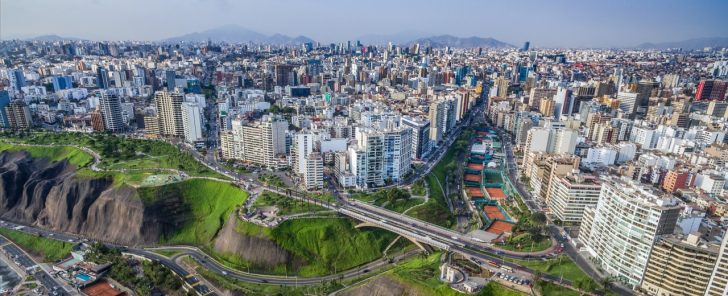
Lima is Peru’s capital and largest city, a major South American cultural, financial, and political hub set in a coastal desert, known for its rich history, vibrant museums, historic colonial center (UNESCO site), unique foggy climate, and as a gateway to ancient sites like Pachacamac.
It’s nicknamed “The Octopus” for its sprawling size and offers diverse experiences, from historical tours to modern culinary scenes,
Lima is a rich mix of pre-Columbian, colonial, and modern influences; it features numerous museums, historic architecture, and diverse cuisine.
A desert city that thrives on coastal fog (garúa) rather than rain, with sunny summers (Dec-Apr) and mild, cloudy winters.
For all the wonder that draws people to visit this city, how safe is it?
We explore that question here.
Let’s start.
Warnings & Dangers in Lima

OVERALL RISK: HIGH
A state of emergency in Lima and Callao (as of late 2025) has increased security, with police and armed forces present. Lima is generally safe for tourists who stay within secure districts like Miraflores, Barranco, and San Isidro, though it requires vigilance due to high rates of petty theft, pickpocketing, and occasional violent crime like armed robbery or express kidnappings.

TRANSPORT & TAXIS RISK: MEDIUM
Using registered taxis or ride-hailing apps is essential for safety, as unregistered street taxis pose risks of robbery or assault. Avoid hailing random taxis, especially at night, and never take uncertified taxis from the airport. The safest transportation includes reputable apps, hotel-arranged transport, or, for longer distances, recognized bus companies like Cruz del Sur.

PICKPOCKETS RISK: HIGH
Pickpocketing is common on public transportation, including the Metropolitano bus system, especially during crowded hours. Pickpocketing and phone-snatching are common in Lima, especially in crowded areas, tourist hotspots (Plaza de Armas), and markets. Motorcyclists often grab phones from their hands or bags from their shoulders, particularly near traffic. Be wary of scams, such as someone spilling something on you or distracting you to steal belongings.

NATURAL DISASTERS RISK: HIGH
As part of the Pacific Ring of Fire, Lima is under constant threat of high-intensity earthquakes, with significant damage expected to infrastructure and residential buildings. Roughly 42% of the Lima area is susceptible to huaicos (mudflows). The Rimac and Chillón river valleys are high-risk zones, particularly impacting informal settlements on the city's outskirts. The region is vulnerable to El Niño-related climatic events, which can trigger unusually intense, short-duration rainfall leading to severe flash flooding and landslides.

MUGGING RISK: HIGH
Mugging risk in Lima is high, with frequent reports of street crime, including armed robberies, even in popular tourist areas like Miraflores and Barranco. Reports indicate an average of 11 muggings per hour. Violent crime has increased, with thieves sometimes targeting tourists and residents. Exercise extreme caution, especially at night, avoid displaying valuables, and use trusted, registered transportation.

TERRORISM RISK: LOW
Remnants of the Shining Path (Sendero Luminoso) are now mainly considered a "narco-terrorist" group focused on drug trafficking and extortion in specific areas, not typically targeting tourists in the capital. Protests, demonstrations, and strikes are frequent in Lima, especially in the historic center. These can turn violent, causing severe disruptions to transportation and, on occasion, closing tourist sites.

SCAMS RISK: HIGH
Robberies or assaults can occur after drinks or food are spiked in bars or restaurants. Pickpockets often work in pairs, using ruses to distract victims. Common tactics include spraying substances on victims (pretending to help clean) or asking questions to create confusion. Express kidnappings occur. Criminals force victims to withdraw money from ATMs, making it essential to avoid using standalone ATMs and only use those inside secure, reputable buildings. It is also not beyond the possibility for weapons to be used.

WOMEN TRAVELERS RISK: MEDIUM
Lima is generally safe for women travelers who exercise a high degree of caution, though risks include pickpocketing, phone snatching, and, less commonly, drugging or sexual assault, particularly at night. Stick to safe neighborhoods like Miraflores, Barranco, or San Isidro, use reputable app-based taxis (Cabify, Uber), and avoid walking alone at night. Beware of accepting food or drinks from strangers, as incidents of drugging to facilitate robbery or assault have occurred.

TAP WATER RISK: HIGH
Tap water in Lima, Peru, is generally not safe to drink directly due to risks of gastrointestinal illness from bacteria, parasites, and potential contaminants in aging pipes. While treated, the water often causes stomach issues for those not accustomed to it, making bottled, boiled, or properly filtered water necessary.
Safest Places to Visit in Lima
- Miraflores
The top choice for tourists, offering hotels, restaurants, parks (like Parque Kennedy & Love Park), shopping, and a strong police presence; very safe for walking.
- San Isidro
Lima’s financial district, known for cleanliness, modern condos, embassies, and green spaces like Bosque El Olivar; very safe and upscale.
- Barranco
A bohemian, artistic district next to Miraflores, popular for street art and nightlife; generally safe, but best to stay aware.
- Magdalena Del Mar
Considered very safe with a good mix of modern and traditional life, excellent cafes, parks, and strong security.
Places to Avoid in Lima
- Callao:
Avoid wandering, particularly after dark, and stick to secure, arranged transport to the airport or cruise terminal.
- La Victoria:
Known for higher crime rates; avoid, especially around crowded markets.
- Central Lima (Cercado de Lima):
Use caution after dark, specifically near the border with Rímac; stick to main, well-lit tourist areas.
- Rímac, El Agustino, and Comas:
These districts are generally considered unsafe for tourists.
- Outer Districts (“Conos”):
Avoid areas like San Juan de Lurigancho, Ate Vitarte, and Villa El Salvador, as they have higher crime rates and offer few, if any, tourist attractions.
Safety Tips for Traveling to Lima
- Follow the news. This is your best chance of knowing about any warnings, whether it is military or weather-related. Don’t leave your hotel without first checking out a news report.
- Don’t walk alone, especially at night. Most tourist areas are safe during the day, but there is always more safety in numbers. There is no place in the city that is considered to be safe at night.
- Steer clear of demonstrations. While it may be interesting to see what is going on, violence often breaks out in these places, and you do not want to be there if that happens.
- Use reputable taxi apps. There are many unlicensed cabs throughout the city, and especially at the airport. Avoid these, as most are scams that will overcharge and set you up for robbery.
- Stay alert for phone snatching. This is especially a problem near streets, where people on motorcycles will grab phones as they pass.
- Don’t play hero. If you are accosted, don’t try to fight. Let them have your money, items, etc, and report the crime as soon as possible.
- Avoid being flashy. Leave the expensive things at home or in your hotel room. Don’t use your phone near a street, and don’t dress in a manner that makes you appear to be wealthy.
- Plan trips for daylight. This is especially important for trips to and from theairport. Use Airport Express Lima or official, pre-booked taxis.
- Only use ATMs inside banks or malls. Any stand-alone ATM puts you at risk of being mugged.
- Program these numbers into your phone. Contact the local police at 105 or the tourist police at 0800-22221. Don’t be afraid to use these numbers when necessary, and don’t be afraid to create a loud reaction to get help if needed.
So... How Safe Is Lima Really?
With constant vigilance and staying only in the tourist areas, there is a medium risk of danger in Lima.
It is not advisable to be alone, especially at night.
Robberies and pickpockets abound, and it is not unheard of for both women and men to be victims of spiked drinks.
There is a high chance of earthquakes, and therefore tsunamis and landslides are common.
If you stay vigilant, listen to the news reports, avoid unregistered taxis, and walk alone at night, you should be able to get by without much trouble.
However, this isn’t a place where a relaxing vacation is likely to be had.
How Does Lima Compare?
| City | Safety Index |
|---|---|
 Lima Lima |
55 |
| Cusco |
60 |
| Iquitos |
71 |
| Puno |
45 |
| Arequipa |
32 |
| Ayacucho |
44 |
 Strasbourg Strasbourg | 74 |
 Faro Faro | 84 |
 Wisconsin Wisconsin | 64 |
 Yekaterinburg Yekaterinburg | 72 |
 Lombok Lombok | 74 |
 Verona Verona | 65 |
Useful Information

Visas
U.S., Canadian, UK, and Australian citizens do not need a visa for tourist visits to Lima, Peru, for up to 90–183 days. A valid passport with at least six months' validity and proof of onward travel (e.g., return ticket) are required. A Virtual Andean Migration Card (TAM) is issued upon arrival, recording the authorized stay duration.

Currency
The currency in Lima, Peru, is the Peruvian Sol (PEN), often referred to as Nuevo Sol. The best places to exchange money are licensed Casas de Cambio (exchange houses) in Miraflores or the historic center, which offer better rates than banks or airports. Avoid changing money on the street to avoid scams.

Weather
Despite its tropical position, the city receives virtually no rain, a stark contrast to other tropical metropolises. Lima instead experiences persistent high humidity, frequent low clouds and fog, and extremely dry weather overall. The temperature shows lows between 58 degrees F and 68 degrees F. The highs range from 66 degrees F to 81 degrees F. The coldest months are July to September. The hottest February and March. Due to the high humidity, you will want to pack items that "breathe" and keep you drier. A sweater may be preferred by some on the colder nights, but usually isn't a necessity.

Airports
Jorge Chávez International Airport is the main international airport serving Lima, the capital of Peru. It is located in Callao, 11 kilometers northwest of the Historic Centre of Lima, the nation's capital city, and 17 kilometers from the district of Miraflores. It is better to book a ride from the airport in an app, as this is where a lot of scams start. The airport has a bank, restaurants, shops, a currency exchange, and is close to the Costa Del Sol Wyndham Hotel. There are also rest stations and VIP lounges. Free wi-fi is available.

Travel Insurance
Travel insurance is not legally required to enter Lima, Peru, but it is strongly recommended due to the high potential for unexpected medical expenses, limited international coverage from home, and risks of trip interruptions. Given that hospitals often require payment upfront and U.S. insurance is rarely accepted, insurance is essential for peace of mind. Private, high-quality care in Lima can be expensive; insurance ensures you are covered for accidents or illnesses. Altitude sickness is common, potentially requiring medical treatment or emergency evacuation. Travel insurance can also offer protection against stolen belongings, passports, or luggage, which is valuable in busy city areas, and coverage for trip cancellations or interruptions due to strikes or unexpected disruptions.
Lima Weather Averages (Temperatures)
Average High/Low Temperature
| Temperature / Month | Jan | Feb | Mar | Apr | May | Jun | Jul | Aug | Sep | Oct | Nov | Dec |
|---|---|---|---|---|---|---|---|---|---|---|---|---|
| High °C |
26 | 27 | 26 | 24 | 22 | 20 | 19 | 19 | 19 | 20 | 21 | 24 |
| Low °C |
19 | 20 | 19 | 18 | 17 | 16 | 15 | 15 | 15 | 16 | 16 | 18 |
| High °F |
79 | 81 | 79 | 75 | 72 | 68 | 66 | 66 | 66 | 68 | 70 | 75 |
| Low °F |
66 | 68 | 66 | 64 | 63 | 61 | 59 | 59 | 59 | 61 | 61 | 64 |
Peru - Safety by City
| City | Safety Index |
|---|---|
| Arequipa | 32 |
| Ayacucho | 44 |
| Cusco | 60 |
| Iquitos | 71 |
| Lima | 55 |
| Puno | 45 |

















Awesome time
Lima is the beat, so much fun, but yes you need to be careful!
Tourists area only
Be safe stick to tourists route then should be fine
Lima can be a great experience
Lima is a beautiful place and it’s not as unsafe as some people make it out to be. Not the safest city that’s for sure but if you know what to do and not to do, you will enjoy it. Sure there can be instances where pickpockets occur and you do need to be careful for those. It just goes with the territory in every major city, in most countries, no? Someone did try to steal from me and I noticed, looked him in the eye and was ready to defend myself when he just started running in the crowd. Where there’s a bigger crowd or a crowded area there will be pickpockets. Make sure they can’t get your phone, wallet, bag, etc.
“Taxi drivers have also been known to participate in robberies and express kidnappings.” – this right here is a problem. It doesn’t happen often but it can happen. I’ve heard of someone (a taxi driver) being arrested for doing this so I know it’s happening. Only use taxis from known companies. I recommend Green Taxi. And keep your eyes peeled for trouble. If your gut tells you there’s something not ok going on, ask for the taxi to stop and take another one.
If you stray from tourist routes or go on dark alleys you are asking for trouble. Muggings, rapes and other violent crimes can happen here so just stay away from bad parts of town and don’t travel alone, at night in those areas. Also be very careful near ATMs. Card skimming can happen. Just make sure no one can see your pin number.
Again, if I was to give you one advice it would be to stay within the tourist routes. This will help you avoid most problems. Use reputed services for hotels, taxis and don’t go out alone at night. And enjoy Lima, it has a lot to offer.
Relatively boring place. Solo female, I heard a lot about crime, ESPECIALLY taxi kidnappings so I was scared to death taking a 3am taxi to the airport (no uber?). I spoke in Spanish and when they ask why my Spanish is so good I say in Spanish that i’ve been studying it in Mexico for the past 2 years. In other words, I’M NOT A RICH U.S. BASED TOURIST–DONT ROB ME! If your Spanish is convincing enough try it! It’s never failed me… (Except for Colombia lol)
Just got back from Lima and the seafood was unreal, especially those little hole-in-the-wall places!
Honestly, Lima’s cool and all with the museums and food, but walking around Miraflores in that chilly garúa at night still had me clutching my phone a bit tighter than I’d like.
Foggy mornings gave me chills and the colonial streets felt magical, but I kept my phone tucked away in crowded spots.
Walking through the garúa into the colonial center made me chuckle at how well the Octopus nickname fits, and I actually felt safer than I expected.
Funny how the garúa makes the colonial streets look cinematic until you’re sitting on a wet bench by the cathedral feeling cold and oddly nervous about walking home alone.
Honestly, I still get jumpy when the garúa rolls in and the historic center goes quiet, that fog presses on your skin and it feels oddly eerie.
Sure, the fog makes everything look mysterious but honestly, walking around some parts at night felt like starring in my own low-budget thriller with zero backup. The colonial buildings are cool until you realize the sidewalks could use some serious fixing.
Stayed a weekend there and yeah the garúa can sneak up on you making the city feel kind of mysterious but cozy at the same time, reminded me of how unpredictable things can be even in a place with so much history around every corner.
I visited Lima last year and while the museums and food were great, I couldn’t help but feel a bit uneasy walking around at night, especially in the more crowded areas.
Spent a week there and yeah, the fog is real thick sometimes, doesn’t help when you’re trying to figure out if a street is sketchy or not.