


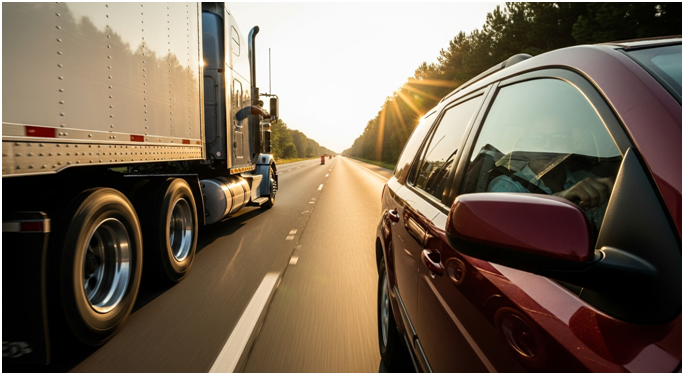
Mississippi is a critical pass-through state for Southern freight, moving massive volumes of commercial traffic between Texas, Tennessee, and the Gulf Coast.
Major arteries like I-10 along the shoreline, I-20 cutting across the center, and I-55 running north to south carry a steady flow of heavy transport alongside everyday commuters.
Sharing these routes with commercial trailers demands heightened situational awareness.
Because of the vast size discrepancy between a passenger car and a fully loaded eighteen-wheeler, the stakes are incredibly high for ordinary motorists.
On Mississippi highways, the challenge isn’t simply the presence of these vehicles—it’s actively managing your proximity to them across long, hot stretches, narrow construction bottlenecks, and routes with limited escape options.
Why Mississippi’s Freight Corridors Demand Extra Attention
Mississippi’s major highways serve as vital pipelines for regional trade, meaning everyday travelers must share the road with massive commercial vehicles.
Knowing how to avoid truck blind spot accidents and understanding the specific dynamics of these routes is essential for anyone driving through the state.
The Highways Travelers Should Watch
Cross the state, and you will quickly find yourself sharing lanes with heavy freight on a handful of corridors known for high volume and congestion:
- The I-55 Corridor: Functions as a critical north-south commercial pipeline, connecting agricultural and industrial hubs directly through the state capital, Jackson.
- The I-20 Corridor: Runs east-west, where heavy commercial transport overlaps with local commuters moving through the Vicksburg and Jackson metro areas.
- The I-10 Corridor: Handles immense port-related traffic along the Coast while carrying tourists headed toward regional beach destinations.
- Rural Two-Lane Routes: Bring unique hazards, as passing opportunities are limited and shoulder space is frequently inadequate.
- The Rural Logging Factor: Unlike standard enclosed freight trailers, rural routes are heavily trafficked by logging trucks. These vehicles pull out slowly from unpaved access roads, carry unsecured overhanging cargo, and can drop bark or debris directly onto the pavement.
The Reality of Traffic Delays
When things go wrong on these high-volume corridors, the impact is immediate and widespread.
Heavy-truck collisions can set off chain reactions, triggering sudden lane closures, medical emergencies, and miles of gridlock.
Missing a traffic alert can easily leave you trapped behind an accident scene for hours with no practical detour available.
How Freight Physics Changes the Driving Equation
Driving near a semi-truck requires a total shift in mindset because basic physics rewrites the rules of the road:
- Stopping Distance: A fully loaded truck weighing up to 80,000 pounds requires much more stopping distance than a standard sedan or SUV. Sudden braking can easily trigger devastating rear-end collisions if smaller vehicles tail too closely.
- Blocked Sightlines: The sheer size of commercial trailers blocks your view of the road ahead, making it much harder to anticipate debris, construction, or slowed traffic.
- Protracted Cleanups: Clearing a truck accident often requires specialized heavy-duty wreckers, so lanes remain closed significantly longer than in standard passenger-vehicle accidents.
Quick-Reference Highway Safety Matrix
| Road Setting | Main Truck-Related Risk | Common Driver Mistake | Safer Response |
|---|---|---|---|
| Interstate Freight Corridors | Blind spots, sudden traffic backups | Riding beside trailers too long | Pass decisively; leave extra following space. |
| Active Work Zones | Abrupt braking, narrowed lanes | Speeding to cut ahead of trucks | Reduce speed early; stay predictable. |
| Rural Two-Lane Highways | Unsafe passing, limited shoulder space | Forcing passes with poor visibility | Wait for clear sightlines; remain patient. |
| Coastal Storm Conditions | Heavy spray, hydroplaning risk | Underestimating visibility loss | Increase following distance; slow down early. |
| Night Driving | Reduced depth perception, fatigue | Misjudging truck speed and gaps | Drive defensively; maximize safety margins. |
Mastering Space and Visibility Around Semis
One of the most persistent dangers for passenger cars on commercial routes is lingering where a truck driver simply cannot see them.
Large trucks have massive blind spots—often called “No-Zones”—on all four sides.
Crucial Safety Rule: The rear blind spot of a commercial trailer can extend up to 200 feet.
If you are tailgating a truck, you are completely invisible to the driver.
Practical Passing Tactics
To stay safe on Mississippi highways, actively manage your vehicle’s position relative to commercial traffic:
- Avoid the right side: The tractor’s design creates an exceptionally dangerous visibility gap on the passenger side. Always prefer passing on the left.
- Pass promptly: Do not linger beside a trailer. Complete your pass efficiently and leave a generous multi-car gap before merging back into the truck’s lane.
- Use the mirror rule: If you cannot clearly see the truck driver’s face in their side-view mirror, they cannot see you.
- Never cut off a truck: Avoid darting tightly in front of a semi near exit ramps or right before construction bottlenecks.
Environmental Hazards: Heat, Storms, and Night Driving
Southern Heat and Mechanical Strain
Deep South summers multiply baseline highway risks.
Extreme heat accelerates driver fatigue along monotonous stretches like the Mississippi Delta.
Furthermore, high temperatures strain vehicles, increasing the likelihood of tire blowouts and engine overheating for both trucks and passenger cars.
Gulf Weather and Flash Flooding
Fast-forming summer squalls along the Gulf Coast can slash visibility in seconds.
The heavy spray kicked up by a speeding semi can completely wash out lane lines and blind surrounding drivers.
Combined with the risk of hydroplaning on rutted pavement or standing water, severe weather demands immediate speed reduction and increased following distance.
The Hazards of Rural Night Driving
After sunset, rural freight corridors become significantly more hazardous.
Limited overhead lighting, slow emergency response times, and wildlife increase the danger.
It is also much harder to judge the speed and closing distance of a large truck at night because headlights and marker lights offer poor depth cues.
Managing Work Zones and Incident Closures
Work Zones Compress Decision Time
Construction zones leave zero room for error.
Narrow lanes hemmed in by concrete barriers eliminate your escape space.
When traffic halts, heavy trucks require a long braking distance, making a boxed-in passenger car highly vulnerable.
State officials strictly enforce reduced speed limits (often 60 mph or lower) in active zones, and fines are doubled for violations.
What to Do When Traffic Stalls
If an interstate collision brings traffic to a standstill, follow these safety steps:
- Slow down early: Activate your hazard lights if you see a backup ahead to warn drivers behind you and prevent a secondary rear-end collision.
- Stay inside your vehicle: Unless your car is on fire or in immediate danger, walking around a live highway lane is incredibly risky.
- Utilize the MDOT toolkit: Rather than blindly trusting standard GPS routing apps that might send you onto unlit, weight-restricted rural bypasses, check MDOTtraffic.com or use the MDOT Traffic mobile app for real-time tracking of interstate truck bottlenecks and lane closures.
- Know the Highway Patrol shortcut: If you witness highly aggressive commercial driving or experience a vehicle breakdown on a remote stretch, dial *47 on your mobile phone to route directly to the nearest Mississippi Highway Patrol dispatch center.
- Beware of Hazmat scenes: Commercial cargo spills often require specialized cleanup crews and cause prolonged closures. Treat any sign of chemical smoke, toxic leaks, or unusual odors with extreme caution and keep your distance.
The Best Safety Tool Is Patience
Ultimately, traveling safely alongside Mississippi’s heavy freight corridors comes down to preparation and patience.
Avoid aggressive schedules that force risky passing maneuvers or speeding.
By respecting the physical limits of large commercial trucks—their massive blind spots, extended stopping distances, and vulnerability to severe weather—you vastly lower your collision risk and ensure a smooth, safe journey.
Additional Resources
 Tourist Safety Tips When Renting a Car or Using Rideshare in Houston
 How a Sports Car Transforms the Road and Opens Up New Routes
 How Houston Local Infrastructure Shapes Tourist Safety
 5 Best Rental Car Companies
 The Road Less Traveled: How to Stay Safe and Stress-Free on a Cross-Border Road Trip
 What Every Traveler Must Know About Car Hire in Cyprus












Last weekend I got stuck behind a logging truck on a narrow two-lane road, and it was nerve-wracking trying to find a spot to pass without risking getting too close to its blind spots.