


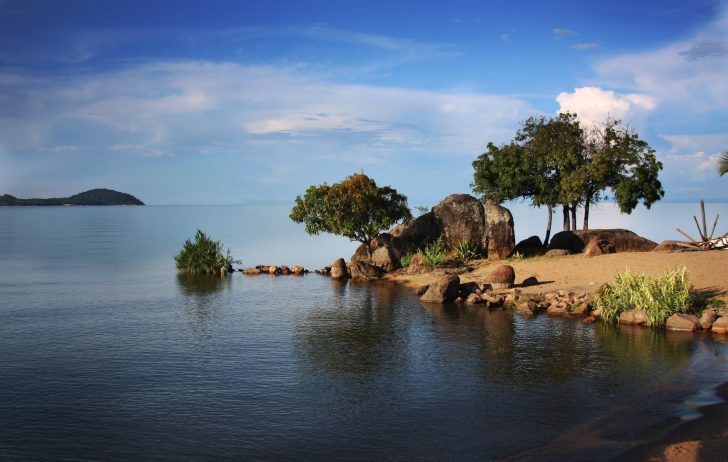
Malawi is home to one of Africa’s largest freshwater lakes, yet it remains one of the continent’s least-visited countries.
It sits in southeastern Africa, bordered by Tanzania, Mozambique, and Zambia, with Lake Malawi stretching almost the full length of its eastern edge.
Despite being landlocked, water plays a significant role in defining its identity.
Historically, Malawi moved from powerful pre-colonial kingdoms into British rule as Nyasaland, gaining independence in 1964.
Its post-independence years were shaped by one-party leadership before transitioning to a multiparty democracy in the 1990s.
Today, it remains politically stable by regional standards, with a strong sense of national identity and community.
Tourism is growing but still refreshingly uncrowded.
Before the pandemic, Malawi welcomed about 800,000 visitors annually, and projections suggest arrivals could reach 1.25 million by the end of the decade.
That growth reflects rising interest in destinations that offer nature, culture, and slower travel without the mass-market feel.
At a high level, people come for water, wildlife, and landscapes, but also for something harder to quantify: approachability.
Malawi feels accessible in a way many countries don’t.
It’s easier to combine beaches, mountains, and safaris in one itinerary, and interactions with locals often become as memorable as the scenery.
While all this sounds like a hidden gem, there are several travel advisories and safety tips we need to discuss before you book a trip.
Warnings & Dangers in Malawi

OVERALL RISK: MEDIUM
The overall risk is medium, but more experienced international travelers might feel like that's a bit much. Violent crime and civil unrest are two of the reasons for the increased advisory levels.

TRANSPORT & TAXIS RISK: MEDIUM
Stick with planned transportation booked through your hotel or tour service, as there's a medium risk with transportation. Driving yourself can lead you to dangerous roads, even road washout risks in the rainy months. Public transportation is crowded, dangerous, and unreliable.

PICKPOCKETS RISK: MEDIUM
This is another medium risk, as petty theft and burglary are common. The United States government advisory notes that carjackings happen more often in Lilongwe and Blantyre. Don't be out after dark walking, driving, or taking cabs. The risk goes up at night.

NATURAL DISASTERS RISK: MEDIUM
Malawi’s main natural risks come from seasonal flooding, landslides, and occasional cyclones during the rainy season from November to April. Heavy rains can wash out roads and isolate rural areas. Drought can also affect water and food supplies. Monitor local forecasts, plan flexible routes, and avoid travel in flood-prone regions during peak rains.

MUGGING RISK: MEDIUM
This is another medium risk, with petty crimes quickly turning violent if met with resistance. Again, you can lower the risk by only traveling during daylight hours and booking rides through your host. The risk is equal in busy tourist areas as it is in more rural areas. Don't let the presence (or lack of) crowds give you a false sense of safety.

TERRORISM RISK: MEDIUM
While traditional international terrorism isn't a big concern here, the risk of civil unrest warrants a medium risk. For example, if you see a demonstration happening, go the other way. These can quickly turn into a dangerous situation. You don't want to be caught in the wrong place at the wrong time.

SCAMS RISK: LOW
It's always wise to read the travel advisories before visiting a new country, but the risk here seems low. Most advisories warn against standard scams like fake romance posts or ATM PIN theft. With the lack of regulated tourism infrastructure, stick to tours that are recommended by the government and don't go shopping for bargain deals at the risk of your safety.

WOMEN TRAVELERS RISK: MEDIUM
Women should proceed with a medium risk, knowing that harassment or catcalling is possible. Read up on the etiquette guides on how to dress and behave in this conservative country to avoid drawing attention to yourself. As with anyone else, don't go out after dark, even if you are in a large group.

TAP WATER RISK: HIGH
The risk is high. Don't drink the tap water here or consume ice cubes made from tap water. You'll need to specifically ask for bottled water at restaurants or risk getting some unpotable water served to you.
Safest Places to Visit in Malawi
The Department of Tourism in Malawi runs the official website visitmalawi.mw.
The “Plan Your Visit” section has a lot of practical information, but the Explore and Experience tab gives you an overview of places to visit in Malawi.
Lilongwe and Blantyre are the main entry points and transport hubs.
They’re useful for markets, museums, and organizing onward travel, but most visitors treat them as launchpads rather than destinations.
Lake Malawi is the main draw and runs along most of the eastern side of the country.
Cape Maclear and Nkhata Bay are popular bases for swimming, snorkeling, kayaking, diving, and beach time.
Likoma and Chizumulu islands offer quieter stays, clear water, and easy access to reef fish.
Senga Bay and Salima are closer to Lilongwe and work well for short lake breaks.
For cooler air and scenery, head into the highlands.
Zomba Plateau has hiking routes, viewpoints, forest trails, and waterfalls.
Mount Mulanje is the country’s top hiking destination, with granite peaks, multi-day hikes, and tea estates at its base.
Thyolo and the surrounding tea-growing areas add scenic drives, estate visits, and access to forest reserves.
Wildlife experiences are centered in Liwonde National Park and Majete Wildlife Reserve, where you’ll see elephants, hippos, crocodiles, antelope, and increasing numbers of big cats.
Nkhotakota Wildlife Reserve is more remote and better for travelers who want fewer vehicles and a more rugged safari.
Lengwe and Kasungu offer additional park options, depending on your route.
Places to Avoid in Malawi
While no part of the country falls under a higher than Level 2: Exercise Increased Precautions risk by other governments, it’s worth knowing the differences in risks between cities and rural regions.
First, don’t travel at night.
That goes for anywhere in busy areas and rural areas.
Poor lighting, unpredictable road conditions, limited emergency services, and higher crime risk make both city streets and rural roads far more dangerous after dark.
Even on guided tours, wildlife in Malawi is exactly that: wild.
You’re dealing with elephants, hippos, buffalo, crocodiles, and big cats, not zoo animals.
Animals don’t follow rules, vehicles break down, and medical care can be far away.
Follow your guide’s instructions, stay in the vehicle when told, and never approach animals for photos.
Another place to avoid is any area where a demonstration is happening.
The civil unrest can quickly explode into something more dangerous.
Steer clear of angry crowds.
Safety Tips for Traveling to Malawi
- Malawi’s national police force is the Malawi Police Service. For emergencies, dial 997 nationwide. Response times vary, especially outside cities, so don’t assume help will arrive quickly in remote areas. If you’re staying at a lodge or hotel, staff can often help contact authorities or medical services faster than going it alone.
- Malawi doesn’t have a centralized nationwide alert app for disasters or security events. Major updates usually come through local radio, government announcements, embassies, and international news. Keep a working local SIM, monitor the weather during the rainy season, and register with your embassy for security updates. When in doubt, ask your hotel what’s happening locally.
- Foreign visitors can drive with a valid home license, though some rental agencies may require an International Driving Permit. Expect police roadblocks across the country. They’re common and usually routine. Carry your license, passport copy, and rental documents at all times. Roads vary widely in condition, and night driving is best avoided.
- Yellow fever vaccination is required if you’re arriving from a country with a yellow fever risk. Routine vaccines should be up-to-date, and travelers are strongly advised to consider hepatitis A and B, typhoid, and rabies, depending on activities. Malaria is present year-round, so take prophylaxis seriously and use insect protection consistently.
- English is an official language and is widely used in government, tourism, and business. Chichewa is the most commonly spoken local language, especially in daily life. In cities and tourist areas, you’ll get by easily in English. In rural areas, communication may be more limited, but people are generally patient and helpful.
- Some travelers have experienced serious complications after seeking care from non-traditional healers in Malawi. Stick to licensed clinics, hospitals, and recognized medical providers, especially for emergencies. If something feels off, trust your instincts and seek professional care immediately. This is also where solid travel insurance and evacuation coverage become more than a nice-to-have.
- Malawi’s laws criminalize consensual same-sex relationships, with penalties that can include long prison sentences. While enforcement has been officially paused for years, the legal framework still exists, and public attitudes remain largely conservative. LGBTQ+ travelers should be discreet, avoid public displays of affection, and be mindful that what feels normal elsewhere can carry real risks here.
- Tourism infrastructure is improving but still limited, especially outside major towns. Power outages, fuel shortages, and spotty cell service are common. In remote areas, you should be prepared to self-manage basic problems. Carry extra water, cash, offline maps, and a charged phone. This is a beautiful country, but it rewards travelers who plan.
- Lake Malawi is stunning, but not all ferries meet modern safety standards. Some vessels are poorly maintained or dangerously overcrowded. If a boat looks unstable, lacks life jackets, or feels over capacity, walk away. Choose reputable operators, ask your lodge for recommendations, and never let scheduling pressure talk you into a risky crossing.
- Old dress laws banning short skirts or long hair on men no longer apply, but Malawi remains socially conservative. Modest clothing is appreciated, especially in villages and rural areas. Covering shoulders and avoiding very short or revealing outfits helps you blend in and avoid unwanted attention. Respect goes a long way here, and it’s usually returned.
So... How Safe Is Malawi Really?
Most countries offer travel advisory levels for all other countries, usually based on a four-tiered scale where Level 1 is the lowest risk and Level 4 is the highest risk.
The United States, Canada, and Australia rank Malawi as Level 2: Exercise Increased Caution.
The United Kingdom usually doesn’t issue ranking levels unless a particular region or country ranks at Level 3 or higher.
For Malawi, the rankings across the board call for increased precaution due to crime and civil unrest.
While it’s not a ranking that should cause you to cancel your plans, it’s enough to take note of the risks we’ve discussed in this article.
Beyond standard safety risks in busy areas, you also face infrastructure and wildlife/wilderness risks in remote areas.
Then there are the cultural concerns that lean very conservative from how you might experience life where you currently live.
Be sure to read the latest travel advisories and reviews of vendors before planning a trip.
The risk level can go up during periods of increased civil unrest or politically-motivated demonstrations.
You’ll need more than common sense to enjoy a trip here, but there are plenty of ways to take additional precautions to enjoy what Malawi has to offer.
How Does Malawi Compare?
| Country | Safety Index |
|---|---|
 Malawi Malawi | 53 |
 Qatar Qatar | 84 |
 South Korea South Korea | 86 |
 Trinidad and Tobago Trinidad and Tobago | 43 |
 Anguilla Anguilla | 70 |
 Burkina Faso Burkina Faso | 41 |
 Dominica Dominica | 80 |
 Malta Malta | 78 |
 Maldives Maldives | 46 |
Useful Information

Visas
Malawi updated its visa rules in 2026, and requirements now vary more by nationality and purpose of travel. Some travelers can still enter visa-free, while others must apply in advance. Because several advisories haven’t caught up yet, always verify directly with the Department of Immigration and Citizenship Services at www.immigration.gov.mw before you book.

Currency
Malawi uses the Malawian kwacha (MWK). Cash is king outside major hotels and cities, and ATMs can be unreliable. Bring a debit card and some backup USD or euros for exchange. Credit cards are accepted in upscale lodges and banks, but don’t assume tap-and-go works everywhere.

Weather
Malawi has two main seasons. Dry season runs roughly from May through October, with cooler nights and prime safari conditions. The rainy season hits from November through April, bringing heat, humidity, and occasional flooding. Lake Malawi stays warm year-round. Pack layers for evenings and plan activities around the midday sun.

Airports
Most international travelers arrive at Kamuzu International Airport in Lilongwe or Chileka International Airport in Blantyre. Flights often connect through Johannesburg, Nairobi, Addis Ababa, or Lusaka. Domestic flights exist, but schedules can change. Build in buffer time for connections and confirm onward flights before arrival.

Travel Insurance
Travel insurance isn’t legally required, but don't travel without it. Medical facilities outside major cities are limited, and evacuation to South Africa is often the real emergency plan. Choose a policy that covers medical treatment, evacuation, trip delays, and theft. Cheap coverage becomes expensive fast if something goes wrong. Don't expect tour guides to cover your insurance risks. If you're doing higher-risk activities, an adventure insurance rider gives you peace of mind if things go sideways.
Malawi Weather Averages (Temperatures)
Average High/Low Temperature
| Temperature / Month | Jan | Feb | Mar | Apr | May | Jun | Jul | Aug | Sep | Oct | Nov | Dec |
|---|---|---|---|---|---|---|---|---|---|---|---|---|
| High °C |
26 | 26 | 26 | 25 | 25 | 24 | 24 | 26 | 29 | 31 | 30 | 28 |
| Low °C |
18 | 17 | 16 | 15 | 13 | 11 | 11 | 13 | 16 | 19 | 19 | 19 |
| High °F |
79 | 79 | 79 | 77 | 77 | 75 | 75 | 79 | 84 | 88 | 86 | 82 |
| Low °F |
64 | 63 | 61 | 59 | 55 | 52 | 52 | 55 | 61 | 66 | 66 | 66 |












I jut,pit
I just got back and I got pick pocketed 4 time smas the cops did nothing about it
Really sorry for that….It is not common in malawi
We are friendly people
You just get to be unlucky if someone attacks you (steal from you) in Malawi because they are the most friendly people you’ll ever meet. Such a beautiful country with kind hearted people
There are friendly people for sure but there are also people who will take advantage of you. Maybe I was one of the unlucky ones you speak of. I had several issues with very rude, shifty people. I can tell you, I will not be going back anytime soon! Maybe I just had a target on my back…
Malawian People have good values
Malawi is not a place for Bars and nightclubs. Local people are raised conservatively. Most of which don’t drink alcohol. Not all people living in Malawi are from Malawi. Many are from naigbouring African countries which don’t share the same values as Malawians. Malawians are a peaceful nation. I Love Malawi ❤️
Malawi Is Not A Bad Place
Malawi Is Just Safe
STAY IN A 5 STAR HOTEL ONLY
LEARN THE LANGUAGE OR DO NOT VISIT AS A TOURIST!
Safe
Malawi Is Safe
Majority of the population understand English
Malawi is one of the nicest countries I’ve been to. I would recommend visiting, the people there are so welcoming and they are keener to help you if you are a foreigner. I would say that Malawi is one of the safest countries I’ve visited.
Loved Malawi
I was in Malawi in 2016, an older (49) woman traveling alone. I spent a week traveling from Tanzania to Zambia, mostly along the lake. I used the local transport (vans) and found myself often given the “privilege” of riding up front (where there were just 2 passengers and the driver), though at times I was squished in a middle seat, sometimes with a random child placed on my lap. While not comfortable, it was a great way to meet people (squashed next to them for a few hours). No matter where I got off, it was easy to find a hotel in the area where the most “deluxe” room was reasonably priced, with electricity and water. As a white woman, I was met with curiosity, but never felt threatened. English was widely spoken, and people were happy to point me in the right direction.
I’ve been curios about seeing Africa’s quieter corners, and Malawi’s nature and lakes sounded beautiful. Reading the safety info, especially about health precautions and basic travel challenges, made me appreciate that planning here would take more thought than most places.