


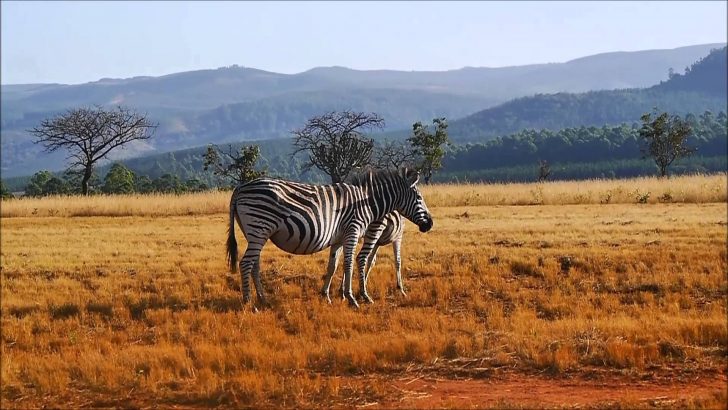
Eswatini may be small, but it packs a surprising punch for a country most travelers can barely find on a map.
Wedged between South Africa and Mozambique, this landlocked kingdom is known for its lush mountains, traditional villages, and strong sense of heritage that hasn’t been diluted by mass tourism.
Formerly called Swaziland, it gained independence from Britain in 1968 and changed its name to Eswatini in 2018 to honor its native identity.
Home to about 1.2 million people, the country welcomes roughly a million visitors each year who come for wildlife viewing, cultural festivals, and scenic drives through rolling highlands.
Travelers explore game reserves like Hlane Royal National Park, wander markets in Mbabane and Manzini, and learn about Swazi traditions in Ezulwini Valley.
Hiking, birdwatching, and community tourism projects are growing fast, giving Eswatini a more personal, small-scale feel than larger African destinations.
But while it’s peaceful and welcoming, Eswatini is still an absolute monarchy, one of the last in the world.
That means laws, customs, and even free speech rules may not align with what visitors are used to.
Respecting local traditions isn’t just polite here; it’s part of traveling safely and responsibly in the kingdom.
Let’s walk through how to do just that!
Warnings & Dangers in Eswatini

OVERALL RISK: MEDIUM
Eswatini is one of Africa’s calmer destinations, but it still has a medium risk. Civil unrest and crime are the biggest concerns. Use increased caution after dark and in cities like Mbabane and Manzini, especially after dark. Rural and park areas are generally safe but lack quick emergency services. GO with a trusted tour guide.

TRANSPORT & TAXIS RISK: MEDIUM
Driving is on the left, and roads outside major routes can be rough or poorly lit. Avoid night driving due to animals, pedestrians, and unmarked vehicles. Public minibuses are cramped and erratic; licensed taxis or private transfers are safer. Always agree on a fare before starting your trip. This is a medium risk, so don't let your guard down.

PICKPOCKETS RISK: MEDIUM
The U.S. travel advisory of Eswatini says that petty crime is common, and anyone who resists a thief could face violence. Hide signs of wealth and do your best to blend in. Keep valuables out of plain sight.

NATURAL DISASTERS RISK: LOW
The risk is low, though heavy rains between November and March can trigger flash floods and slippery mountain roads. This is another reason why a tour guide is the safest way to explore, since they know the landscape.

MUGGING RISK: MEDIUM
Muggings and carjackings happen too often, and that's why this is a medium risk. Again, blending in and hiding signs of affluence can help deter any would-be criminals, but also avoid traveling alone and staying inside after dark.

TERRORISM RISK: LOW
The terrorism risk in Eswatini is low. There are no known active extremist groups, though small-scale political unrest sometimes flares up near protests or border crossings. Avoid demonstrations, since civil unrest is another reason this is a medium risk.

SCAMS RISK: LOW
Scams are uncommon, but the ones that do happen mostly involve inflated prices for tourists or fake tour offers. Stick with reputable operators and confirm bookings directly. Be skeptical of anyone promising discounted safaris or “special permits” you haven’t heard of elsewhere.

WOMEN TRAVELERS RISK: MEDIUM
Women should use caution here, as it's still a medium risk. Dress conservatively and solo travelers might experience some harassment or catcalling. Reliable guides and established accommodations enhance safety and comfort.

TAP WATER RISK: MEDIUM
Don't drink tap water or use ice cubes of tap water. While some water might be safe, it's generally not potable water across the country. Even if it's safe, it won't taste good. It’s fine for brushing teeth, but not ideal for drinking straight from the tap. Bottled water is cheap and easy to find across the country.
Safest Places to Visit in Eswatini
The African Travel & Tourism Association hosts the website thekingdomofeswatini.com.
Use this site to find legit tour guides and trip planners.
Central Eswatini is the easiest starting point, with the capital city of Mbabane and the Ezulwini Valley.
This area combines culture and convenience, home to the Mantenga Cultural Village, Mlilwane Wildlife Sanctuary, and plenty of craft markets worth browsing between game drives.
Head northwest for cooler air and adventure in the highlands.
Malolotja Nature Reserve and Sibebe Rock make this region popular for hiking and camping.
Waterfalls, forests, and mountain views replace city noise here.
To the northeast, the focus shifts to conservation and community.
Mlawula Nature Reserve and Mbuluzi Game Reserve offer quieter safaris with self-drive options and eco-lodges that put your tourism money directly into local hands.
In the southeast, you’ll find Eswatini’s best-known parks: Hlane Royal National Park and Mkhaya Game Reserve.
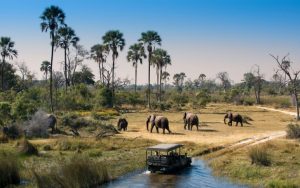
This is big-animal territory, with rhino, elephant, and lion sightings that rival larger safari destinations.
Finally, the southwest offers scenic road trips through rolling hills, valleys, and historic sites like the Nsangwini Rock Paintings.
Piggs Peak and the Maguga Dam are perfect for travelers who prefer views and culture over wildlife.
Places to Avoid in Eswatini
Eswatini is generally calm, but a few areas deserve caution.
Avoid the eastern border zones near Mozambique at night, where petty crime and smuggling can make things tense.
The capital, Mbabane, and nearby Manzini are safe by day but not ideal for wandering alone after dark.
Roads outside major towns are poorly lit, and animals or stalled vehicles often appear without warning.
Hitchhiking is risky, and walking alone on rural roads after sunset is asking for trouble.
Beyond that, the biggest mistake you can make is ignoring local laws or mocking traditions.
Eswatini is a monarchy with strict respect for authority, and what might feel like casual criticism elsewhere could cause real offense here.
When in doubt, stay polite, stay alert, and remember you’re a guest in one of Africa’s few remaining kingdoms.
Safety Tips for Traveling to Eswatini
- The Royal Eswatini Police Service handles law enforcement across the country, including borders and traffic. In an emergency, call 999 for police, 977 for ambulance, or 933 for fire. Save these in your phone and note that rural response times can be slow, so alert your hotel or guide if you need help fast.
- You can stay informed by enrolling in your home embassy’s traveler alert system and following local radio, TV, or social media updates. Eswatini occasionally experiences protests and road closures, so always check for advisories before heading out. Local hotels and tour operators are often quick to share safety information too.
- You can drive in Eswatini using your valid home-country license along with an International Driving Permit. Drive on the left, watch for livestock on rural roads, and avoid driving at night. Police checkpoints are common, so keep your passport, license, and rental papers handy. If you choose to drive, get a 4X4 vehicle.
- No vaccines are required unless you’re traveling from a yellow fever area, but hepatitis A, typhoid, and routine boosters are smart. Malaria risk is low in the highlands but higher in the eastern lowveld near Mozambique. Bring insect repellent and talk to your doctor about antimalarial medication if you’ll be in rural areas.
- Eswatini has two official languages: siSwati and English. You’ll have no problem getting around since English is used in schools, government, and most tourist settings. Learning a few siSwati greetings earns instant goodwill—locals appreciate visitors who make the effort to say “sawubona” (hello).
- Electricity supply in Eswatini can be unpredictable, especially outside urban centers. Load shedding and aging infrastructure lead to rolling blackouts, particularly during peak evening hours. Most hotels and lodges have generators, but it’s smart to pack a power bank or flashlight for when the lights go out.
- Cell coverage is solid in cities and along major roads, though it fades fast in mountain areas. Local SIM cards are affordable and usually a better deal than roaming. Bring an unlocked phone and confirm it supports local bands. Data service is reliable enough for maps and messaging apps in most regions.
- Pick a guide through your hotel or a licensed tour operator, not someone who approaches you on the street. Ask about their certification, insurance, and first-aid training. A good guide will know local customs, safety protocols, and how to handle wildlife encounters or border checkpoints without issues.
- Eswatini is an absolute monarchy, and public criticism of the royal family is seen as deeply disrespectful and, in some cases, illegal. Locals hold the king and traditions in high regard, and negative comments can land you in awkward or even risky situations. It’s best to keep political opinions to yourself and stay focused on the culture and scenery.
- Eswatini’s reserves are home to everything from antelopes to rhinos. Keep your distance, never feed animals, and follow your guide’s instructions. Stay inside vehicles during game drives and don’t block animal paths for photos. Wild animals are unpredictable, and even the cute ones can bite, charge, or kick when stressed.
So... How Safe Is Eswatini Really?
We reviewed the government travel advisories for Eswatini, so we’ll start there.
The United States, Canada, and Australia all list it as Level 2: Exercise Increased Caution.
That’s the second-lowest of a four-tiered scale.
The biggest risks are civil unrest and crime, according to the advisories.
They also note that police aren’t always helpful or productive if you’ve been the victim of a crime.
This is really a country that has more risks about “what if” than “what is.”
Political tensions can lead to demonstrations or violence.
Power can be shut off without notice.
Even jaywalking can lead to being detained.
You might read elsewhere that “Eswatini is one of the safest countries in Africa.”
That statement says more about how dangerous other countries are and less about how safe Eswatini is.
This is a poor country, and poverty can lead to crimes of desperation.
Signs of affluence can make you a target.
Every activity or adventure gets even riskier after dark.
Make your plans during daylight hours and be prepared to lose power and mobile service at any time.
Despite the risks, tourism is growing here, with nearly a million people visiting in 2023.
Hopefully, we’ve helped you get a better idea of how safe it is and if you want to mitigate the risks of a visit.
How Does Eswatini Compare?
| Country | Safety Index |
|---|---|
 Eswatini Eswatini | 47 |
 Luxembourg Luxembourg | 74 |
 Algeria Algeria | 44 |
 Senegal Senegal | 45 |
 Somalia Somalia | 16 |
 Barbados Barbados | 80 |
 Guatemala Guatemala | 53 |
 Kyrgyz Republic Kyrgyz Republic | 38 |
 Zimbabwe Zimbabwe | 53 |
Useful Information

Visas
Most countries do not need a visa in order to enter Eswatini. Visitors will usually receive entry permission valid for 30 days. Make sure your passport. Make sure your passport is valid for at least 3 months from the date of entry into Eswatini and has at least 2 blank pages. If you are not sure about your visa status, visit www.doyouneedvisa.com which will let you know whether or not you need visa based on your nationality and the country you want to visit.

Currency
There are two official currencies in Eswatini: South African rand and Swazi lilangeni. ATMs are common throughout the country, while credit cards might not be accepted in rural areas so it is wise to have some cash with you at all times.

Weather
The climate of Eswatini varies from tropical to near temperate depending on the area of the country. In general, rain is usually expected during the summer months, often times accompanied by thunderstorms. Winters are usually mild and dry.

Airports
King Mswati III International Airport, originally named Sikhuphe International Airport is an airport in Eswatini. It is the only international airport in Eswatini accepting commercial flights with others being private and unpaved.

Travel Insurance
Just like anywhere else, we recommend getting travel insurance when traveling to Eswatini, since it covers not only the costs of medical problems, but also theft and loss of valuables.
Eswatini Weather Averages (Temperatures)
Average High/Low Temperature
| Temperature / Month | Jan | Feb | Mar | Apr | May | Jun | Jul | Aug | Sep | Oct | Nov | Dec |
|---|---|---|---|---|---|---|---|---|---|---|---|---|
| High °C |
32 | 32 | 31 | 29 | 27 | 25 | 25 | 27 | 28 | 30 | 30 | 32 |
| Low °C |
17 | 17 | 16 | 12 | 10 | 9 | 9 | 11 | 14 | 16 | 17 | 18 |
| High °F |
90 | 90 | 88 | 84 | 81 | 77 | 77 | 81 | 82 | 86 | 86 | 90 |
| Low °F |
63 | 63 | 61 | 54 | 50 | 48 | 48 | 52 | 57 | 61 | 63 | 64 |














Get your facts RIGHT!
Please get your facts right people. What is the use of destroying a country’s safety reputation? for facts and info to be rendered under your “warnings and risks” subtopic, kindly contact the Eswatini Tourism Authority (www.thekingdomofeswatini.com).
Why would you trust the paid mouthpieces of the government?
Well worth a visit
As a family of four we’ve just left Eswatini. We had a great time. Not once did we feel threatened and found the locals to be very friendly. There is abject poverty to be seen all round and I was definitely a curiosity with my red hair but I’d happily travel back there again.
Potholes are everywhere as are cattle, goats and chickens grazing on the sides of the road. You also need to watch out for locals walking on poorly lit roads. We actually found most drivers were excellent.
In a nutshell we would happily travel back again.
Very Safe
This is exaggerated. It’s a safe country full of friendly and helpful locals. They may not be so diverse but they’re used to different nationalities so anyone from anywhere will be treated the same. Also the remark about “unlike the neighbouring countries” is ridiculous. In the region out of 10 countries 7 are safe and laid back by all Standards. Obviously South Africa distorts the perception
I’m born and raised in New York City. I’ve been traveling to Swaziland for a decade. Safest place I’ve ever been! Friendliest people I’ve ever encountered. I find unbelievable that this site would say anything but that about Eswatini.
They have too it’s from Europe people
safest country
i am a swazi born and breed in Eswatini
most of what is written here is incorrect, especially the review on crime. you can flash all your belongings all you want during the day and no one will touch you and , obviously at night you shouldnt.
“mugging and robberies” very rare especially to tourists, on that part our police are doing a very good job.
overall we are very cool people
Having gone here a few times, to Eswatini… I have had issues. I am not sure if this was down to my appearance or what (I am mixed). I had someone steal my belongings right in front of me and run off with them. Another time, I was mocked by a group of younger men and then one of them made me trip and lose a bag in a body of water near to where I was standing.
Check their markets for handmade gems
Farm animals mixed with small kids were all around in the rural areas while cities like Mbanane are an eclectic mix of modern architecture and good food. I’ve found it rather safe and a pleasure to engage in conversations with locals, they were always smiling and willing to spend a couple of minutes helping us to get from one point to another.
Been there in 2020… stayed for one month… really enjoyed my stay…very friendly…safe
This broke down Eswatini’s risks and practical tips in a way that actually helped me picture walking around Mbabane or heading into a park. I appreciated the attention to crime cautions and local customs felt more ready for a real trip.
Exploring Eswatini was such an eye-opener; the vibrant markets in Mbabane were full of character, and I really appreciated seeing the strong sense of community there. It’s refreshing to visit a place where the culture feels so alive and untouched by the usual tourist traps.
I had no idea Eswatini was such a hidden gem! The mix of lush landscapes and deep-rooted traditions sounds like a dream for anyone who loves adventure and culture.
Spent a long weekend doing the Ezulwini Valley drives and poking around the Manzini market, and it honestly felt like visiting a cousin’s place that somehow never got overrun by tour buses.
Strolling through Mbabane’s market stalls and smelling grilled corn always hits me with a weird mix of nostalgia and calm.
Ezulwini’s mornings stick with me, the low cloud hugging the ridges, the markets waking up slow, and this strange mix of pride and worry about how tightly things are run.
I never expected to be so moved by the quiet beauty of those rolling highlands and the warmth in local markets.