


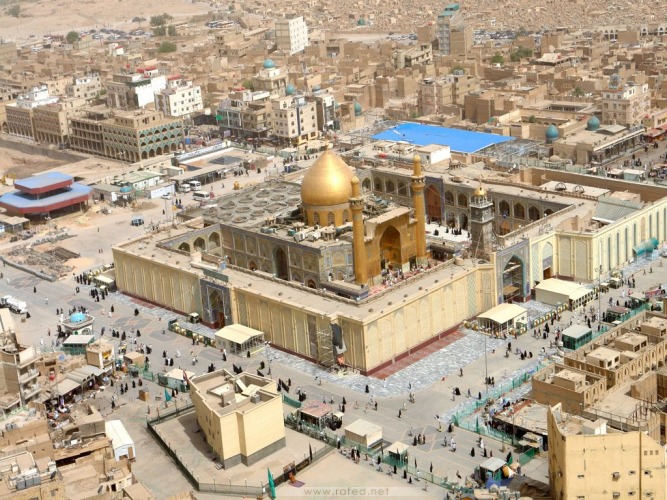
Najaf sits in central Iraq, southwest of Baghdad, on the edge of the desert and at the heart of one of the most important pilgrimage landscapes in the Shia Muslim world.
For many travelers, Najaf is not a casual city break but a destination with deep religious meaning, anchored by the Imam Ali Shrine and centuries of scholarship, devotion, and history.
It is a city that feels spiritually weighty, intensely local, and very different from the more familiar tourist circuits of the Middle East.
At the same time, Najaf exists inside a country that still carries serious security concerns, which means travelers need to separate the atmosphere inside the holy city from the broader risk picture in Iraq.
That contrast is what makes Najaf so unusual: sacred, fascinating, welcoming in many settings, but never a place to approach carelessly.
Warnings & Dangers in Najaf

OVERALL RISK: HIGH
Najaf itself can feel calmer than many outsiders expect, especially around major religious sites where security is tighter. But the bigger issue is Iraq’s overall risk environment, which includes terrorism concerns, regional instability, and limited consular support for some foreign travelers. For that reason, Najaf is not a low-stress destination, even if parts of the city feel orderly and closely monitored.

TRANSPORT & TAXIS RISK: MEDIUM
Transport in Najaf is manageable, but it requires caution. Airport transfers, hotel-arranged drivers, and known taxi services are much safer bets than accepting random rides on the street. Traffic can be chaotic, signage may be inconsistent, and language barriers can complicate things. During major religious events, congestion becomes a real issue, and moving around the city can take much longer than expected.

PICKPOCKETS RISK: MEDIUM
Pickpocketing is not the first danger most people associate with Najaf, but crowded pilgrimage zones always create opportunities for petty theft. Around shrine entrances, markets, transport hubs, and large gatherings, distracted visitors can become easy targets. The risk rises sharply during peak religious seasons when streets fill with pilgrims and personal space disappears almost completely.

NATURAL DISASTERS RISK: LOW
Najaf is not known for major natural disasters on the scale of earthquake belts or cyclone zones. The more realistic environmental concerns are extreme heat, dust, dehydration, and occasional sandstorms. In summer, temperatures can become brutal, and that creates a genuine health risk for travelers who underestimate the climate or spend too long outdoors without water and shade.

MUGGING RISK: MEDIUM
Street mugging is not the city’s defining safety issue, especially in heavily trafficked religious areas, but it is still wise to avoid quiet streets after dark, poorly lit peripheral districts, and unnecessary wandering away from central zones. Travelers who look lost, visibly wealthy, or isolated face more risk than those moving with purpose and using trusted local transport.

TERRORISM RISK: HIGH
This remains the most serious category. Even though Najaf is a major religious center with layered security around important sites, Iraq as a whole continues to face terrorism related concerns and broader instability. A city can feel calm on the ground while still sitting inside a high-risk national environment. That is the key point travelers should understand before going.

SCAMS RISK: MEDIUM
Najaf is not a classic scam capital, but visitors can still encounter inflated taxi fares, overcharging in shops near major religious sites, and unofficial “helpers” offering guidance, exchange assistance, or transport. None of this is especially exotic, but it can be annoying and expensive. Clear pricing, small bills, and prearranged services reduce most of the hassle.

WOMEN TRAVELERS RISK: MEDIUM
Women can visit Najaf, but it is a conservative city, and behavior that feels normal in many destinations may stand out here. Modest dress is important, especially near shrines and religious institutions. Solo women should plan transport carefully, avoid isolated movement at night, and stay in reputable accommodations. A respectful presentation goes a long way in helping travel feel smoother and safer.

TAP WATER RISK: HIGH
Drinking tap water in Najaf is not a good gamble for most visitors. Even where local systems function, travelers can be more sensitive to water quality, storage conditions, and sanitation differences. Bottled sealed water is the smarter choice, and it is also wise to avoid ice from uncertain sources and to use bottled water when brushing your teeth if you have a sensitive stomach.
Safest Places to Visit in Najaf
Imam Ali Shrine Area
The area around the Imam Ali Shrine is the city’s emotional and spiritual center, and it is also one of the places where travelers are likely to feel the strongest visible security presence.
Because it draws huge numbers of pilgrims, the zone is heavily watched, busy, and structured around movement on foot.
For visitors who want to experience Najaf’s heart, this is the most natural place to begin.
Stay alert in crowds, but this is also where the city feels most organized for outsiders.
Old City Streets Near the Shrine
The historic lanes surrounding the shrine are full of religious bookshops, small eateries, clerical institutions, and local commerce.
These streets are lively and usually safer than more isolated outer districts simply because there are always people around.
For a traveler, that matters.
Busy streets with families, pilgrims, and shopkeepers generally feel more comfortable than empty ones.
This is the best area for slow walking in daylight and early evening.
Reputable Hotels and Main Pilgrim Corridors
If you are staying in Najaf, the safest choice is usually to remain close to major pilgrimage routes and known hotels that regularly host domestic and international visitors.
These areas tend to have better local knowledge, easier access to trusted transport, and more predictable routines.
In practical terms, this means less improvisation, and less improvisation usually means less risk.
Wadi Al Salam Periphery With Local Guidance
Wadi Al Salam, one of the world’s most famous cemeteries, is an important and striking place, but it is best approached with context and local guidance rather than by wandering alone.
Visiting with a knowledgeable guide or trusted local contact helps you avoid confusion and keeps the experience respectful.
It is interesting, memorable, and far more manageable when planned properly.
Places to Avoid in Najaf
Isolated Outskirts After Dark
The biggest mistake in Najaf is assuming that because the shrine district feels active and protected, the whole city operates the same way.
It does not. Peripheral areas and quieter outer roads become much less comfortable after dark, especially for foreign visitors who do not know local patterns.
There is little reason for tourists to casually drift into these zones, and even less reason to do so at night.
Unofficial Transport Pickup Points
Avoid random ride offers outside crowded areas, especially if the driver seems pushy or the price is vague.
This is not about paranoia so much as common sense.
Unofficial pickup points can lead to fare disputes, confusion, or being taken on an unnecessarily long route.
Use hotel-arranged drivers, clear taxi stands, or transport recommended by trusted locals.
Extremely Crowded Festival Bottlenecks
During major pilgrimage periods, some areas are not dangerous because of crime but because of density.
Overcrowding creates risk of separation, disorientation, lost belongings, heat exhaustion, and delays in reaching transport or medical help.
Bottlenecks near entrances, checkpoints, and main processional routes can become exhausting fast.
If you visit during a major religious event, avoid the instinct to push into the most crowded sections.
Politically Sensitive Gatherings
Travelers should steer clear of demonstrations, security incidents, or any gathering that feels tense or unpredictable.
Even if a crowd starts peacefully, the situation can change quickly.
This applies especially in a country where wider political and security dynamics can shift fast.
Observing from a distance is still too close.
Just leave the area.
Safety Tips for Traveling to Najaf
- Check the security situation right before you go. Najaf cannot be judged only by old impressions or guidebooks. Conditions in Iraq can change quickly, and what looked manageable a month ago may feel very different now. Review current travel advisories and local conditions before departure and again just before any movement inside the country.
- Arrange airport transfers in advance. Landing and figuring it out on the spot is not the move here. A prebooked hotel car or trusted driver removes a lot of unnecessary stress, especially if you arrive tired, late at night, or without strong Arabic skills. The fewer decisions you have to make curbside, the better.
- Stay close to the shrine district or another well-known central area. In a city like Najaf, location matters more than luxury. A simple hotel in a busy, established zone can be safer than a nicer property in a more isolated location. You want visibility, foot traffic, and easy access to people who are used to helping pilgrims and visitors.
- Dress conservatively and read the room. Najaf is a deeply religious city. Visitors do not need to erase their identity, but they should show respect through clothing and behavior. Modest dress helps you blend in, reduces unwanted attention, and makes interactions smoother, especially at sacred sites.
- Carry only what you need each day. Keep cash limited, store your passport securely, and avoid flashing expensive phones, jewelry, or watches. In crowded pilgrimage areas, less is more. The goal is not to look alarmed, just uninteresting to anyone hoping for an easy target.
- Use bottled water and be careful with food hygiene. Heat and dehydration can hit hard in Najaf, so drink plenty of sealed bottled water. Choose busy eateries where turnover is high, and food is freshly served. A stomach problem is more than annoying in a place where routines and comfort can already feel challenging.
- Avoid wandering alone late at night. Even if your evening walk instinct kicks in, save it for destinations better suited to casual nighttime wandering. In Najaf, stick to purposeful movement. Know where you are going, how you are getting back, and who can help if plans change.
- Expect checkpoints and cooperate calmly. Security checks are part of travel reality in and around Najaf. Give yourself extra time, keep identification accessible, and stay patient. Getting irritated solves nothing and can complicate simple interactions. Calm, respectful cooperation is the smart approach.
- Be extra careful during major pilgrimage periods. Visiting during a major religious season can be extraordinary, but it also raises practical risks. Crowds swell, accommodation fills up, transport slows down, and petty theft becomes easier. If you go during a peak event, plan every detail more carefully than usual.
- Have a backup plan for communication and emergencies. Save your hotel contact, driver number, important addresses, and emergency information offline. Do not rely entirely on mobile signal or app-based navigation. In a destination where stress levels can rise quickly, redundancy is not overplanning. It is just smart travel.
So... How Safe Is Najaf Really?
Najaf is one of those destinations where the local feel and the wider national risk picture do not always match.
On the ground, many travelers, especially religious pilgrims, may find parts of the city orderly, purposeful, and more controlled than they expected.
The shrine area in particular tends to have strong security, constant foot traffic, and a rhythm built around visitors.
That can create a sense of reassurance.
But that is only half the story.
Najaf is still in Iraq, and Iraq remains a high-risk country for international travel because of terrorism concerns, instability, and limited assistance options for some foreign nationals.
That broader reality matters more than whether a single district in a single city feels calm on a Tuesday afternoon.
In other words, Najaf may be safer than many outsiders imagine in its central religious core, but it is not a destination I would call casually safe.
My honest take is this: Najaf is best suited to travelers with a clear purpose, strong preparation, local contacts or structured arrangements, and a real willingness to adapt to a conservative environment.
It is not a spontaneous tourism stop.
If you go, go deliberately.
Stay central, move carefully, respect the city’s religious character, and do not mistake sacred atmosphere for low-risk travel conditions.
How Does Najaf Compare?
| City | Safety Index |
|---|---|
 Najaf Najaf |
49 |
| Sulaymaniyah |
68 |
| Kirkuk |
47 |
| Baghdad |
25 |
| Basra |
51 |
 Granbury Granbury | 74 |
 Perugia Perugia | 60 |
| Juneau | 88 |
| Alpine | 83 |
| Denton | 72 |
| Winona | 86 |
Useful Information

Visas
Visa rules depend heavily on your nationality, and travelers should verify the latest requirements before booking. Iraq uses an e-visa system for many visitors, and passports typically need at least six months of validity. Processing, fees, and eligibility can change, so treat visa planning as an early task, not something to leave until the week of departure.

Currency
The local currency is the Iraqi dinar. Cash is still very important, and travelers should not assume cards will work smoothly everywhere. It is usually best to exchange money through reputable exchange offices or banks and to carry smaller notes for taxis, snacks, and market purchases. Avoid changing money with random street dealers.

Weather
Najaf is hot, dry, and intensely sunny for much of the year. Summer can be punishing, with extreme daytime heat that makes long outdoor walks exhausting. Pack lightweight, modest clothing, comfortable shoes, sunscreen, and something for dust. In cooler months, evenings can feel surprisingly crisp, so a light layer is still worth bringing.

Airports
Najaf is served by Al Najaf International Airport, which sits just outside the city and is the most convenient arrival point for most visitors. Prearranged transfers are the best option from the airport to town. You may also see routes through Baghdad, but for travelers specifically heading to Najaf, flying directly into Najaf is usually simpler.

Travel Insurance
Travel insurance is absolutely worth it for Najaf. This is not the kind of destination where you want to travel uninsured and hope for the best. Look for a policy that includes medical coverage, emergency evacuation, trip disruption, and regional security-related complications. Read the fine print carefully, because some insurers limit or exclude coverage for Iraq.
Najaf Weather Averages (Temperatures)
Average High/Low Temperature
| Temperature / Month | Jan | Feb | Mar | Apr | May | Jun | Jul | Aug | Sep | Oct | Nov | Dec |
|---|---|---|---|---|---|---|---|---|---|---|---|---|
| High °C |
17 | 19 | 24 | 30 | 37 | 41 | 43 | 43 | 40 | 34 | 25 | 19 |
| Low °C |
4 | 6 | 9 | 15 | 21 | 24 | 26 | 25 | 22 | 17 | 10 | 6 |
| High °F |
63 | 66 | 75 | 86 | 99 | 106 | 109 | 109 | 104 | 93 | 77 | 66 |
| Low °F |
39 | 43 | 48 | 59 | 70 | 75 | 79 | 77 | 72 | 63 | 50 | 43 |
Iraq - Safety by City
| City | Safety Index |
|---|---|
| Baghdad | 25 |
| Basra | 51 |
| Kirkuk | 47 |
| Najaf | 49 |
| Sulaymaniyah | 68 |



poggers
pog loving the new warzone map from my mums basement
Najaf is safe
I have just spent a week in Najaf for business and tourism. Security is excellent at the airport, and present in the city particularly at the holy shrines. However, I saw no signs of any trouble whatsoever, day or night. The people were all friendly and the restaurants and cafes were excellent. I would advise anyone to travel to Najaf – it will be safe!
Worst place to visit bathrooms in the airport are disgusting still using old style bathrooms where you use a hole on the floor no tissue is provided… airport is confusing and small you can’t get any help if you need it. Too much searching, search the car, search the bags.,. Crazy you feel unsafe from tanks inside airport and soldiers with machine guns very scary feeling. The women are extremely mean and dangerous they all wear black very weird when you look around all you see is everybody is wearing long black outfit in 114 degree temperature. I do Not recommend Najaf, Karbala and Baghdad for visitors since I went to all these places. And it’s scared the hell out of me!
Walking by the Imam Ali Shrine at dusk with the sun still warming the courtyard, I felt this heavy calm but couldn’t ignore the checkpoints nearby so I stayed quietly alert.
Never thought a city could feel so heavy with history yet still have this calm vibe in the crowded streets, especially near the Imam Ali Shrine where time seems to slow down.