


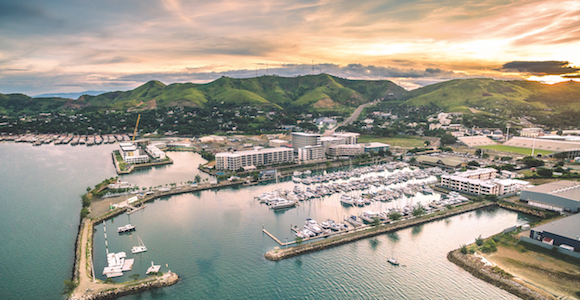
Port Moresby, the capital of Papua New Guinea, has a rich history that dates back to its original indigenous inhabitants, the Motu-Koitabu people.
They had already gained a reputation as a reputable trade partner with other area tribes.
Their fishing, seafaring, and trading with other tribes helped them develop and maintain their economy and culture.
Once the British arrived in the 19th century, they also recognized the area for its economic value and settled there.
Port Moresby continued to grow and develop even more after World War II, quickly bringing many people to the area who call the city home.
The natural beauty of Port Moresby, its blend of traditional with modern features, and historical charm are some reasons that people choose to live in and to visit Port Moresby.
Although it has many sites to see and many things to do, travelers are likely to wonder if it is safe for them to travel to the capital city of Papua, New Guinea.
Travelers can quickly learn if it is a safe place to travel to, and information about the safe places to visit and the places that they should avoid in Port Moresby.
Warnings & Dangers in Port Moresby

OVERALL RISK: HIGH
The reason that the overall risk of safety issues is high is related to the high crime rate and the alleged acts of corruption committed by some public officials, including police officers. Criminals sometimes target tourists in resort areas to steal their belongings and money. There are high rates of both petty crimes and violent crimes that occur in Port Moresby.

TRANSPORT & TAXIS RISK: HIGH
The high crime rate makes using taxis, buses, or other means of public transport unsafe for travelers. They should rent a car or travel with a guide from a reputable tour group company.

PICKPOCKETS RISK: HIGH
Pickpockets frequently target travelers who visit Port Moresby. Do not carry wallets or handbags in places where pickpockets can grab them. There have been incidents of criminals snatching bags out of vehicles as they pass by or when they are stopped at a light, not just from the hands of people on the street. Keep wallets, credit cards, and cash in an inside pocket. Carry only what you need with you.

NATURAL DISASTERS RISK: HIGH
Port Moresby and all of Papua New Guinea have a high risk of earthquakes. There are also several active volcanoes in the area. Tsunamis are another natural disaster risk. Stay alert to any changes that may indicate a pending natural disaster. Follow the instructions of local officials.

MUGGING RISK: HIGH
Armed robberies targeting tourists are somewhat common in Port Moresby. People should never risk their safety or their lives if a robber demands their money or belongings.

TERRORISM RISK: LOW
Although Port Moresby has a high crime rate overall, the risk of terrorism here is low. There have never been any incidents of terrorism in the area.

SCAMS RISK: MEDIUM
The primary scams targeting tourists are those that involve the use of ATMs. Travelers should only use ATMs inside banks. Do not use an ATM if someone seems to be watching you or following you.

WOMEN TRAVELERS RISK: HIGH
Women should not travel to Port Moresby alone. They should also avoid drawing attention to themselves by wearing modest clothing. Women travelers have been victims of sexual assaults. They should not go out alone at night.

TAP WATER RISK: HIGH
Travelers should not drink the tap water in Port Moresby. Although the water undergoes treatment, industrial activities, inadequate infrastructure, and pollutants can cause the risk of water-borne diseases. Some sources list water-borne diseases as a leading cause of death for young children. Drink bottled or filtered water instead of tap water. Do not use tap water to wash produce.
Safest Places to Visit in Port Moresby
Port Moresby has several things for visitors to see and do that can give them a unique and wonderful experience when they visit the capital city.
There is something for everybody, whether they want to explore historical sites, shop in the marketplaces, enjoy the modern vibe of the city, or gaze at the stunning beaches.
Experience the sights and sounds of the local markets that offer tourists the opportunity to engage with the local sellers.
Enjoy hand-crafted baskets, jewelry, textiles, and other goods that are made by local people.
Sample the local fresh fruits and vegetables.
Ela Beach offers spectacular views, gentle waves, and the opportunity to engage in water sports.
Stay on the beach, and people watch, enjoy the food, or play a game of beach volleyball if you do not want to get in the water.
Visit the PNG National Botanical Gardens to see native plants, to walk through the lush gardens, and to learn about the biodiversity of Port Moresby and Papua New Guinea.
The destination is also home to many bird species.
Port Moresby Nature Park is another place where nature lovers can see beautiful gardens and the wildlife that call Port Moresby their home.
Tourists who visit this park can see various plants, flowers, bird species, and if they are lucky, they may be able to snap a picture of kangaroos.
Indulge in local cuisine to experience the culinary traditions along with modern flavors and dishes.
Many of the recipes include ingredients like chicken, root vegetables, and fish.
Be sure to try the mumu, which is the national dish of Papua New Guinea.
It is a combination of slow-cooked meat, fruits, vegetables, and root crops.
Savor the meals served in Port Moresby with the local spices that are native to the area.
Enjoy a guided tour of the Parliament House.
The stunning architecture blends traditional with modern designs.
Visitors gain an appreciation for the diverse tribes of Port Moresby and of Papua, New Guinea, as they continue their tour.
Visitors can listen in if they tour Parliament House during a session.
Places to Avoid in Port Moresby
Travelers who visit Port Moresby should heed warnings about places to avoid in the city and the surrounding area.
Venturing into unsafe areas can pose safety risks for tourists.
Do not go to any isolated or rural areas.
This warning is especially important for women who visit Port Moresby.
Tourists who visit Port Moresby need to stay away from areas that are high-crime areas and that are places that the U.S. Department of State or the U.S. Embassy to Papua New Guinea says that people should avoid when they visit the area.
Do not go to the Murata Area, the Hohola Area, the Badili and Gabutu Area, or the Koki Market Area.
Tourists should also avoid Gerehu Stage 6, the Koura Highway in the Tokorara Area, and other unsafe neighborhoods or areas.
Do not visit downtown or the beaches at night.
Safety Tips for Traveling to Port Moresby
- Do not go anywhere outside popular tourist destinations. Stay away from less populated areas. Travelers need to stay vigilant even in areas that are popular with tourists because of crimes that often target travelers.
- Keep car doors locked and windows closed. Do not drive with car doors unlocked. Keep windows rolled up when driving a vehicle in Port Moresby. Criminals often grab things or target tourists when they stop at lights or even when driving down the street.
- Stay in well-lit areas. Do not go down side streets, even to visit out-of-the-way markets or shops. It is not safe to do so. Stay in well-lit areas where there are other people.
- Use bank ATMs. Do not use an ATM anywhere but inside a bank. Be aware of anyone who may be watching you.
- Keep hotel or escort doors and windows locked at all times. Criminals target tourists in many ways, including robbing them at resorts that are popular with tourists. Keep doors and windows closed and locked at your place of accommodation.
- Dress down. Do not wear designer clothes or expensive jewelry when you visit Port Moresby. Dress down to look like the locals so that you do not draw attention to yourself.
- Watch out for crocodiles. Crocodiles are not just at popular attractions. They are in the waters of Port Moresby. Be careful and stay vigilant when engaging in water activities in Port Moresby.
- Stay with your travel group or friends. People who visit Port Moresby should not stray away from their group for safety reasons.
- Monitor the weather. Port Moresby has a high risk of natural disasters, including risks from earthquakes, tsunamis, and active volcanoes. Monitor weather reports and warnings from local officials.
- Do not carry large amounts of cash. Carry only the cash that you need and the credit card that you need when visiting Port Moresby. Do not flash your cash.
So... How Safe Is Port Moresby Really?
Port Moresby has several safety risks, including high rates of several types of crimes.
Some criminals specifically target foreign tourists.
Travelers may want to read warnings from the U.S. Department of State to learn the travel warning status at the time of their trip.
The agency issued a Level 3: Reconsider Travel Advisory in April 2025.
Tourists should not explore the sites and attractions alone, especially women.
Women should dress modestly so that they do not draw attention to themselves.
Travelers may not get much help from local officials because of rumored corruption.
They may side with the criminals.
Report crimes to the U.S. Embassy.
Despite the safety risks, many people still travel to Port Moresby every year.
Follow safety tips and stay vigilant to protect your safety.
How Does Port Moresby Compare?
| City | Safety Index |
|---|---|
 Port Moresby Port Moresby |
25 |
 Sturgis Sturgis | 80 |
| Rogersville | 76 |
| Duluth | 78 |
| Pembroke Pines | 77 |
 Siwa Oasis Siwa Oasis | 70 |
| Concord | 74 |
Useful Information

Visas
Visas are required for tourists who visit Port Moresby and anywhere in Papua New Guinea. Travelers need to obtain a visa or an eVisa before arriving in Port Moresby.

Currency
The official currency of Papua New Guinea is the kina. It has been the official currency since 1975.

Weather
Enjoy the tropical weather when visiting Port Moresby. The city has high temperatures and consistent amounts of rainfall. The high humidity may be oppressive for some people. Travelers should stay alert to any changes in the weather that may lead to the possibility of natural disasters.

Airports
Jacksons International Airport is also known as the Port Moresby Airport. It is about four miles just outside the city center of Port Moresby. The airport is the largest airport and the busiest airport in Papua New Guinea.

Travel Insurance
The U.S. Department of State highly recommends that travelers who plan to visit Papua New Guinea, including Port Moresby, purchase travel insurance. Having travel insurance is a must for travelers who travel outside the U.S. Speak with your travel insurance representative to learn about policies, coverage, and the best travel insurance policy for your needs.
Port Moresby Weather Averages (Temperatures)
Average High/Low Temperature
| Temperature / Month | Jan | Feb | Mar | Apr | May | Jun | Jul | Aug | Sep | Oct | Nov | Dec |
|---|---|---|---|---|---|---|---|---|---|---|---|---|
| High °C |
31 | 31 | 31 | 31 | 30 | 29 | 29 | 29 | 30 | 31 | 32 | 32 |
| Low °C |
24 | 24 | 24 | 23 | 23 | 22 | 22 | 22 | 23 | 23 | 24 | 24 |
| High °F |
88 | 88 | 88 | 88 | 86 | 84 | 84 | 84 | 86 | 88 | 90 | 90 |
| Low °F |
75 | 75 | 75 | 73 | 73 | 72 | 72 | 72 | 73 | 73 | 75 | 75 |
Papua New Guinea - Safety by City
| City | Safety Index |
|---|---|
| Port Moresby | 25 |












No Go Zone
Not a good place to visit. Maybe it was safer many years back but I would not go here today. Too much of a risk and honestly, the city is not well-kept in most areas. I cut my trip here short and went to a different location. I just didn’t feel safe enough to stay here for more than two nights. I would not go back if someone had paid me.
Port Moresby was never safe, even in the 1960’s. However it gradually became more dangerous until, after Independence it descended into a hell hole.Things rapidly slid down hill when Comrade Whitlam got to the throne in Australia.
I personally believe that as a member of Comintern, he did a deal to hand the place over to Russia. This could not happen at that time so the deal was made to allow China in at some time in the future, and this is actually what is occuring now under the “Belts and Roads” policies.
Nobody who knew anything about the place at all during the 1960’s believed there was any chance that the place was ready for Independence’ The white people who lived there could not, at that time, believe that even the Canberra politicians could be stupid enough to allow the place to go so soon after the vicious fighting of WW2 when the Japs were literally at our front door and would have been in Australia if the Americans had not been here to stop them.
The moment that Independences was signed the place went downhill and returned to corruption and tribalism and is currently a failed country in all but name.
This is not all due to Comrade Whitlam and he could not have got away with it were it not for the stupidity and ill education of the Australian people.
My advice: Don’t even think about going there to see for yourself.
POM is a hell hole. Stay away.
Yep, this pretty well summarizes the decline of PNG. My mom used to call Gough Whitlam “Goof” Whitlam. If you visit, stay away from Moresby and Lae, the 2 largest cities. Madang is safer if you want to experience the tropical coastline, coral reefs, diving, etc. Goroka is fairly safe if you want to experience the Highlands. Stay at a resort, and go on guided tours. None of the country is safe to go traipsing around by yourself, especially if you are a woman. Rape is very common. I don’t know what is wrong with PNG men, but a shockingly large proportion of them think it is OK to rape women.
Port Moresby Safety
I lived in Port Moresby from 1965 to 1970 and it WAS safe. Both for me and my wife. I do agree however it was a long way from independence, or so I thought.
Experience the wildlife at the Nature Park was unforgettable, especially seeing those vibrant birds of paradise up close.
Ah yes, nothing screams relaxation like meticulously plotting your route to dodge the sketchy spots while soaking in Port Moresby’s “natural beauty.”
Walking along Ela Beach during the day felt relaxed, but I stuck to busy streets after dark.
Do you have any tips on which parts of Port Moresby tied to the Motu-Koitabu trading history are actually safe to wander during the day, because the mix of traditional and modern is gorgeous but I felt kind of uneasy on my first afternoon there?
Spent a day walking around the waterfront and honestly the mix of old and new buildings gave the place a cool vibe.