


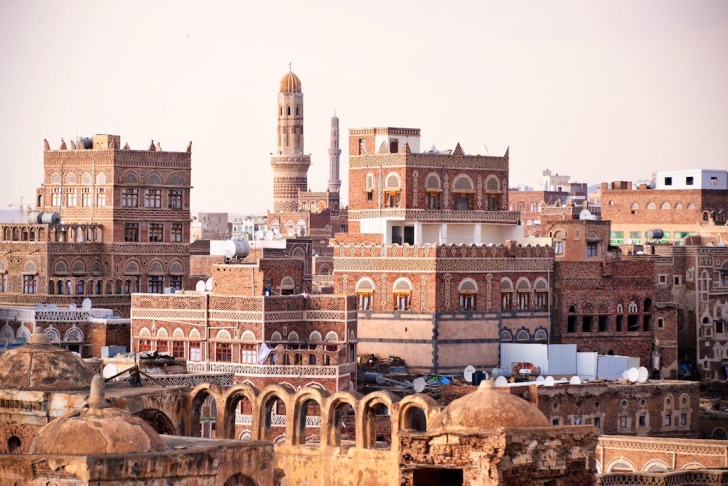
Sana’a is one of those cities that can stop you in your tracks even before you set foot inside it.
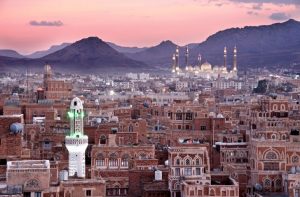
Yemen’s highland capital sits more than 7,000 feet above sea level, backed by mountains and famous for its old tower houses decorated with white geometric trim that make the skyline look almost hand-painted.
The Old City is one of the most visually striking urban landscapes in the Arab world, with a history stretching back many centuries.
On beauty alone, Sana’a would be an easy place to recommend.
The problem is that beauty is not the same thing as safety.
Right now, Sana’a is a destination where the cultural reward is enormous, but the practical and security risks are so serious that travelers need to think less like tourists and more like crisis planners before even considering a trip.
Warnings & Dangers in Sana’a

OVERALL RISK: HIGH
Sana'a carries a high overall risk for travelers. The city sits inside a country where multiple governments warn against all travel because of armed conflict, terrorism, kidnapping, civil unrest, and the lack of reliable consular support. Even experienced travelers would face conditions that are far outside normal tourism risk.

TRANSPORT & TAXIS RISK: HIGH
Transport risk is high because movement in and around Sana'a can change quickly with checkpoints, road closures, fuel shortages, and security incidents. This is not a city where you can assume you will easily find a safe taxi or travel freely after dark. Airport disruptions make arrival and departure planning especially fragile.

PICKPOCKETS RISK: MEDIUM
Pickpocketing is not the main danger most people associate with Sana'a, but that does not make it irrelevant. In crowded markets, transport hubs, and busy commercial streets, opportunistic theft can happen, especially when visitors stand out. The reason this is rated medium instead of high is that much larger threats overshadow routine street crime.

NATURAL DISASTERS RISK: MEDIUM
Natural disaster risk is medium. Sana'a is not mainly feared for earthquakes or hurricanes, but travelers can still run into seasonal flooding, poor drainage, infrastructure failures, and weather-related travel disruptions. The city’s elevation also creates cooler conditions than many people expect, which can catch unprepared travelers off guard, especially at night.

MUGGING RISK: HIGH
Mugging risk is high because general insecurity raises the stakes of any street-level confrontation. In a conflict environment, criminality can overlap with militia activity, informal armed actors, and weak law enforcement. That means what might be a robbery elsewhere can become much more unpredictable and dangerous in Sana'a.

TERRORISM RISK: HIGH
Terrorism risk is high and is one of the biggest reasons governments tell their citizens not to go. Yemen continues to be associated with terrorist threats, armed groups, missile and drone activity, and a highly unstable security environment. For a traveler, this is not a background concern. It is central to the risk picture.

SCAMS RISK: MEDIUM
Scam risk is medium. Traditional tourist scams matter less here than in heavily visited destinations, simply because Sana'a is not functioning as a normal tourist market. Still, visitors can face overcharging, fake intermediaries, transport manipulation, and people offering to solve permit, money, or logistics problems for inflated fees.

WOMEN TRAVELERS RISK: HIGH
Women travelers face high risk, not only because of ordinary safety concerns but because conflict conditions magnify vulnerability. Social norms are conservative, mobility can be restricted, and the lack of dependable emergency support makes any harassment or security incident harder to manage. Solo travel here would be especially risky.

TAP WATER RISK: HIGH
Tap water risk is high. In a city facing infrastructure strain, conflict-related disruption, and uneven access to safe services, visitors should not rely on untreated tap water. Bottled or reliably purified water is the safer choice, and ice, washed produce, and hot drinks from questionable sources should all be approached carefully.
Safest Places to Visit in Sana’a
Old City of Sana’a
If there is one part of Sana’a that captures the city’s soul, it is the Old City.
The architecture is extraordinary, and for travelers interested in culture, history, and photography, it is the main draw.
In relative terms, this area can feel safer than more chaotic outer districts because it is central, recognizable, and historically important.
That said, safer in Sana’a does not mean safe in the way travelers usually mean it.
You would still need trusted local guidance, careful timing, and a strong exit plan.
Al-Sabeen and Major Civic Areas
Large civic districts and well-known administrative zones can be easier to navigate than unfamiliar residential fringes because they are more visible and better known to drivers and local contacts.
If you must move around the city, sticking to central, established areas reduces the chance of getting lost or drifting into more volatile surroundings.
These are not sightseeing areas in the classic sense, but they are generally more manageable than remote neighborhoods.
Mosques, Historic Markets, and Daytime Visits
Culturally significant places such as historic mosques and traditional market areas are the most interesting parts of Sana’a for a visitor, particularly during daylight hours when activity is more predictable.
Daytime movement lowers some risks tied to low visibility and thinner street activity at night.
The key is to keep visits brief, local-led, and highly planned rather than wandering spontaneously as you might in another capital.
Places to Avoid in Sana’a
Outskirts and Poorly Known Residential Districts
The outer edges of Sana’a are the first places I would tell travelers to avoid.
These areas can be harder to navigate, less predictable, and more exposed to checkpoints, informal armed presence, or limited emergency response.
If something goes wrong there, getting help or even getting clear information may be difficult.
For a foreign visitor, there is very little upside in taking that risk.
Military, Political, and Strategic Sites
Any location associated with military activity, political authority, or communications infrastructure should be treated as strictly off-limits.
In a conflict setting, these places can become targets with little warning, and even being nearby can expose travelers to questioning, detention, or collateral danger.
Photography around such places is an especially bad idea.
Airport Corridors and Uncertain Transit Routes
Normally, areas near an airport are just annoying because of traffic.
In Sana’a, they can be dangerous because aviation operations have been repeatedly disrupted, and the airport itself has been affected by conflict.
Any road tied to a sudden closure, strike, or security response can turn from routine to hazardous quickly.
I would avoid unnecessary trips anywhere along uncertain transit corridors.
Safety Tips for Traveling to Sana’a
- Reconsider the trip entirely. This is not me being dramatic. When multiple governments say do not travel, that should be taken literally. Sana’a is not a destination where careful packing and a money belt solve the problem. The biggest safety move may be not going at all.
- Do not travel independently. If travel is unavoidable, go only with trusted local contacts who understand current conditions street by street. A guidebook mindset will not help much here. Real-time local knowledge matters more than anything you can plan from abroad.
- Keep movements short and daytime-only. The less time you spend in transit, the lower your exposure to checkpoints, confusion, and sudden incidents. Daylight improves visibility, navigation, and your odds of adapting quickly if something changes.
- Have multiple exit plans. In unstable destinations, one transport route is no route. Flights can be disrupted, roads can close, and access can change without much warning. Know your primary departure plan, your backup, and who you would call if both failed.
- Avoid political talk and sensitive photography. Asking the wrong questions, taking photos in the wrong place, or appearing too curious around state, military, or security-linked sites can create serious problems. Keep your profile low, and your camera use selective.
- Carry cash carefully and split it up. Financial conditions in Yemen are difficult, the currency picture is complicated, and electronic payment reliability cannot be assumed. Carry only what you need for the day, divide your money between secure places, and keep a hidden reserve.
- Drink only sealed or purified water. Waterborne illness is a much more realistic travel problem here than many people realize. Use bottled or properly purified water, and be cautious with ice, salads, and food washed in local water.
- Dress conservatively and avoid standing out. In Sana’a, blending in matters. Conservative clothing is respectful, practical, and less likely to attract unwanted attention. For women especially, modest dress is part of basic risk management, not just etiquette.
- Prepare for weak emergency support. Do not assume your government can easily help you inside Yemen. In many cases, embassy support is suspended or very limited. That changes the entire risk calculation because help may be distant or unavailable.
- Monitor the situation constantly. In some destinations, checking the news once before departure is enough. Sana’a is not one of them. Conditions can shift quickly because of conflict, airspace issues, political developments, or regional escalation. You need current information every day, not just before the trip.
So... How Safe Is Sana’a Really?
Sana’a is not realistically a safe leisure destination at the moment.
That is the clearest conclusion I can draw.
The city itself is fascinating and historically rich, but the safety picture is dominated by factors that are far beyond the ordinary traveler’s control: armed conflict, terrorism risk, kidnapping concerns, airspace disruptions, fragile infrastructure, and the lack of normal consular support.
On top of that, Yemen’s broader economic stress has pushed inflation and currency instability higher, which tends to make day-to-day logistics harder and less predictable for everyone on the ground.
What makes Sana’a especially difficult is that there is no clean separation between tourist inconvenience and danger.
In safer cities, you can usually manage risk by choosing the right neighborhood, hotel, and taxi app.
In Sana’a, major threats can affect the whole operating environment.
Even the airport picture has been unstable, with closures and damage tied to the wider conflict.
That means your risks begin before you arrive and may continue when you try to leave.
For nearly all travelers, I would rate Sana’a as a place to admire from afar for now rather than visit in person.
How Does Sana’a Compare?
| City | Safety Index |
|---|---|
 Sana’a Sana’a |
36 |
 Pittston Pittston | 74 |
| St. Charles | 79 |
 Leipzig Leipzig | 78 |
| Pittsburgh | 63 |
| Rockland | 82 |
 Cusco Cusco | 60 |
Useful Information

Visas
Visitors generally need a visa before traveling to Yemen. Tourist visa access can be limited and change quickly depending on diplomatic conditions and where you apply. In many cases, travelers need prior approval and should expect that rules, processing times, and embassy availability may shift without much notice.

Currency
The local currency is the Yemeni rial. Currency conditions have been unstable, and exchange rates can vary sharply by region and authority, which complicates budgeting. In practice, travelers should carry major foreign currency in clean notes and exchange money only through trusted channels rather than informal street offers.

Weather
Sana'a has a much cooler climate than many people expect from the Arabian Peninsula because of its high elevation. Daytime temperatures are often mild, while nights can feel chilly, especially in winter. Pack layers, a light jacket, sun protection, and sturdy shoes for uneven streets and dust.

Airports
Sana'a International Airport is the main airport for the capital, but air travel has been highly unreliable due to closures, damage, and conflict-related disruption. Even when flights resume, schedules can be fragile. Anyone traveling to Sana'a needs to verify airport status repeatedly and avoid assuming commercial access will remain stable.

Travel Insurance
Travel insurance is essential, but this is one destination where you need to read the policy carefully. Standard plans may exclude war zones, terrorism-related incidents, evacuation, or travel to places under do-not-travel advisories. The right policy matters almost as much as the decision of whether to travel at all.
Sana’a Weather Averages (Temperatures)
Average High/Low Temperature
| Temperature / Month | Jan | Feb | Mar | Apr | May | Jun | Jul | Aug | Sep | Oct | Nov | Dec |
|---|---|---|---|---|---|---|---|---|---|---|---|---|
| High °C |
22 | 23 | 25 | 26 | 28 | 30 | 29 | 28 | 27 | 25 | 23 | 22 |
| Low °C |
4 | 6 | 8 | 10 | 12 | 14 | 15 | 14 | 12 | 9 | 6 | 4 |
| High °F |
72 | 73 | 77 | 79 | 82 | 86 | 84 | 82 | 81 | 77 | 73 | 72 |
| Low °F |
39 | 43 | 46 | 50 | 54 | 57 | 59 | 57 | 54 | 48 | 43 | 39 |
Yemen - Safety by City
| City | Safety Index |
|---|---|
| Sana’a | 36 |












WTF!!!
Sana’a is very safe despite the war, and AQAP does not control it lmfao!!!
Matter fact, AQAP does not control no parts of the country as they used to in the past.
Is it safe to travel and what would be the best way to travel
Yemen is safe
Yemen is safe besides the war I love Yemen and I wish we can help them.
Not for the faint hearted
I don’t remember what triggered my dire need to see Sana’a but I just knew I had to see this city and document it as much as possible. I’ve noticed that locals tend to scowl whenever a foreigner does something out of place so I reserved my time to study them. If you’re asked something, take your time before rushing to answer. While it may get a bad reputation, it’s clearly not even close to being the most dangerous city in Yemen.
All the checkpoints kept me on the edge of my seat but hey, it’s all part of maintaining law and order.
Tried to blend in as best as possible. This means no flashy clothes, no visible brands, growing your beard might get you out of trouble. I had a guide for the whole duration of my trip. Things go much smoother when you have someone else to fill you in regarding local customs, what roads are safe and which not, etc.
Yemenis are friendly people who appreciate tourists that go out of their country. They all know people tend to avoid cities that have a less fortunate situation.
A huge percentage of the population can barely make ends meet so walking around with your expensive camera/drone and just flashing it around is both in bad taste and foolish. People have mugged tourists for way less.
Water supply is another issue they’re faced with so I did my best to avoid waste. The food is cheap, diverse, with way too big portions.
Don’t play around. I know people might play it cool once they land here and see that there’s really not that much to fear but being cocky will lead you to unwanted trouble. Again, and I can’t stress this enough, try to remember that a lot of these people barely make enough money to cover their debts and bills.
Walking past the tall tower houses with their qamariya windows, my chest tightened at how alive the place felt and I couldn’t stop noticing the warm smell of bread from the souk.
Walking around those tower houses with the white geometric trim up at 7,000 feet made my jaw drop and gave me a weird giddy-nervous feeling, gorgeous to look at but you can’t pretend the safety stuff isn’t there.
I get that the place is stunning, but honestly getting around there felt tense and unpredictable every time I tried.
It’s wild how those tower houses look like they’re straight out of a painting, but hearing about the risks kinda makes you double think stepping inside. I wonder what it’s like catching that view with the mountains around at sunrise.