


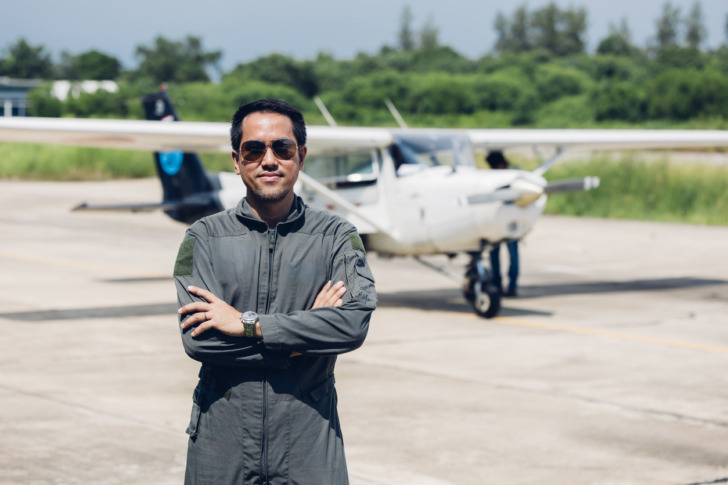
Kevin Rideout, an American missionary pilot kidnapped in Niamey, Niger, in October 2025, has been freed and is safely in U.S. custody.
The New York Times, citing unnamed U.S. officials, confirmed his release, and Devdiscourse reported that Rideout is en route to the United States and described as being in good health.
The roughly year-long ordeal ends with a man alive.
It also leaves a pointed question for anyone who travels to conflict-affected regions: how much did they know before they landed?
Pre-Departure Preparation as a Safety Obligation
Dare Shonubi, a content strategist, data analyst, and frequent international traveler, follows entry rules and official advisories as a matter of standard practice before any trip.
Rideout’s case, he observes, it is a sharp illustration that pre-departure preparation must cover far more than booking confirmation and packing lists.
It must include reading what governments are actually saying about a destination.
Following Rideout’s kidnapping, the U.S. advised against travel to Niger, citing safety concerns.
That advisory did not appear from nowhere.
It reflected a security environment that specialists had been watching for years, and any traveler consulting official channels before departure would have encountered it clearly.
Shonubi also flags a compliance blind spot that often goes unexamined.
Travelers who bet on sports or play online casino games at home tend to assume those habits travel with them, when in practice legality varies considerably by country.
In destinations with strict legal frameworks or active conflict, what feels routine can carry real legal exposure.
He points travelers to the Smart Betting Guide to confirm where such play is legal and regulated before departure, treating it as an external compliance check alongside reading security advisories, not an afterthought.
Three Men, an Airport Road, and a Route West
Rideout was affiliated with Serving in Mission, a missionary organization operating in the region.
According to an anonymous diplomat cited in reporting, three men abducted him while he was heading to the airport in Niamey.
The abduction was swift and organized.
Following the kidnapping, his captors moved him westward toward the Tillaberi region, a vast area along Niger’s border with Mali and Burkina Faso that has long been troubled by armed activity.
The geography of the route matters.
Tillaberi is not an incidental destination.
It sits at the convergence of three countries each contending with significant insurgent pressure, and movement into that zone carries well-documented risk for anyone without armed protection.
Niger’s Insurgency and the Reach Into Mali
Niger’s security situation is not an isolated crisis.
The country contends with severe jihadist insurgencies that mirror those gripping its neighbors Mali and Burkina Faso, forming a broad belt of instability across the central Sahel.
Armed groups move across borders with relative ease, and state authority in rural and border areas is limited.
The effort to locate Rideout did not stay within Niger’s borders.
Efforts to find him fueled broader intelligence operations in Mali, illustrating how a single kidnapping in one country can draw intelligence resources across the region.
That spillover reflects both the reach of the groups operating in this environment and the difficulty of conducting any meaningful search without engaging networks that extend well beyond the point of abduction.
For foreign nationals considering travel to any part of this region, the U.S. advisory against travel to Niger, issued in the aftermath of the kidnapping, represented a formal acknowledgment of what the operational picture already showed.
Official Silence on the Details of His Return
Despite the confirmation that Rideout is free and heading home, the official record remains sparse.
As of the report’s publication, neither the U.S. State Department nor the White House had issued a formal statement regarding his return.
No government spokesperson had addressed the case publicly.
The gap in official comment is not unusual in cases involving sensitive operations or ongoing diplomatic considerations, but it leaves the public account incomplete.
More significantly, the identity of the group that held Rideout for nearly a year has not been disclosed.
The circumstances surrounding his release remain unclear, whether through negotiation, a rescue operation, or some other process entirely.
What is confirmed is limited but consequential.
A man taken off a road in Niamey is alive and back under U.S. care.
Everything else- the who, the how, the terms, if any existed- remains unresolved and officially unaddressed.
Additional Resources
 Here is Why Introverts Should Travel to Different Places Once a Year
 Best Places for an American Cross-Country Road Trip
 American Joggers in Venice Nearly Learned a €250 Lesson About Local Rules
 Is It Safe to Gamble Online While Traveling Abroad? What Tourists Should Know
 UK Government Flags Cuba as a Destination Requiring Careful Preparation
 Age of Consent by Country











