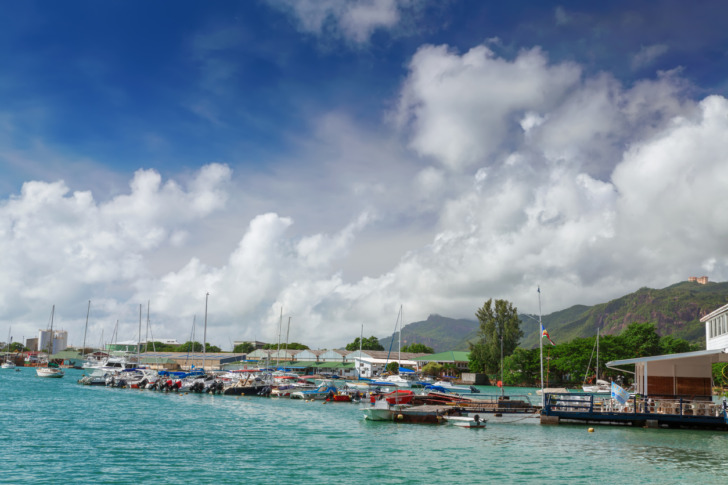
Seychelles sits near the top of most safe-island lists, and the data supports it.
Travel Safe Abroad’s own Seychelles review gives the country a safety index of 80 with a low overall risk, and the US State Department keeps it at Level 1, the lowest of its four advisory tiers.
Violent crime against visitors is rare.
The ocean needs more attention, and it is also where most visitors spend their favorite days, because many granite coves, marine parks and quiet beaches of the inner islands can only be reached by water.
Whether a boat charter in Seychelles turns out safe comes down to three choices you make before boarding: who runs it, which boat you step onto, and which month you travel.
What surprised me on the State Department’s Seychelles page was how bluntly it describes the local tourism sector.
It says the industry is not well regulated, safety inspections of equipment are rare, and staff may not be trained or certified.
That puts most of the checking on you.
This guide walks through those checks in the order you will meet them: the paperwork, the boat on the morning of the trip, the season, marine park rules, and what to do in the water and in an emergency.
Where the Real Risks Are on Seychelles Waters
Most incidents involving visitors happen close to shore.
Beaches across Mahé, Praslin and La Digue rarely have lifeguards, and seasonal currents can pull a tired swimmer away from a beach or an anchored boat faster than people expect.
That is why the State Department’s short list of tips for the country includes swimming with a partner and following posted warning signs.
Sharks draw attention out of proportion to the actual risk.
Two fatal attacks occurred off Praslin in 2011, and they are still the incidents people cite, largely because nothing comparable has become routine in these waters since.
Piracy comes up in almost every forum thread about sailing here.
The UK Foreign Office says the regional threat has decreased, with the remaining risk concentrated off the coast of Somalia, far from the granitic inner islands where day trips and most week-long charters operate.
Weather is the more practical concern.
The archipelago lies outside the Indian Ocean cyclone belt, so the main variables are wind and swell, and both change with the season.
Check the Operator Before You Pay
Paperwork feels tedious until something goes wrong at sea.
Three things are worth confirming in writing before you confirm a booking, and a reputable operator will answer all of them in a single message.
Ask for the Maritime Operating License
Boats that carry paying guests in Seychelles need an operating license from the Seychelles Maritime Safety Authority.
Its 2023 licensing regulations cover “hire craft,” the category for vessels let out for recreation and sport fishing.
Ask for the license details and check that the vessel named on them matches the boat you are booking.
The official tourism board also recommends choosing operators listed on its destination website, describing them as trained, insured and compliant with safety requirements.
Confirm the Insurance Covers Everyone on Board
Guidelines for leisure boat operators issued by the Seychelles Department of Tourism say charter businesses should carry insurance suited to their type of operation, covering passengers as well as crew.
Ask about this directly.
Your own travel policy should also list water activities, since some basic plans exclude them.
Decide Between Skippered and Bareboat
A skippered charter puts a local captain in charge of navigation, anchoring and weather decisions, which suits nearly every first-time visitor. Bareboat hire works differently.
Charter companies require at least one certified skipper aged over 18 in your group, holding an official license such as the International Certificate of Competence, and port authorities can ask to see the original document.
Trips to the Amirantes and other outer islands need official authorization and a boat licensed for those waters with a local skipper at the helm.
What a Safe Boat Looks Like on the Day
The second checkpoint comes on the morning of the trip.
Ahead of the annual Feast of the Assumption crossings to La Digue, the head of the maritime safety authority urged passengers never to board a small boat without a life jacket, after fatal boat accidents in 2016 and 2018.
The Department of Tourism’s operator guidelines list the equipment a leisure boat should carry, and you can check most of it in two minutes on the jetty:
- Individual life jackets for every passenger, in child sizes if kids are aboard
- Lifebuoys and a life raft or other flotation for the whole group
- A working fire extinguisher and a stocked first aid kit
- A marine radio or other emergency communication system
- A safety briefing from the captain before departure
- A question from the crew about swimming ability and medical conditions
The UK Foreign Office gives the same advice in plainer terms: pay attention to safety briefings and make sure life jackets are provided, especially on smaller excursion boats.
Pick the Right Season for Calm Water
Two wind systems shape the year in the Seychelles, with calmer transition months between them, and the month you choose affects how every crossing feels.
The official tourism board names April to May and October to November as the calmest periods at sea.
| Period | Wind pattern | Sea conditions | What it means for a charter |
|---|---|---|---|
| December to March | Northwest monsoon | Wettest months, generally calmer seas | Good snorkeling days, with plans built around rain showers |
| April | Transition, light winds | Calm water, clear visibility | Easiest month for families and first-time charterers |
| May to September | Southeast trade winds | Drier but windier, choppier water on exposed coasts, stronger currents | Choose a larger boat or a catamaran and take seasickness medication before departure |
| October to November | Transition, light winds | Calm water, good visibility | A strong window for island hopping and longer routes |
Currents shift with the wind.
Sailing guides for the islands note that from June to September they run west at a steady pace and can speed up to around 4 knots through passages over shallow flats.
Seaweed can also pile up on parts of Praslin during the same months, which affects landing spots more than safety.
Marine Park Rules That Also Keep You Safe
Many of the most visited stops, including Sainte Anne Marine National Park off Mahé and Curieuse near Praslin, sit inside protected areas managed by the Seychelles Parks and Gardens Authority.
The rules exist to protect the reefs, and several of them protect swimmers too.
Boats must anchor or moor only in designated spots and keep watch for snorkelers; motorized water sports are banned inside the parks, and spearguns and fishing gear are not allowed.
Two more details are useful before you go.
Yellow buoys mark coral restoration sites, and the park authority asks boats to stay away from them entirely.
Several islands, among them Félicité, Grande Soeur and Frégate, are privately owned, so landing there requires the owner’s permission.
In my experience, a captain who follows these rules without being reminded tends to run the rest of the day just as carefully.
Swimming and Snorkeling From the Boat
A good share of the risk on any charter comes during the time spent off the deck.
Tidal currents can be strong in the straits between islands and in the channels that lead into lagoons, and those are often the spots where captains stop for snorkeling.
The national Beach and Sea Safety Guide advises swimming across a current to get out of it and staying close enough to shore or the boat that you can return easily.
The maritime safety authority has also warned that alcohol and swimming are a dangerous mix, so the cold drinks are best saved for the ride back to the marina.
Anyone who cannot swim should keep a life jacket on in the water.
I would add one habit that takes ten seconds: agree on a hand signal with the crew before you jump in, so they know when you need the boat to come to you.
Red Flags That Mean You Should Walk Away
Some warning signs appear before you reach the jetty.
Travel Safe Abroad rates the risk of scams in Seychelles as medium, so treat excursion offers with the same caution you would apply to taxis or currency exchange.
An operator who cannot give a license number, avoids questions about insurance, or asks you to pay on the beach with no written confirmation is cutting corners somewhere.
On the day itself, leave if you see no life jackets, get no briefing, count more passengers than seats, or notice the crew drinking.
The same goes for a captain who talks you into heading out when the forecast looks rough, since a postponed day on the water is easy to reschedule.
If Something Goes Wrong at Sea
Save 999, the local emergency number, in your phone before leaving the hotel.
The US Embassy advises extra caution on Praslin, La Digue and the outer islands because of health risks, and the country’s main hospital facilities are concentrated on Mahé.
The United States has no consular office in Seychelles, so American travelers who need help are directed to the embassy in Port Louis, Mauritius.
Check that your travel insurance covers medical evacuation as well as water activities.
Before you leave for the marina, give your hotel reception the boat’s name, the operator’s phone number and the planned route for the day.
If the boat is overdue, someone on shore will know which bays the coast guard should check first.