


 Morocco : Safety by City
Morocco - safety as a country
Casablanca is Morocco’s largest city, the primary economic hub, and a major port on the Atlantic Ocean.
Located in central-western Morocco on the Chaouia plain, it is the largest city in the Maghreb region, with a metropolitan population exceeding 4 million.
Known as the “white city” or simply “Casa,” it combines modern, bustling urban life with a rich mix of French colonial Art Deco architecture and traditional Moorish styles, particularly around the city center and Mohammed V Square.
It is a blend of modernity and tradition, featuring a “New Medina” (Quartier Habous) and a bustling, smaller Old Medina.
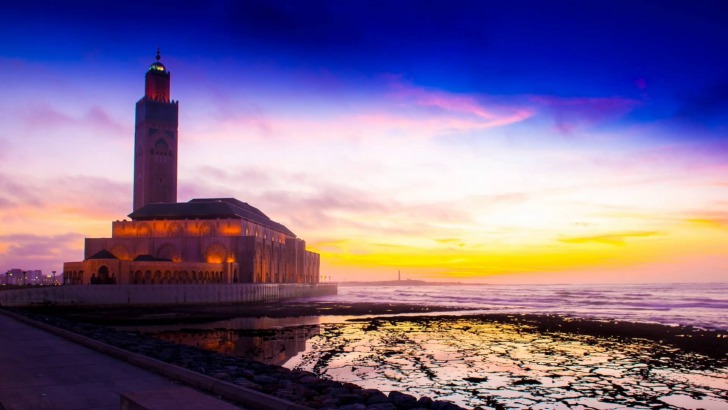
It is home to the stunning Hassan II Mosque, one of the world’s largest.
Other places of interest are the Corniche and the Mahkama du Pacha.
Warnings & Dangers in Casablanca

OVERALL RISK: MEDIUM
Casablanca is generally safe for tourists, but it's a large, bustling city with typical urban risks like petty theft (pickpocketing, phone snatching) and scams, requiring standard big-city awareness, especially at night, where you should stick to well-lit, busy areas and avoid wandering alone in unfamiliar spots.

TRANSPORT & TAXIS RISK: LOW
Casablanca's city transport, including red "petit" taxis and the overground tram, is generally safe during the day, though petty theft and scams occur. Reckless driving is common, and some drivers may refuse to use meters. Insist on using meters, as some drivers will overcharge. The overground tram is a safe, efficient, and cost-effective way to travel through the city. City buses are generally not recommended for tourists due to safety concerns and overcrowding; however, intercity buses like CTM are safe.

PICKPOCKETS RISK: HIGH
Watch out for pickpockets in crowded markets (souks) and tourist areas; be wary of overly friendly strangers offering unsolicited help or guide services, as these can lead to scams.This is a large city and the atmosphere is much like that of larger cities throughout the world.

NATURAL DISASTERS RISK: HIGH
Casablanca faces high risks from coastal flooding, erosion, and urban flooding, with significant vulnerabilities stemming from climate change, rapid urbanization, and aging infrastructure. Major events often cause severe damage to transportation and industrial areas. There is a medium risk of earthquakes, tsunamis, water scarcity, and extreme heat.

MUGGING RISK: LOW
While petty crimes are common, violent ones are rare in this city. While violent crime against tourists is rare, caution is advised in crowded spots and certain neighborhoods at night. While some areas of Casablanca can feel gritty, sticking to tourist-friendly areas and exercising common sense, as in any major city, will significantly reduce risk.

TERRORISM RISK: MEDIUM
While Moroccan authorities are highly proactive in dismantling terror cells, the threat persists from small, independent groups inspired by ISIS, with potential targets including tourist locations, transport hubs, and public areas. While no major, successful terrorist attacks have occurred in recent years, the threat of potential plots remains.

SCAMS RISK: MEDIUM
Risks primarily involve overcharging taxi drivers, fake tour guides, and aggressive vendor tactics near popular spots like the Hassan II Mosque. Common scams include "helpful" locals demanding high tips for unwanted navigation, photographers charging for photos, and unsolicited “free” gifts. Individuals may approach you near tourist sites, offering to guide you to the Medina or local spots, only to demand excessive payment at the end. Locals may offer directions or help, then ask for money. Vendors in the old town may use high-pressure tactics. Also, people with monkeys or snakes may force them onto you for a photo and demand payment. You may be handed a "gift" and asked for payment afterward.

WOMEN TRAVELERS RISK: LOW
Casablanca is generally considered safe for women travelers. The worst is the verbal harassment, staring, and unwanted attention from men are common, particularly in crowded areas, the Medina, and on public transport. If subjected to catcalling, ignore it and keep walking; engaging often makes it worse.

TAP WATER RISK: MEDIUM
Tap water in Casablanca is generally treated to safe standards but carries a high risk of causing stomach upset, diarrhea, and nausea for tourists due to different bacteria and higher mineral content. There is a high probability of traveler's diarrhea, nausea, or stomach cramps for those not adjusted to local water.
Safest Places to Visit in Casablanca
The following places offer high-end hotels, restaurants, and increased security.
- Gauthier:
Trendy, upscale, and safe at night with many cafés.
- Anfa/Racine:
Quiet, wealthy residential areas with good security.
- Maarif/Triangle d’Or:
Busy, central, and commercial—ideal for shopping and dining, though crowded.
- The Corniche (Ain Diab):
Safe for nightlife and seaside walks, featuring many luxury hotels.
- Belvédère:
Conveniently located, safe, and close to the train station.
Places to Avoid in Casablanca
The places and situations that are best avoided in Casablanca are:
- Residential/Industrial Suburbs:
Neighborhoods often noted as having higher crime rates include Sidi Moumen, Hay Mohammadi, Sbata, Derb Sultan, Derb Kabir, and Hay Moulay Rachid.
- The Old Medina & Specific Streets at Night:
While generally safe during the day, the Old Medina and unlit, empty alleys should be avoided at night.
- Ouled Ziane Bus Station:
Is known as a high-risk area for petty crime and pickpocketing.
- Areas of High Congestion:
Crowded market areas, popular tourist sites, and public transport (like buses) are hotspots for pickpockets.
- Isolated Beaches:
Avoid deserted beaches, particularly after dark.
Safety Tips for Traveling to Casablanca
- Be mindful of laws. This is especially important forlocal laws regarding religion and same-sex relationships. Take time to familiarize yourself with these before visiting. Same-sex relationships are illegal; LGBTQ+ travelers should be cautious. Avoid proselytizing for any religion, as this has caused trouble for foreigners.
- Learn to say ‘no.’ Street harassment from vendors and solicitors is common; a firm “no” and continued walking is usually effective.
- Dress conservatively. Morocco is a conservative, Islamic country; dress respectfully, especially outside tourist zones, to avoid unwanted attention. Don’t accept offers to show you around town or take you on a tour.
- Keep valuables secure. Carry only copies of important papers with you. Leave expensive phones and cameras at home and opt for less expensive ones.
- Stick to pre-arranged transport. This is especially important at night. Official taxis do exist, but ask for help getting one from the hotel staff, as there are people who pretend to be taxis. Many hotels have their own transportation, which is safe.
- Learn basic French or Arabic. Some people speak English, but having a basic knowledge of these two will allow you to stand out less and afford you the chance to get help if needed.
- Carry small change. This can be used for street vendors, tips, and taxi fares. This will allow you to avoid sharing any card information if you are unsure of the situation.
- Avoid photographs. This means photographs of street performers and those with animals. Monkeys and snakes are often the most used animals. The performers often pose and then demand money.
- Avoid tap water. While the water is safe enough for those who are used to it, the different bacteria and such in the area are often troublesome for those not accustomed to the local water. It is best to remain safe and use bottled or filtered water.
- Avoid walking at night. It is too easy to become disoriented and walk into areas where you are unsafe. Women are especially vulnerable at night. If you must be out at night, opt for an Uber or taxi.
So... How Safe Is Casablanca Really?
As with any large city, Casablanca holds a certain amount of danger.
Most can be avoided, however, with diligence and using basic common sense.
Learning to say no and walking away will help you avoid many scams.
Avoid walking at night, as this could get you into areas you don’t need to be.
Take only official transportation and use only guides verified to be legitimate.
Avoid getting into any discussions with anyone about politics or religion.
Women face the chance of being harassed with catcalls and such.
While it may be tempting to say something, it is best to simply ignore and move on, as interacting could worsen the situation.
Those facing the most danger are members of the LGBTQ+ community.
This is illegal in Casablanca and can lead to being arrested.
It is best to try not to make yourself visible in this area for safety’s sake.
Weather poses the highest risk.
This can be easily avoided by following weather reports and following any directions given by authorities should something occur.
How Does Casablanca Compare?
| City | Safety Index |
|---|---|
| Casablanca |
50 |
| Ouarzazate |
78 |
| Meknes |
72 |
| Tangier |
70 |
| Chefchaouen |
80 |
| Essaouira |
79 |
| Fes |
51 |
 Thessaloniki Thessaloniki | 63 |
 Long Beach Long Beach | 63 |
 Eilat Eilat | 47 |
| Bentonsport | 94 |
| Williamstown | 88 |
| Missoula | 61 |
Useful Information

Visas
A visa is not needed for stays up to 90 days. A valid passport with at least one blank page is required. Stays beyond 90 days require an extension from a local police station. Passports must be valid for at least 6 months beyond the arrival date. Travelers may need to show a return/onward ticket, proof of sufficient funds, and accommodation bookings. Passengers may be required to complete a health declaration form upon arrival.

Currency
The official currency in Casablanca and throughout Morocco is the Moroccan dirham (MAD), which is divided into 100 santimat (or centimes). It is a closed currency, meaning it is typically only available and convertible within Morocco. The best way to get cash is to use ATMs upon arrival, as they offer competitive rates. While you can exchange money at airport bureaus, city centers often have better rates. You can bring in or take out up to 2,000 DH. While rates often fluctuate, this is approximately $200 in American money. While cards are accepted in hotels and modern restaurants in Casablanca, it is a largely cash-based society; carrying cash is essential for smaller shops and taxis.

Weather
Casablanca features a mild Mediterranean climate with warm, dry summers and cool, humid winters. Temperatures typically range from 48 degrees F to 79 degrees F throughout the year. It rarely drops below 42 degrees F or rises above 85 degrees F. The best time to visit for warm-weather activities is from late June to early September, while spring and fall offer mild, pleasant weather. December and January are the wettest months with an average of 7 days of rainfall a month. June through September sees almost no rain at all. Depending on the time of year you visit, you may want to bring a light jacket for the evenings. Being a largely Muslim country, both women and men should be careful about what clothing they wear. Women especially need to make sure their shoulders and knees are covered. Men may wear shorts, but they need to cover their legs, and shirts are required. Swimsuits may be worn at the beach or in the hotel pool, but nowhere else.

Airports
Casablanca Mohammed V International Airport (CMN) is the primary and busiest airport serving Casablanca, Morocco, handling millions of passengers annually with flights across Africa, Europe, and the Middle East. Located about 30 km from the city center, it serves as a major hub for Royal Air Maroc and Air Arabia Maroc. The airport features duty-free shops, restaurants, cafés, and lounges. Free Wi-Fi, currency exchange, and baggage wrapping are available. Trains, taxis, and shuttles are available for transportation to the city center.

Travel Insurance
While not legally mandatory for entry into Morocco, travel insurance for Casablanca is highly recommended. It serves as a vital safety net for unexpected medical costs, emergency evacuations, and trip disruptions.
Casablanca Weather Averages (Temperatures)
Average High/Low Temperature
| Temperature / Month | Jan | Feb | Mar | Apr | May | Jun | Jul | Aug | Sep | Oct | Nov | Dec |
|---|---|---|---|---|---|---|---|---|---|---|---|---|
| High °C |
17 | 18 | 20 | 20 | 20 | 25 | 26 | 28 | 23 | 25 | 23 | 17 |
| Low °C |
9 | 9 | 12 | 12 | 12 | 19 | 19 | 19 | 15 | 16 | 15 | 9 |
| High °F |
63 | 64 | 68 | 68 | 68 | 77 | 79 | 82 | 73 | 77 | 73 | 63 |
| Low °F |
48 | 48 | 54 | 54 | 54 | 66 | 66 | 66 | 59 | 61 | 59 | 48 |
Morocco - Safety by City
| City | Safety Index |
|---|---|
| Agadir | 77 |
| Casablanca | 50 |
| Chefchaouen | 80 |
| Essaouira | 79 |
| Fes | 51 |
| Marrakech | 60 |
| Meknes | 72 |
| Ouarzazate | 78 |
| Rabat | 75 |
| Tangier | 70 |












L
I livehere :))))))))))))))))))))))))))))))))))
PICKPOCKETS RISK isn’t low. Although it’s overall a safe city, hide valuables and do not have your phone in the open. Markets get super crowded and the risk of getting pickpocketed is much higher so always be cautious of your surroundings.
Beware of thieves!
British tourist walking through Casablanca today. A lady pointed to my backpack and it was open. Thankfully nothing was taken but was very scary as my money/passports/cards was all in there. Be very careful!
Did you really get to see the Hassan II Mosque up close? I’ve heard it’s breathtaking, especially with its mix of modern and traditional styles!
Strolling from the Art Deco streets around Mohammed V Square down to the Corniche, with the Atlantic smell in the air and the Hassan II Mosque looming, put a stupid grin on my face.
Do you still get that salty sea breeze on the Corniche at sunset that somehow makes all the city noise fade away?
Strolling the Corniche at sunset with the Atlantic breeze and the Hassan II Mosque looming over the water totally chilled me out.
I thought the Hassan II Mosque would be more impressive up close, it felt a bit overwhelming with all the crowds and noise around.
Walking along the Corniche at sunset gave me such a chill feeling, like you’re right between the old vibes and the city’s nonstop buzz, something you don’t find just anywhere.
Sure, because nothing screams relaxing getaway like navigating through a city with over 4 million people, all while trying to decide if you want to admire some fancy French colonial buildings or just get lost in the chaos of the Old Medina.
Walking by the Hassan II Mosque when the sun hits just right gave me chills I wasn’t expecting.
The vibe around the Hassan II Mosque at sunset is something you don’t forget, the way the light hits the ocean is unreal.
I thought the Hassan II Mosque would feel overwhelming, but it actually gave off a pretty peaceful vibe despite the crowds.